Garland Texas — Retro Vintage History
One town made from two — a North Texas city that started as a feud between two railroad camps and got its name from a man who'd never been to Texas. Garland sits on the Blackland prairie northeast of Dallas, where two railroads once built rival depots a mile apart and the towns around them, Duck Creek and Embree, fought for years over which would win. In 1887 a congressman ended it by dropping a post office on neutral ground between them and calling the new town Garland. Cotton, onions on the rail line, and Texas hats since — this page tells the story.
Wear the HistoryThe first settlement here was Duck Creek, a Peters Colony community on the creek that still runs through the city, with a post office by the 1850s. Then the railroads came. In 1886 the Gulf, Colorado & Santa Fe and the Missouri, Kansas & Texas — the Katy — both bypassed old Duck Creek and built depots about a mile apart, and two rival towns sprang up beside them: Embree on the Santa Fe line, and a new Duck Creek on the Katy. The two fought hard — over the post office, over incorporation, over which would swallow the other. In 1887 Congressman Joseph Abbott settled it by moving the post office to neutral ground between the depots, and the new town took the name Garland, for U.S. Attorney General Augustus H. Garland. Garland incorporated in 1891.
United, the town grew on the rich black soil of the Blackland Belt. Cotton came first — gins, a roller flour mill, and the rail lines carrying the crop to market — and by the 1940s Garland had become a major onion-shipping point on the railroad. Industry followed: a cotton mill, then manufacturing, and a Texas cowboy-hat trade that made the city part of the state's hat-making story. Through the mid-twentieth century the Dallas boom rolled northeast and Garland turned from a farm-and-rail town into one of the largest cities in Texas — but the downtown square, the Plaza Theatre of 1941, and Duck Creek itself still mark where it began.
What's with Duck Creek and Embree? They're the two towns that became Garland — and they couldn't stand each other. When the railroads built rival depots a mile apart in 1886, Embree grew up around the Santa Fe stop and a new Duck Creek around the Katy stop, and the rivalry got bitter enough that, by local accounts, men started carrying guns and neighbors stopped speaking across the divide. The fight was really over the post office and the right to incorporate. Congressman Joseph Abbott broke the deadlock in 1887 by putting the post office on neutral ground halfway between the depots and giving the place a brand-new name nobody could claim — Garland — so that neither town "won." That's why Garland's real origin story isn't a founding so much as a peace treaty: one town made from two.

Garland keeps its founding contradiction in plain sight. The creek and the old name Duck Creek are still on the map; the rail lines that started the fight still run through town; and the downtown square sits roughly where the compromise put it, between where the two depots stood. It's a city built by burying the hatchet — cotton money and onion-rail traffic in its early decades, hat-making and manufacturing later, and the long northeast sprawl of the Dallas Metroplex around it in the twentieth century. For a place named after a stranger, Garland made the name its own.
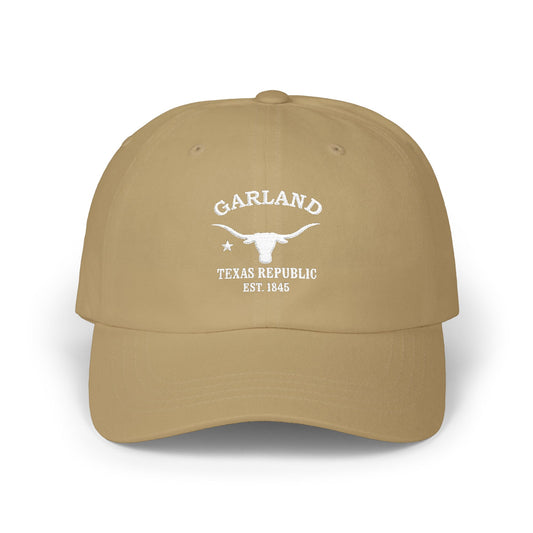
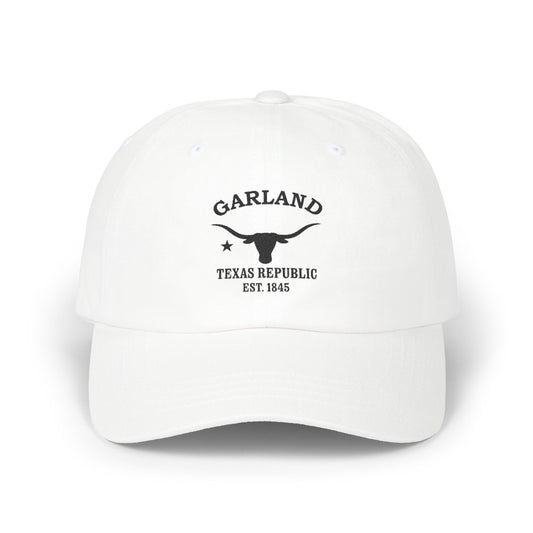
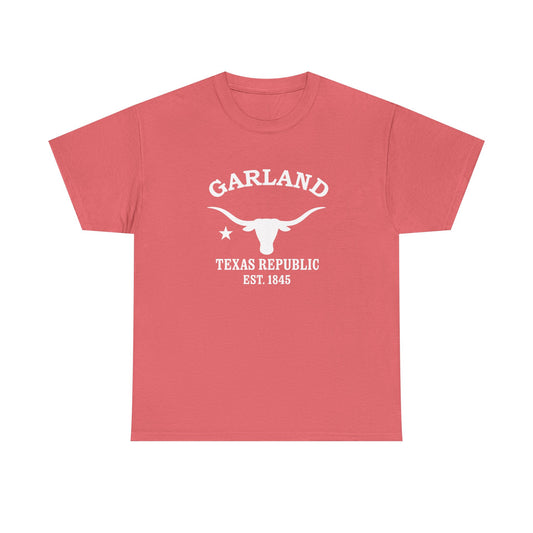
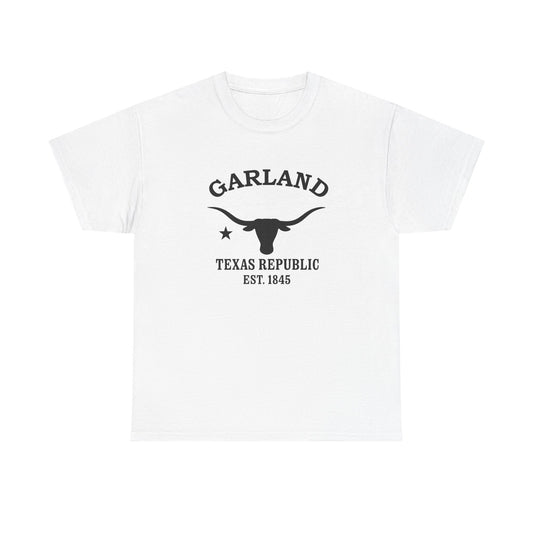
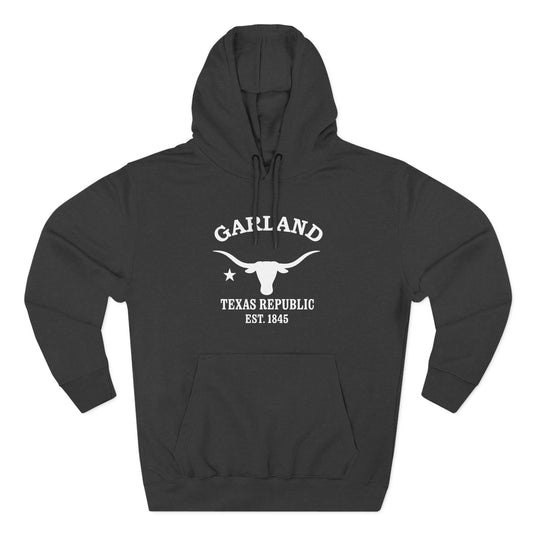
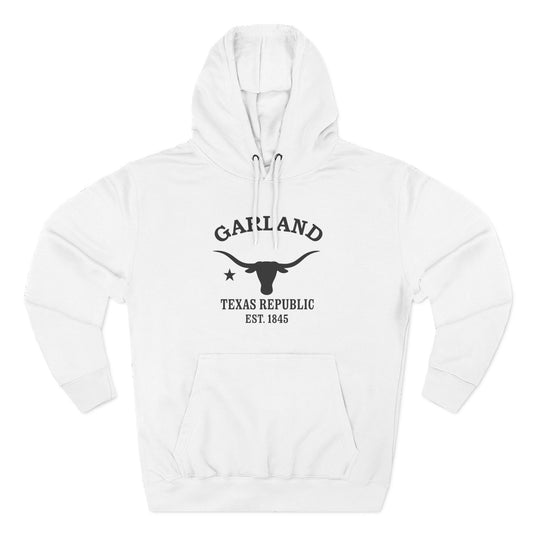
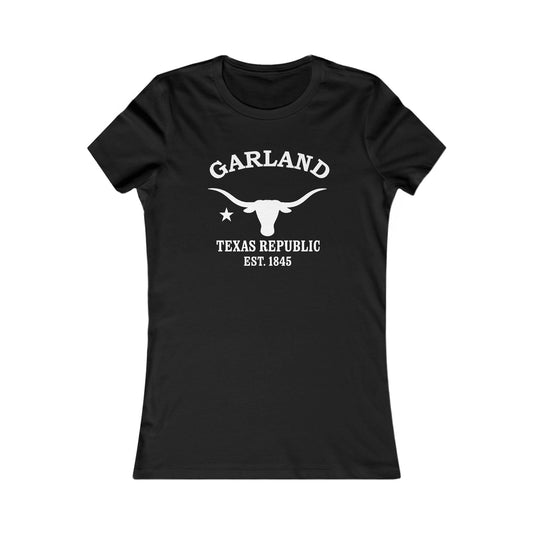
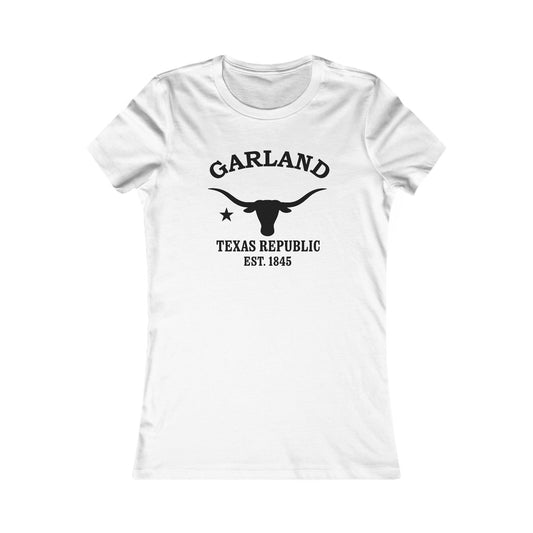
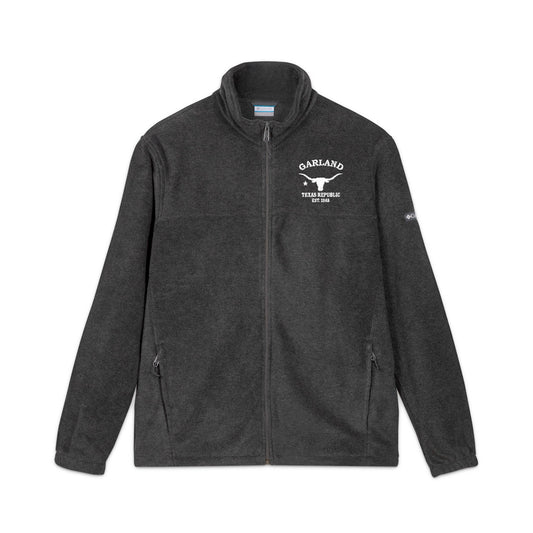
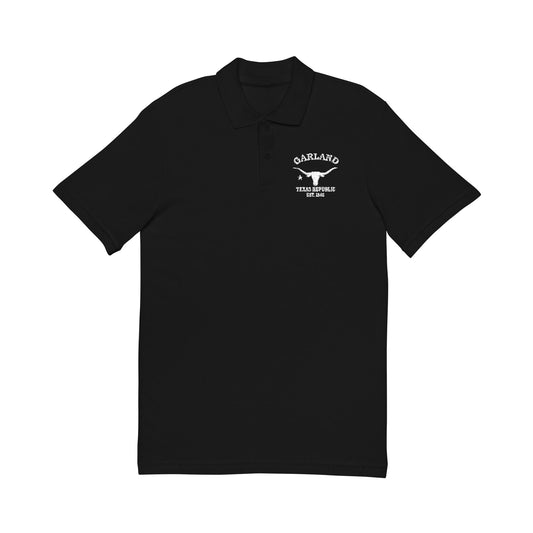
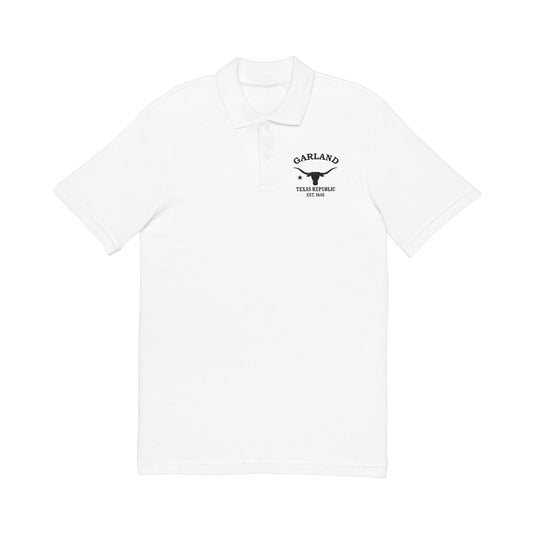
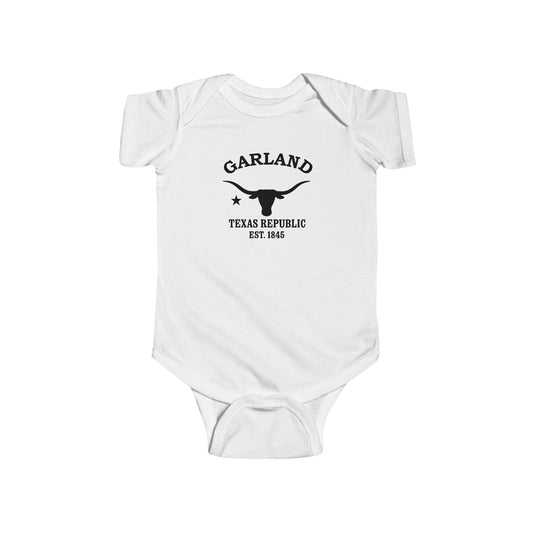
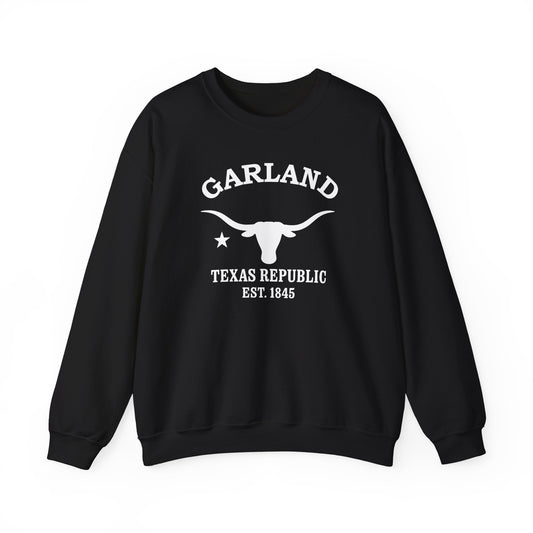
Our Garland logo carries the Texas longhorn and Lone Star over "Texas Republic, Est. 1845," the same emblem every Merlin Classics Texas place wears. The longhorn and star are the Lone Star State's shorthand — toughness, independence, the open range — printed black-and-white with the worn look of an old barn brand or a rodeo poster. What makes this one Garland is the place behind it: the two railroad towns, the Blackland cotton, the Texas hats. On a tee or a cap it reads less like a souvenir and more like a piece of North Texas — Est. 1845, worn plain.
Today Garland is one of the largest cities in Texas, a Dallas-Fort Worth Metroplex city proud of its rail-town roots, its Blackland-prairie cotton heritage, and the downtown square where two rival towns became one. Its story runs from the Duck Creek settlement through the 1886 railroad rivalry, the 1887 compromise that named the town, and the cotton-and-rail decades that built it. Our Garland designs gather that identity into wearable form — the railroad, the prairie, the Lone Star. Garland, Texas — one town made from two, since 1887.

Garland Texas — Travel Guide
Visiting Garland Texas Today
Garland sits northeast of Dallas on the Blackland prairie, with Lake Ray Hubbard on its eastern edge — an easygoing Metroplex city of a historic downtown square, neighborhood parks, nature preserves, and lakeshore recreation, all a short drive from downtown Dallas.
The Square, the Lake & the Prairie
For visitors searching for things to do in Garland, Texas:
- Stroll the historic downtown square and the restored Plaza Theatre (1941).
- Get out on Lake Ray Hubbard for boating, sailing, and shoreline parks.
- Walk the old-growth bottomland of Spring Creek Forest Preserve.
- Ride the wooded singletrack at Rowlett Creek Preserve.
- Shop and gather at Firewheel Town Center and the downtown events on the square.
Why People Visit Garland Texas
People come to Garland for its easy place in the Metroplex — a historic square and a real founding story, lake recreation on Ray Hubbard, and green preserves — all minutes northeast of Dallas. It's practical, green, and neighborly: the town that two railroads accidentally built.
Wear the History

For deeper reading on the Garland, Texas history described here — the Peters Colony settlement of Duck Creek, the 1886 arrival of the Gulf, Colorado & Santa Fe and Missouri, Kansas & Texas railroads and the rival depots, the Duck Creek-Embree rivalry, Congressman Joseph Abbott's 1887 compromise and the naming of Garland for Augustus H. Garland, the 1891 incorporation, the Blackland cotton and onion-shipping rail economy, and the 1941 Plaza Theatre — it may be useful to consult (1) the Garland Landmark Society and the Garland Landmark Museum (in the historic Santa Fe depot), (2) the Nicholson Memorial Library local-history room, (3) the Texas State Library and Archives and the Texas Historical Commission, (4) the Garland City Secretary's records office, and (5) the Dallas County historical commission and the Texas State Historical Association handbook. For travel and visitor information, it may be useful to contact (1) the Visit Garland / city visitor information office, (2) the Texas Office of Tourism, (3) the Garland Parks and Recreation department, (4) Texas State Parks and the Lake Ray Hubbard recreation offices, and (5) the Garland Chamber of Commerce.
Shop the Garland Texas collection
View full collection-
Garland Texas Vintage Retro Embroidered Cotton Cap - White Logo
Regular price $32.00 USDRegular price -
Garland Texas Vintage Retro Embroidered Cotton Cap - Black Logo
Regular price $32.00 USDRegular price -
Garland Texas Vintage Retro Unisex Heavy Cotton Tee - White Logo
Regular price $22.00 USDRegular price -
Garland Texas Vintage Retro Unisex Heavy Cotton Tee - Black Logo
Regular price $22.00 USDRegular price -
Garland Texas Vintage Retro Unisex Heavy Cotton Hoodie - White Logo
Regular price $48.00 USDRegular price -
Garland Texas Vintage Retro Unisex Heavy Cotton Hoodie - Black Logo
Regular price $48.00 USDRegular price -
-
Garland Texas Vintage Retro Womens Fitted Ringspun Cotton Tee - Black Logo
Regular price $28.00 USDRegular price -
Garland Texas Vintage Retro Unisex Embroidered Fleece Jacket - White Logo
Regular price $98.00 USDRegular price -
Garland Texas Vintage Retro Unisex Embroidered Cotton Polo - Black Logo
Regular price $48.00 USDRegular price -
Garland Texas Vintage Retro Cotton Jersey Baby Bodysuit - Black Logo
Regular price $26.00 USDRegular price -
Garland Texas Vintage Retro Vinyl Sticker - Black Logo
Regular price From $6.00 USDRegular price -
Garland Texas Vintage Retro Ceramic Mug - Black Logo
Regular price From $16.00 USDRegular price -
Garland Texas Vintage Retro Cotton Canvas Tote Bag - White Logo
Regular price $25.00 USDRegular price -
Garland Texas Vintage Retro Cotton Canvas Tote Bag - Black Logo
Regular price $25.00 USDRegular price -
Garland Texas Vintage Retro Thank You Card Set - Black Logo
Regular price From $25.00 USDRegular price -
Garland Texas Vintage Retro Unisex Cotton Jersey Tank Top - Black Logo
Regular price $28.00 USDRegular price -
Garland Texas Vintage Retro Unisex Cotton Jersey Tank Top - White Logo
Regular price $28.00 USDRegular price -
Garland Texas Vintage Retro Back Printed Art Series Cotton Tee - Black Logo
Regular price $32.00 USDRegular price -
Garland Texas Vintage Retro Giclée Print Art Series Poster
Regular price From $38.00 USDRegular price -
Garland Texas Vintage Retro Unisex Heavy Crewneck Sweatshirt - Black Logo
Regular price $38.00 USDRegular price -
Garland Texas Vintage Retro Unisex Heavy Crewneck Sweatshirt - White Logo
Regular price $38.00 USDRegular price