


What's with Duck Creek and Embree? Garland began in 1887 as a post office set between two feuding railroad towns, Duck Creek and Embree, named for Attorney General Augustus Garland. The feud was real: when two railroads built rival depots in 1886, old Duck Creek split into two new towns — Duck Creek on the Katy line and Embree on the Santa Fe — that fought over everything, the post office most of all. A fire gutted old Duck Creek's business district; Embree grabbed the mail; injunctions flew; the fight landed in court. In late 1887 Congressman Joseph Abbott settled it the Texas way — he had the post office moved to neutral ground exactly midway between the two depots, and on December 9, 1887 it opened under a brand-new name. Local legend says both towns accepted it because Augustus Garland had never set foot in Texas: nobody knew him, so nobody could object.
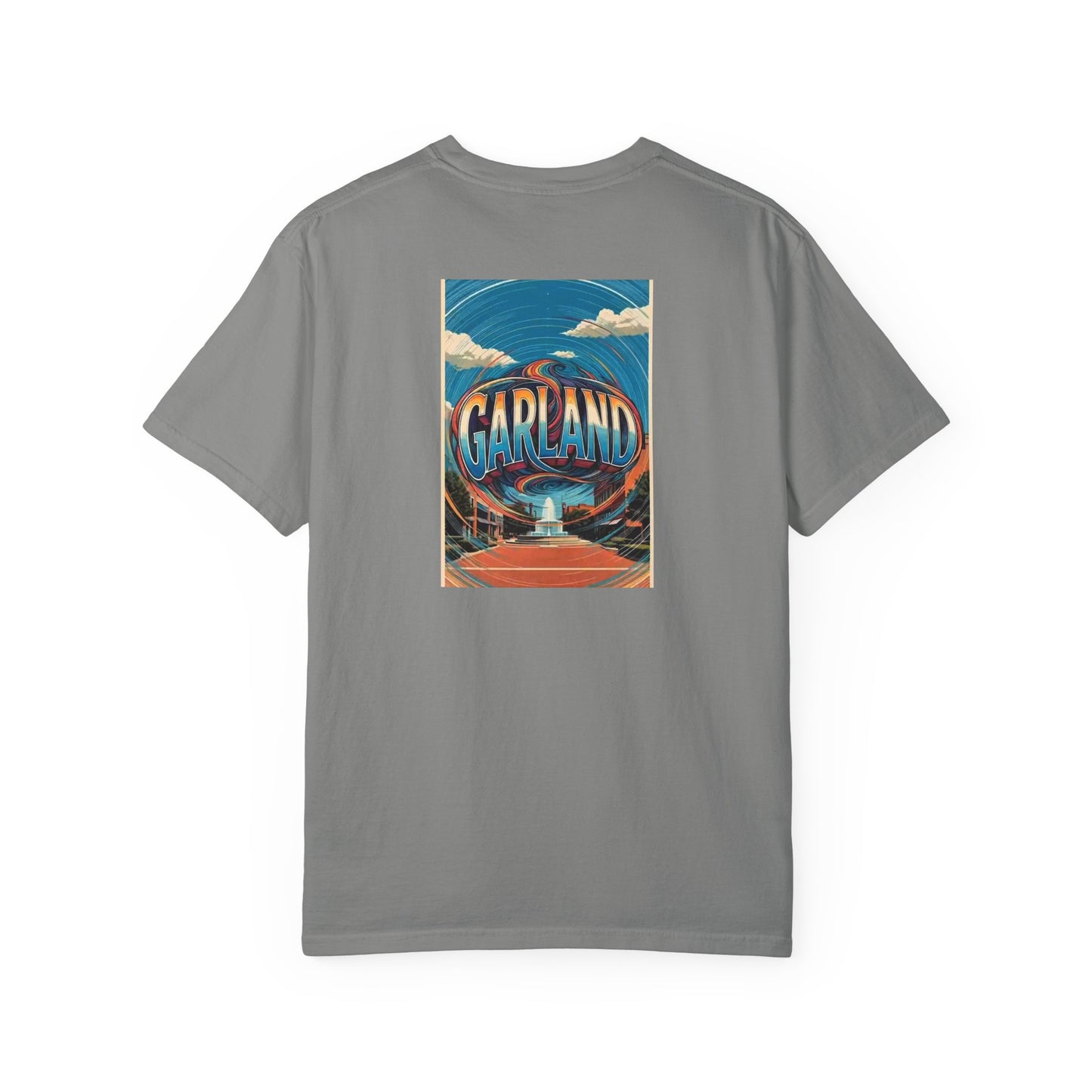
Our retro Garland designs draw on all of it — the black-dirt cotton rows and rail-depot heritage, the Plaza's marquee glow, Lake Ray Hubbard water and Blackland green, and the Lone Star pride of a true Texas hometown. Each piece is rendered in the vintage travel style we build for every American town we love — made to feel like a postcard from the square you can wear.
Why People Visit Garland Texas
- Stroll the historic downtown square and the restored Plaza Theatre (1941).
- Get out on Lake Ray Hubbard for boating, sailing, and shoreline parks.
- Walk the old-growth bottomland of Spring Creek Forest Preserve.
- Ride the wooded singletrack at Rowlett Creek Preserve.
- Shop and gather on the historic downtown square, with the Plaza Theatre marquee glowing over it.
