Every design is set in hand-lettered vintage type for that old-school, crate-label look. One sample color shown — black and white logo options on every piece. Recently in the national press. Enjoy!
-
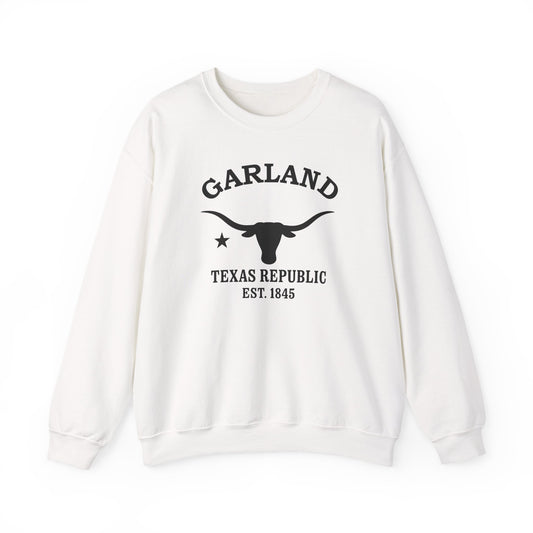
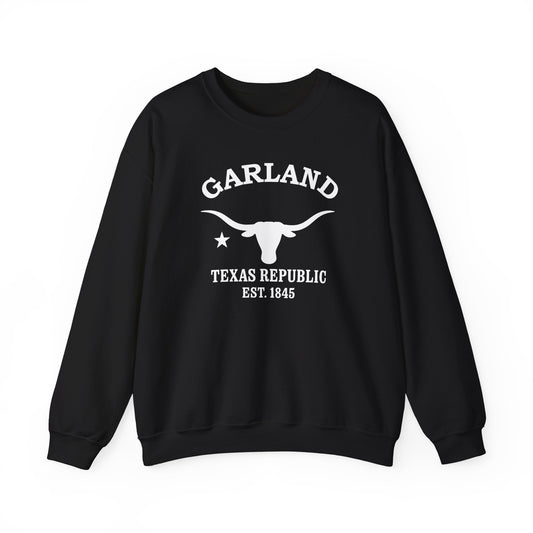
Garland Texas Vintage Retro Premium Crewneck Sweatshirt - Black Logo
Regular price $48.00 USDRegular price -
Garland Texas Vintage Retro Premium Crewneck Sweatshirt - White Logo
Regular price $48.00 USDRegular price -
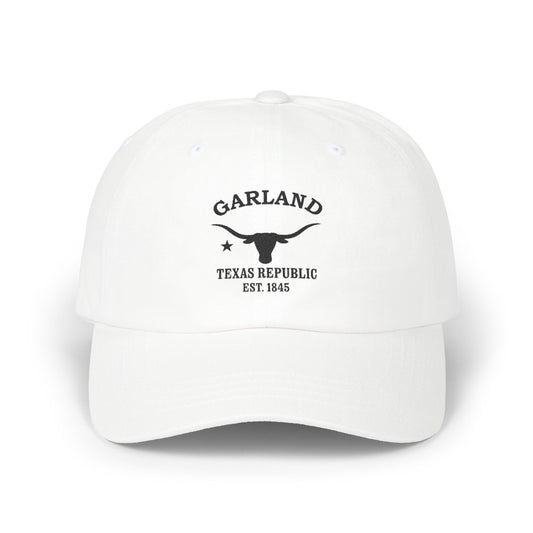
Garland Texas Vintage Retro Embroidered Cotton Cap - White Logo
Regular price $32.00 USDRegular price -
Garland Texas Vintage Retro Embroidered Cotton Cap - Black Logo
Regular price $32.00 USDRegular price -
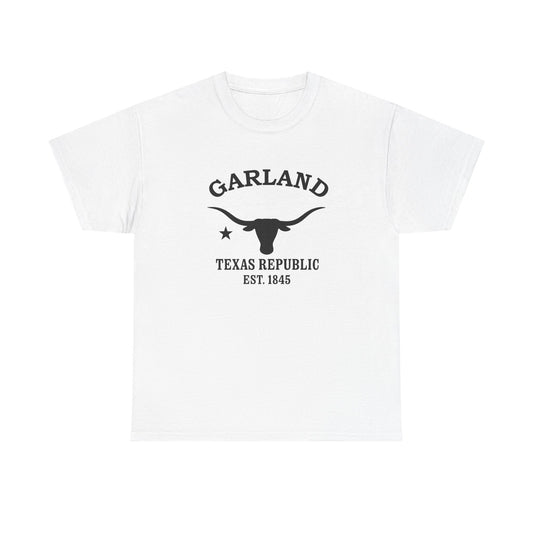
Garland Texas Vintage Retro Unisex Heavy Cotton Tee - White Logo
Regular price $22.00 USDRegular price -
Garland Texas Vintage Retro Unisex Heavy Cotton Tee - Black Logo
Regular price $22.00 USDRegular price -
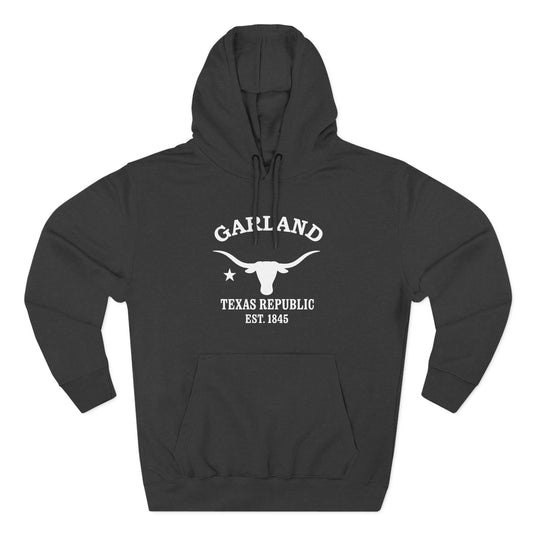
Garland Texas Vintage Retro Unisex Heavy Cotton Hoodie - White Logo
Regular price $56.00 USDRegular price -
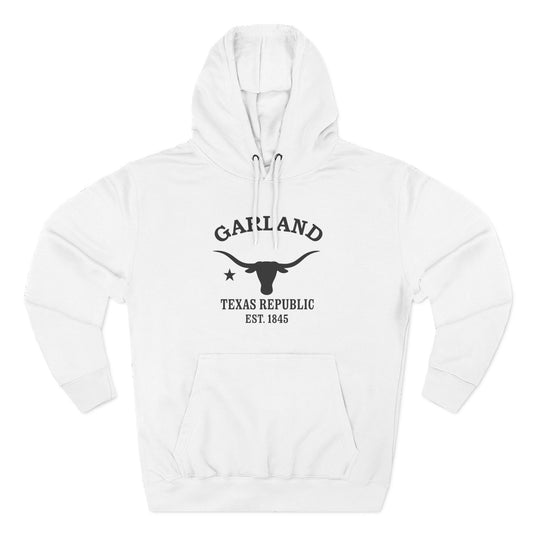
Garland Texas Vintage Retro Unisex Heavy Cotton Hoodie - Black Logo
Regular price $56.00 USDRegular price -
-
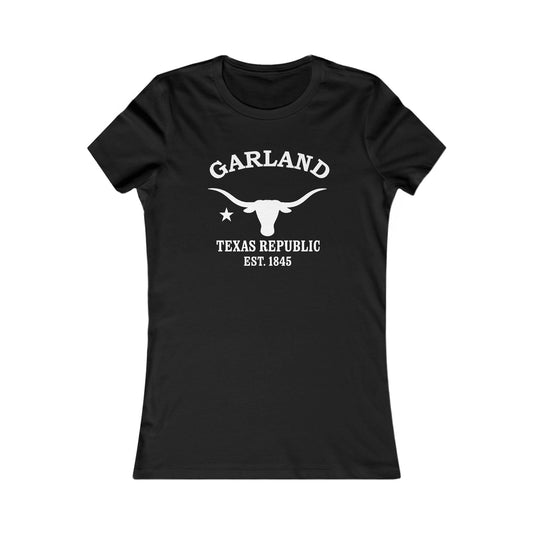
Garland Texas Vintage Retro Womens Fitted Ringspun Cotton Tee - Black Logo
Regular price $28.00 USDRegular price -
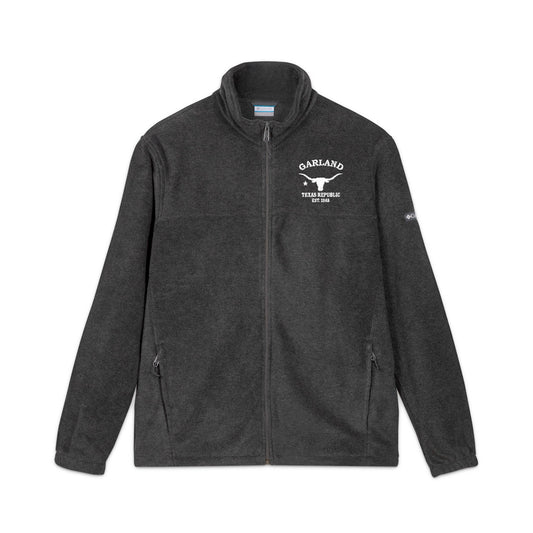
Garland Texas Vintage Retro Unisex Embroidered Fleece Jacket - White Logo
Regular price $98.00 USDRegular price -
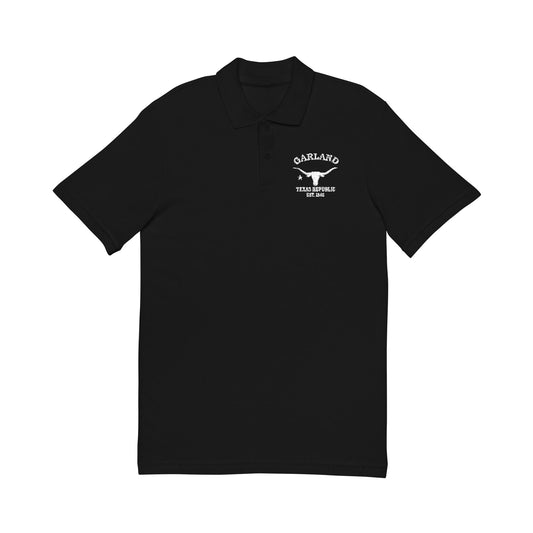
Garland Texas Vintage Retro Unisex Embroidered Cotton Polo - Black Logo
Regular price $48.00 USDRegular price -
Garland Texas Vintage Retro Cotton Jersey Baby Bodysuit - Black Logo
Regular price $26.00 USDRegular price -
Garland Texas Vintage Retro Vinyl Sticker - Black Logo
Regular price From $6.00 USDRegular price -
Garland Texas Vintage Retro Ceramic Mug - Black Logo
Regular price From $16.00 USDRegular price -
Garland Texas Vintage Retro Cotton Canvas Tote Bag - White Logo
Regular price $25.00 USDRegular price -
Garland Texas Vintage Retro Cotton Canvas Tote Bag - Black Logo
Regular price $25.00 USDRegular price -
Garland Texas Vintage Retro Thank You Card Set - Black Logo
Regular price From $25.00 USDRegular price -
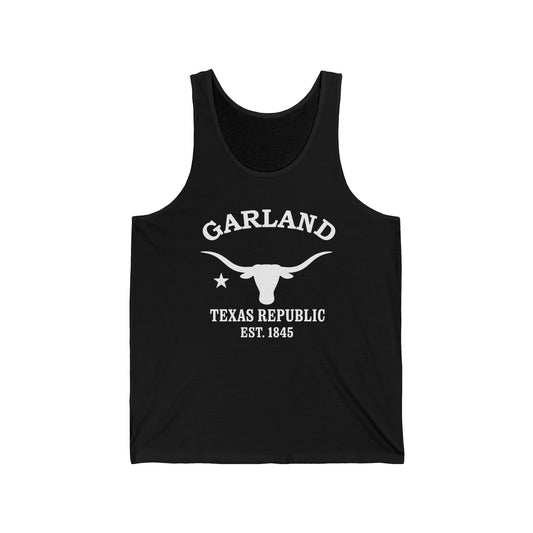
Garland Texas Vintage Retro Unisex Cotton Jersey Tank Top - Black Logo
Regular price $28.00 USDRegular price -
Garland Texas Vintage Retro Unisex Cotton Jersey Tank Top - White Logo
Regular price $28.00 USDRegular price -
Garland Texas Vintage Retro Back Printed Art Series Cotton Tee - Black Logo
Regular price $32.00 USDRegular price -
Garland Texas Vintage Retro Giclée Print Art Series Poster
Regular price From $38.00 USDRegular price -
Garland Texas Vintage Retro Unisex Heavy Crewneck Sweatshirt - Black Logo
Regular price $44.00 USDRegular price -
Garland Texas Vintage Retro Unisex Heavy Crewneck Sweatshirt - White Logo
Regular price $44.00 USDRegular price





Garland Texas — Retro Vintage History
Garland is one town made from two — a Dallas County city on the old Blackland Prairie, fifteen miles northeast of downtown Dallas, that began its life as a pair of feuding railroad camps glaring at each other across a mile of black dirt. Today it is one of the largest cities in Texas: a manufacturing powerhouse of the Metroplex, home to one of the most diverse communities in the state, with Lake Ray Hubbard on its eastern shore and a square downtown that remembers where it all started. One post office, two stubborn towns, and a name nobody could argue with — that is Garland.
Wear the HistoryWhere you're from. Where you love. Where you explored. Where you belong.
What's with Duck Creek and Embree? Garland began in 1887 as a post office set between two feuding railroad towns, Duck Creek and Embree, named for Attorney General Augustus Garland. The feud was real: when two railroads built rival depots in 1886, old Duck Creek split into two new towns — Duck Creek on the Katy line and Embree on the Santa Fe — that fought over everything, the post office most of all. A fire gutted old Duck Creek's business district; Embree grabbed the mail; injunctions flew; the fight landed in court. In late 1887 Congressman Joseph Abbott settled it the Texas way — he had the post office moved to neutral ground exactly midway between the two depots, and on December 9, 1887 it opened under a brand-new name. Local legend says both towns accepted it because Augustus Garland had never set foot in Texas: nobody knew him, so nobody could object.

The land came first, and it was extraordinary land — the Blackland Prairie, a belt of deep black waxy soil that made some of the finest cotton country in America. Settlers of the Peters Colony began arriving around 1850, and by 1854 the little community of Duck Creek, named for the stream that still runs through the city, had its own post office. The village that grew up in the 1870s was pure Blackland Texas: cotton gins, gristmills, churches, and farm families working ground so rich it turned the region into the cotton heart of North Texas.
QUICK FACTS — GARLAND, TX
Garland began as Duck Creek, a Peters Colony settlement on the Blackland Prairie with a post office by 1854.
In 1886 two railroads built rival depots a mile apart, splitting the community into Duck Creek and Embree.
After a fire and a courtroom fight, Congressman Joseph Abbott had the post office moved midway between the towns in December 1887.
The new town was named for Augustus H. Garland, United States Attorney General under Grover Cleveland.
Garland incorporated on March 31, 1891, absorbing both Duck Creek and Embree into one city.
In the early 1900s Garland was a cotton town of the Blackland belt and a major onion-shipping rail point.
Lake Ray Hubbard, one of North Texas's largest reservoirs, forms Garland's eastern shoreline.
Today Garland is one of the largest cities in Texas — a Dallas County manufacturing hub of remarkable diversity.
Union came quickly once the name did. On March 31, 1891, Garland incorporated and absorbed both Duck Creek and Embree — one city where two rivals had stood — and by 1890 the young town already counted four churches, three cotton gins, and a flour mill. The Blackland farms kept it prosperous: cotton above all, and in the early twentieth century Garland's twin rail lines made it one of the region's great onion-shipping points, moving the crop out of the black dirt by the trainload.
The twentieth century turned the farm town into an industrial one. Manufacturing put down roots — Resistol, the famous Western hat maker, among the plants that made Garland a byword for Texas industry — and the city diversified into electronics, food processing, chemicals, and instruments, building one of the larger industrial bases in North Texas. The Plaza Theatre rose on the downtown square in 1941 and still anchors it, restored and busy; the postwar Metroplex boom did the rest, carrying Garland from a courthouse-square cotton town to one of the largest cities in Texas.
And the modern city may be the best chapter yet. Garland today is one of the most diverse communities in Texas — with deep Hispanic roots and one of the region's most vibrant Vietnamese communities, whose markets and kitchens have become a destination in their own right. Lake Ray Hubbard brings sails, boat ramps, and shoreline parks to the eastern edge; Spring Creek Forest Preserve keeps a rare stand of old-growth Blackland forest; and the old square downtown — with the Plaza's neon glowing — hosts the city that two feuding depot camps accidentally built together.
Our retro Garland designs draw on all of it — the black-dirt cotton rows and rail-depot heritage, the Plaza's marquee glow, Lake Ray Hubbard water and Blackland green, and the Lone Star pride of a true Texas hometown. Each piece is rendered in the vintage travel style we build for every American town we love — made to feel like a postcard from the square you can wear.
Two towns that could not share a post office became one city that shares everything — a square, a lake, a hundred languages, and a name borrowed from a man who never saw the place. From the Blackland cotton rows to the Plaza's neon to the sails on Lake Ray Hubbard, the whole story still fits on one square. Garland, Texas — one town made from two, since 1887. Wear a little of it wherever the road takes you.

Garland Texas — Travel Guide
Visiting Garland Texas Today
Garland sits northeast of Dallas on the Blackland prairie, with Lake Ray Hubbard on its eastern edge — an easygoing Metroplex city of a historic downtown square, neighborhood parks, nature preserves, and lakeshore recreation, all a short drive from downtown Dallas.
The Square, the Lake & the Prairie
For visitors searching for things to do in Garland, Texas:
- Stroll the historic downtown square and the restored Plaza Theatre (1941).
- Get out on Lake Ray Hubbard for boating, sailing, and shoreline parks.
- Walk the old-growth bottomland of Spring Creek Forest Preserve.
- Ride the wooded singletrack at Rowlett Creek Preserve.
- Shop and gather on the historic downtown square, with the Plaza Theatre marquee glowing over it.
Why People Visit Garland Texas
People come to Garland for its easy place in the Metroplex — a historic square and a real founding story, lake recreation on Ray Hubbard, and green preserves — all minutes northeast of Dallas. It's practical, green, and neighborly: the town that two railroads accidentally built.
Wear the History
Where you're from. Where you love. Where you explored. Where you belong.
Kindred Cities
Greetings to visitors from Leeds, England and Stuttgart, Germany (willkommen) — like-minded working cities that make things and don't fuss about it.
Places that built themselves on making things have a temperament in common, and Garland shares it with Leeds and Stuttgart. Leeds turned from mills into a northern powerhouse; Stuttgart engineers the cars the world drives; Garland grew on factories and a famously diverse workforce just east of Dallas. Roll-up-your-sleeves towns, prouder of the work than the postcard.
Garland is home ground for anyone from a city that earns its keep on the factory floor: a practical, hard-working town with a historic downtown, an international table thanks to its many communities, and Dallas right next door. Come and visit us soon.
When you plan the trip, the City of Garland and Visit Dallas are the place to start.
Wear the History
Where you're from. Where you love. Where you explored. Where you belong.

For deeper reading on the Garland, Texas history described here — the Peters Colony settlement of Duck Creek, the 1886 arrival of the Gulf, Colorado & Santa Fe and Missouri, Kansas & Texas railroads and the rival depots, the Duck Creek-Embree rivalry, Congressman Joseph Abbott's 1887 compromise and the naming of Garland for Augustus H. Garland, the 1891 incorporation, the Blackland cotton and onion-shipping rail economy, and the 1941 Plaza Theatre — it may be useful to consult (1) the Garland Landmark Society and the Garland Landmark Museum (in the historic Santa Fe depot), (2) the Nicholson Memorial Library local-history room, (3) the Texas State Library and Archives and the Texas Historical Commission, (4) the Garland City Secretary's records office, and (5) the Dallas County historical commission and the Texas State Historical Association handbook. For travel and visitor information, it may be useful to contact (1) the Visit Garland / city visitor information office, (2) the Texas Office of Tourism, (3) the Garland Parks and Recreation department, (4) Texas State Parks and the Lake Ray Hubbard recreation offices, and (5) the Garland Chamber of Commerce.
- Choosing a selection results in a full page refresh.
- Opens in a new window.