McAllen Texas — Retro Vintage History
McAllen is the City of Palms — the commercial heart of the Rio Grande Valley, at the southern tip of Texas where the state turns tropical. Palm-lined streets run toward the Rio Grande, Reynosa sits just across the river, and two countries share one valley of food, music, and family names. A 1904 railroad townsite on a Spanish land-grant ranch has grown into a bi-national metro of well over a million people — and one of the best birding destinations in North America. Tejano heart, border soul, citrus-and-palm sunshine: that is McAllen.
Wear the HistoryWhere you're from. Where you love. Where you explored. Where you belong.
What's with the City of Palms? McAllen is called the City of Palms for the palm-lined subtropical streets of the Rio Grande Valley, a nickname the city had adopted by 1940. The tall palms came with the Valley's great agricultural boom: once irrigation canals and the railroad opened the Delta-rich land after 1904, growers planted citrus by the square mile and civic boosters planted palms by the block, and the young farm town styled itself a subtropical resort. The name took — by the time a suspension bridge opened to Reynosa in 1941 and winter visitors began arriving in earnest, the City of Palms was McAllen's calling card, and the palms still line the boulevards today. One caution for the trivia-minded: Fort Myers, Florida claims the same nickname — but in Texas, there is only one.

People have lived along this stretch of the river since long before any survey: the Coahuiltecan peoples made the Tamaulipan brushland home. In 1797 the Spanish crown granted the Santa Anita Ranch to José Manuel Gómez, and the land passed down through the Ballí family for generations. Salomé Ballí, heir to the grant, married the Irish-born businessman John McAllen in 1861, and the spread became the McAllen Ranch — sheep, cattle, and brush country running down to the Rio Grande, with the site of the future city inside its fences.
QUICK FACTS — MCALLEN, TX
McAllen began as a townsite on the historic Santa Anita Ranch, a Spanish land grant dating to 1797.
The McAllen Townsite Company platted the city on December 5, 1904, the year the railroad arrived; McAllen incorporated in 1911.
The city is named for John McAllen, the Irish-born rancher whose land became the townsite.
McAllen adopted its nickname, the City of Palms, by 1940 for its palm-lined subtropical streets.
The McAllen–Hidalgo–Reynosa International Bridge, a suspension bridge opened in 1941, made the city a winter resort and gateway to Mexico.
McAllen anchors the Rio Grande Valley with Reynosa, Mexico — a bi-national metropolitan area of more than 1.5 million people.
Quinta Mazatlán, a 1930s Spanish Revival adobe mansion, is a World Birding Center site in a region recording more than 500 bird species.
Mild winters draw thousands of winter Texans, and the Valley's groves grow the famous Texas red grapefruit.
The modern city arrived on rails. Irrigation companies began watering the Delta lands around 1900, the St. Louis, Brownsville & Mexico Railway pushed through the ranch in 1904, and on December 5 of that year the McAllen Townsite Company platted a town named for the old rancher. A rival townsite — East McAllen — rose two miles away in 1907, won the post office, and became the McAllen that incorporated in 1911. In 1916, during the border troubles of the Mexican Revolution era, some 20,000 National Guard troops camped here, and the soldier payrolls put the young town permanently on the map.
Then came the boom the palms were planted for. Citrus groves, canneries, and packing sheds spread across the Valley through the 1920s; McAllen adopted a home-rule charter in 1927; and by 1940 the farm-and-oil town of nearly 12,000 was calling itself the City of Palms. The 1941 suspension bridge to Reynosa made it a winter resort and a port of entry, and when oil was found near Reynosa in 1947, the two cities grew together — workers, shoppers, and families moving both ways across the river, a rhythm that has never stopped.
That rhythm is the culture. McAllen sits at the heart of Tejano South Texas — a bilingual, overwhelmingly Mexican-American valley where conjunto accordions and Tejano music grew up in the dance halls, where la frontera is not a line but a way of life, and where family trees have branches on both banks of the river. The Valley's own name for itself — el Valle — says it plainly: one valley, two countries, one community.
And the birds know no border at all. McAllen is one of North America's great birding destinations: the Valley sits on the central flyway funnel where more than 500 species have been recorded, and Quinta Mazatlán — a 1930s Spanish Revival adobe mansion turned World Birding Center site — keeps fifteen acres of native forest in the middle of the city. The green jay, the Valley's dazzling signature bird, is an everyday sight here and almost nowhere else in the United States; winter Texans and birders arrive together every year when the north turns cold.
Our retro McAllen designs draw on all of it — the palms against a Valley sky, the green jay's colors, the bridge to Reynosa, the citrus gold of the groves, and the Lone Star pride of deep South Texas. Each piece is rendered in the vintage travel style we build for every American town we love, made to feel like a postcard from el Valle you can wear.
A land-grant ranch, a railroad town, a bridge between nations, and a sky full of green jays — McAllen wears its story lightly, the way the palms wear the wind. From the Santa Anita grant of 1797 to the bi-national valley of today, every era left something worth keeping: the palms, the music, the citrus gold, the family names on both banks of the river. City of Palms. Heart of the Rio Grande Valley. Wear a little of it wherever the road takes you.

McAllen, Texas — Travel Guide
Visiting McAllen Today
McAllen sits at the southern tip of Texas in the Rio Grande Valley, a warm, walkable, palm-lined city on the Mexican border. Expect a subtropical climate — mild, sunny winters that draw birders and winter Texans, and hot, bright summers. It makes an easy base for nature, museums, and cross-border culture, with the river and Reynosa just minutes south.
Birds, Palms & the Border
For visitors looking for things to do in McAllen, Texas:
- Tour Quinta Mazatlán, the 1935 adobe mansion and World Birding Center, for gardens, trails, and Valley birds.
- Walk the McAllen Nature Center's trails through native Rio Grande Valley thornscrub.
- Explore IMAS, the International Museum of Art & Science, for art and family science exhibits.
- Visit the award-winning McAllen Public Library, the celebrated big-box-turned-library downtown.
- Shop La Plaza Mall, the Valley's major retail draw near the airport corridor.
- Time a winter visit for peak birding and the warm ‘winter Texan’ season.
- Drive the Valley for citrus stands, international bridges, and border-town flavor.
- Stroll downtown McAllen for palm-lined plazas, the seasonal arts and festival calendar, and the winter-Texan crowd.
Why People Visit McAllen
McAllen offers something rare — a subtropical Texas city where world-class birding, citrus country, and a living bi-national culture all sit within easy reach. Visitors come for the palms and the birds, stay for the food and the warmth, and leave understanding why this corner of Texas calls itself the City of Palms.
Wear the History
Where you're from. Where you love. Where you explored. Where you belong.
Kindred Cities
Greetings, friends from Reynosa (bienvenidos) — our neighbour across the river and partner in one shared valley.
McAllen and Reynosa are two halves of one community the Rio Grande happens to divide. Together they anchor the booming Rio Grande Valley borderland — McAllen on the Texas bank, Reynosa on the Mexican — joined by international bridges that thousands cross every day for work, family, and food.
The tie is as old as the city: the 1941 suspension bridge made the two towns a single destination, and when oil was found near Reynosa in 1947, the sister cities grew together — workers, shoppers, and families moving both ways across the river ever since.
Come from Reynosa and McAllen is the same valley seen from the north bank: the same warm Tamaulipan plain, the same food and music and family names, and a Texas city that has always counted Reynosa as kin. Come and visit us soon.
When you plan the trip, the McAllen Convention & Visitors Bureau is the place to start.
Wear the History
Where you're from. Where you love. Where you explored. Where you belong.

For deeper reading on the McAllen history described here — the Coahuiltecan homeland and the 1797 Santa Anita Spanish land grant, John McAllen and the Ballí ranching family, the 1903 Hidalgo Irrigation Company and the 1904 railroad townsite, the rise of Rio Grande Valley citrus, and the 1935 Quinta Mazatlán estate — it may be useful to consult (1) the McAllen Heritage Center, (2) the Museum of South Texas History in Edinburg, (3) the University of Texas Rio Grande Valley Special Collections & Archives, (4) the Texas State Historical Association (Handbook of Texas), and (5) the Texas State Library and Archives Commission. For travel and visitor information, it may be useful to contact (1) the McAllen Convention & Visitors Bureau, (2) Quinta Mazatlán / the World Birding Center, (3) the McAllen Chamber of Commerce, (4) the City of McAllen Parks & Recreation Department, and (5) Travel Texas, the state tourism office.
Shop the McAllen Texas collection
View full collection-
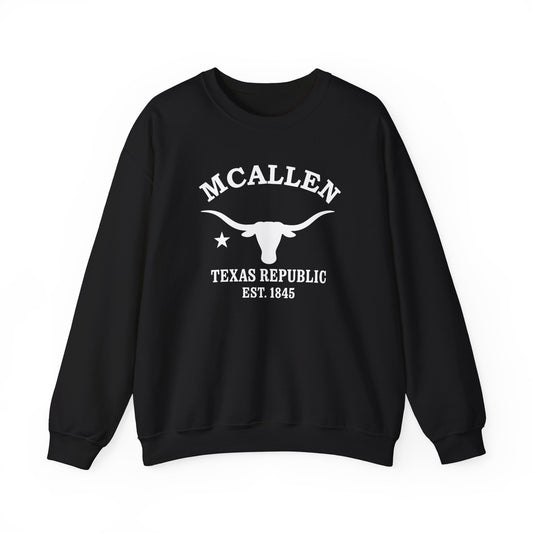
Mcallen Texas Vintage Retro Premium Crewneck Sweatshirt - Black Logo
Regular price $48.00 USDRegular price -
Mcallen Texas Vintage Retro Premium Crewneck Sweatshirt - White Logo
Regular price $48.00 USDRegular price -
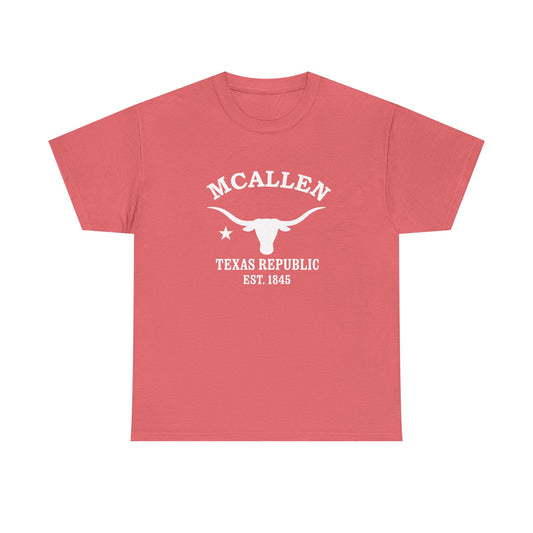
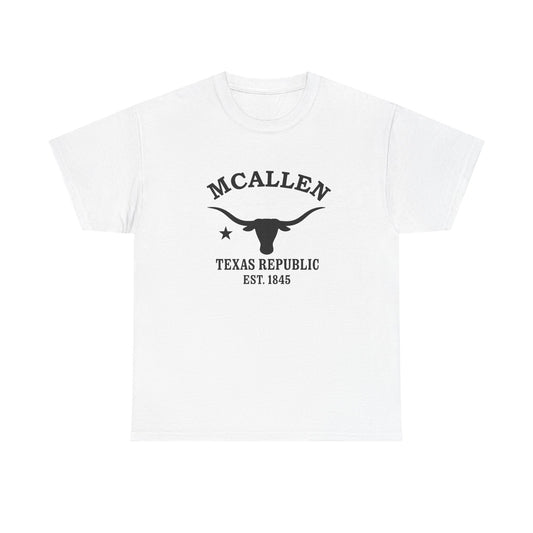
McAllen Texas Vintage Retro Unisex Heavy Cotton Tee - White Logo
Regular price $22.00 USDRegular price -
McAllen Texas Vintage Retro Unisex Heavy Cotton Tee - Black Logo
Regular price $22.00 USDRegular price -
McAllen Texas Vintage Retro Vinyl Sticker - Black Logo
Regular price From $6.00 USDRegular price -
-
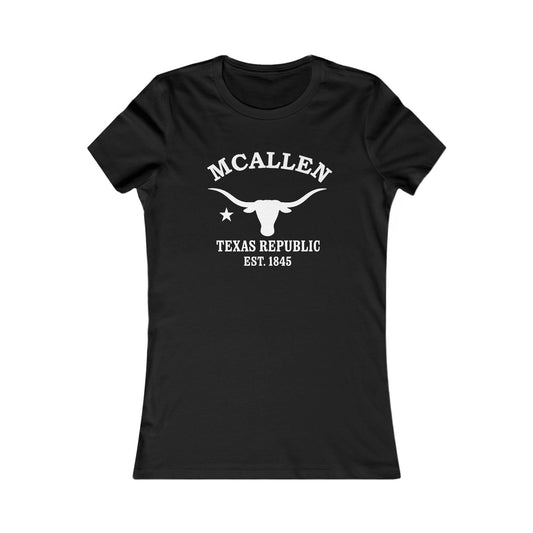
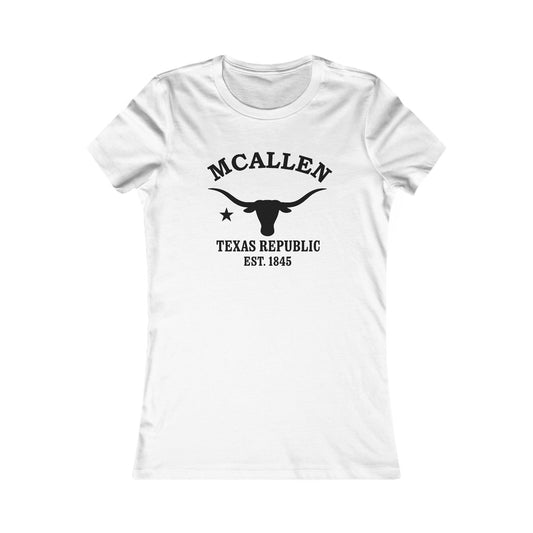
McAllen Texas Vintage Retro Womens Fitted Ringspun Cotton Tee - Black Logo
Regular price $28.00 USDRegular price -
McAllen Texas Vintage Retro Unisex Heavy Cotton Hoodie - White Logo
Regular price $56.00 USDRegular price -
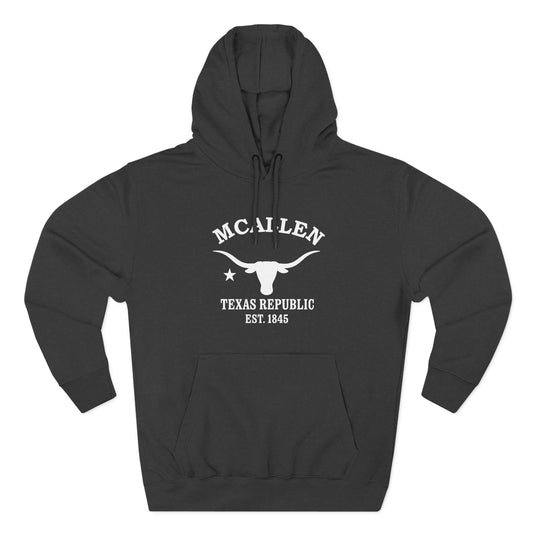
McAllen Texas Vintage Retro Unisex Heavy Cotton Hoodie - Black Logo
Regular price $56.00 USDRegular price -
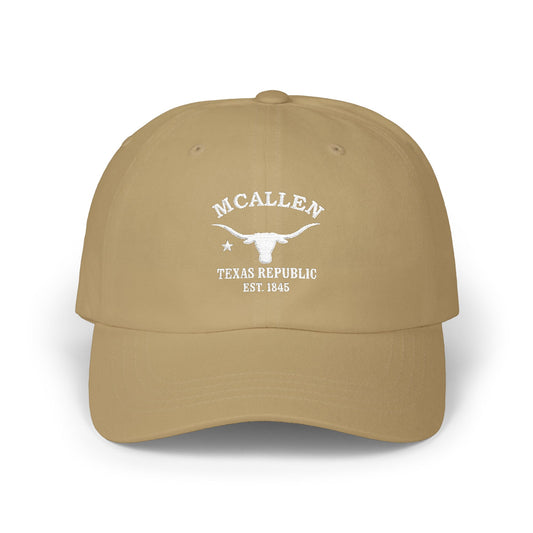
McAllen Texas Vintage Retro Embroidered Cotton Cap - White Logo
Regular price $32.00 USDRegular price -
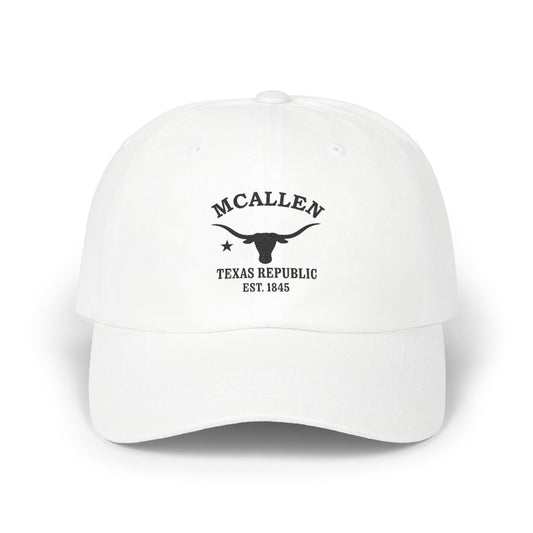
McAllen Texas Vintage Retro Embroidered Cotton Cap - Black Logo
Regular price $32.00 USDRegular price -
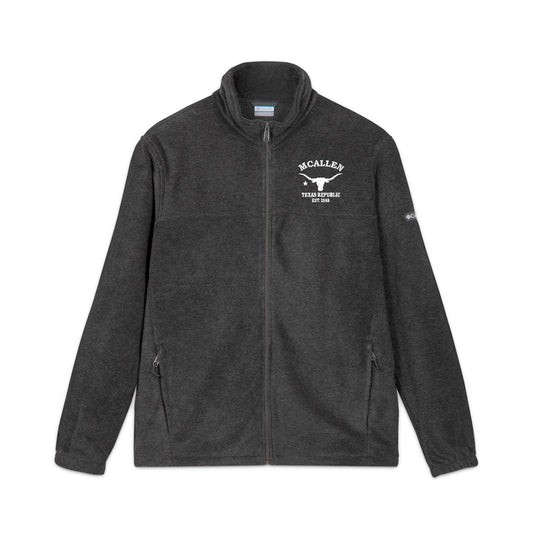
McAllen Texas Vintage Retro Unisex Embroidered Fleece Jacket - White Logo
Regular price $98.00 USDRegular price -
McAllen Texas Vintage Retro Ceramic Mug - Black Logo
Regular price From $16.00 USDRegular price -
McAllen Texas Vintage Retro Cotton Canvas Tote Bag - White Logo
Regular price $25.00 USDRegular price -
McAllen Texas Vintage Retro Cotton Canvas Tote Bag - Black Logo
Regular price $25.00 USDRegular price -
McAllen Texas Vintage Retro Thank You Card Set - Black Logo
Regular price From $25.00 USDRegular price -
McAllen Texas Vintage Retro Cotton Jersey Baby Bodysuit - Black Logo
Regular price $26.00 USDRegular price -
McAllen Texas Vintage Retro Unisex Cotton Jersey Tank Top - Black Logo
Regular price $28.00 USDRegular price -
McAllen Texas Vintage Retro Unisex Cotton Jersey Tank Top - White Logo
Regular price $28.00 USDRegular price -
McAllen Texas Vintage Retro Unisex Heavy Crewneck Sweatshirt - Black Logo
Regular price $44.00 USDRegular price -
McAllen Texas Vintage Retro Unisex Heavy Crewneck Sweatshirt - White Logo
Regular price $44.00 USDRegular price -
McAllen Texas Vintage Retro Unisex Embroidered Cotton Polo - Black Logo
Regular price $48.00 USDRegular price -
McAllen Texas Vintage Retro Back Printed Art Series Cotton Tee - Black Logo
Regular price $32.00 USDRegular price