



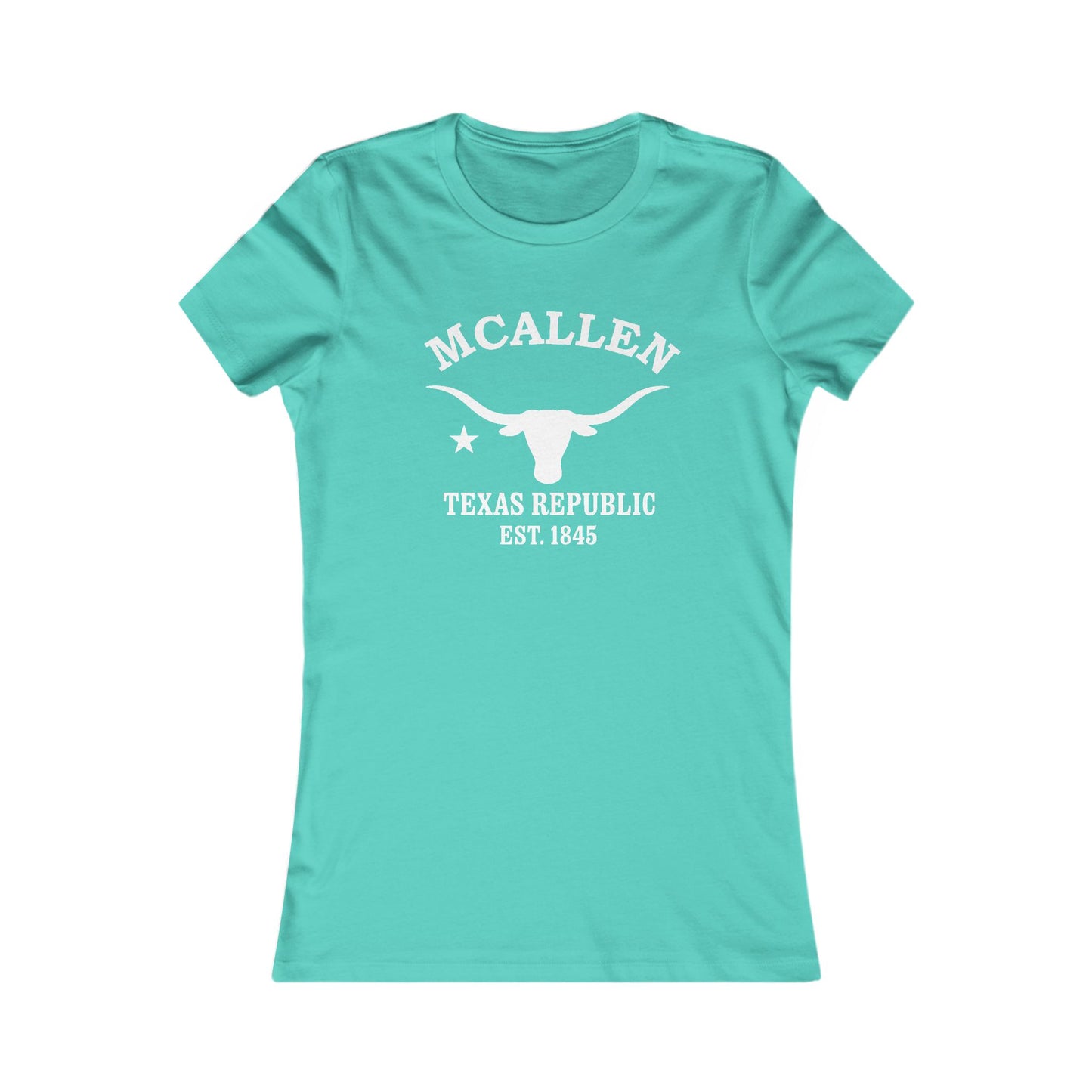


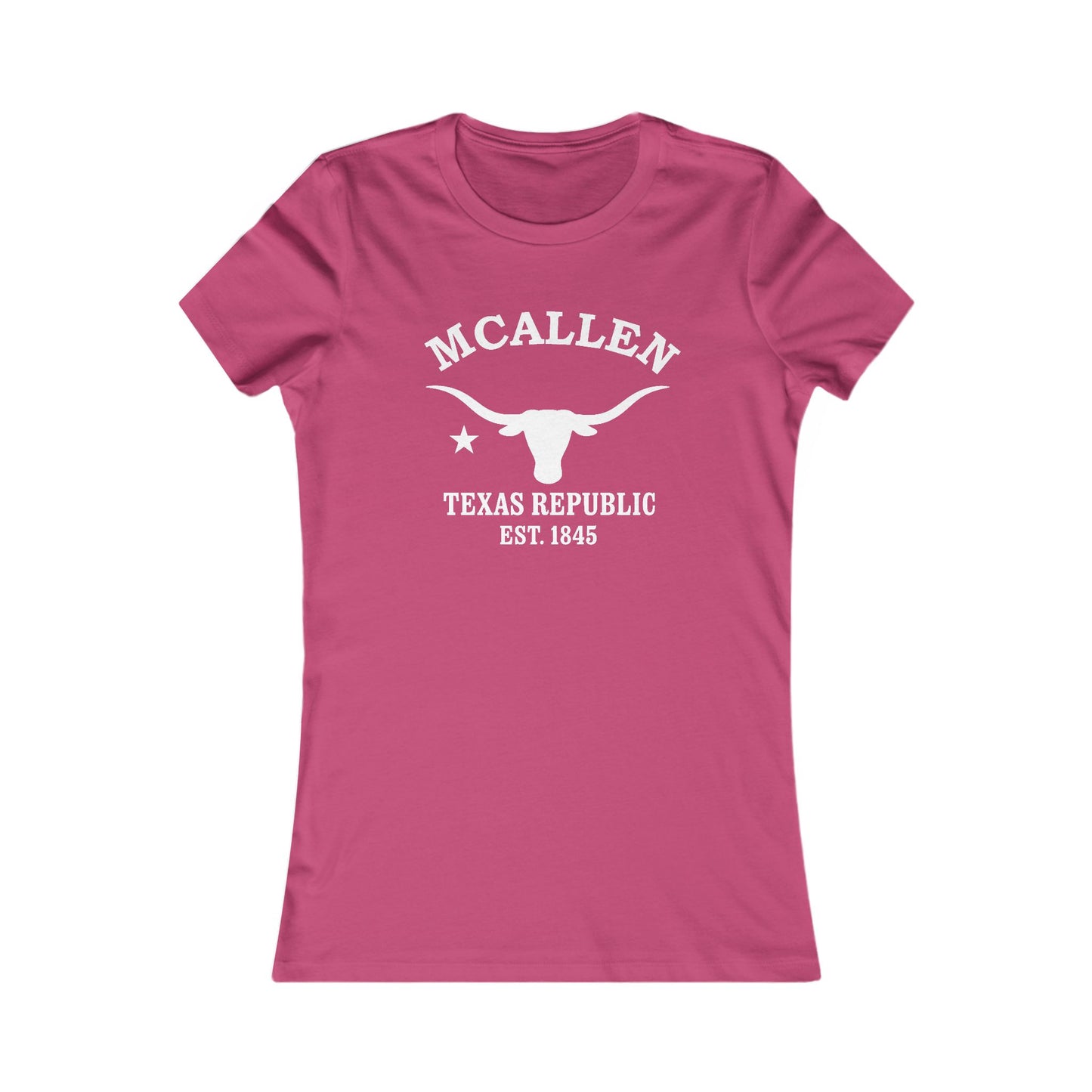
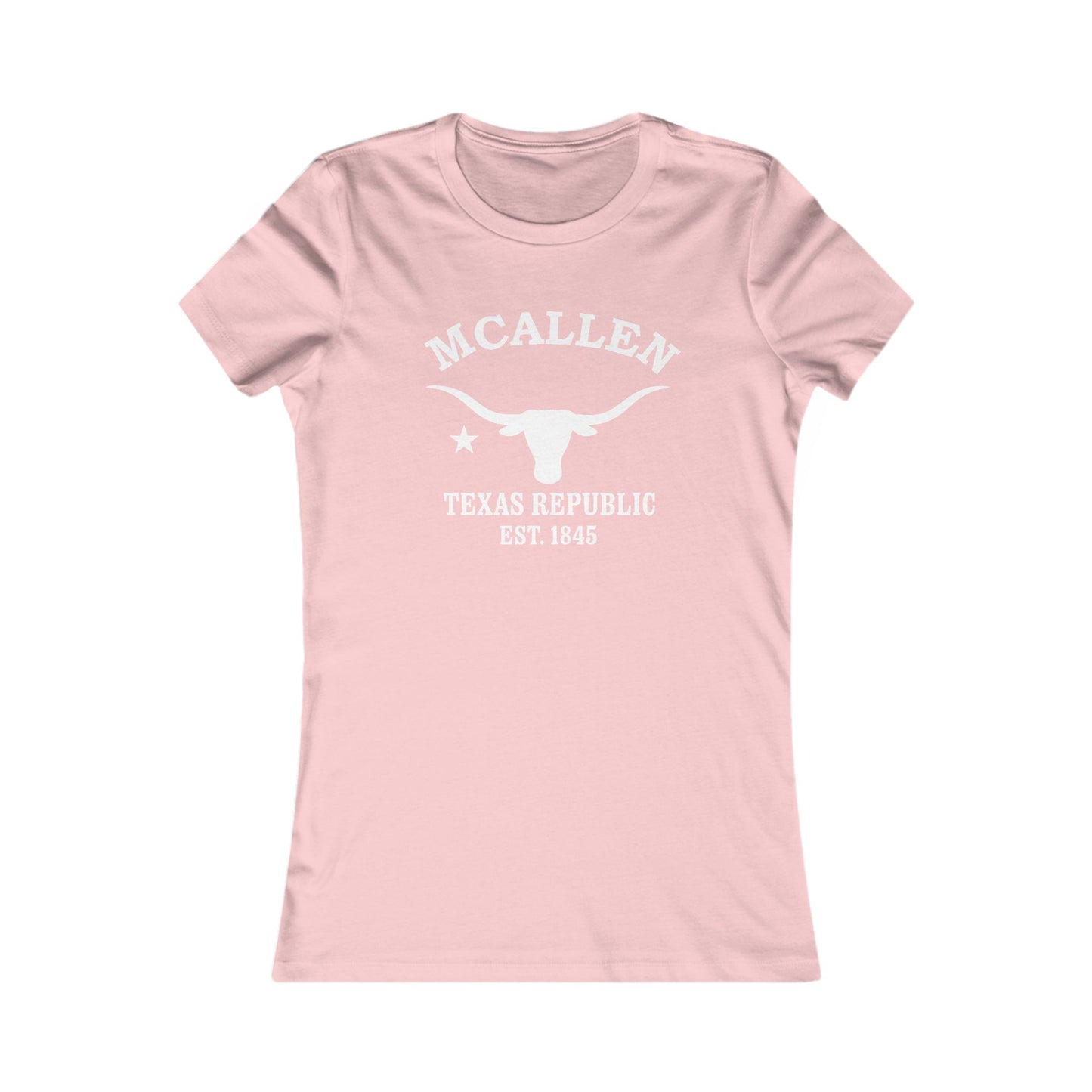
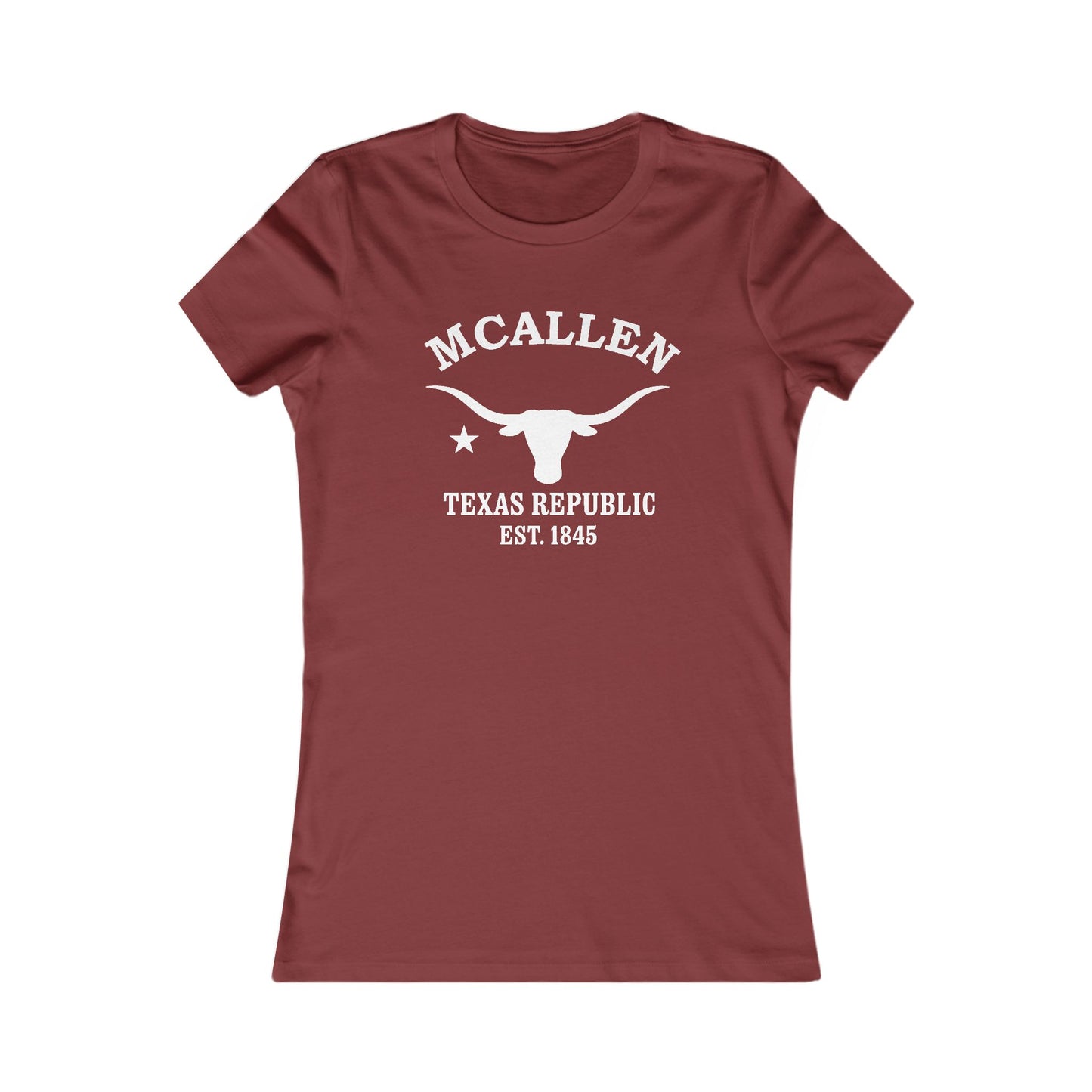
McAllen is the City of Palms — the commercial heart of the Rio Grande Valley, at the southern tip of Texas where the state turns tropical. Palm-lined streets run toward the Rio Grande, Reynosa sits just across the river, and two countries share one valley of food, music, and family names. A 1904 railroad townsite on a Spanish land-grant ranch has grown into a bi-national metro of well over a million people — and one of the best birding destinations in North America. Tejano heart, border soul, citrus-and-palm sunshine: that is McAllen.
A land-grant ranch, a railroad town, a bridge between nations, and a sky full of green jays — McAllen wears its story lightly, the way the palms wear the wind. From the Santa Anita grant of 1797 to the bi-national valley of today, every era left something worth keeping: the palms, the music, the citrus gold, the family names on both banks of the river. City of Palms. Heart of the Rio Grande Valley. Wear a little of it wherever the road takes you.
Why People Visit McAllen
McAllen offers something rare — a subtropical Texas city where world-class birding, citrus country, and a living bi-national culture all sit within easy reach. Visitors come for the palms and the birds, stay for the food and the warmth, and leave understanding why this corner of Texas calls itself the City of Palms.
