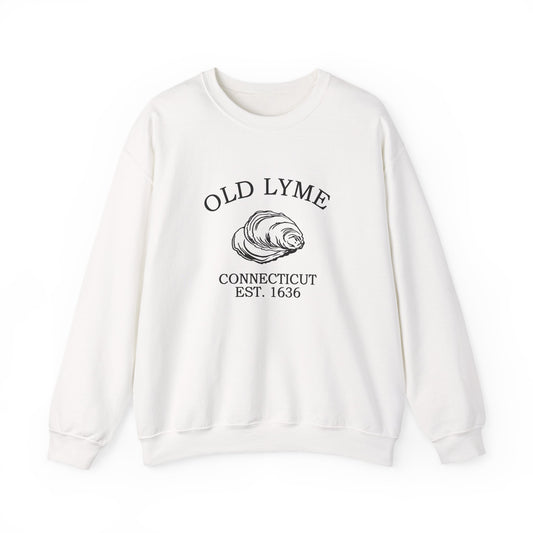
Old Lyme Connecticut — Retro Vintage History
What's with the painted walls? Walk into the dining room of a certain 1817 mansion on Lyme Street and the walls answer for themselves: the doors and panels are covered in paintings — 41 of them, painted directly onto the wood by the artists who lived there. Florence Griswold's boarding house took its rent in more than money. The tradition began in 1900 as a joking paint-off between Henry Ward Ranger and Henry Rankin Poore, and it grew into the colony's competitive honor: membership in the Lyme Art Colony came to mean leaving your mark, literally, on a door. Landscapes, still lifes, animals, a lighthearted frieze over the fireplace — each panel signed by a painter who had worked the summer light along the Lieutenant River. The artists are gone. The panels are still there, in place, in the house — there is no other room like it in America.
Wear the HistoryWhere you're from. Where you love. Where you explored. Where you belong.
The boarding house that became the birthplace of American Impressionism. In the summer of 1899, a New York landscape painter named Henry Ward Ranger took a room at a quiet boarding house on Lyme Street. The house had been built in 1817 by a sea captain named Robert Griswold and was run, by 1899, by his unmarried daughter — Florence Griswold, then 49, supporting herself and a sister with what was left of the family property. Ranger had just returned from Europe, and he saw in the soft summer light along the Lieutenant River something that reminded him of Barbizon, the French village where 19th-century painters had once gathered to paint outdoors from life. He wrote to his New York dealer: "I want to start an American Barbizon here." He returned the next spring with friends. Over the next 38 years, until Florence Griswold's death in 1937, more than 200 American painters lived and worked in that boarding house and the surrounding village. The Lyme Art Colony became the most famous art colony in the United States — and the first in America to adopt Impressionism. The painter Childe Hassam arrived in 1903 and shifted the colony's palette from Ranger's misty Tonalist browns and greens to vivid Impressionist light. Willard Metcalf, Robert Vonnoh, William Chadwick, Matilda Browne, and Henry Rankin Poore followed. They painted the Old Lyme Congregational Church across the green, the Lieutenant River through the trees, the marshes, the orchards, the dirt lanes. Willard Metcalf's 1906 painting May Night, depicting the Griswold house at twilight with Florence Griswold herself walking the path, became the first contemporary American painting purchased by the Corcoran Gallery of Art in Washington. The Griswold House was designated a National Historic Landmark in 1993. The artists are gone, the boarding house is a museum, and the paintings hang in the Met, the National Gallery, the Smithsonian. But the river is still there. The light is still there. And on a summer evening looking down Lyme Street from the church, the village still looks the way Hassam painted it.
QUICK FACTS — OLD LYME, CT
The Lyme Art Colony, founded in Old Lyme in 1899 by Henry Ward Ranger, was the first art colony in America to adopt Impressionism.
More than 200 American painters lived and worked at Florence Griswold's boarding house and the surrounding village over 38 years.
The colony's artists painted 41 panels directly onto the doors and dining-room walls of the boarding house — a tradition that began as a paint-off in 1900.
Willard Metcalf's May Night (1906), showing the Griswold house at twilight, was the first contemporary American painting purchased by the Corcoran Gallery of Art.
Childe Hassam arrived in 1903 and shifted the colony from misty Tonalism to vivid Impressionist light — earning Old Lyme the nickname "the American Giverny."
The Griswold House, built in 1817 by architect Samuel Belcher for sea captain Robert Griswold, was designated a National Historic Landmark in 1993.
Old Lyme separated from Saybrook in the "Loving Parting" of 1665, incorporated as South Lyme in 1855, and took its present name in 1857.
President Woodrow Wilson summered at the Griswold boarding house during the colony's heyday.
The Loving Parting. Old Lyme began as the east bank of Saybrook Colony, founded in 1636 at the mouth of the Connecticut River. In 1665 the settlers on the two banks divided the colony in what the records call the "Loving Parting" — one of the gentlest town separations in colonial America — and the east side became Lyme. For the next two centuries the village at the river's mouth lived on farming, fishing, shipbuilding, and trade with the West Indies; the Federal-style mansions of Lyme Street, many built for sea captains, date from that maritime prosperity, and the Lyme Street district — 109 acres of it — was listed on the National Register in 1971. The shoreline village incorporated as its own town, South Lyme, in 1855, and took the name Old Lyme in 1857. In 1975, Yale researchers investigating a cluster of illness in the Lyme towns identified the disease that now carries the name.

The marsh hoards. The marshes here look soft and empty until you slow down, then you notice they are packed with small life and hidden structure: channels, grasses, and bird paths stitched into the green. Marsh Hoards is the local nickname for all those tucked-away riches, the way the wetlands hold more than they show from the road. A quick cue is the pluff-mud pull: if your boot sinks and releases with a slow pop, you are standing on a living sponge that stores water and keeps the shoreline stable. That is ecology, not treasure. At sunset the marsh turns copper, and the hoard becomes light itself — the same light the colony's painters came for.
Today the colony's afterlife is the town's main draw. The Griswold House at 96 Lyme Street is the Florence Griswold Museum — 13 acres on the Lieutenant River, the restored boarding house with its painted panels, a modern gallery, and gardens running down to the water. The Lyme Art Association, founded by the colony's painters, still exhibits in its 1921 gallery next door. Sound View and White Sand beaches fill on summer weekends along Long Island Sound, Rogers Lake anchors the town's northern half, and the sea captains' houses still line Lyme Street under the elms — the view down the street from the Congregational Church remains, recognizably, the one the Impressionists painted.

Our Old Lyme retro logo carries Connecticut's clam shell over "Connecticut · Est. 1636," tying the town to the colonial founding of Connecticut — the shared emblem of every Merlin Classics Connecticut place. Printed black-and-white with the worn look of an old oyster-crate label, the shell reads as the shoreline in shorthand: tidal, coastal, salt-aired. What makes this one Old Lyme is the story behind it — the boarding house, the painted doors, and the birthplace of American Impressionism.
Old Lyme wears its history lightly: a town green the Impressionists painted, a museum where the art is on the walls because the walls are the art, and river light that has been drawing painters for more than a century. Our Old Lyme designs gather that identity — the clam shell, the 1636 emblem, the colony's light — into wearable form. Painting the light since 1899.
Old Lyme Connecticut — Travel Guide
Visiting Old Lyme Connecticut Today
Old Lyme is a center of American Impressionism, with museums, sculpture gardens, and shoreline beaches set near a classic town green.
Coastal Living, Parks, and Heritage in Old Lyme Connecticut
For visitors searching for things to do in Old Lyme Connecticut:
- Tour the Florence Griswold Museum, artists colony home with galleries and riverside grounds.
- See the painted panels — 41 works painted directly on the doors and walls of the boarding house.
- Visit Lyme Art Association, historic galleries showcasing regional painters.
- Relax at Sound View Beach, sandy shoreline with gentle surf and boardwalk blocks.
- Walk the Town Green, churches and historic homes along tree lined Lyme Street.
- Enjoy White Sand Beach, neighborhood cove with seasonal access and calm waters.
- Paddle or picnic at Rogers Lake, the freshwater anchor of the town's northern half.
Why People Visit Old Lyme Connecticut
Old Lyme balances arts heritage with beaches and greens. Visitors find quiet museums, sculpture paths, and easy seaside stops. It is graceful, creative, and restful. Travelers find year round appeal in parks, paths, and public spaces. The setting combines natural beauty with accessible neighborhoods and landmarks. History and everyday culture sit side by side in a welcoming way.
Wear the History
Where you're from. Where you love. Where you explored. Where you belong.
Kindred Cities
A warm welcome to visitors from Giverny (bienvenue) and Barbizon — like-minded villages where painters came to chase the light.
Old Lyme is the home of American Impressionism, and it shares that calling with the two French villages that started it all. Barbizon drew Millet and the plein-air painters into the forest of Fontainebleau; Giverny gave Monet his gardens and the movement its name; Old Lyme gathered Childe Hassam and the Lyme Art Colony around Florence Griswold's boardinghouse at the mouth of the Connecticut River. Three small places where artists settled to paint the changing light.
Old Lyme welcomes anyone who loves an artist's town: the Florence Griswold Museum, where the colony painted on the very walls, river light over the marshes, and the quiet that drew the Impressionists to set up their easels here a century ago. Come and visit us soon.
When you plan the trip, the Town of Old Lyme and the Connecticut Office of Tourism are the place to start.
Wear the History
Where you're from. Where you love. Where you explored. Where you belong.

For deeper reading on Old Lyme, Connecticut history and the Lyme Art Colony described here, it may be useful to consult (1) the Florence Griswold Museum at 96 Lyme Street, whose curatorial publications and Lyme Historical Society archives are the primary scholarly record of the colony, (2) Jeffrey W. Andersen's museum literature introducing the Lyme Art Colony, (3) Connecticut Humanities and the ConnecticutHistory.org platform for primary-source articles on Old Lyme, the Loving Parting, and the art colony, (4) the Smithsonian Archives of American Art for the papers and correspondence of Childe Hassam, Willard Metcalf, and Henry Ward Ranger, and (5) the National Gallery of Art and Corcoran collection records for May Night. For deeper local and family history research in Old Lyme and surrounding Connecticut, it may be useful to reach out to (1) the Lyme Historical Society at the Florence Griswold Museum, (2) the Old Lyme-Phoebe Griffin Noyes Library local history room, (3) the Connecticut State Library and State Archives in Hartford, (4) the Old Lyme town clerk records office, and (5) the New London County Historical Society. For travel and visitor information in Old Lyme, it may be useful to contact (1) the Town of Old Lyme, (2) the Connecticut Office of Tourism, and (3) the Lyme Art Association. Readers interested in the broader cultural reception of Old Lyme and its art-colony tradition — the painted panels of the Griswold House, the American Impressionist canon that runs from Hassam's church facades to Metcalf's May Night, and the shoreline landscape aesthetic that ties Old Lyme to Giverny and Barbizon — will find that the vocabulary studied here, particularly the named painters (Henry Ward Ranger, Childe Hassam, Willard Metcalf, Robert Vonnoh, William Chadwick, Matilda Browne, Henry Rankin Poore), the named places (Lyme Street, the Lieutenant River, the Congregational Church, the Florence Griswold House), and the named works (May Night, the 41 painted panels), recur across all of these traditions as a shared visual grammar of the American art-colony movement.
Shop the Old Lyme Connecticut collection
View full collection-
Old Lyme Connecticut Vintage Retro Premium Crewneck Sweatshirt - Black Logo
Regular price $48.00 USDRegular price -
Old Lyme Connecticut Vintage Retro Premium Crewneck Sweatshirt - White Logo
Regular price $48.00 USDRegular price -
Old Lyme Connecticut Vintage Retro Vinyl Sticker - Black Logo
Regular price From $6.00 USDRegular price -
Old Lyme Connecticut Vintage Retro Ceramic Mug - Black Logo
Regular price From $16.00 USDRegular price -
Old Lyme Connecticut Vintage Retro Unisex Heavy Cotton Tee - Black Logo
Regular price $22.00 USDRegular price -
Old Lyme Connecticut Vintage Retro Unisex Heavy Cotton Tee - White Logo
Regular price $22.00 USDRegular price -
Old Lyme Connecticut Vintage Retro Cotton Canvas Tote Bag - Black Logo
Regular price $25.00 USDRegular price -
Old Lyme Connecticut Vintage Retro Cotton Canvas Tote Bag - White Logo
Regular price $25.00 USDRegular price -
Old Lyme Connecticut Vintage Retro Thank You Card Set - Black Logo
Regular price From $25.00 USDRegular price -
Old Lyme Connecticut Vintage Retro Cotton Jersey Baby Bodysuit - Black Logo
Regular price $26.00 USDRegular price -
Old Lyme Connecticut Vintage Retro Unisex Cotton Jersey Tank Top - Black Logo
Regular price $28.00 USDRegular price -
Old Lyme Connecticut Vintage Retro Unisex Cotton Jersey Tank Top - White Logo
Regular price $28.00 USDRegular price -
-
Old Lyme Connecticut Vintage Retro Womens Fitted Ringspun Cotton Tee - Black Logo
Regular price $28.00 USDRegular price -
Old Lyme Connecticut Classic Cotton Cap - White Logo
Regular price $32.00 USDRegular price -
Old Lyme Connecticut Classic Cotton Cap - Black Logo
Regular price $32.00 USDRegular price -
Old Lyme Connecticut Vintage Retro Back Printed Art Series Cotton Tee - Black Logo
Regular price $32.00 USDRegular price -
Old Lyme Connecticut Vintage Retro Unisex Heavy Crewneck Sweatshirt - White Logo
Regular price $44.00 USDRegular price -
Old Lyme Connecticut Vintage Retro Unisex Heavy Crewneck Sweatshirt - Black Logo
Regular price $44.00 USDRegular price -
Old Lyme Connecticut Vintage Retro Giclée Print Art Series Poster
Regular price From $38.00 USDRegular price -
Old Lyme Connecticut Vintage Retro Unisex Heavy Cotton Hoodie - White Logo
Regular price $56.00 USDRegular price -
Old Lyme Connecticut Vintage Retro Unisex Heavy Cotton Hoodie - Black Logo
Regular price $56.00 USDRegular price -
Old Lyme Connecticut Vintage Retro Unisex Embroidered Cotton Polo - Black Logo
Regular price $48.00 USDRegular price