


Today the colony's afterlife is the town's main draw. The Griswold House at 96 Lyme Street is the Florence Griswold Museum — 13 acres on the Lieutenant River, the restored boarding house with its painted panels, a modern gallery, and gardens running down to the water. The Lyme Art Association, founded by the colony's painters, still exhibits in its 1921 gallery next door. Sound View and White Sand beaches fill on summer weekends along Long Island Sound, Rogers Lake anchors the town's northern half, and the sea captains' houses still line Lyme Street under the elms — the view down the street from the Congregational Church remains, recognizably, the one the Impressionists painted.
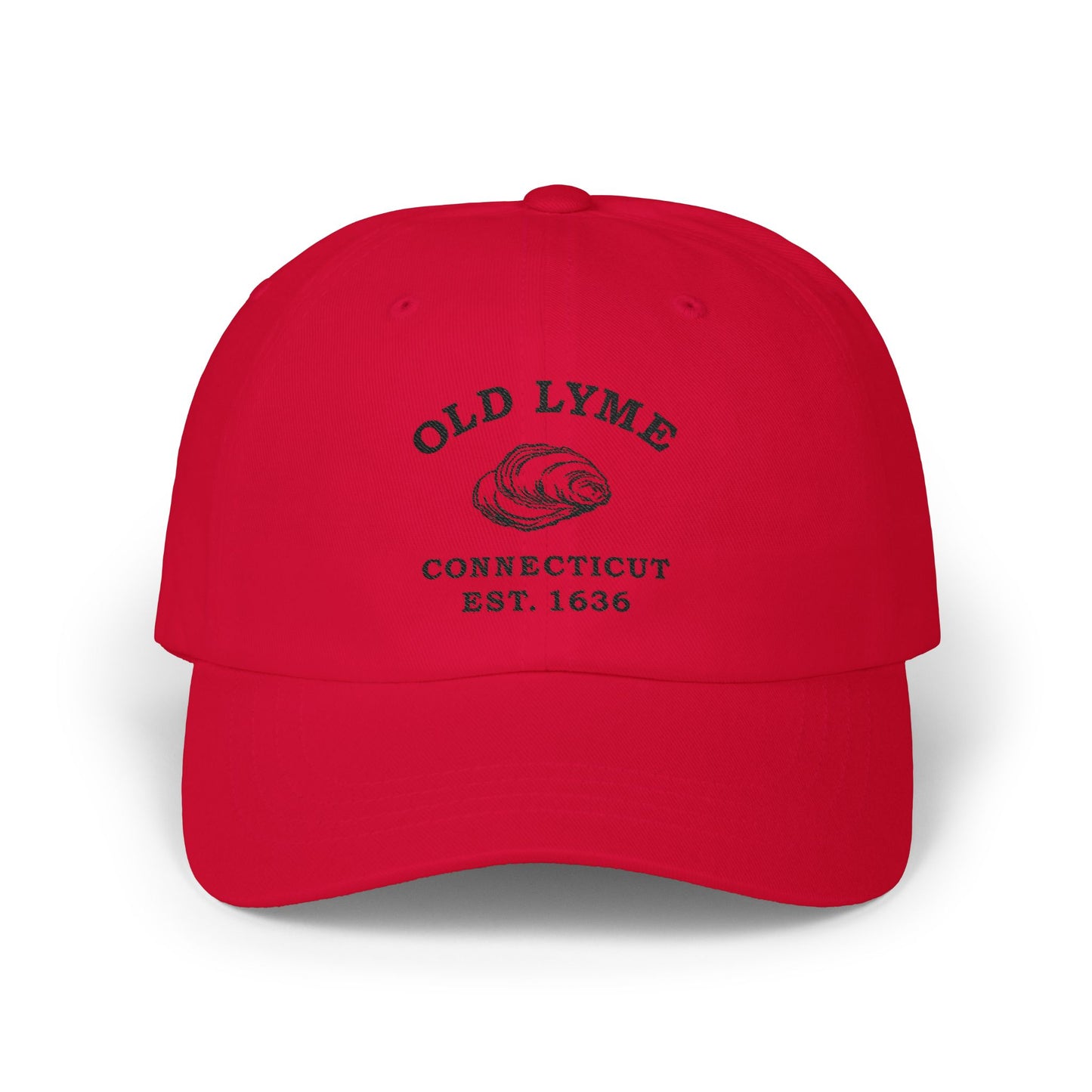
Our Old Lyme retro logo carries Connecticut's clam shell over "Connecticut · Est. 1636," tying the town to the colonial founding of Connecticut — the shared emblem of every Merlin Classics Connecticut place. Printed black-and-white with the worn look of an old oyster-crate label, the shell reads as the shoreline in shorthand: tidal, coastal, salt-aired. What makes this one Old Lyme is the story behind it — the boarding house, the painted doors, and the birthplace of American Impressionism.
Why People Visit Old Lyme Connecticut
- Tour the Florence Griswold Museum, artists colony home with galleries and riverside grounds.
- See the painted panels — 41 works painted directly on the doors and walls of the boarding house.
- Visit Lyme Art Association, historic galleries showcasing regional painters.
- Relax at Sound View Beach, sandy shoreline with gentle surf and boardwalk blocks.
- Walk the Town Green, churches and historic homes along tree lined Lyme Street.
- Enjoy White Sand Beach, neighborhood cove with seasonal access and calm waters.
- Paddle or picnic at Rogers Lake, the freshwater anchor of the town's northern half.
