Every design is set in hand-lettered vintage type for that old-school, crate-label look. One sample color shown — black and white logo options on every piece. Recently in the national press. Enjoy!
-
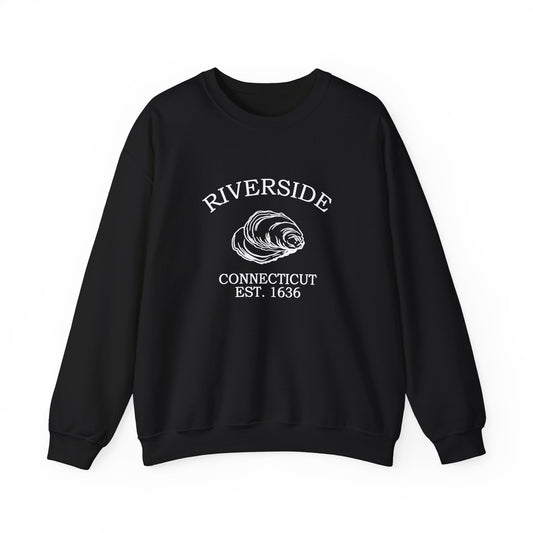
Riverside Connecticut Vintage Retro Premium Crewneck Sweatshirt - Black Logo
Regular price $48.00 USDRegular price -
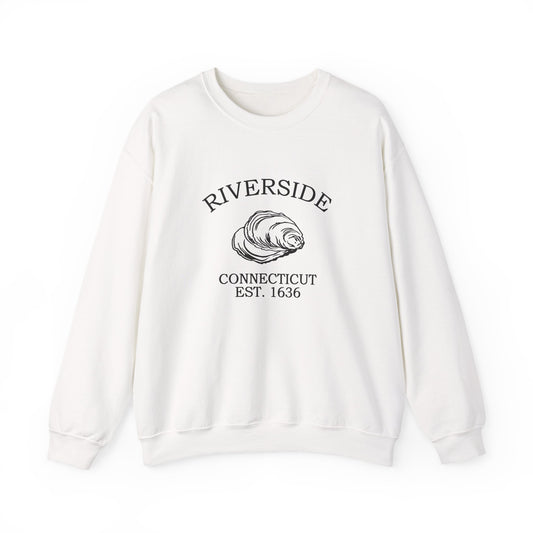
Riverside Connecticut Vintage Retro Premium Crewneck Sweatshirt - White Logo
Regular price $48.00 USDRegular price -
Riverside Connecticut Vintage Retro Embroidered Cotton Cap - Black Logo
Regular price $32.00 USDRegular price -
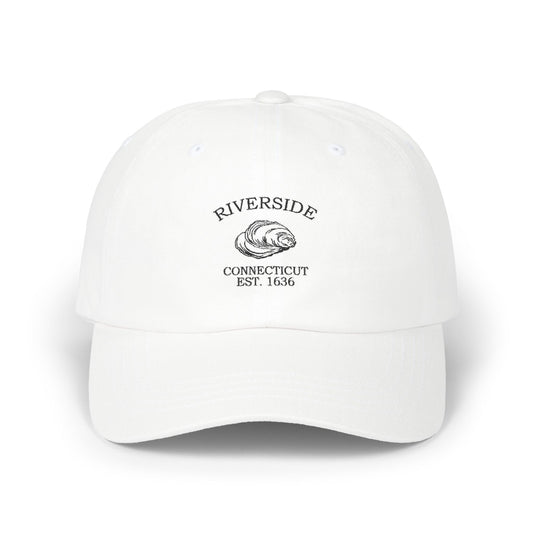
Riverside Connecticut Vintage Retro Embroidered Cotton Cap - White Logo
Regular price $32.00 USDRegular price -
Riverside Connecticut Vintage Retro Womens Fitted Ringspun Cotton Tee - Black Logo
Regular price $28.00 USDRegular price -
-
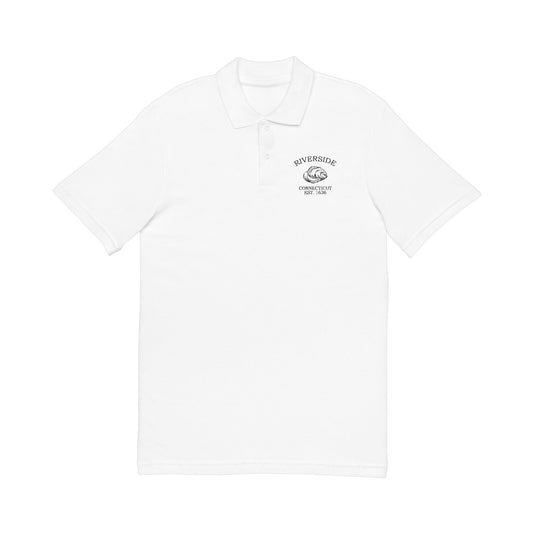
Riverside Connecticut Vintage Retro Unisex Embroidered Cotton Polo - Black Logo
Regular price $48.00 USDRegular price -
Riverside Connecticut Vintage Retro Unisex Heavy Cotton Hoodie - Black Logo
Regular price $56.00 USDRegular price -
Riverside Connecticut Vintage Retro Unisex Heavy Cotton Hoodie - White Logo
Regular price $56.00 USDRegular price -
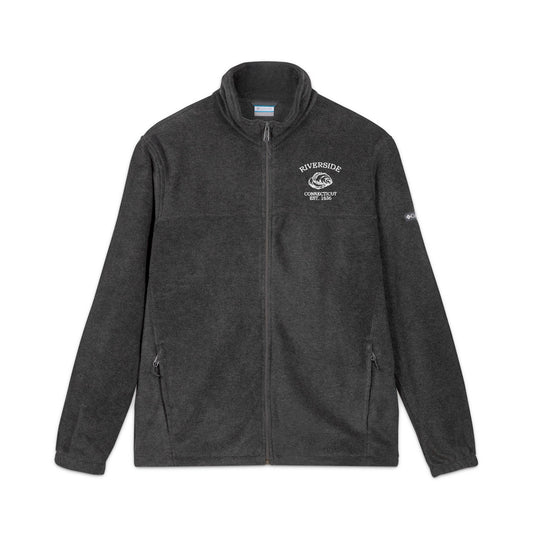
Riverside Connecticut Vintage Retro Unisex Embroidered Fleece Jacket - White Logo
Regular price $98.00 USDRegular price -
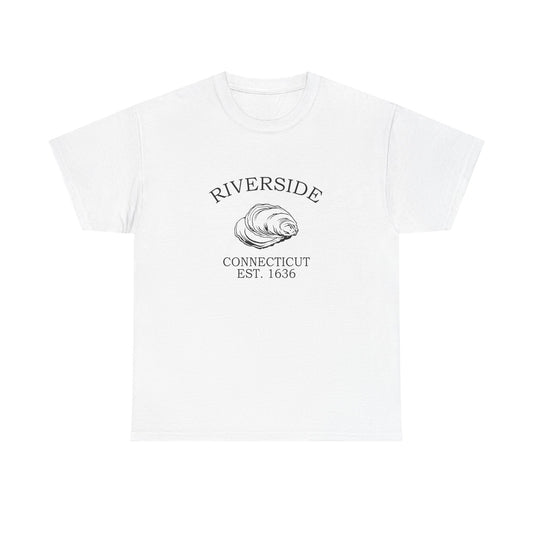
Riverside Connecticut Vintage Retro Unisex Heavy Cotton Tee - Black Logo
Regular price $22.00 USDRegular price -
Riverside Connecticut Vintage Retro Unisex Heavy Cotton Tee - White Logo
Regular price $22.00 USDRegular price -
Riverside Connecticut Vintage Retro Vinyl Sticker - Black Logo
Regular price From $6.00 USDRegular price -
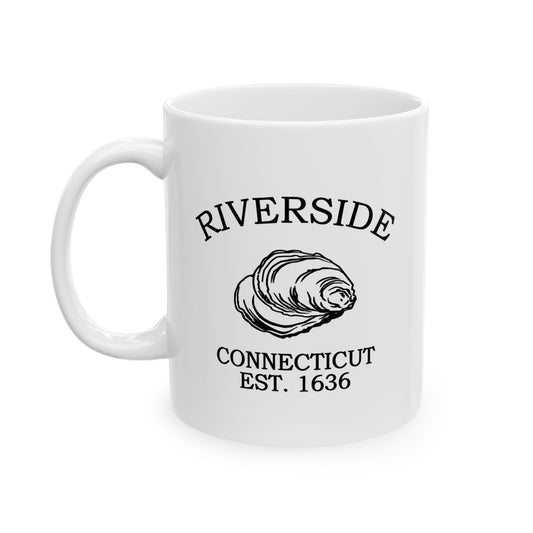
Riverside Connecticut Vintage Retro Ceramic Mug - Black Logo
Regular price From $16.00 USDRegular price -
Riverside Connecticut Vintage Retro Cotton Canvas Tote Bag - Black Logo
Regular price $25.00 USDRegular price -
Riverside Connecticut Vintage Retro Cotton Canvas Tote Bag - White Logo
Regular price $25.00 USDRegular price -
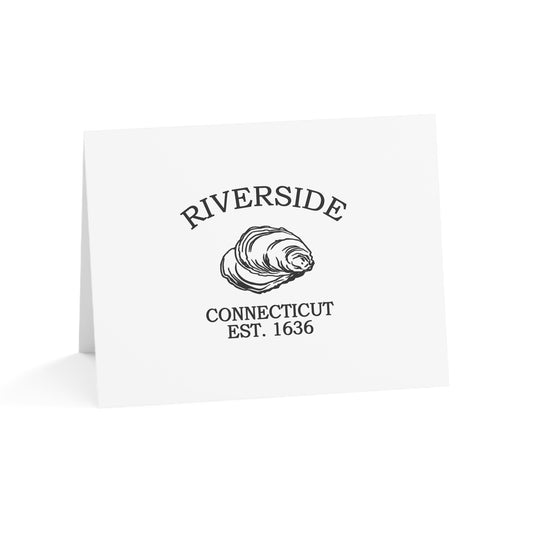
Riverside Connecticut Vintage Retro Thank You Card Set - Black Logo
Regular price From $25.00 USDRegular price -
Riverside Connecticut Vintage Retro Cotton Jersey Baby Bodysuit - Black Logo
Regular price $26.00 USDRegular price -
Riverside Connecticut Vintage Retro Unisex Cotton Jersey Tank Top - Black Logo
Regular price $28.00 USDRegular price -
Riverside Connecticut Vintage Retro Unisex Cotton Jersey Tank Top - White Logo
Regular price $28.00 USDRegular price -
Riverside Connecticut Vintage Retro Unisex Heavy Crewneck Sweatshirt - White Logo
Regular price $44.00 USDRegular price -
Riverside Connecticut Vintage Retro Unisex Heavy Crewneck Sweatshirt - Black Logo
Regular price $44.00 USDRegular price -
Riverside Connecticut Vintage Retro Back Printed Art Series Cotton Tee - Black Logo
Regular price $32.00 USDRegular price -
Riverside Connecticut Vintage Retro Giclée Print Art Series Poster
Regular price From $38.00 USDRegular price














Riverside Connecticut — Retro Vintage History
What’s with Mianus Neck? Before it was Riverside, this corner of Greenwich was called Mianus Neck — a quiet 17th-century farming-and-oystering village on the lands lying by the Mianus River. The river, and the village, took their name from Mayn Myannos, a Munsee sachem; for generations the river was the main route in and out of eastern Greenwich. Then in 1869 two developers, the New York real-estate broker Jeremiah Atwater and the attorney Luke Vincent Lockwood, bought up the Neck, built a railroad station, and renamed the place “Riverside” — a prettier, sellable name to lure summer New Yorkers up the new line. The bet paid off. The oystermen’s neck became one of Fairfield County’s most refined railroad suburbs, and the old name survives mostly in the river that still borders it.
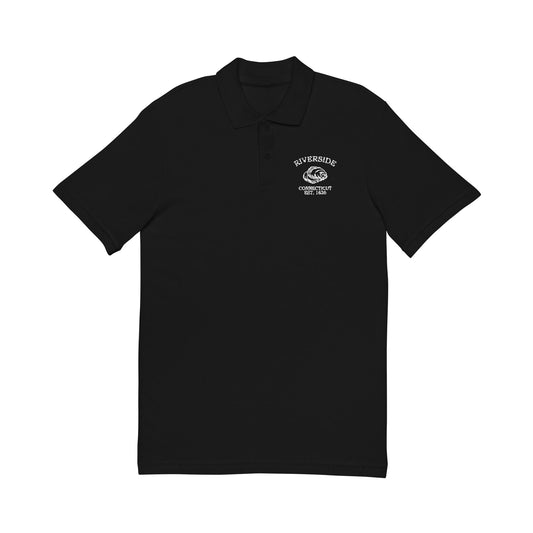
Wear the HistoryLook closely at the Riverside crest and you’ll find an oyster, and that is no accident. Mianus Neck lived on the water — fishing and oystering the Mianus River and the shallows of Long Island Sound, where Greenwich and neighboring Cos Cob were part of the great Sound oyster trade that fed New York for a century. The oyster on the logo, over “Connecticut · Est. 1636,” is the shared emblem of every Merlin Classics Connecticut town — a nod to the Sound’s shellfish heritage and the colony’s founding era. On Riverside it points straight back to the Neck, when the day’s living came up out of the river on the half shell.
What Atwater and Lockwood built still shapes the place. They laid out winding shoreline lanes, donated land for St. Paul’s Episcopal Church in 1876, and tied Riverside to Manhattan with the New York, New Haven & Hartford line — an hour’s ride that turned a farming neck into a commuter’s Eden. Through the 1880s and into the new century, Victorian cottages and Shingle-style houses rose on leafy lots along Riverside Avenue, the old “Potato Road.” By the 1930s the neighborhood held some of the highest real-estate values in the region.

Riverside also keeps a genuine rarity. Carrying Riverside Avenue over the railroad tracks is the Riverside Avenue Bridge — a 19th-century truss built almost entirely of structural cast iron, the only surviving cast-iron bridge in Connecticut and one of very few left in the country. It began life in 1871 as part of a six-span railroad bridge over the Housatonic in Stratford, fabricated by the Keystone Bridge Company; when that bridge was replaced, a span was salvaged and re-erected here over the tracks in 1894. Elegant, ornate, and improbably durable, it has been on the National Register of Historic Places since 1977.
The water that fed the oystermen now carries sailboats. In May 1888 a retired Civil War captain named George I. Tyson built a clubhouse on his own waterfront on the eastern shore of Cos Cob Harbor, at the mouth of the Mianus, and founded the Riverside Yacht Club — the second-oldest yacht club in Connecticut and among the oldest in the United States. Its Victorian clubhouse went up the next year, and the club has been racing on Long Island Sound ever since. Sailcloth, brass, and harbor-grey: this is Riverside’s prevailing weather.
Today Riverside is barely two square miles of winding lanes and waterfront between Cos Cob and Old Greenwich, split by Interstate 95 and the Boston Post Road and threaded by the Metro-North line that built it. The c.1760 Samuel Ferris House, the Ferris family’s old Cape farmhouse, still stands near the Post Road. It is a quiet, patrician corner of the Gold Coast — sailboats off the harbor, the old cast-iron bridge, and a farmhouse-to-mansion arc along the Mianus River.
Our Riverside logo carries the Connecticut oyster over “Connecticut · Est. 1636,” the founding era of the colony — the shared emblem of every Merlin Classics Connecticut town. Printed in clean retro black-and-white that reads like an old oyster-crate label, the oyster stands for the whole Long Island Sound shellfish coast; what makes this one Riverside is everything behind it — Mianus Neck and the Mianus River, the cast-iron bridge, the 1888 yacht club, and the leafy Greenwich shore.
Today Riverside is a leafy, watery corner of Greenwich where an oystering neck became a genteel railroad suburb. Our Riverside designs gather that identity — the oyster emblem, the Mianus River, the quiet Sound-side shore — into wearable form. Riverside — where the Mianus River meets the Sound, and old Greenwich keeps its quiet.
Wear the History
Riverside, Connecticut — Travel Guide
Visiting Riverside Today
Riverside is a leafy waterfront neighborhood of Greenwich on Long Island Sound, between Cos Cob and Old Greenwich. It pairs quiet residential lanes and small-boat harbor with genuine heritage — a rare cast-iron bridge, an 1888 yacht club, and a colonial farmhouse — all an hour by train from Manhattan.
The Shore, the River & the Old Bridge
For visitors looking for things to do in Riverside, Connecticut:
- See the cast-iron Riverside Avenue Bridge — Connecticut’s only surviving one — over the railroad tracks.
- Walk or paddle along the Mianus River where it meets Cos Cob Harbor.
- Watch the sailboats off the Riverside Yacht Club on Long Island Sound.
- Pass the c.1760 Samuel Ferris House near the Boston Post Road.
- Stroll the pond and lawns of Binney Park on the Old Greenwich edge.
- Take in the harbor views at nearby Cos Cob Park.
- Drive south to Greenwich Point Park for Sound beaches and trails.
- Catch the Metro-North at the Riverside station — about an hour from Grand Central.
Why People Visit Riverside
Riverside rewards visitors who like the quiet, watery side of the Gold Coast: sailboats on the Mianus, shaded streets, and a handful of real landmarks close together. Add the Sound-side parks and the easy ride to the city, and the genteel calm makes its own case.
Wear the History
Kindred Cities
We’re glad to welcome visitors from Windsor, England and Annecy, France (bienvenue) — like-minded towns where the water makes the place.
Riverside lives up to its name on the banks of the Mianus where it meets Long Island Sound, and Windsor and Annecy share the gift of a lovely waterside. Windsor stands in genteel order along the Thames beneath its royal castle; Annecy threads turquoise canals through an Alpine old town, the jewel of its lake; Riverside keeps its yacht club, its leafy lanes and its small-boat harbour in one of Greenwich’s prettiest corners. Three places where life bends gracefully toward the water.
Riverside favours anyone who likes the quiet, watery side of Fairfield County: sailboats on the Mianus, shaded streets a short hop from the city, and the genteel calm of a Greenwich neighbourhood with its feet in Long Island Sound. Come and visit us soon.
When you plan the trip, the Greenwich Chamber of Commerce and the Connecticut Office of Tourism are the place to start.
Wear the History

For deeper reading on the Riverside history described here — the 17th-century oystering village of Mianus Neck on the lands by the Mianus River (named for the Munsee sachem Mayn Myannos), the c.1760 Samuel Ferris House, the 1869 renaming of the Neck and the railroad-suburb development by Jeremiah Atwater and Luke Vincent Lockwood, St. Paul’s Episcopal Church, the cast-iron Riverside Avenue Bridge, and the 1888 Riverside Yacht Club — it may be useful to consult (1) the Greenwich Historical Society, (2) the Greenwich Library and its local history and oral-history collections, (3) the Connecticut State Library and State Archives, (4) the Town of Greenwich clerk and land records, and (5) the Riverside Association. For travel and visitor information, it may be useful to contact (1) the Greenwich Chamber of Commerce, (2) the Connecticut Office of Tourism, (3) the Greenwich parks and recreation department, (4) the Connecticut state-parks office, and (5) Metro-North for the Riverside station on the New Haven Line.
- Choosing a selection results in a full page refresh.
- Opens in a new window.