


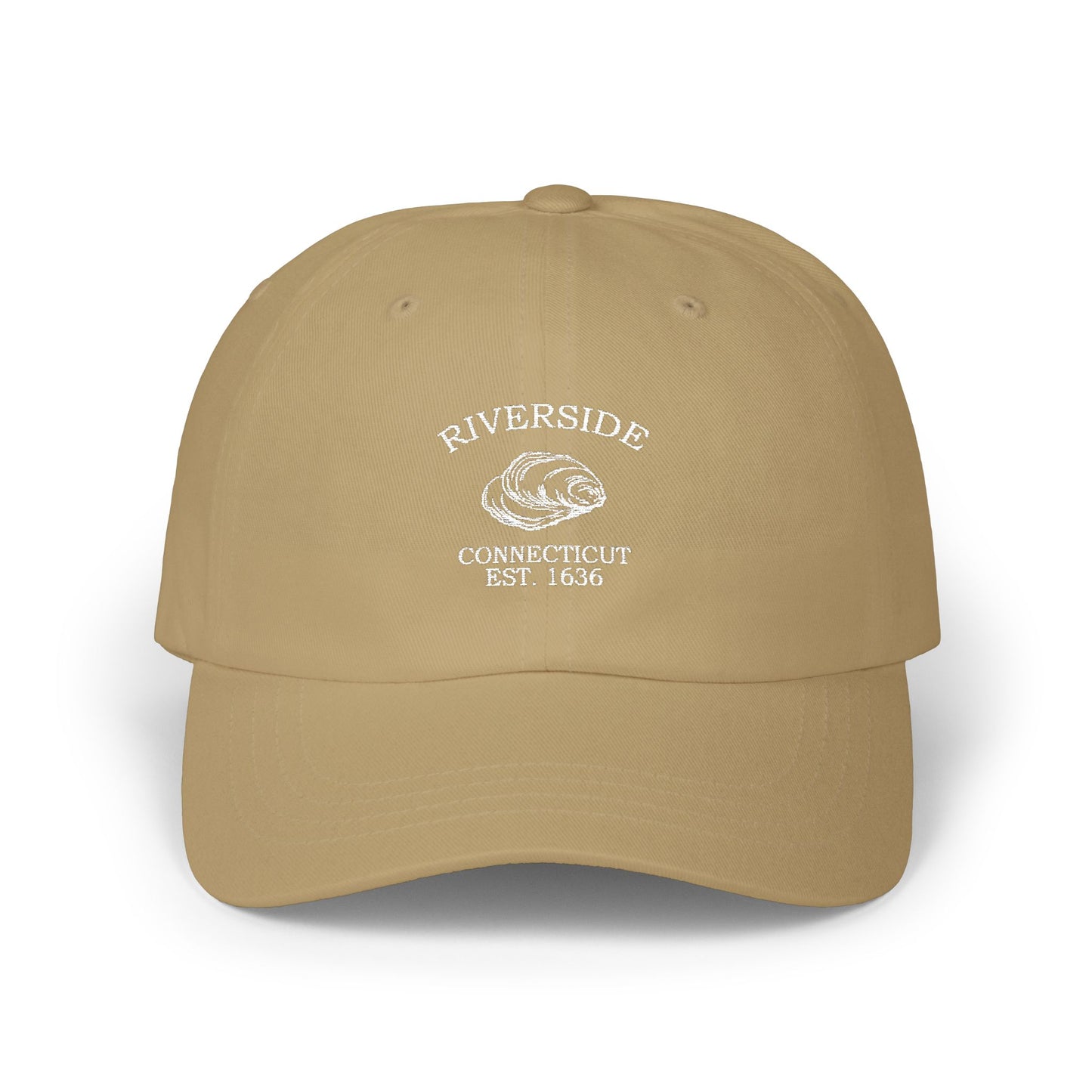
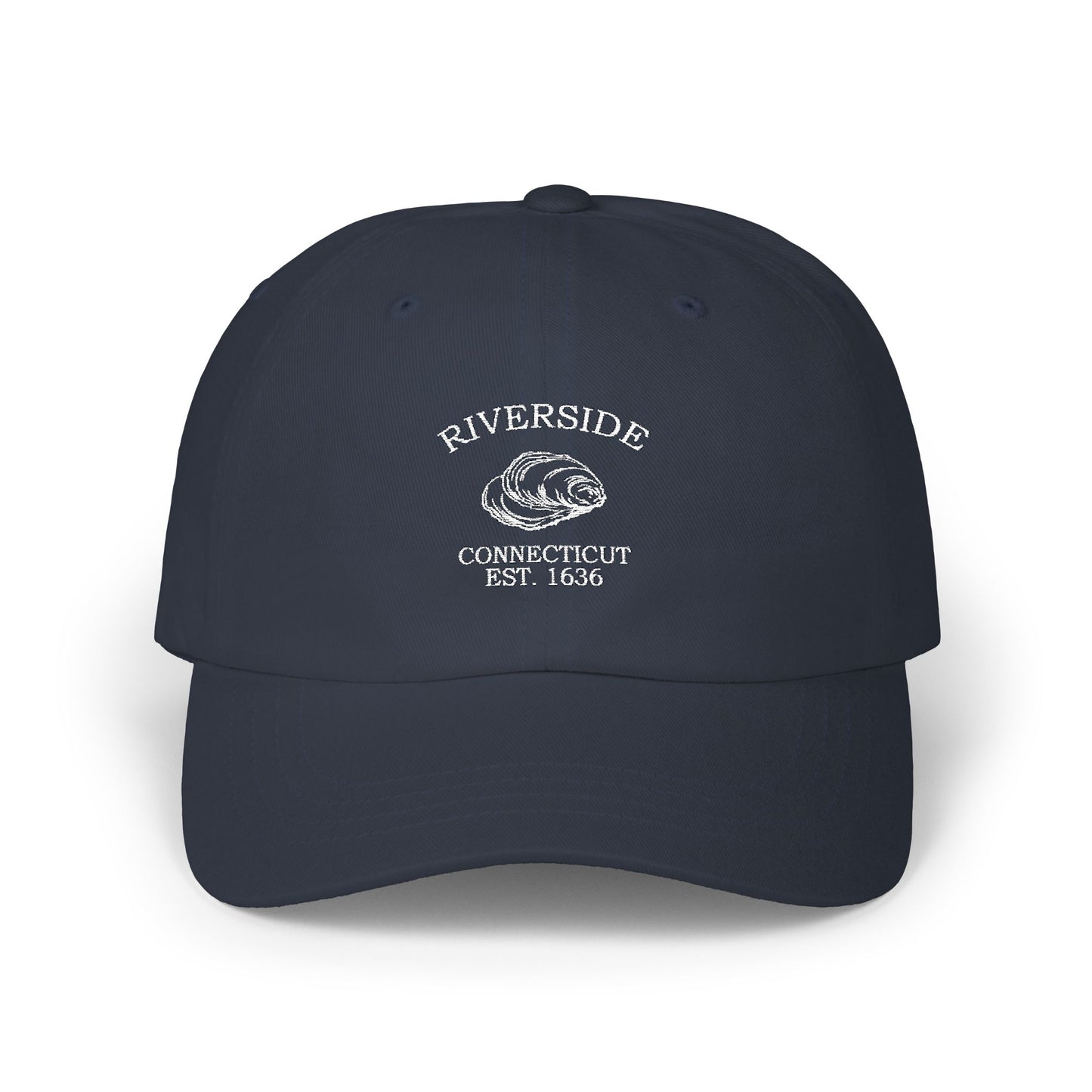
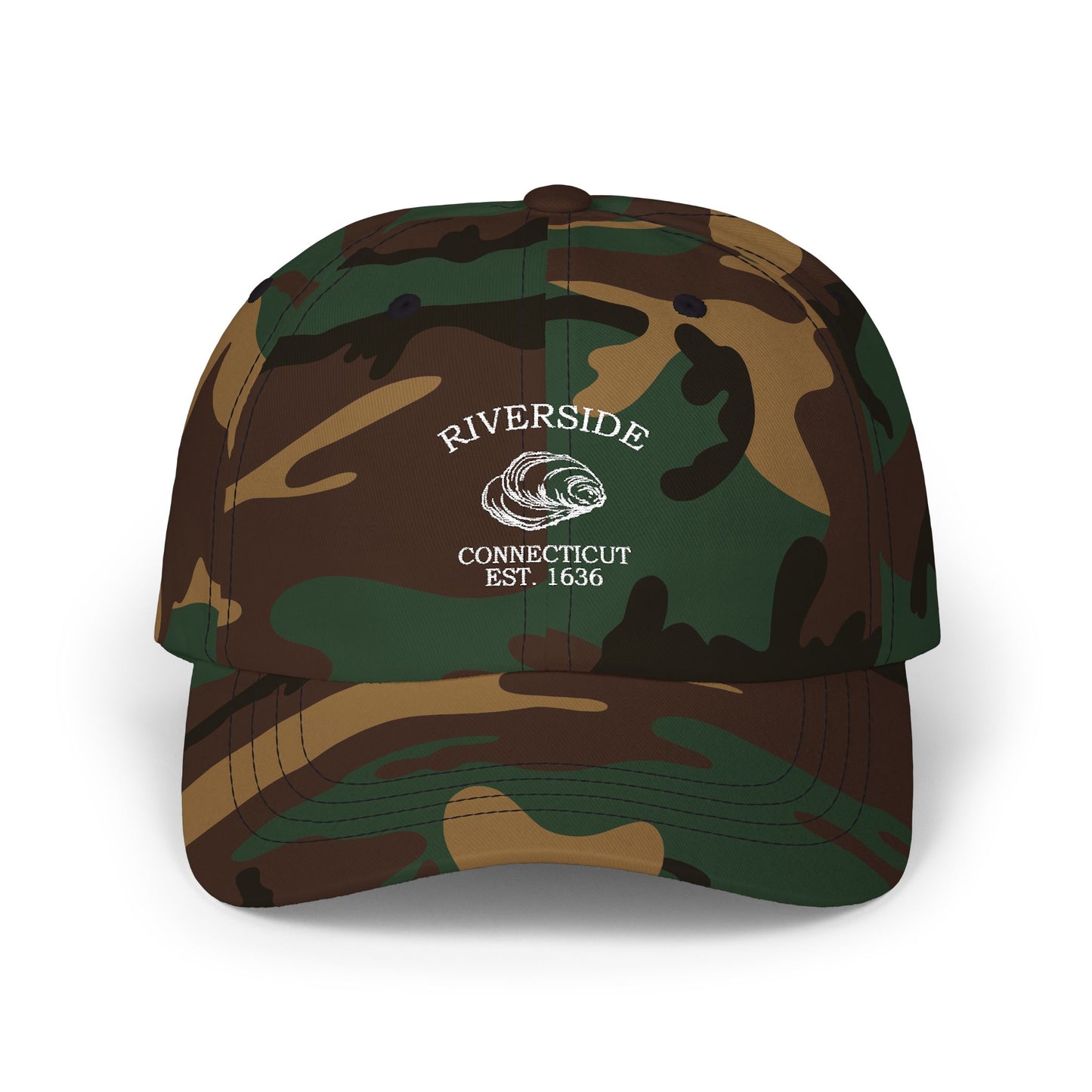
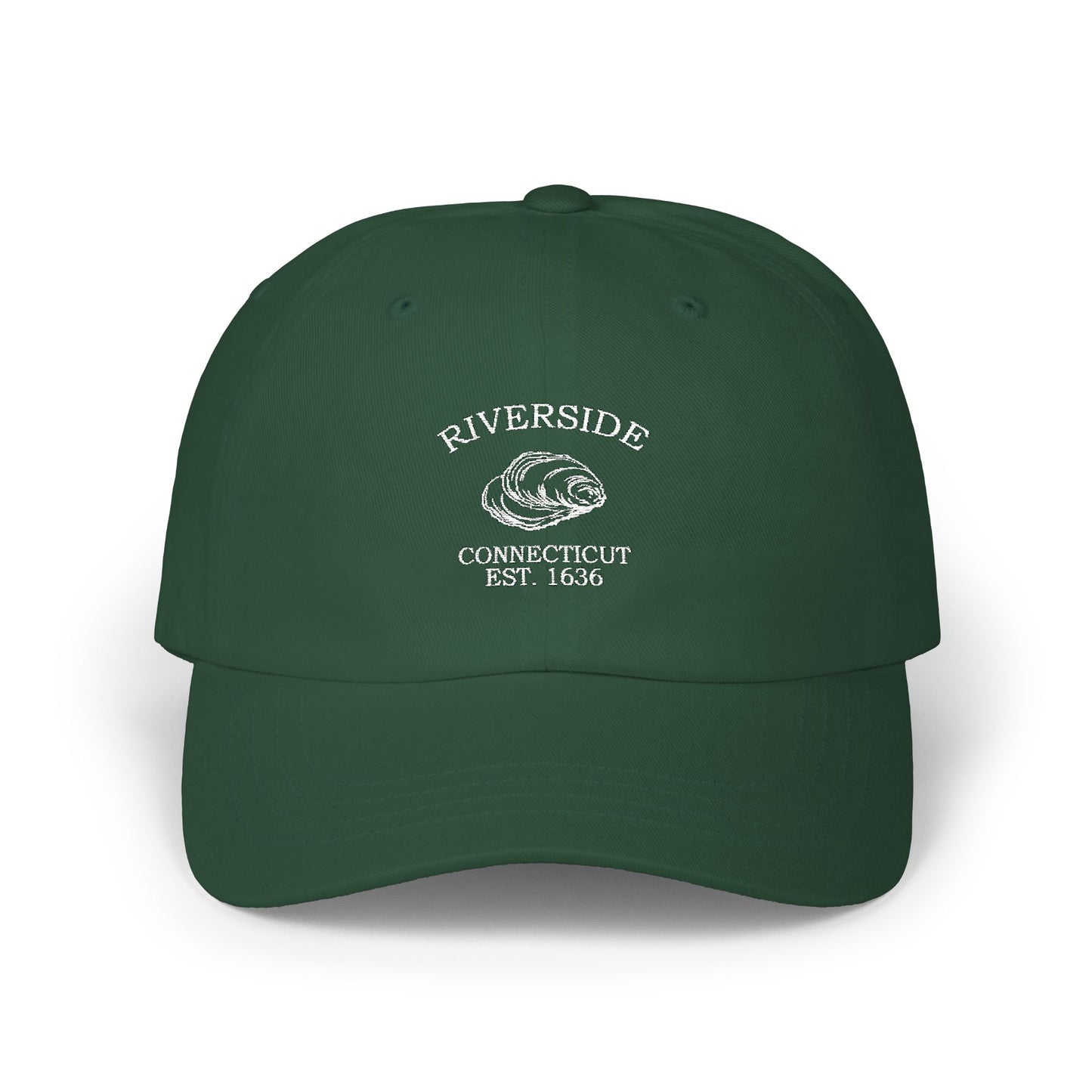
What’s with Mianus Neck? Before it was Riverside, this corner of Greenwich was called Mianus Neck — a quiet 17th-century farming-and-oystering village on the lands lying by the Mianus River. The river, and the village, took their name from Mayn Myannos, a Munsee sachem; for generations the river was the main route in and out of eastern Greenwich. Then in 1869 two developers, the New York real-estate broker Jeremiah Atwater and the attorney Luke Vincent Lockwood, bought up the Neck, built a railroad station, and renamed the place “Riverside” — a prettier, sellable name to lure summer New Yorkers up the new line. The bet paid off. The oystermen’s neck became one of Fairfield County’s most refined railroad suburbs, and the old name survives mostly in the river that still borders it.
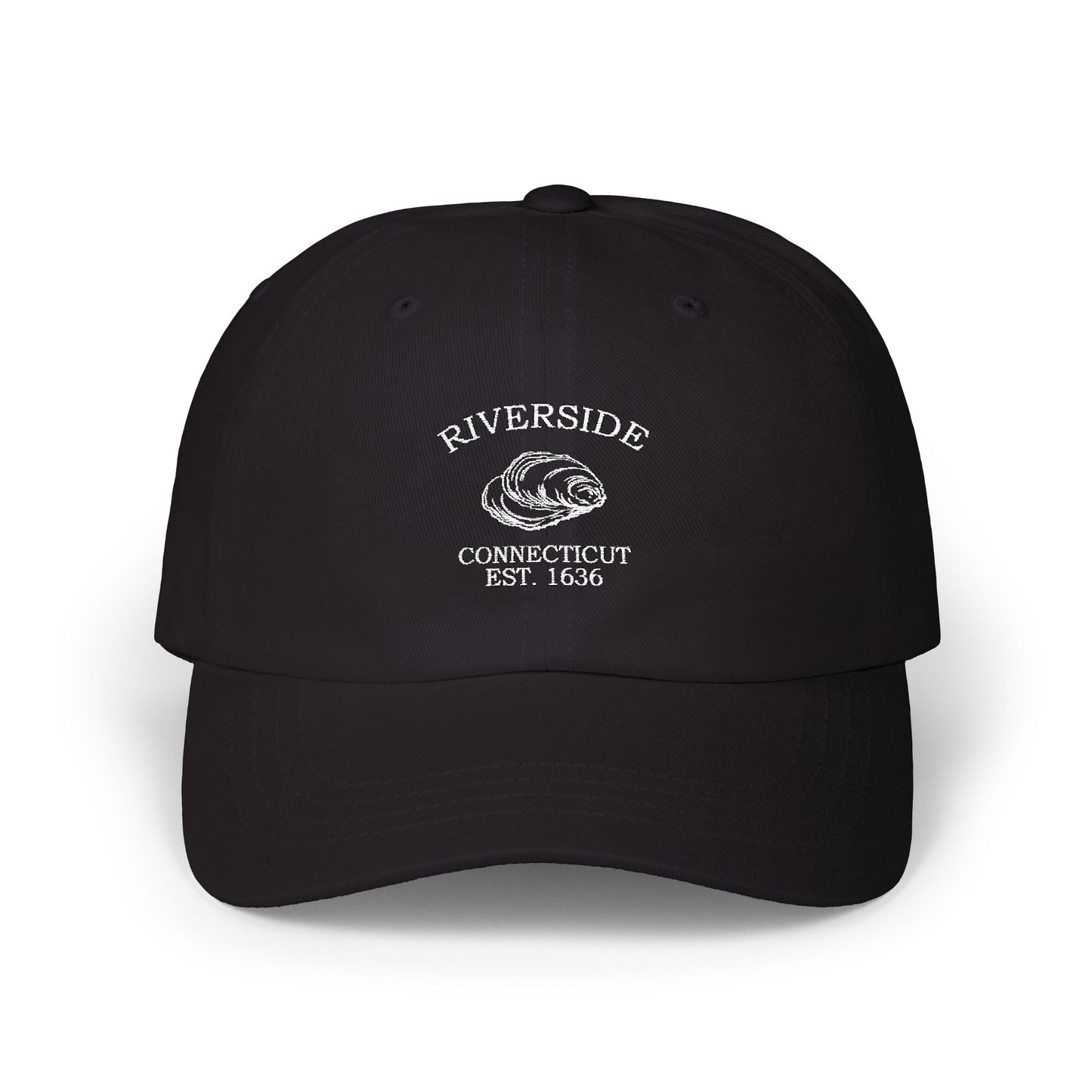
Look closely at the Riverside crest and you’ll find an oyster, and that is no accident. Mianus Neck lived on the water — fishing and oystering the Mianus River and the shallows of Long Island Sound, where Greenwich and neighboring Cos Cob were part of the great Sound oyster trade that fed New York for a century. The oyster on the logo, over “Connecticut · Est. 1636,” is the shared emblem of every Merlin Classics Connecticut town — a nod to the Sound’s shellfish heritage and the colony’s founding era. On Riverside it points straight back to the Neck, when the day’s living came up out of the river on the half shell.
Why People Visit Riverside
Riverside rewards visitors who like the quiet, watery side of the Gold Coast: sailboats on the Mianus, shaded streets, and a handful of real landmarks close together. Add the Sound-side parks and the easy ride to the city, and the genteel calm makes its own case.
