


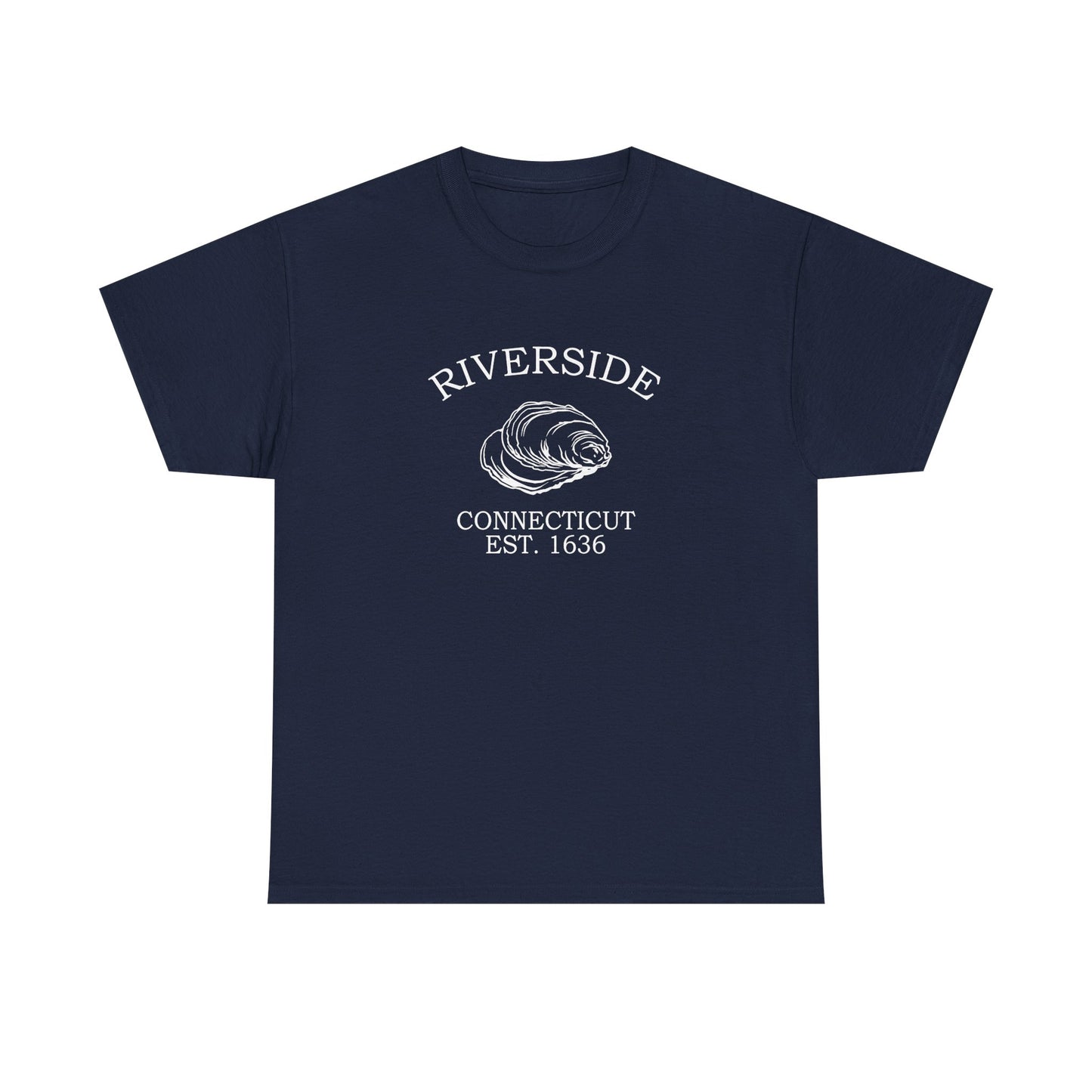
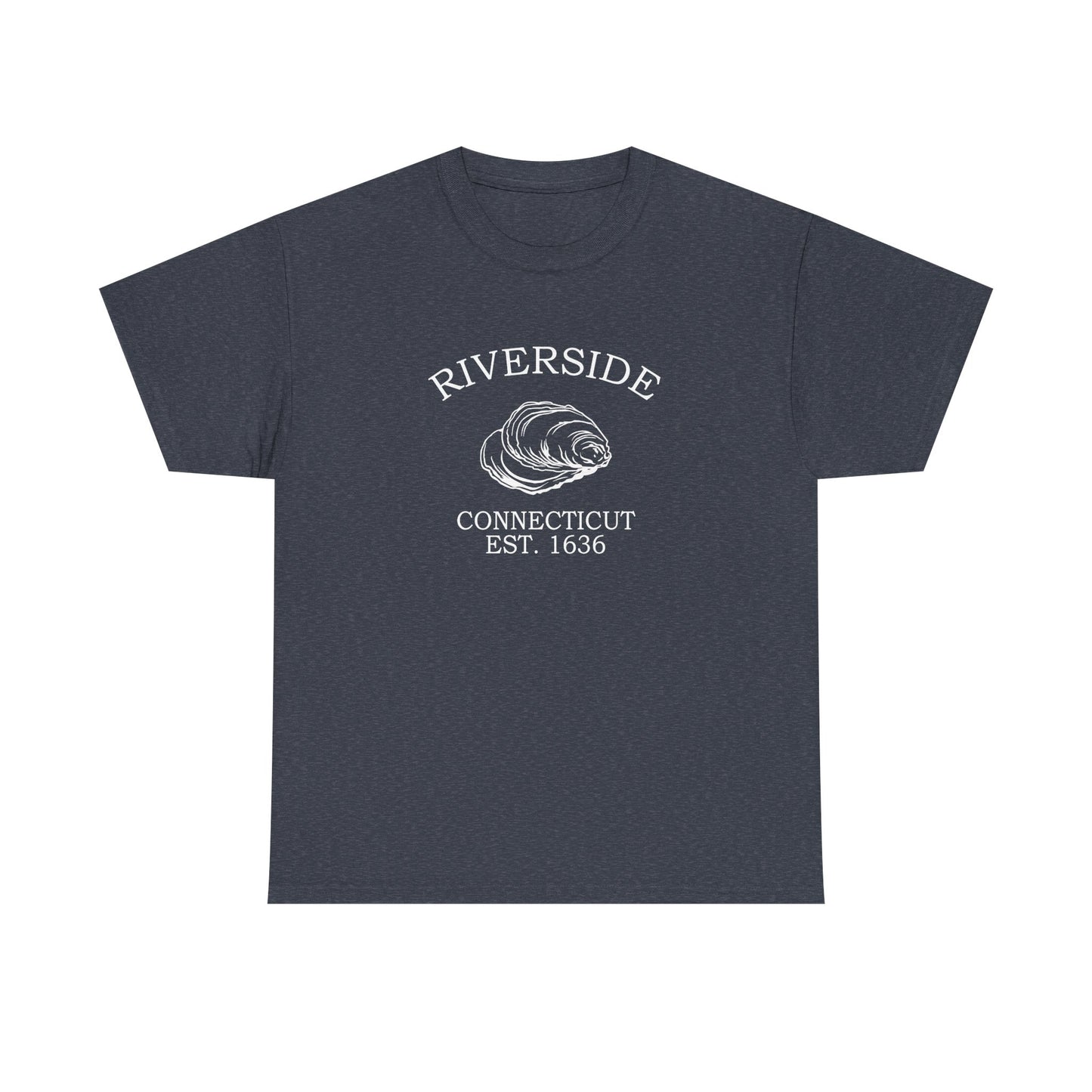
In the nineteenth and early twentieth centuries, Riverside grew as steamboats and railroads connected it to New York and New England. Summer visitors built cottages along the shore, and local commerce thrived on maritime trade. By mid-century, suburban development expanded as highways and commuter lines linked Riverside to the broader Greenwich area. Schools, churches, and small businesses shaped its community while preserving historic homes and shoreline charm. Riverside’s timeline reflects adaptation: from colonial farms to a suburban town that balanced tradition, heritage, and modern growth.
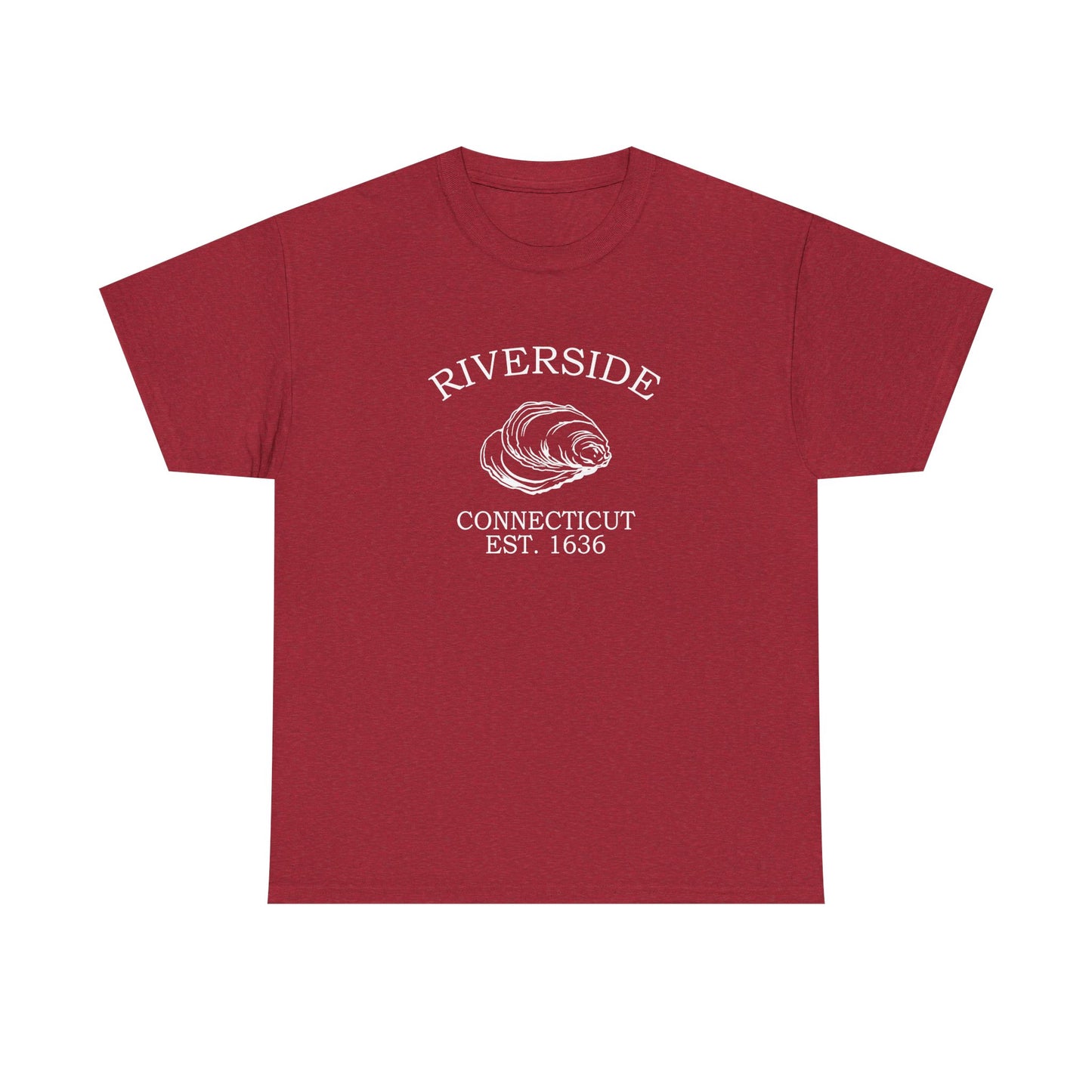
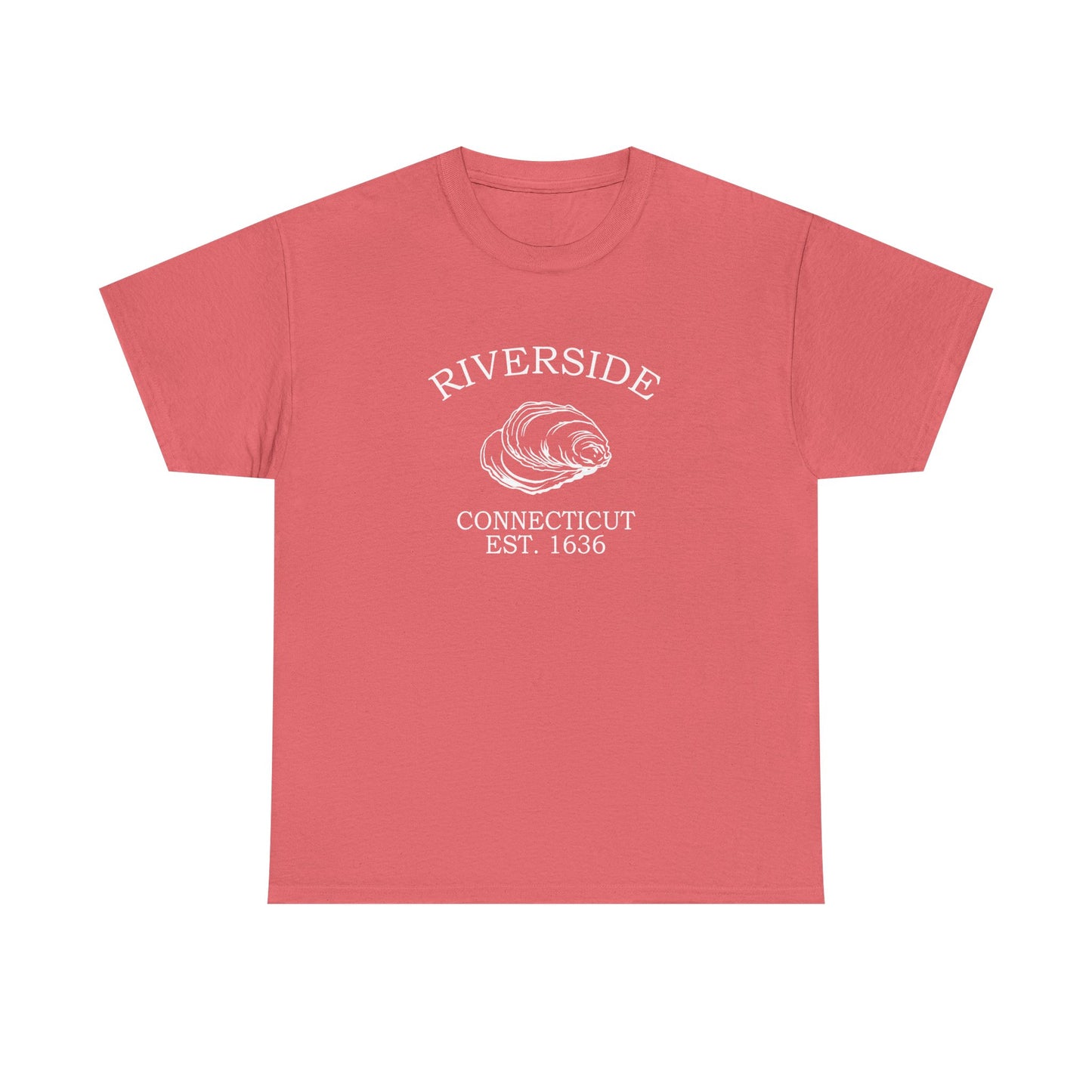
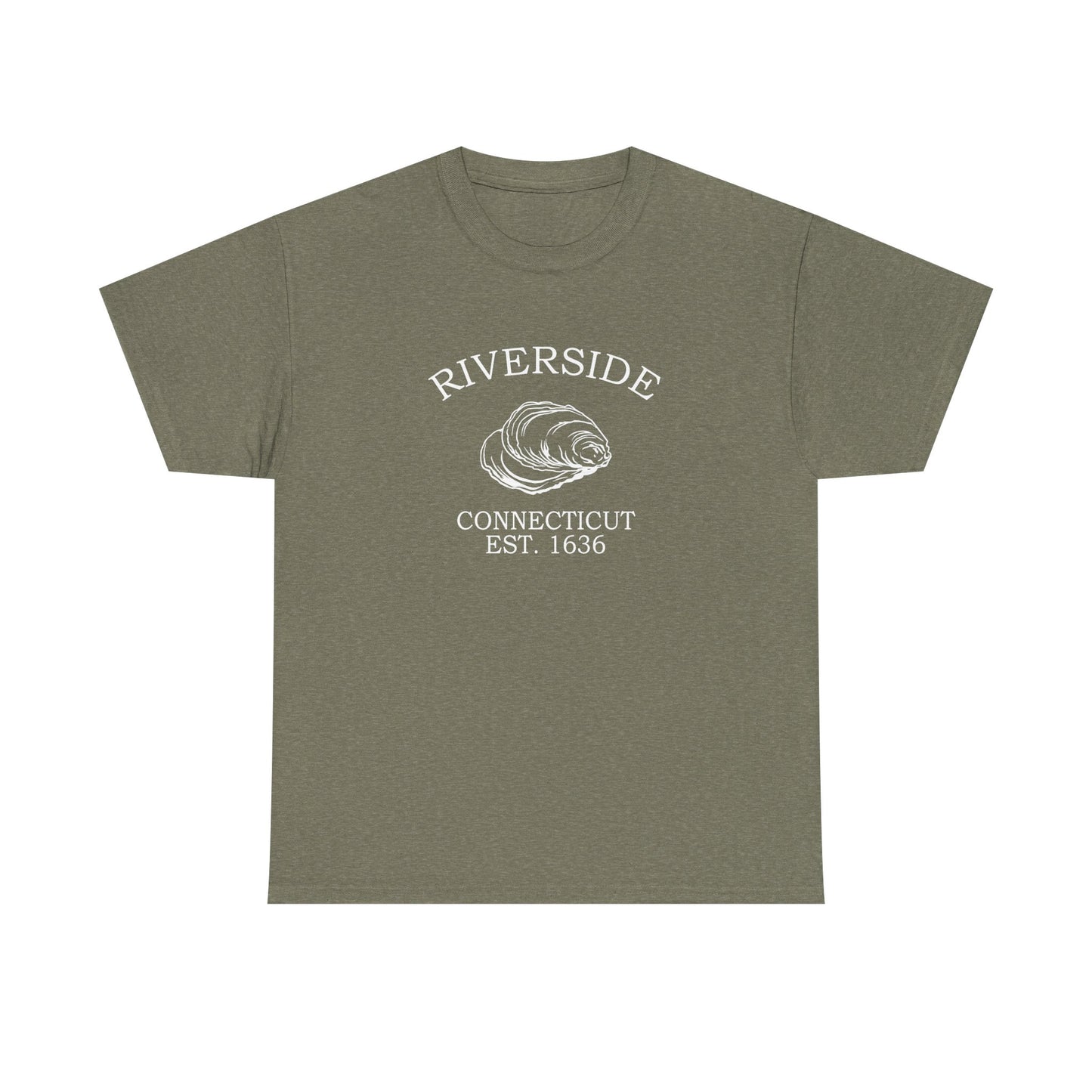
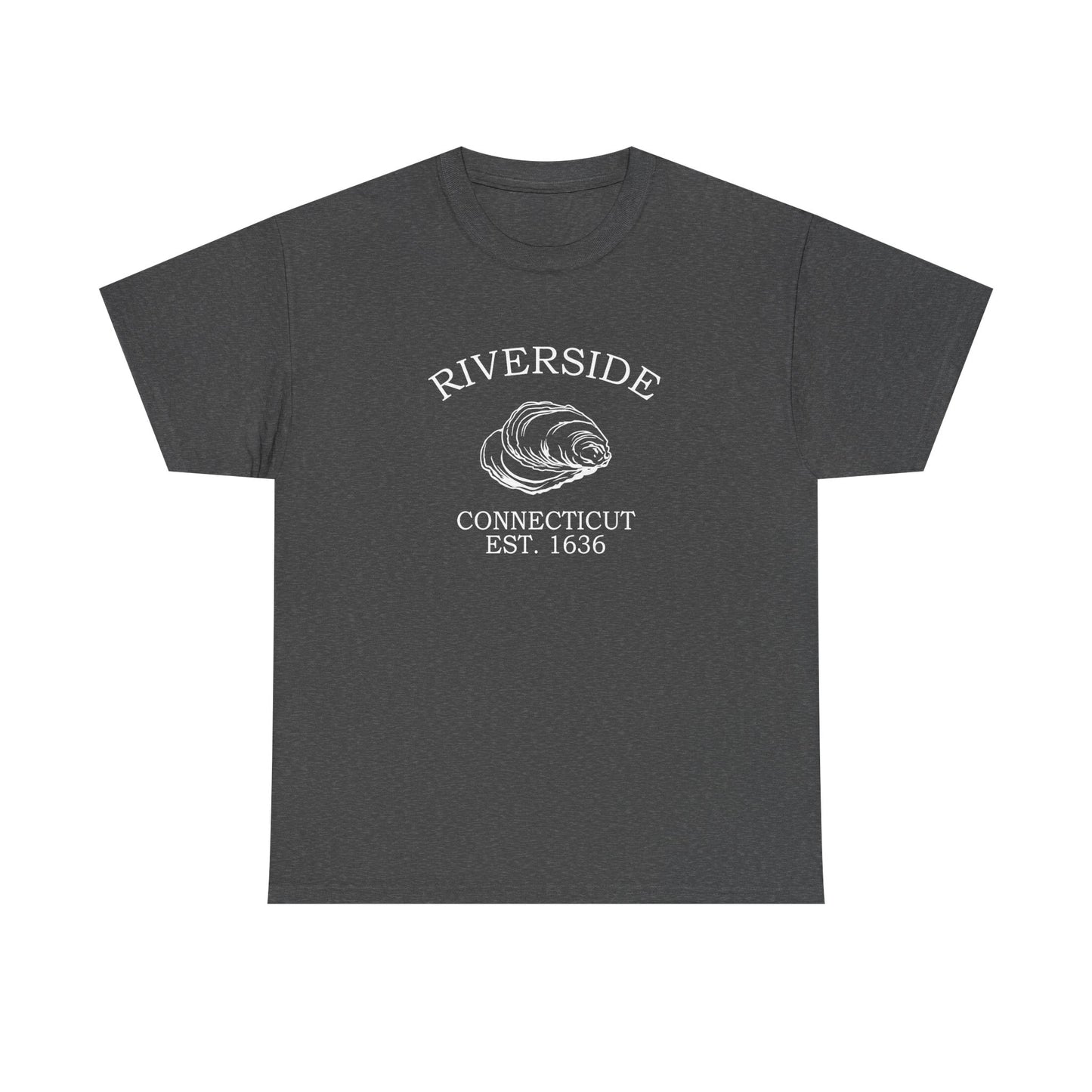
Our Riverside retro logo highlights a clam shell motif, tying the community to its maritime roots. The shell symbolizes abundance from Long Island Sound, while “1640” recalls early colonial settlement in the Greenwich area. Its bold black-and-white styling resembles oyster crate labels, boatyard stamps, and seaside signage. Retro in tone, the design bridges Riverside’s layered history: Indigenous heritage, colonial resilience, and mid-century suburban growth. On apparel, the motif feels authentic and enduring, reflecting the community’s shoreline pride and its connection to both river and sea.
Why People Visit Riverside Connecticut
- Hike Mianus River trails, bridges and woodlands with mellow elevation changes.
- Stroll Bruce Park, ponds, sculpture, and tree lined paths a short drive away.
- Visit Cos Cob Park, lawns and harbor overlooks beside the river mouth.
- Browse Riverside Commons, everyday shops along the Boston Post Road corridor.
- Walk around the station area, sidewalks linking avenues to neighborhood greens.
