
What Atwater and Lockwood built still shapes the place. They laid out winding shoreline lanes, donated land for St. Paul’s Episcopal Church in 1876, and tied Riverside to Manhattan with the New York, New Haven & Hartford line — an hour’s ride that turned a farming neck into a commuter’s Eden. Through the 1880s and into the new century, Victorian cottages and Shingle-style houses rose on leafy lots along Riverside Avenue, the old “Potato Road.” By the 1930s the neighborhood held some of the highest real-estate values in the region.
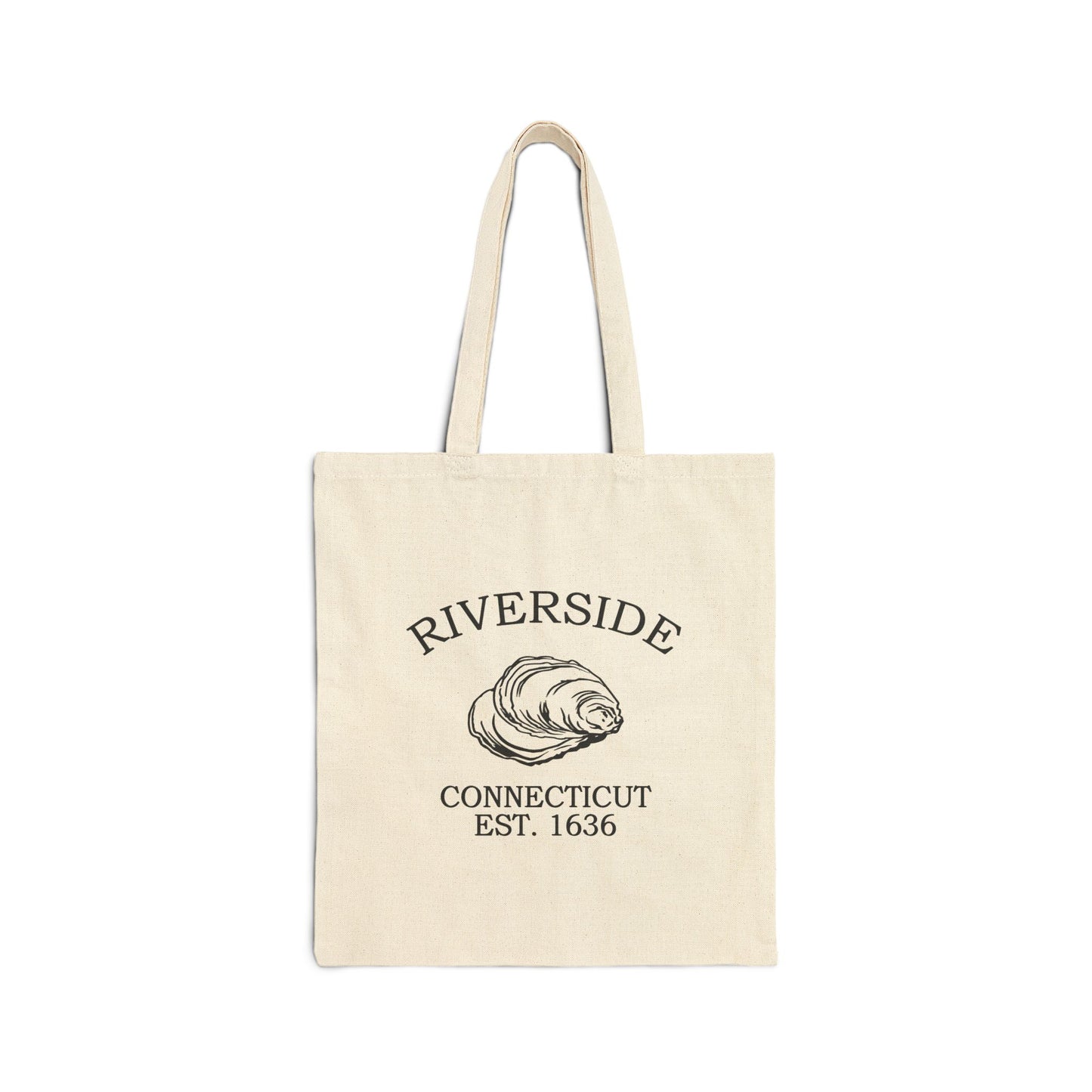
Our Riverside logo carries the Connecticut oyster over “Connecticut · Est. 1636,” the founding era of the colony — the shared emblem of every Merlin Classics Connecticut town. Printed in clean retro black-and-white that reads like an old oyster-crate label, the oyster stands for the whole Long Island Sound shellfish coast; what makes this one Riverside is everything behind it — Mianus Neck and the Mianus River, the cast-iron bridge, the 1888 yacht club, and the leafy Greenwich shore.
Why People Visit Riverside
Riverside rewards visitors who like the quiet, watery side of the Gold Coast: sailboats on the Mianus, shaded streets, and a handful of real landmarks close together. Add the Sound-side parks and the easy ride to the city, and the genteel calm makes its own case.
