-
Plano Texas Vintage Retro Vinyl Sticker - Black Logo
Regular price From $6.00 USDRegular price -
Plano Texas Vintage Retro Embroidered Cotton Cap - White Logo
Regular price $32.00 USDRegular price -
Plano Texas Vintage Retro Embroidered Cotton Cap - Black Logo
Regular price $32.00 USDRegular price -
Plano Texas Vintage Retro Unisex Heavy Cotton Tee - White Logo
Regular price $22.00 USDRegular price -
Plano Texas Vintage Retro Unisex Heavy Cotton Tee - Black Logo
Regular price $22.00 USDRegular price -
Plano Texas Vintage Retro Unisex Heavy Cotton Hoodie - White Logo
Regular price $48.00 USDRegular price -
Plano Texas Vintage Retro Unisex Heavy Cotton Hoodie - Black Logo
Regular price $48.00 USDRegular price -
-
Plano Texas Vintage Retro Womens Fitted Ringspun Cotton Tee - Black Logo
Regular price $28.00 USDRegular price -
Plano Texas Vintage Retro Back Printed Art Series Cotton Tee - Black Logo
Regular price $32.00 USDRegular price -
Plano Texas Vintage Retro Giclée Print Art Series Poster
Regular price From $38.00 USDRegular price -
Plano Texas Vintage Retro Unisex Embroidered Fleece Jacket - White Logo
Regular price $98.00 USDRegular price -
Plano Texas Vintage Retro Cotton Canvas Tote Bag - White Logo
Regular price $25.00 USDRegular price -
Plano Texas Vintage Retro Cotton Canvas Tote Bag - Black Logo
Regular price $25.00 USDRegular price -
Plano Texas Vintage Retro Ceramic Mug - Black Logo
Regular price From $16.00 USDRegular price -
Plano Texas Vintage Retro Thank You Card Set - Black Logo
Regular price From $25.00 USDRegular price -
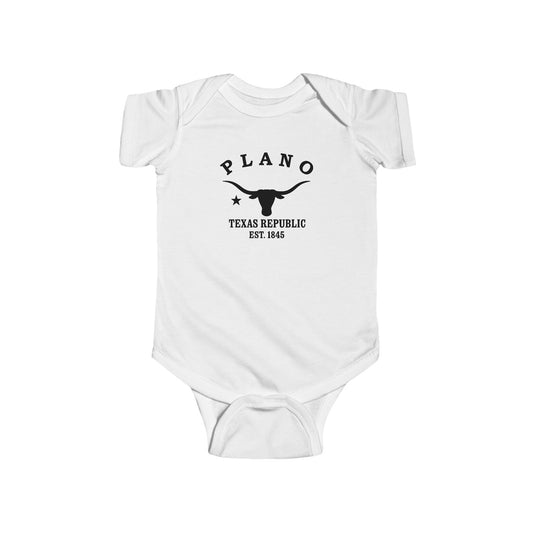
Plano Texas Vintage Retro Cotton Jersey Baby Bodysuit - Black Logo
Regular price $26.00 USDRegular price -
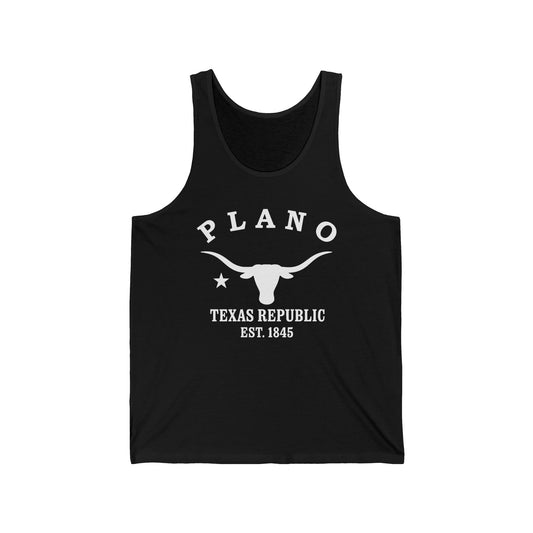
Plano Texas Vintage Retro Unisex Cotton Jersey Tank Top - Black Logo
Regular price $28.00 USDRegular price -
Plano Texas Vintage Retro Unisex Cotton Jersey Tank Top - White Logo
Regular price $28.00 USDRegular price -
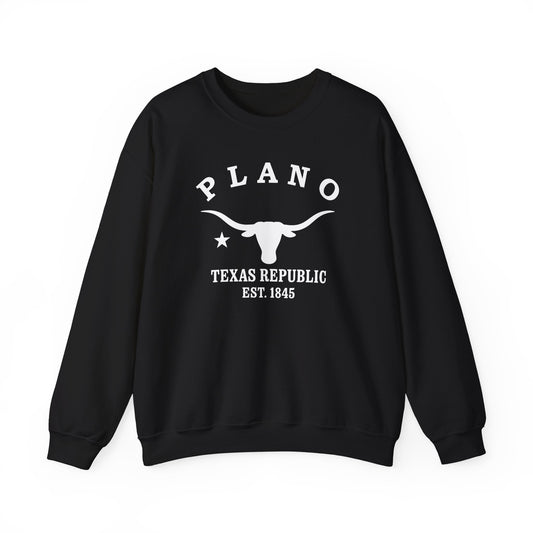
Plano Texas Vintage Retro Unisex Heavy Crewneck Sweatshirt - Black Logo
Regular price $38.00 USDRegular price -
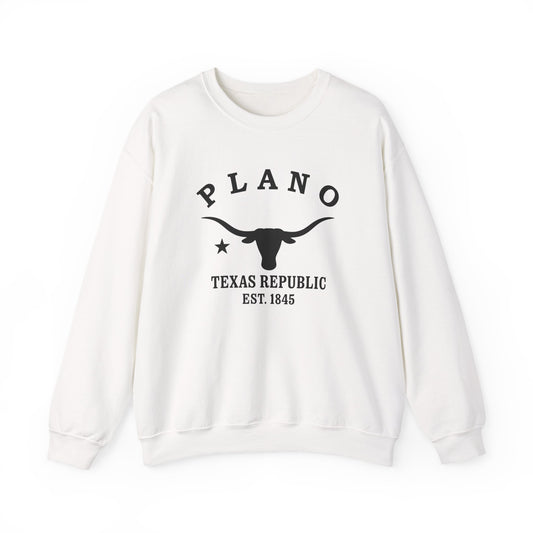
Plano Texas Vintage Retro Unisex Heavy Crewneck Sweatshirt - White Logo
Regular price $38.00 USDRegular price -
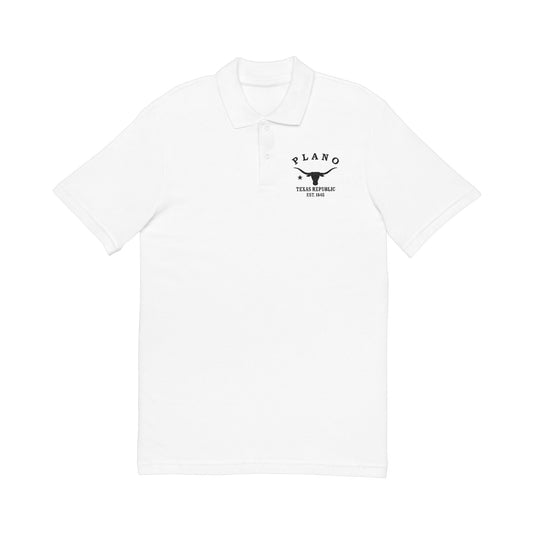
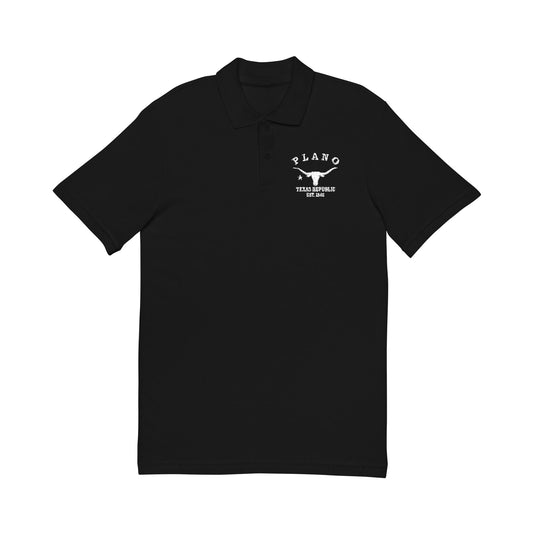
Plano Texas Vintage Retro Unisex Embroidered Cotton Polo - Black Logo
Regular price $48.00 USDRegular price





Plano Texas — Retro Vintage History
What's with the black prairie? Drive the edges of Plano after a rain and the turned fields go almost coal-dark — the famous black soil of the Texas Blackland Prairie, some of the richest farmland in the state. That flat, dark ground is the whole reason there's a town here at all, and it's even the reason for the name: when settlers needed a word for this level country, they borrowed the Spanish for 'flat' — plano. Beneath the ninth-largest city in Texas, the prairie is still the bedrock of the story.
Wear the HistoryThe land was Blackland Prairie long before it was a town — a stretch of Collin County that drew settlers under the Peters' Colony land grants of the Republic of Texas. Families from Kentucky, Tennessee, and across the older South arrived in 1845 and 1846, breaking the tough prairie sod for wheat, corn, and cattle, and William Foreman put up a sawmill and gristmill that became the settlement's nucleus. The frontier era that opened the prairie to these farms also displaced the Native peoples who had long lived across North Texas, a hard fact of the period. A post office came around 1852, and the first physician, Dr. Henry Dye, is credited with proposing the name that stuck: plano, for the flat country all around.
What turned a farm settlement into a town was the railroad. When the Houston & Texas Central Railway reached Plano in 1872, it connected the Blackland farms to distant cotton and grain markets and made the town Collin County's commercial hub almost overnight; warehouses, gins, and a depot rose where there had been open prairie. Plano incorporated on June 2, 1873, with C.J.E. Kellner as its first mayor. For the rest of the century it grew as a cotton, wheat, and milling center — a busy little market town shipping the prairie's harvest out to the wider world under a very big Texas sky.

Then, in 1881, fire nearly ended it. A blaze tore through the wooden downtown and destroyed all fifty-one of its business structures — only one survived. Rather than fold, Plano rebuilt in brick, and that decision is why Historic Downtown Plano still stands today, its oldest brick buildings dating to the 1890s. The rebuilt main street, the 1884 Schimelpfenig dry-goods building among its survivors, is a record in masonry of a town that refused to disappear.
The prairie's grandest survivor sits a little west of downtown. In 1891 the Farrell family built a fourteen-room Victorian farmhouse — elaborate jigsaw trim, a windmill, barns, a blacksmith shop, a henhouse, and a country store — on a working ranch, the same year Plano organized its public school system. For decades the place was a sheep operation; 'Miss Ammie' Wilson, a champion sheep breeder, ran it into the 1970s and left it to the public rather than the developers. Today it survives as the Heritage Farmstead Museum, an accredited living-history site where the windmill still turns and the Blackland Prairie story is kept alive, room by restored room — a working farm preserved whole inside a modern metropolis.
The twentieth century brought the electric Interurban, whose 1908 depot now houses a railway museum, and then a transformation no early Planoite could have pictured. As Dallas spilled north in the 1960s, '70s, and '80s, the farm town became one of the fastest-growing suburbs in the Sun Belt; corporate headquarters followed, the population multiplied many times over, and Plano grew into the ninth-largest city in Texas — home now to more transplants than native Texans. Yet the old bones show through: straight section-line roads, a preserved downtown, and, every September, a Blackland sky full of hot-air balloons rising over ground that was prairie long before it was a city.
Our Plano logo carries the Texas longhorn and the Lone Star, the shared retro emblem of our Texas places. Drawn in worn black-and-white that recalls a branding iron, a rodeo poster, or old barn signage, the longhorn stands for ranching toughness and the agricultural grit that built the town, while the star is Texas itself. It's the through-line that links Plano to every other Texas place we make. What makes this one Plano is everything behind it — the black prairie, the 1891 farmstead, the brick downtown, and the railroad that started it all.
Today Plano is a city of a quarter-million people, transplants from across the country, and corporate towers — but its roots run straight down into the Blackland Prairie. Its story moves from the Peters' Colony farms and the 1872 railroad, through the fire of '81 and the brick rebuild, to the 1891 farmstead and the Sun Belt boom that made it the ninth-largest city in Texas. Our Plano designs gather that farm-town heritage into wearable form — the longhorn and star, the prairie, and the town that refused to burn away. Plano, Texas: Blackland roots, big Texas sky.

Plano, Texas — Travel Guide
Visiting Plano Today
Plano sits on the Texas Blackland Prairie in Collin County, about twenty minutes north of downtown Dallas — a big, modern city that has kept its farm-town heart in a restored brick downtown, a preserved Victorian farmstead, and miles of prairie-and-creek green space. It's flat, walkable in its historic core, and easy to explore between museums, parks, and the arts district.
The Farmstead, the Brick Downtown & the Prairie
For visitors looking for things to do in Plano, Texas:
- Tour the Heritage Farmstead Museum, the 1891 Victorian farmhouse and working-ranch buildings on the old Blackland Prairie.
- Wander Historic Downtown Plano's brick Arts District — the post-1881-fire main street, with galleries, murals, and storefronts.
- Visit the Interurban Railway Museum in the restored 1908 electric-railway depot.
- Walk the trails and overlooks of Arbor Hills Nature Preserve, prairie and woods on the edge of the city.
- Spend an afternoon at Oak Point Park & Nature Preserve, Plano's largest green space on the creek bottoms.
- Stroll the Boardwalk at Granite Park, a lakeside walkway and easygoing community gathering spot.
Why People Visit Plano
Plano rewards visitors who want Texas history without the crowds of a tourist town — a genuine 1891 farmstead, a brick Main Street rebuilt after the great fire, an electric-railway museum, and nature preserves on the old Blackland Prairie. People come for the Heritage Farmstead and the downtown arts district, for the September balloons over the prairie, and for an easy, welcoming North-Texas day with real roots behind it.
Wear the History

For deeper reading on the Plano, Texas history described here — the Texas Blackland Prairie and the Peters' Colony settlement of 1845–46, William Foreman's sawmill and gristmill, the naming credited to Dr. Henry Dye, the 1872 arrival of the Houston & Texas Central Railway and the June 2, 1873 incorporation under first mayor C.J.E. Kellner, the great fire of 1881 and the brick rebuild of downtown, the 1891 Farrell-Wilson farmstead and 'Miss Ammie' Wilson's sheep ranch, and the early-1900s Interurban electric railway — it may be useful to consult (1) the Heritage Farmstead Museum, (2) the Plano Conservancy for Historic Preservation and the Interurban Railway Museum, (3) the Plano Public Library's Genealogy and local-history collection, (4) the Texas State Library and Archives Commission and the Texas Historical Commission, and (5) the Collin County historical and clerk's records offices. For travel and visitor information, it may be useful to contact (1) Visit Plano, (2) the Plano Chamber of Commerce, (3) the City of Plano Parks and Recreation Department, (4) Texas State Parks, and (5) the regional transit and DFW-area airport information desks.