


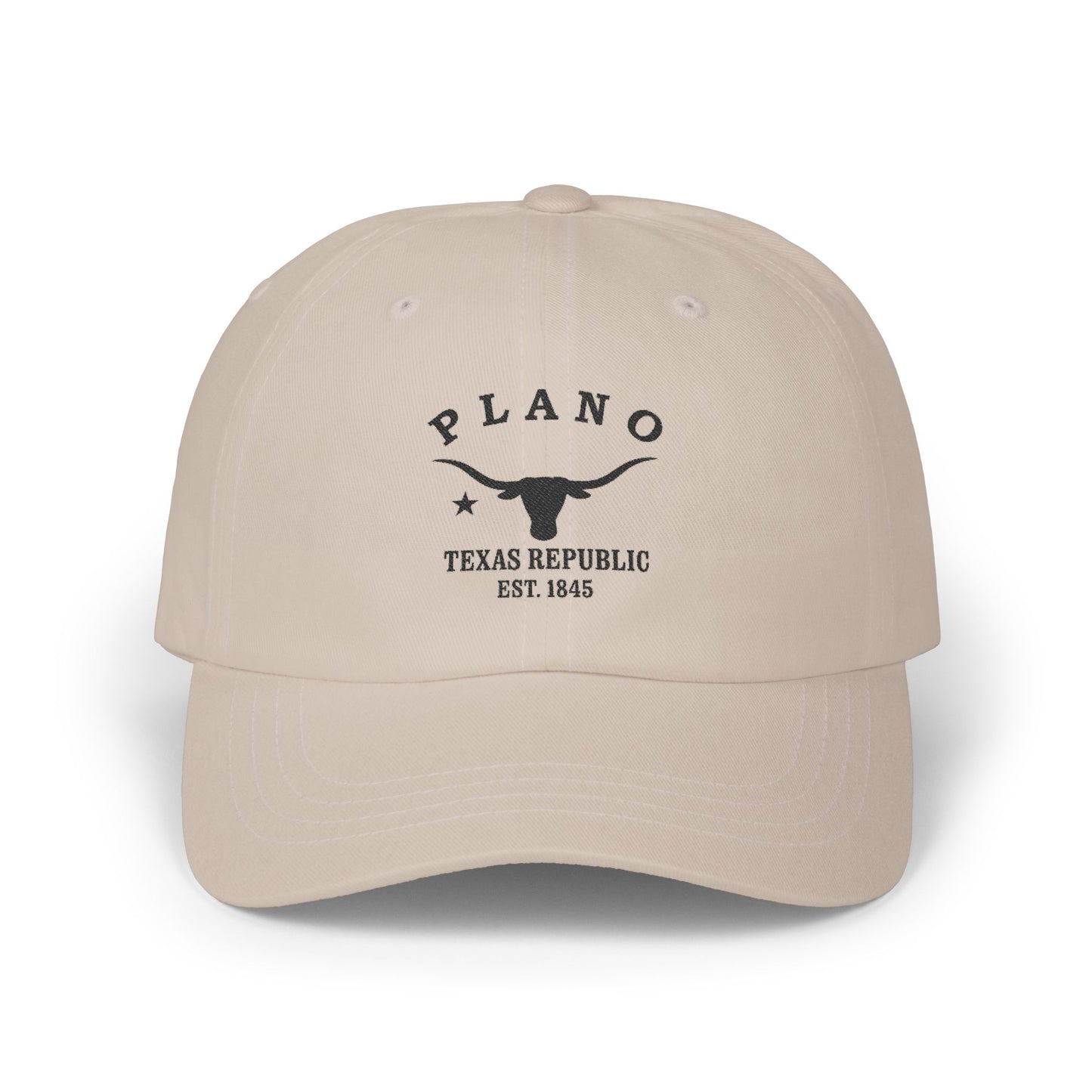
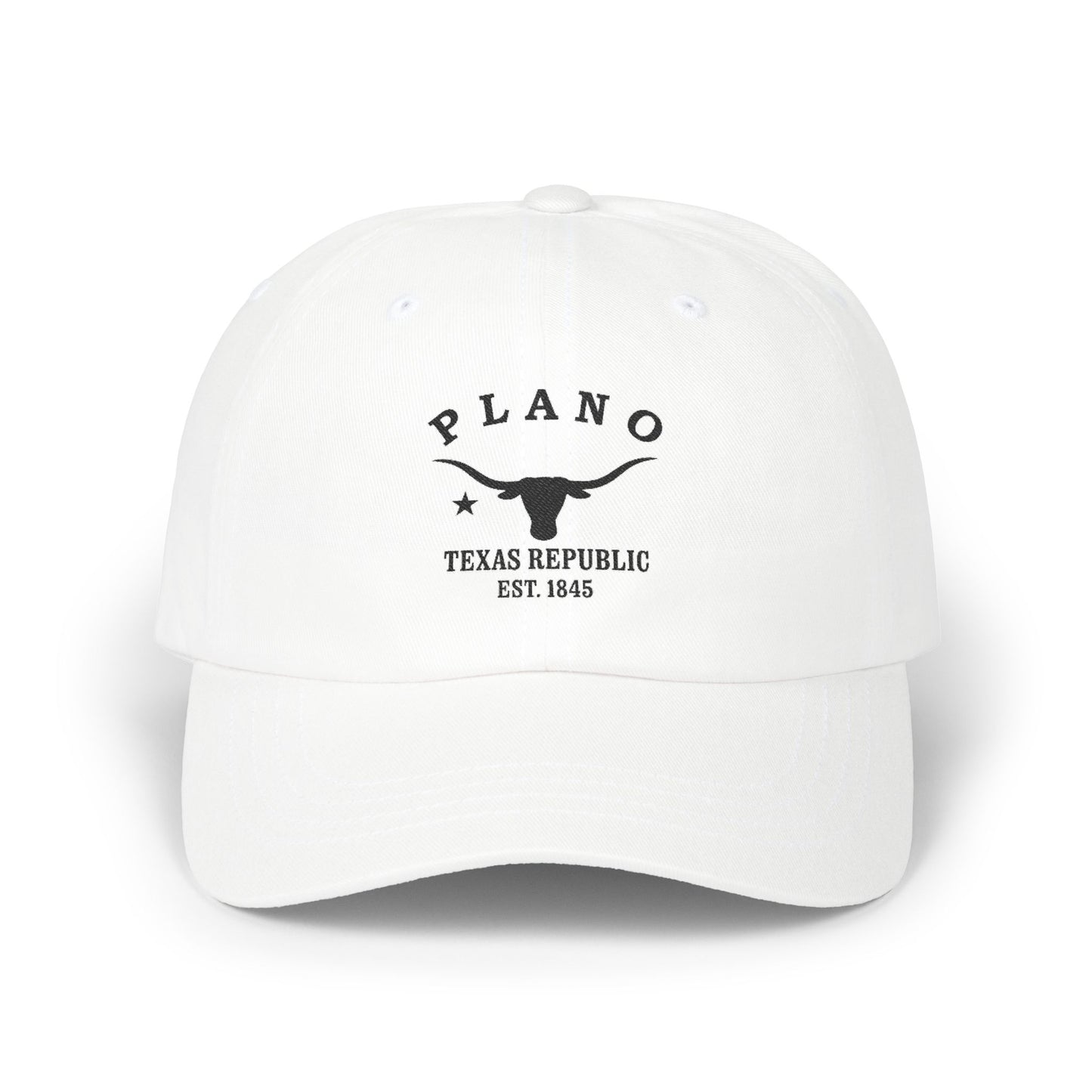
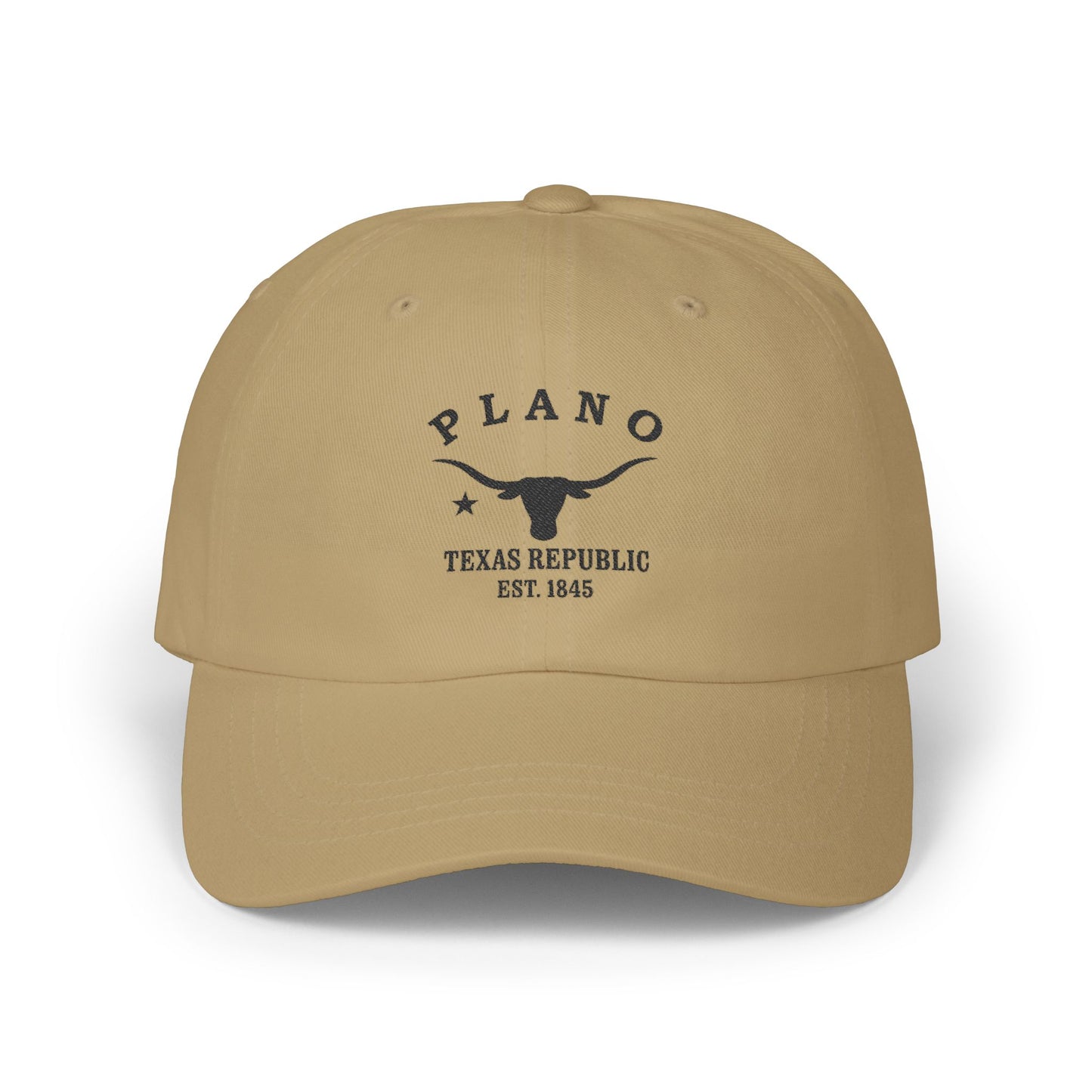
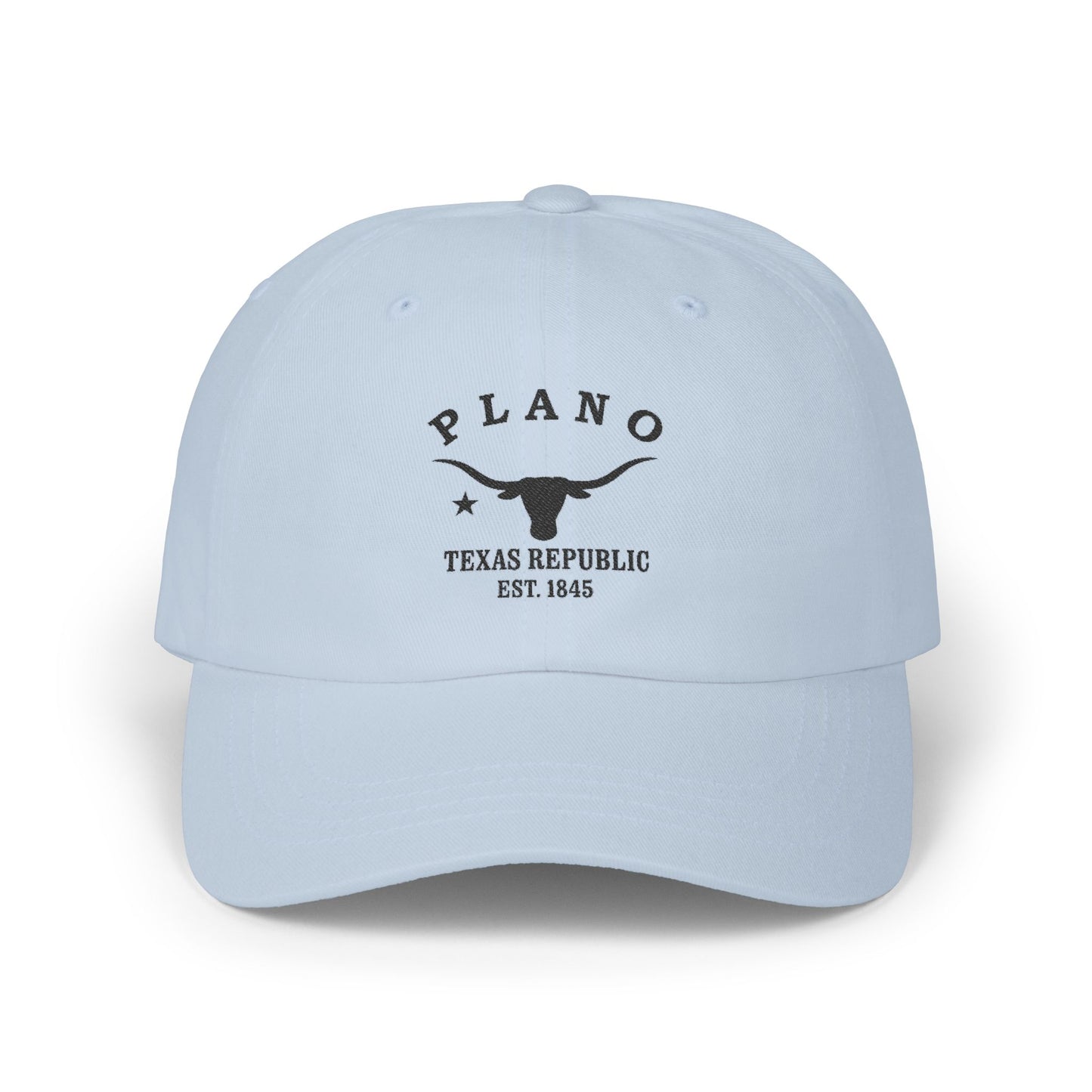
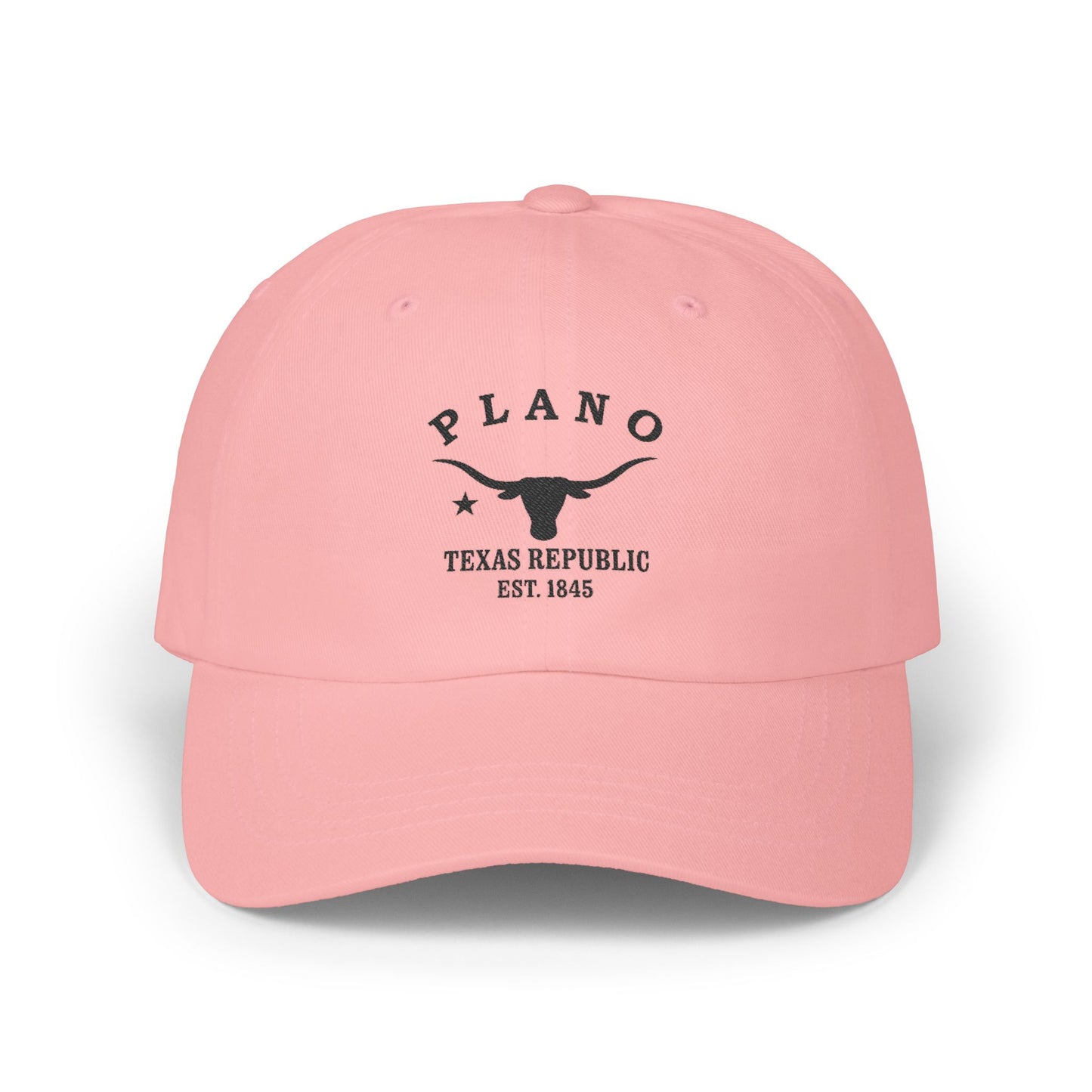
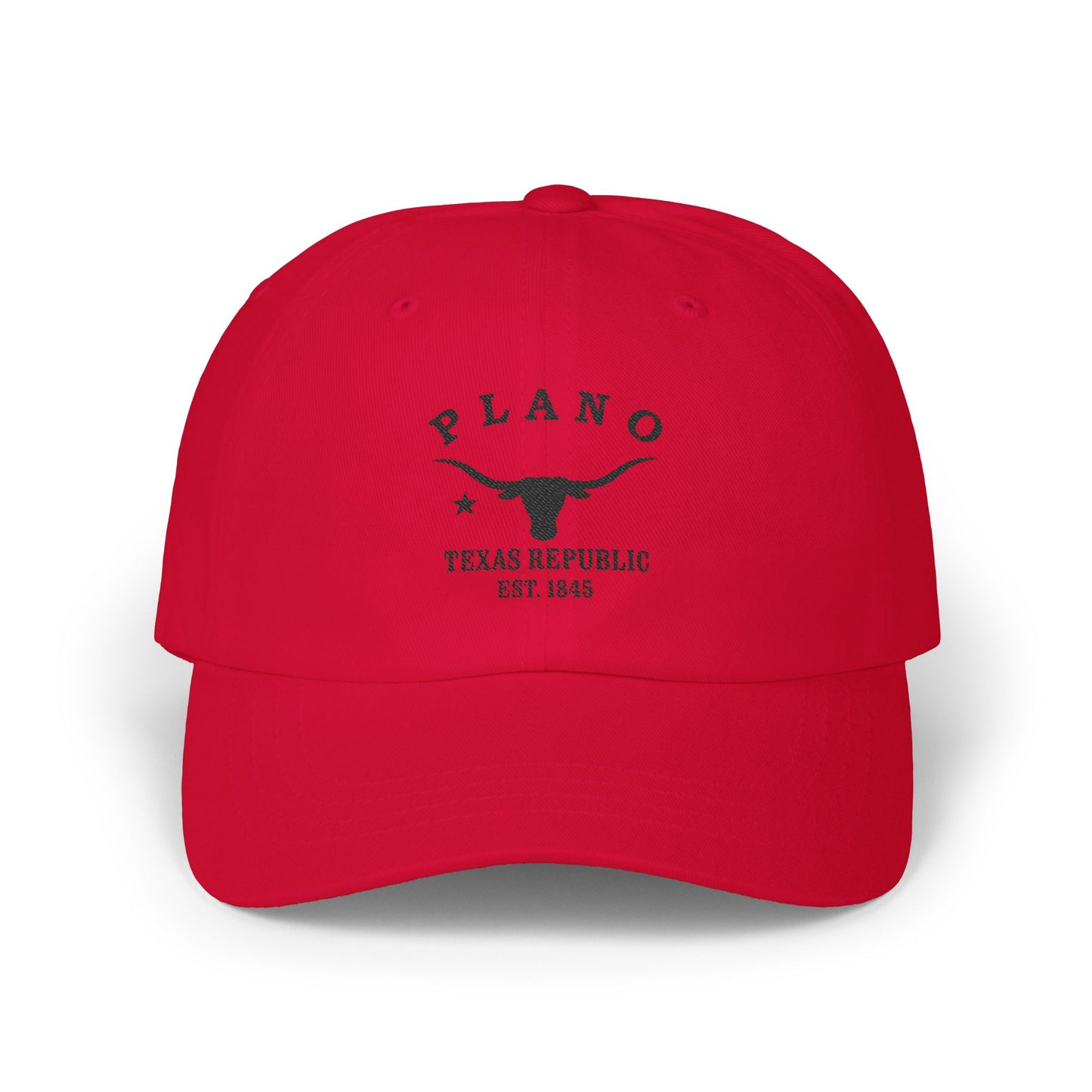
Our Plano logo carries the Texas longhorn and the Lone Star, the shared retro emblem of our Texas places. Drawn in worn black-and-white that recalls a branding iron, a rodeo poster, or old barn signage, the longhorn stands for ranching toughness and the agricultural grit that built the town, while the star is Texas itself. It's the through-line that links Plano to every other Texas place we make. What makes this one Plano is everything behind it — the black prairie, the 1891 farmstead, the brick downtown, and the railroad that started it all.
The prairie's grandest survivor sits a little west of downtown. In 1891 the Farrell family built a fourteen-room Victorian farmhouse — elaborate jigsaw trim, a windmill, barns, a blacksmith shop, a henhouse, and a country store — on a working ranch, the same year Plano organized its public school system. For decades the place was a sheep operation; 'Miss Ammie' Wilson, a champion sheep breeder, ran it into the 1970s and left it to the public rather than the developers. Today it survives as the Heritage Farmstead Museum, an accredited living-history site where the windmill still turns and the Blackland Prairie story is kept alive, room by restored room — a working farm preserved whole inside a modern metropolis.
Why People Visit Plano
Plano rewards visitors who want Texas history without the crowds of a tourist town — a genuine 1891 farmstead, a brick Main Street rebuilt after the great fire, an electric-railway museum, and nature preserves on the old Blackland Prairie. People come for the Heritage Farmstead and the downtown arts district, for the September balloons over the prairie, and for an easy, welcoming North-Texas day with real roots behind it.
