Every design is set in hand-lettered vintage type for that old-school, crate-label look. One sample color shown — black and white logo options on every piece. Recently in the national press. Enjoy!
-
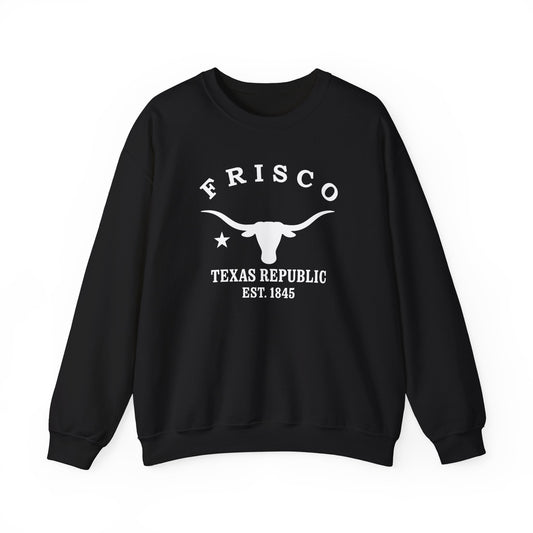
Frisco Texas Vintage Retro Premium Crewneck Sweatshirt - Black Logo
Regular price $48.00 USDRegular price -
Frisco Texas Vintage Retro Premium Crewneck Sweatshirt - White Logo
Regular price $48.00 USDRegular price -
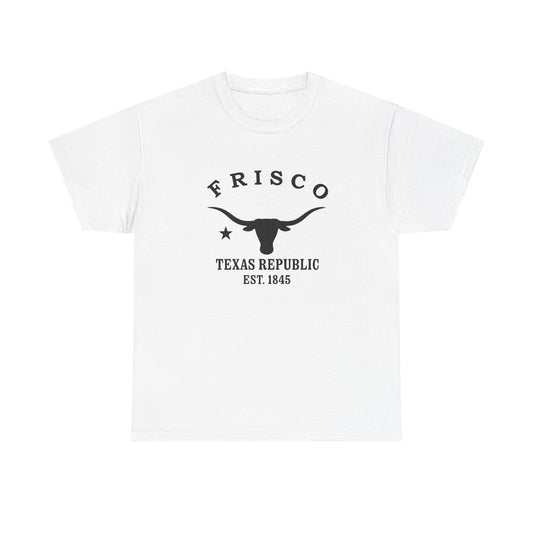
Frisco Texas Vintage Retro Unisex Heavy Cotton Tee - White Logo
Regular price $22.00 USDRegular price -
Frisco Texas Vintage Retro Unisex Heavy Cotton Tee - Black Logo
Regular price $22.00 USDRegular price -
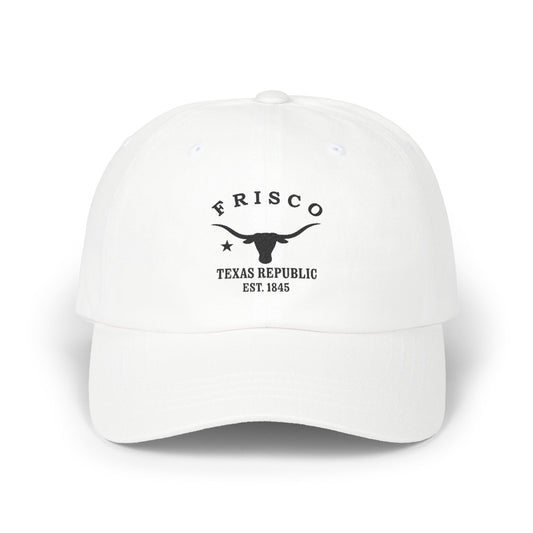
Frisco Texas Vintage Retro Embroidered Cotton Cap - White Logo
Regular price $32.00 USDRegular price -
Frisco Texas Vintage Retro Embroidered Cotton Cap - Black Logo
Regular price $32.00 USDRegular price -
Frisco Texas Vintage Retro Giclée Print Art Series Poster
Regular price From $38.00 USDRegular price -
Frisco Texas Vintage Retro Back Printed Art Series Cotton Tee - Black Logo
Regular price $32.00 USDRegular price -
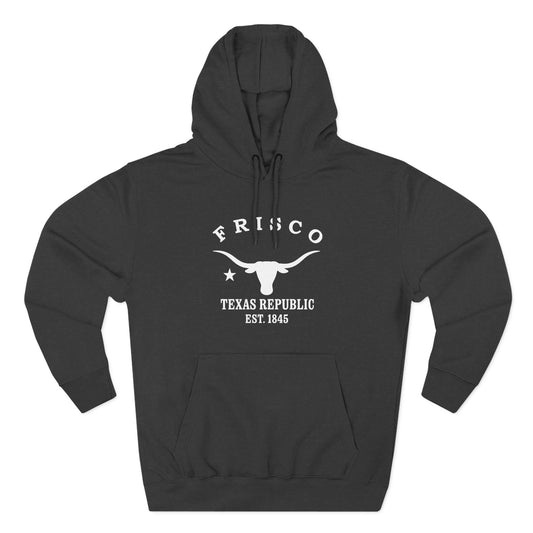
Frisco Texas Vintage Retro Unisex Heavy Cotton Hoodie - White Logo
Regular price $56.00 USDRegular price -
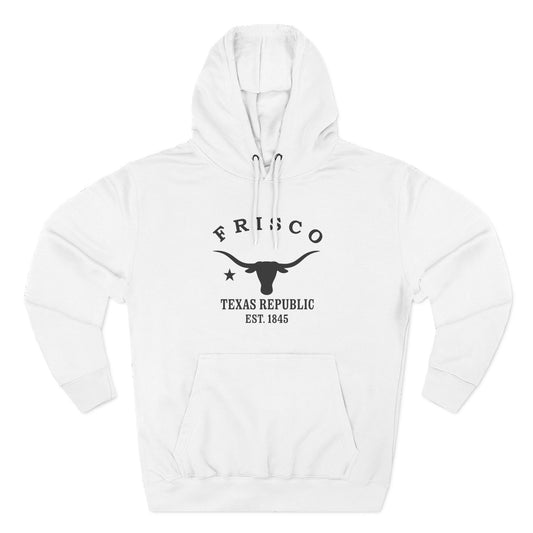
Frisco Texas Vintage Retro Unisex Heavy Cotton Hoodie - Black Logo
Regular price $56.00 USDRegular price -
Frisco Texas Vintage Retro Vinyl Sticker - Black Logo
Regular price From $6.00 USDRegular price -
-
Frisco Texas Vintage Retro Womens Fitted Ringspun Cotton Tee - Black Logo
Regular price $28.00 USDRegular price -
Frisco Texas Vintage Retro Unisex Embroidered Fleece Jacket - White Logo
Regular price $98.00 USDRegular price -
Frisco Texas Vintage Retro Ceramic Mug - Black Logo
Regular price From $16.00 USDRegular price -
Frisco Texas Vintage Retro Cotton Canvas Tote Bag - Black Logo
Regular price $25.00 USDRegular price -
Frisco Texas Vintage Retro Cotton Canvas Tote Bag - White Logo
Regular price $25.00 USDRegular price -
Frisco Texas Vintage Retro Thank You Card Set - Black Logo
Regular price From $25.00 USDRegular price -
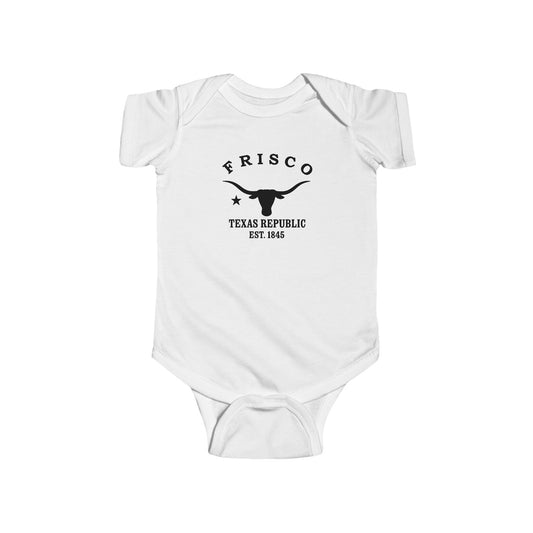
Frisco Texas Vintage Retro Cotton Jersey Baby Bodysuit - Black Logo
Regular price $26.00 USDRegular price -
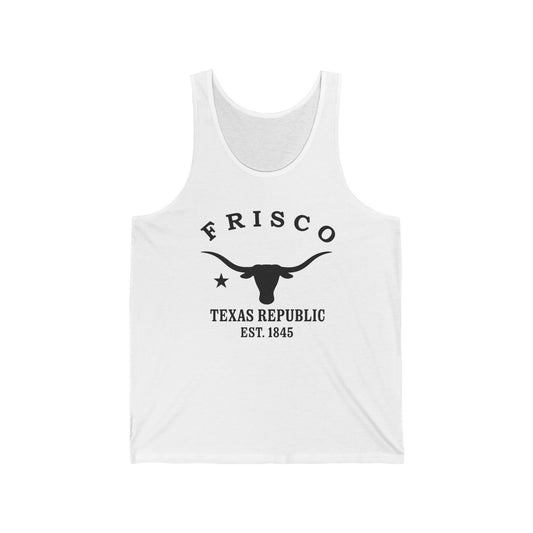
Frisco Texas Vintage Retro Unisex Cotton Jersey Tank Top - Black Logo
Regular price $28.00 USDRegular price -
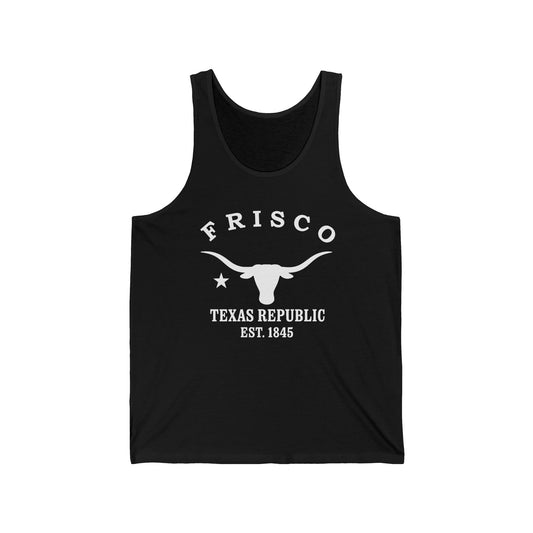
Frisco Texas Vintage Retro Unisex Cotton Jersey Tank Top - White Logo
Regular price $28.00 USDRegular price -
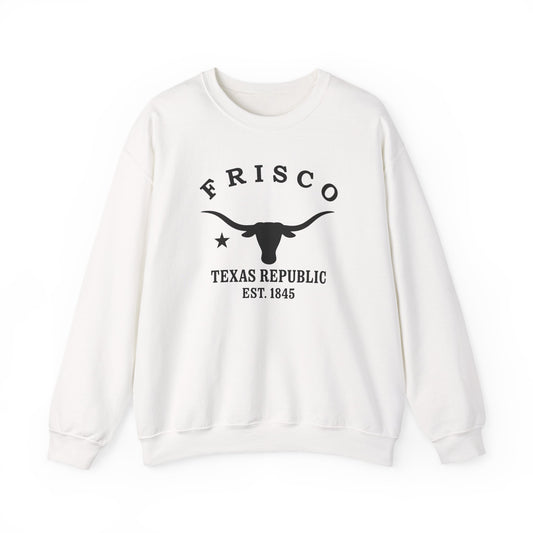
Frisco Texas Vintage Retro Unisex Heavy Crewneck Sweatshirt - Black Logo
Regular price $44.00 USDRegular price -
Frisco Texas Vintage Retro Unisex Heavy Crewneck Sweatshirt - White Logo
Regular price $44.00 USDRegular price -
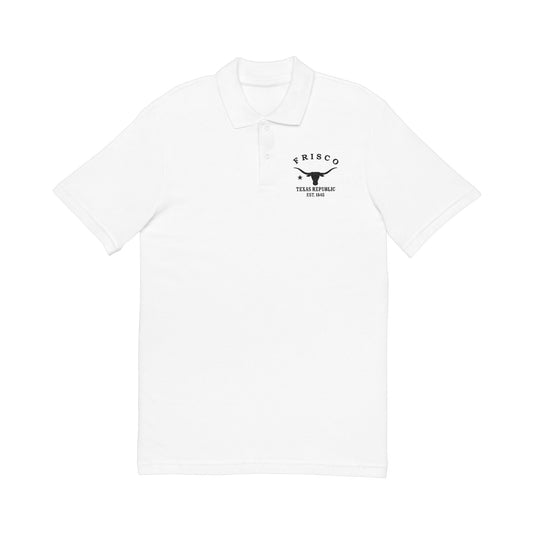
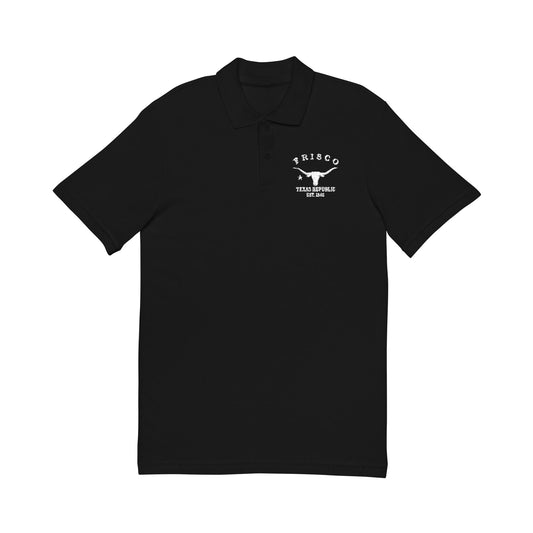
Frisco Texas Vintage Retro Unisex Embroidered Cotton Polo - Black Logo
Regular price $48.00 USDRegular price





Frisco Texas — Retro Vintage History
What's with the boom? A lifetime ago, Frisco was a few hundred people, a grain elevator, and a water tower on the North Texas prairie. Today it is a city of more than two hundred thousand — for a stretch in the 2000s, and again in 2017, the single fastest-growing city in the entire United States. Frisco didn't drift into that: it went from cotton fields to corporate campuses in about a generation, and the speed of it is the first thing anyone notices. Out here, the newest thing is usually the point.
Wear the HistoryThe land Frisco sits on was a route long before it was a town. The Shawnee Trail — later the Preston Trail, and today Preston Road — ran north out of Texas along a ridge of white rock: an old Indigenous footpath that became the earliest of the great cattle-driving roads, with longhorns moved up it by the millions toward the railheads of the north. A trailside community called Lebanon grew up along it and got its post office in 1860. For decades this was cattle-and-cotton country, prairie crossed by drovers, with the markets always somewhere else.
Frisco is named for a railroad. In 1902 the St. Louis–San Francisco Railway — “the Frisco” — laid a line across the prairie, and because its steam locomotives needed water, the crews built a watering stop on low ground a few miles west of Lebanon. A town gathered around the stop, and some Lebanon families are said to have rolled their houses over to it on logs. They first called the place Emerson, but the post office rejected the name, so they named it for the railway that had made it — Frisco City, soon shortened to Frisco. The old water tower on the original downtown still stands for that beginning, a landmark from the days when the train stopped for water. The railroad’s grand name outran its reach — the Frisco never actually got to San Francisco, stopping far short in the Southwest — but the borrowed name stuck to the little Texas town for good.

For its first half-century Frisco stayed small. It incorporated in 1908 and settled into the rhythm of a North Texas farm town — cotton gins and grain elevators, corn and cattle, a few hundred people through the Depression and into the postwar years. As late as 1960 the whole town was barely a thousand people. The railroad had named it and fed it, but the markets and the growth were always down the line in Dallas.
Then Dallas came north. Through the 1980s and '90s the metroplex's suburban tide rolled up through Plano and over Frisco's southern edge, and farmland turned to subdivisions almost overnight. Frisco became one of the fastest-growing cities in America — first across the 2000s, then again, outright number one, in 2017 — its population leaping from about six thousand in 1990 to more than two hundred thousand a generation later. Schools, highways, and whole neighborhoods appeared where cotton had grown, and the prairie filled in block by block.
What the boom built, more than anything, was a place to play. Frisco set out to brand itself “Sports City USA,” and stacked the new ground with stadiums and arenas, practice facilities and corporate headquarters, a soccer hall of fame and even a museum of video games. On a given weekend the office parks empty out and the venues fill up; the town the railroad named has become a place people drive in to for the games. It is the most modern thing about Frisco, and somehow the most Frisco thing about it — a town that, having run out of cotton to grow, decided to grow crowds instead.
Our Frisco logo carries the Texas longhorn and Lone Star over “Texas Republic · Est. 1845,” the year Texas joined the Union — the shared emblem of every Merlin Classics Texas place. Here the longhorn is more than decoration: Frisco grew up on the Shawnee Trail, the very road those cattle were driven up. Printed in a distressed black-and-white that reads like an old brand iron, the longhorn is Texas in shorthand — and what makes this one Frisco is the country behind it: the cattle trail, the railroad name, and the boomtown that rose from the prairie.
Today Frisco is one of the youngest big cities in Texas — a boomtown that kept the longhorn trail in its bones and the railroad in its name. Our Frisco designs gather that identity — the longhorn-and-star, the Frisco line, the water tower, the prairie that became a city — into wearable form. Frisco, Texas — from a railroad watering stop to a boomtown, in a single lifetime.

Frisco, Texas — Travel Guide
Visiting Frisco Today
Frisco sits at the north edge of the Dallas–Fort Worth metroplex, an easy drive up the tollway from Dallas — a young, fast-built city of sports venues, museums, and walkable squares, with its old railroad downtown still at the center.
The Heritage, the Square & the Venues
For visitors looking for things to do in Frisco, Texas:
- Start at the Frisco Heritage Museum, with the restored depot and historic buildings that tell the railroad-town story.
- Find the old downtown water tower, the landmark from the days the train stopped here for water.
- Look for the Texas historic marker on the Shawnee Trail — the old cattle road Frisco grew up beside — at the Collin College campus.
- Wander Frisco Square's fountains, shops, and seasonal events.
- Take in the city's “Sports City USA” venues, a soccer hall of fame, and a museum of video games.
Why People Visit Frisco
Frisco offers a rare mix — a brand-new big city with deep-Texas roots: a railroad-heritage downtown, the old cattle trail underfoot, and a skyline of stadiums and corporate campuses that went up in a single generation. It's polished, easy to navigate, and unmistakably North Texas.
Wear the History
Kindred Cities
Welcome to visitors from Milton Keynes, England and Mississauga, Canada — kindred boomtowns built on purpose and at speed.
Master-planned towns that went from open ground to major city in a generation — that is Frisco's story, and Milton Keynes and Mississauga know it exactly. Milton Keynes is Britain's most famous new town of grids and roundabouts; Mississauga grew into Canada's sixth-largest city beside Toronto; Frisco rocketed from a railroad stop to a sports-and-corporate boomtown north of Dallas. Planned, fast and unapologetically new.
Frisco will feel familiar to anyone whose city was farmland a lifetime ago — and ambitious with it: pro sports headquarters, gleaming corporate campuses, and neighbourhoods still rising out of the prairie. The newest thing here is usually the point. Come and visit us soon.
When you plan the trip, Visit Frisco — the city's tourism bureau — is the place to start.
Wear the History

For deeper reading on the Frisco history described here — the Shawnee/Preston cattle trail and the trailside town of Lebanon (post office 1860), the 1902 St. Louis–San Francisco Railway watering stop that named the town, the 1908 incorporation and the cotton-and-cattle farm-town decades, and the late-20th- and early-21st-century growth that made Frisco one of the fastest-growing cities in America — it may be useful to consult (1) the Frisco Heritage Museum and the Frisco Heritage Association, (2) the Frisco Public Library local-history collection, (3) the Texas State Library and Archives and the Texas Historical Commission, (4) the City of Frisco clerk's records office, and (5) the Collin County Historical Commission. For travel and visitor information, it may be useful to contact (1) Visit Frisco, the city's tourism bureau, (2) the Frisco Chamber of Commerce, (3) the City of Frisco parks and recreation department, (4) the Texas state-parks office, and (5) regional transit and DFW-area visitor desks.
- Choosing a selection results in a full page refresh.
- Opens in a new window.