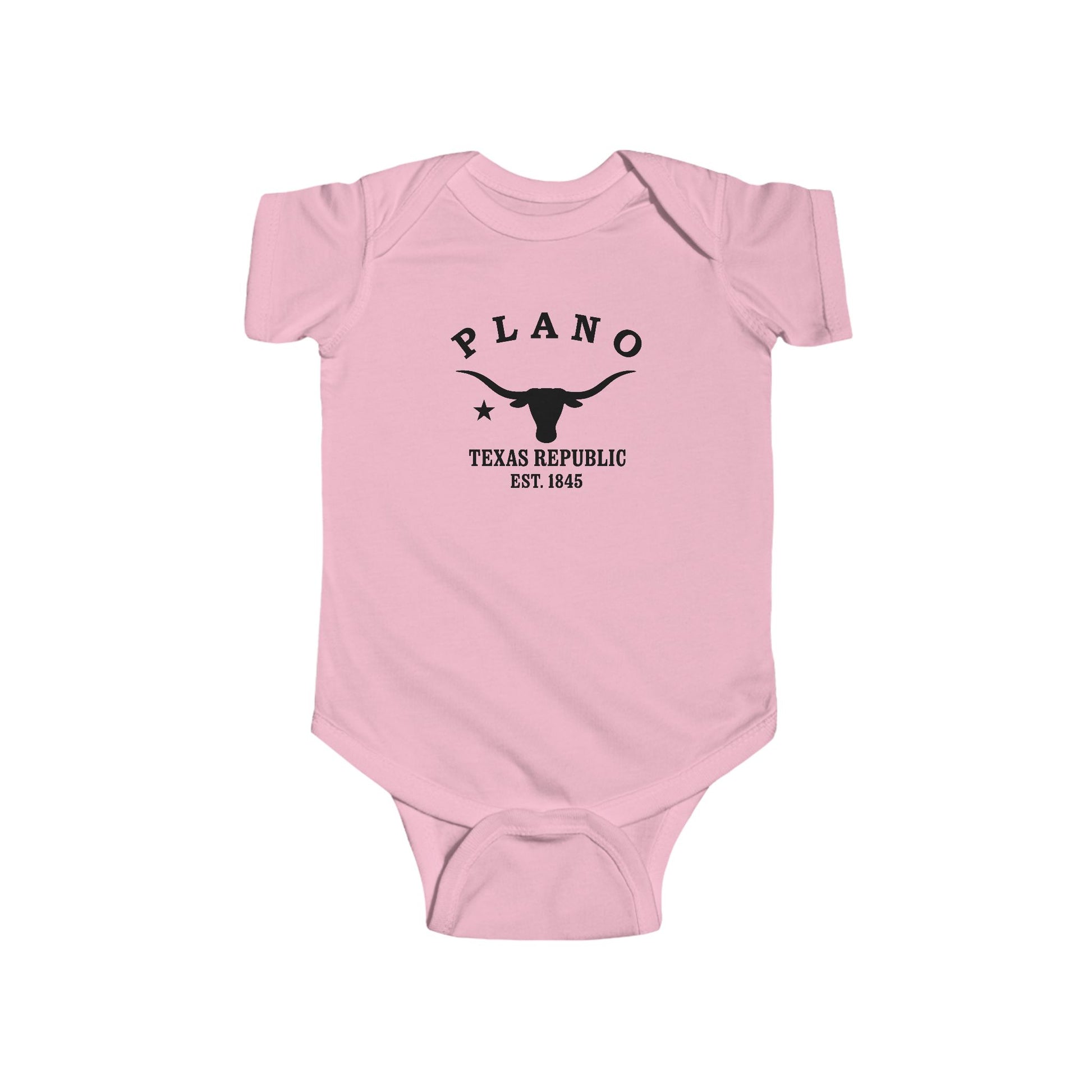
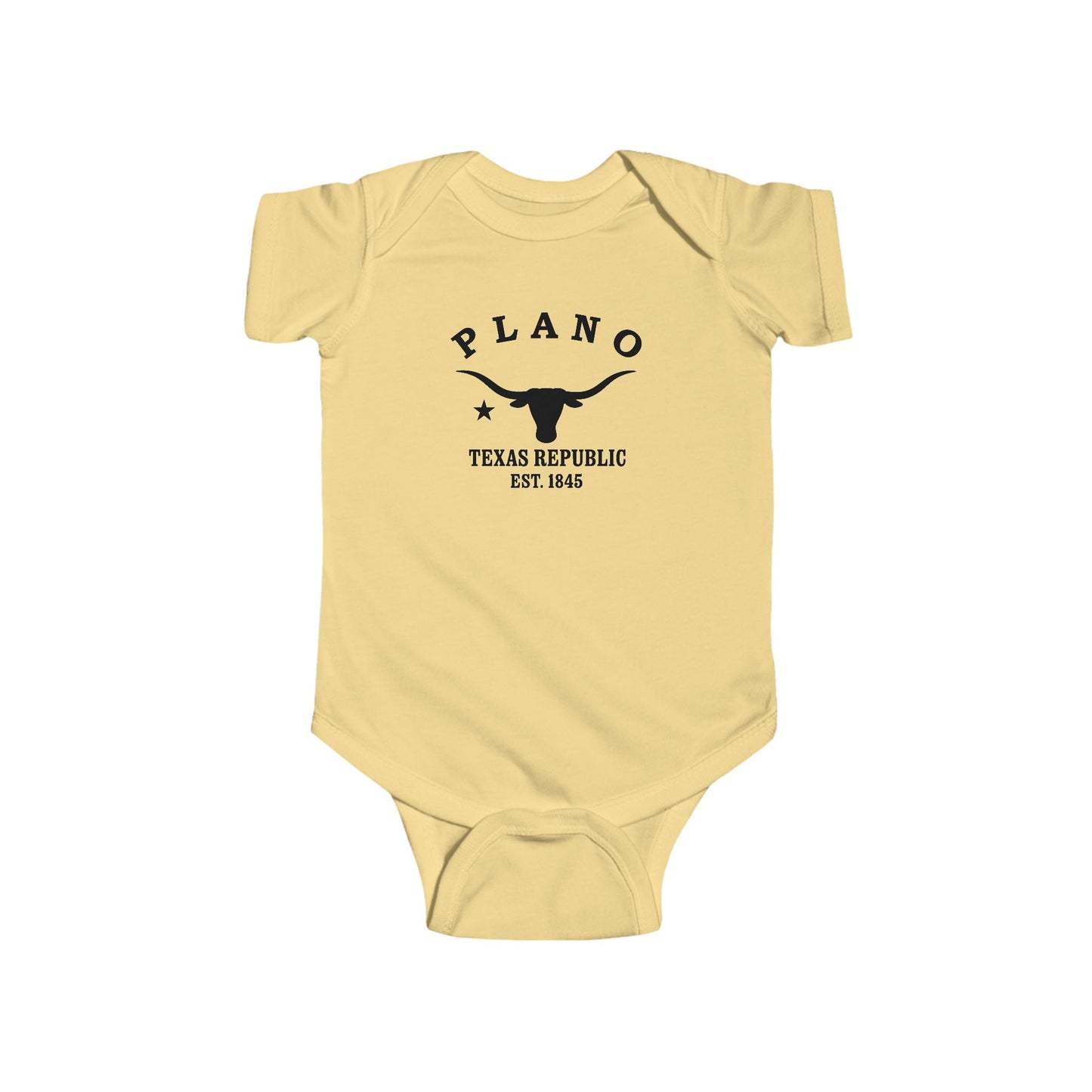
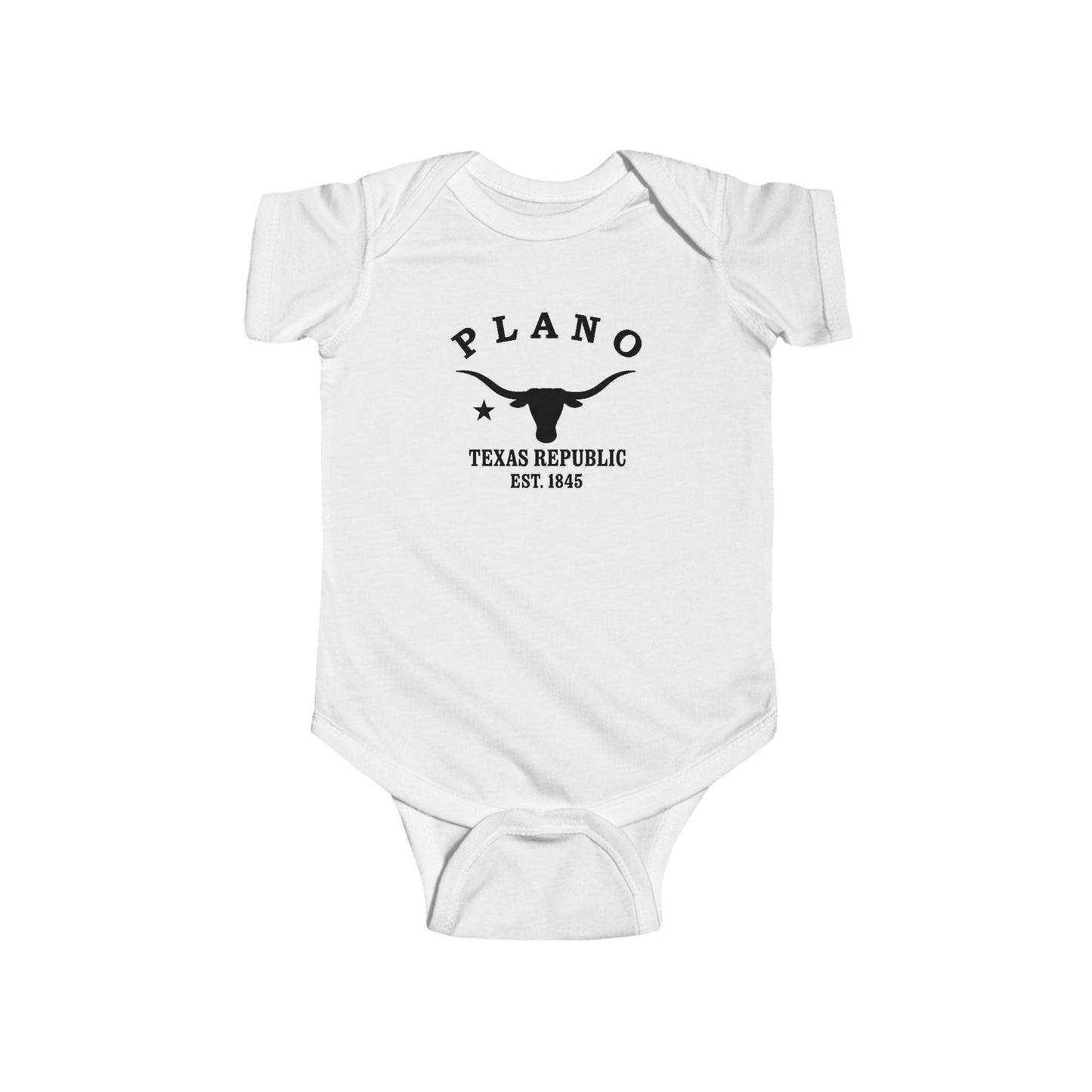
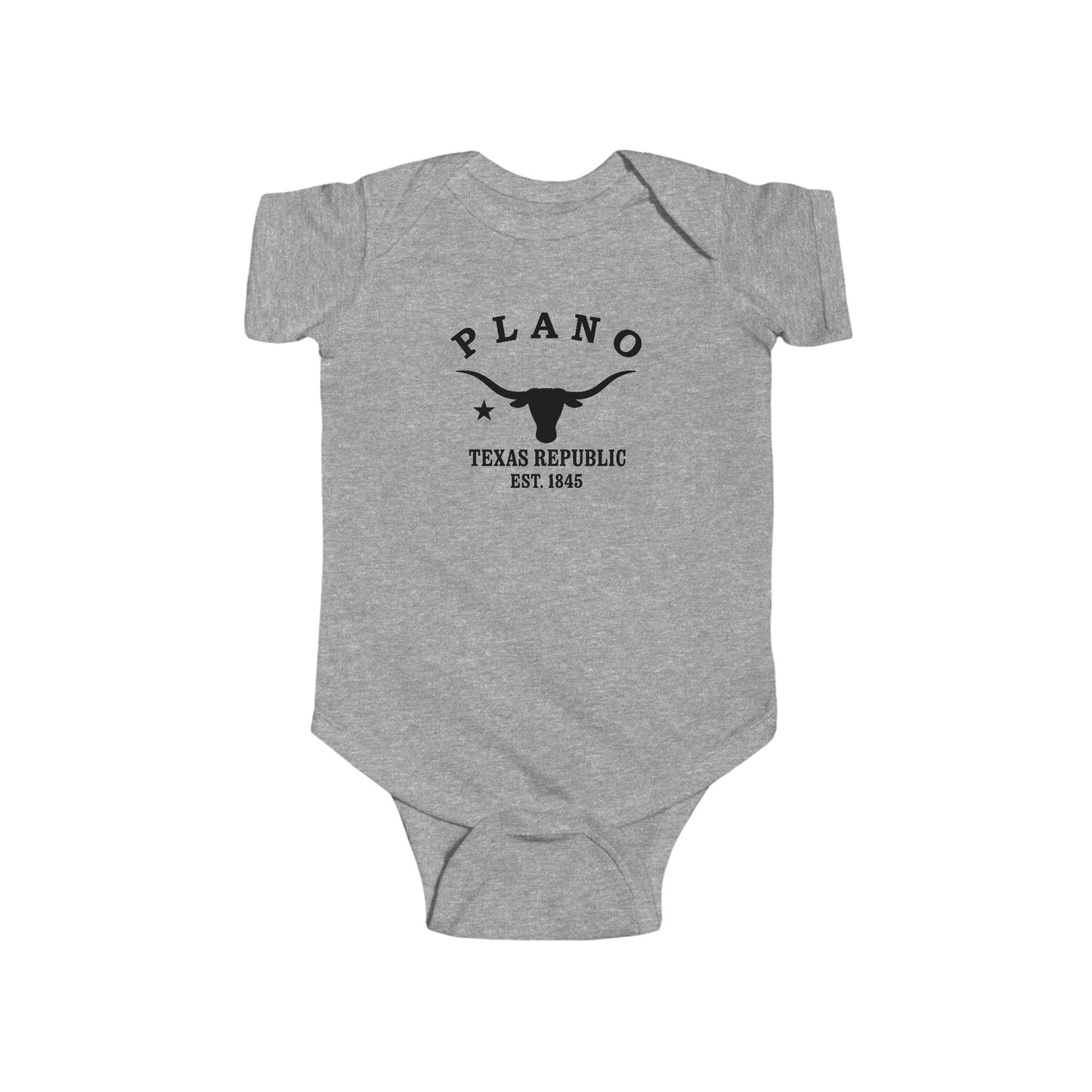
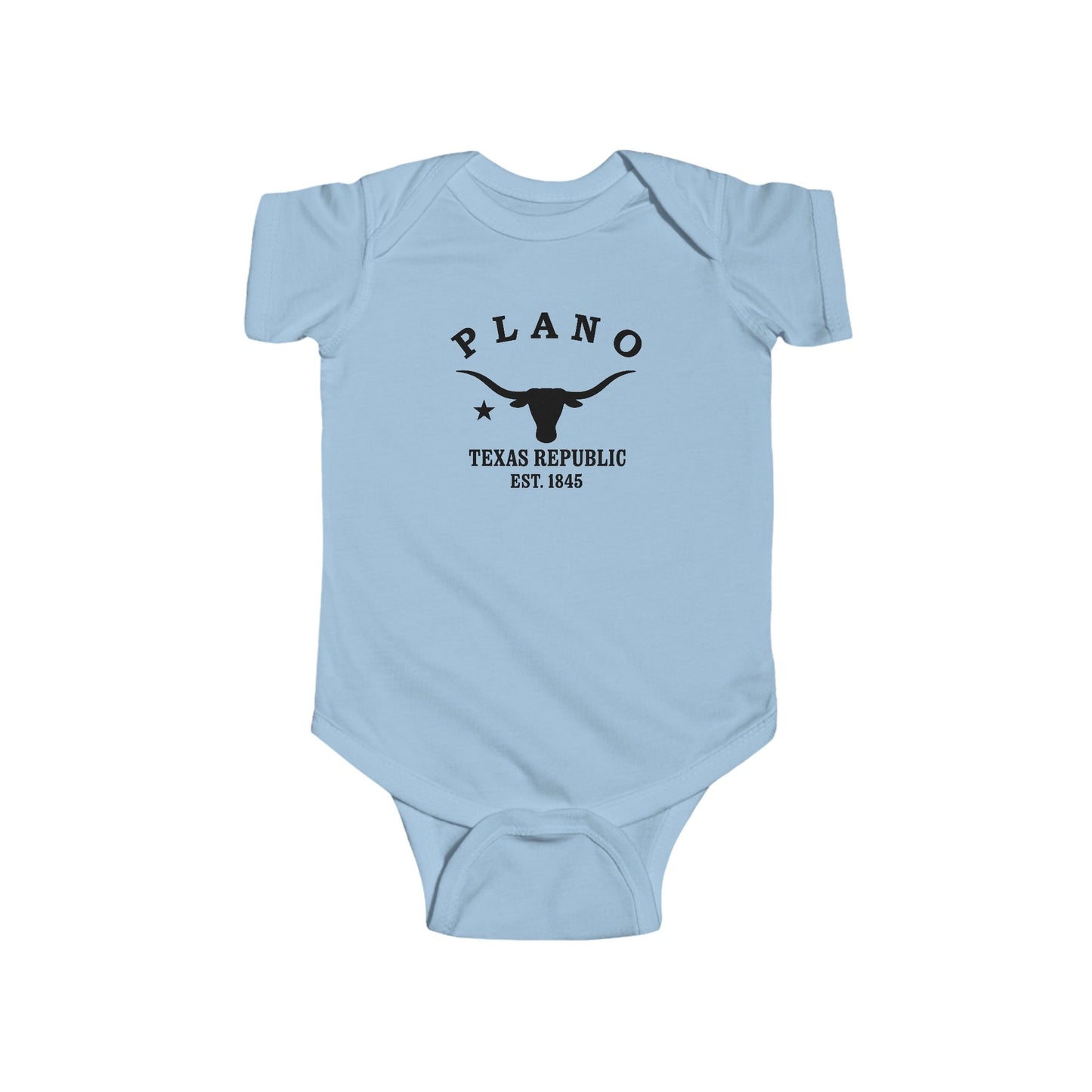
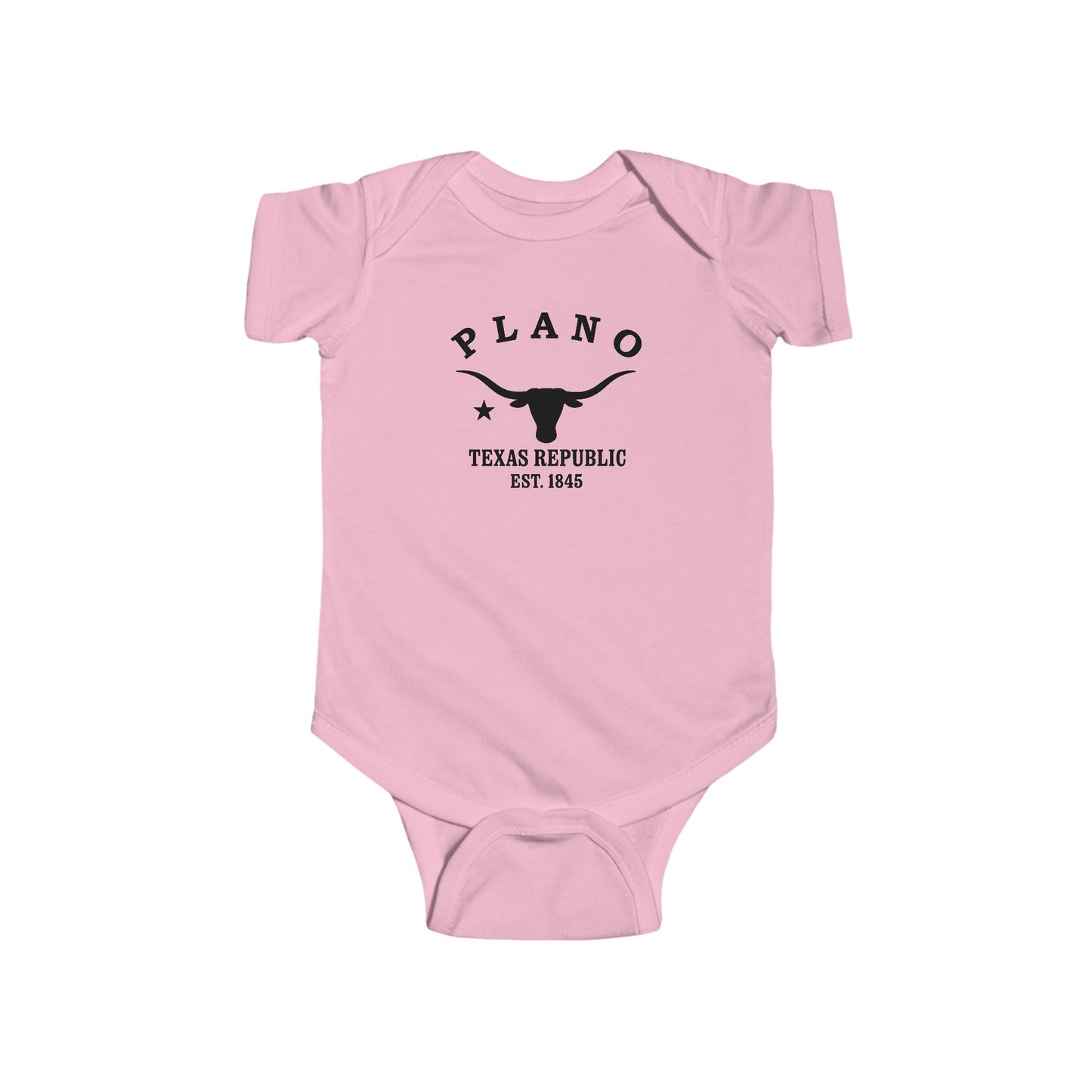
Our Plano logo carries the Texas longhorn and the Lone Star, the shared retro emblem of our Texas places. Drawn in worn black-and-white that recalls a branding iron, a rodeo poster, or old barn signage, the longhorn stands for ranching toughness and the agricultural grit that built the town, while the star is Texas itself. It's the through-line that links Plano to every other Texas place we make. What makes this one Plano is everything behind it — the black prairie, the 1891 farmstead, the brick downtown, and the railroad that started it all.
What turned a farm settlement into a town was the railroad. When the Houston & Texas Central Railway reached Plano in 1872, it connected the Blackland farms to distant cotton and grain markets and made the town Collin County's commercial hub almost overnight; warehouses, gins, and a depot rose where there had been open prairie. Plano incorporated on June 2, 1873, with C.J.E. Kellner as its first mayor. For the rest of the century it grew as a cotton, wheat, and milling center — a busy little market town shipping the prairie's harvest out to the wider world under a very big Texas sky.
Why People Visit Plano
Plano rewards visitors who want Texas history without the crowds of a tourist town — a genuine 1891 farmstead, a brick Main Street rebuilt after the great fire, an electric-railway museum, and nature preserves on the old Blackland Prairie. People come for the Heritage Farmstead and the downtown arts district, for the September balloons over the prairie, and for an easy, welcoming North-Texas day with real roots behind it.
