Every design is set in hand-lettered vintage type for that old-school, crate-label look. One sample color shown — black and white logo options on every piece. Recently in the national press. Enjoy!
-
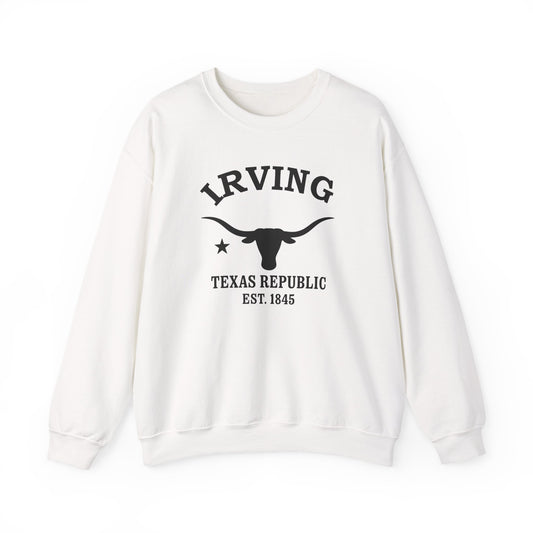
Irving Texas Vintage Retro Premium Crewneck Sweatshirt - Black Logo
Regular price $48.00 USDRegular price -
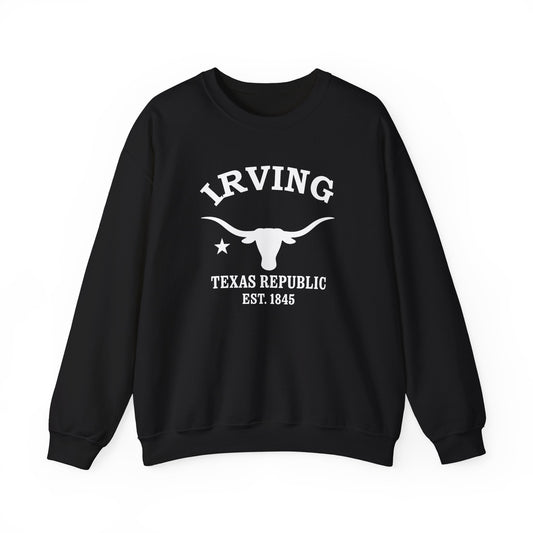
Irving Texas Vintage Retro Premium Crewneck Sweatshirt - White Logo
Regular price $48.00 USDRegular price -
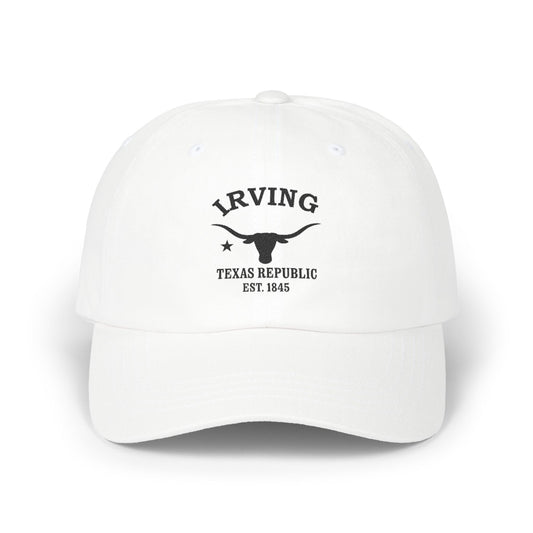
Irving Texas Vintage Retro Embroidered Cotton Cap - White Logo
Regular price $32.00 USDRegular price -
Irving Texas Vintage Retro Embroidered Cotton Cap - Black Logo
Regular price $32.00 USDRegular price -
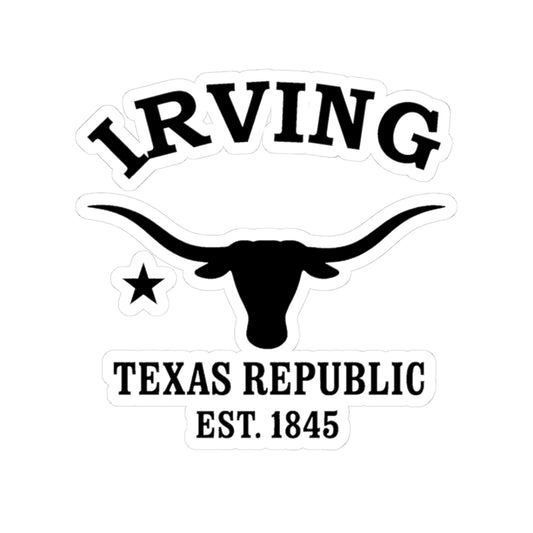
Irving Texas Vintage Retro Vinyl Sticker - Black Logo
Regular price From $6.00 USDRegular price -
-
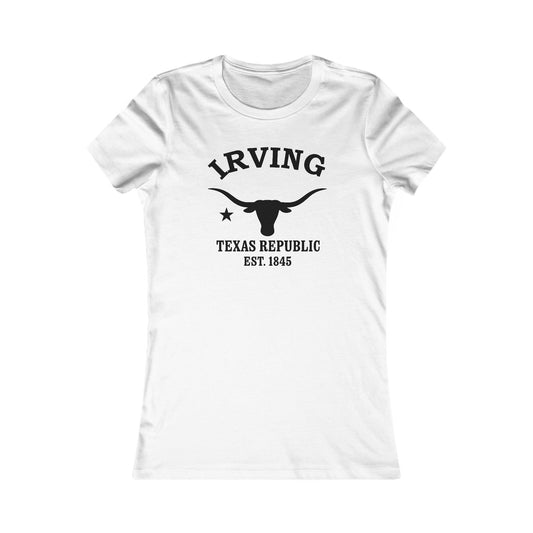
Irving Texas Vintage Retro Womens Fitted Ringspun Cotton Tee - Black Logo
Regular price $28.00 USDRegular price -
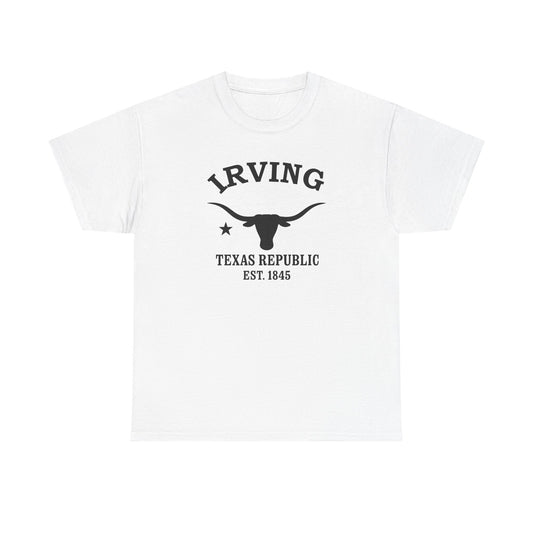
Irving Texas Vintage Retro Unisex Heavy Cotton Tee - White Logo
Regular price $22.00 USDRegular price -
Irving Texas Vintage Retro Unisex Heavy Cotton Tee - Black Logo
Regular price $22.00 USDRegular price -
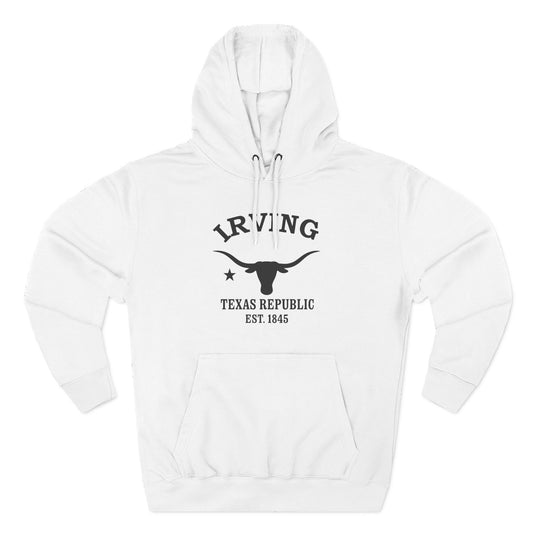
Irving Texas Vintage Retro Unisex Heavy Cotton Hoodie - White Logo
Regular price $56.00 USDRegular price -
Irving Texas Vintage Retro Unisex Heavy Cotton Hoodie - Black Logo
Regular price $56.00 USDRegular price -
Irving Texas Vintage Retro Back Printed Art Series Cotton Tee - Black Logo
Regular price $32.00 USDRegular price -
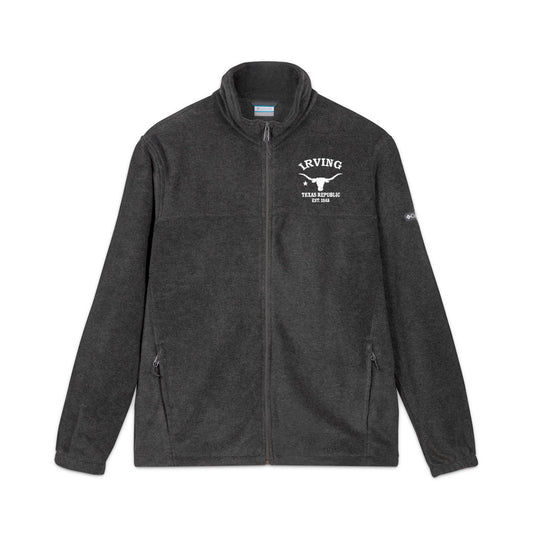
Irving Texas Vintage Retro Unisex Embroidered Fleece Jacket - White Logo
Regular price $98.00 USDRegular price -
Irving Texas Vintage Retro Giclée Print Art Series Poster
Regular price From $38.00 USDRegular price -
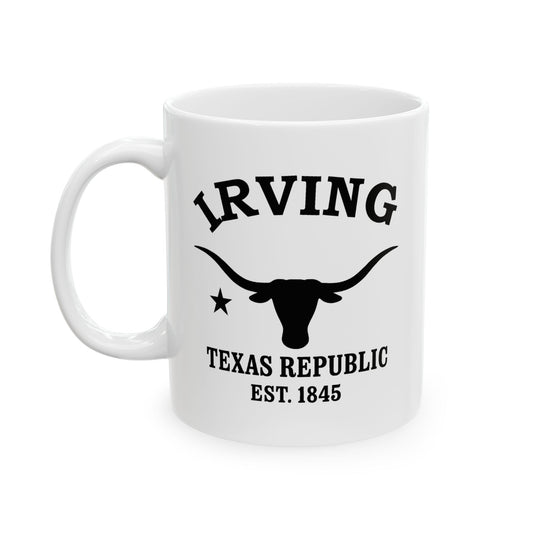
Irving Texas Vintage Retro Ceramic Mug - Black Logo
Regular price From $16.00 USDRegular price -
Irving Texas Vintage Retro Cotton Canvas Tote Bag - White Logo
Regular price $25.00 USDRegular price -
Irving Texas Vintage Retro Cotton Canvas Tote Bag - Black Logo
Regular price $25.00 USDRegular price -
Irving Texas Vintage Retro Thank You Card Set - Black Logo
Regular price From $25.00 USDRegular price -
Irving Texas Vintage Retro Cotton Jersey Baby Bodysuit - Black Logo
Regular price $26.00 USDRegular price -
Irving Texas Vintage Retro Unisex Cotton Jersey Tank Top - Black Logo
Regular price $28.00 USDRegular price -
Irving Texas Vintage Retro Unisex Cotton Jersey Tank Top - White Logo
Regular price $28.00 USDRegular price -
Irving Texas Vintage Retro Unisex Heavy Crewneck Sweatshirt - Black Logo
Regular price $44.00 USDRegular price -
Irving Texas Vintage Retro Unisex Heavy Crewneck Sweatshirt - White Logo
Regular price $44.00 USDRegular price -
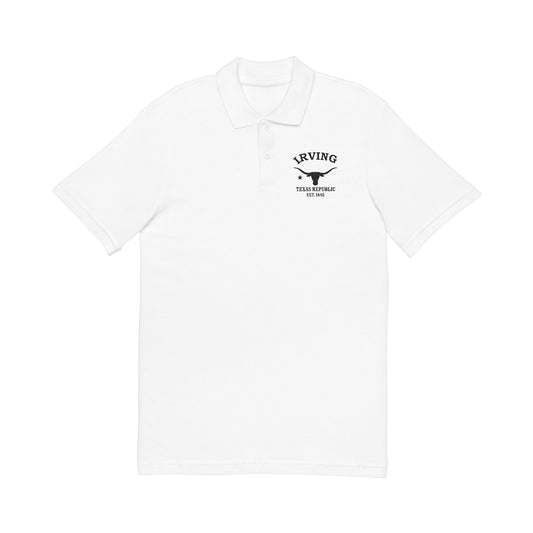
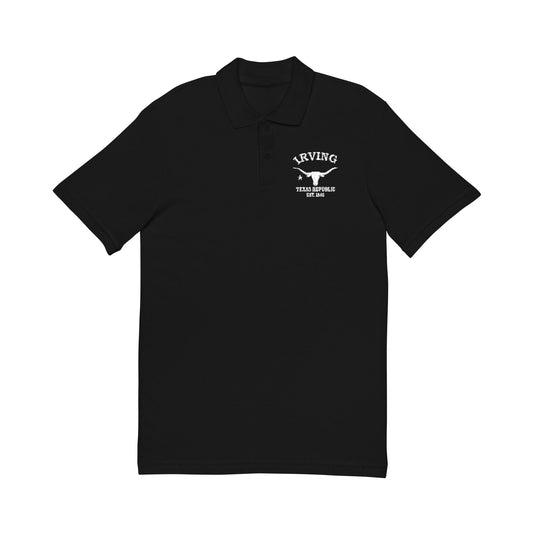
Irving Texas Vintage Retro Unisex Embroidered Cotton Polo - Black Logo
Regular price $48.00 USDRegular price








Irving Texas — Retro Vintage History
What's with the wild horses running through the fountain? Come into Las Colinas and you meet them at Williams Square: nine bronze mustangs, one and a half times life size, galloping flat-out across a granite plaza while hidden jets throw up spray at their hooves, so the whole herd looks caught mid-splash across a prairie stream. This is the Mustangs of Las Colinas, the largest equestrian sculpture in the world — modeled over eight years by the wildlife sculptor Robert Glen and set running here in 1984. The horses are not decoration; they stand for the wild mustang herds that once ran the open range, the free-roaming Texas the city grew out of. In a business district of glass towers, nine wild horses still run.
Wear the HistoryIrving itself is younger than the herd it honors. In 1903 two promoters, Otis Brown and J.O. Schulze, platted a townsite on the prairie between Dallas and Fort Worth, along the rail line that ran between them, and named it for the author Washington Irving — the New Yorker who gave the world Rip Van Winkle and the Headless Horseman. The young town farmed corn, wheat, and cotton and shipped its harvest down the rails to the two cities on either side; it incorporated in 1914. The literary name was a flourish for a dusty prairie townsite, but it stuck, and Irving has carried an author's name ever since. From the start, Irving's whole position was its in-between place: close to everything, beholden to neither neighbor.

For half a century Irving stayed a quiet farm town of churches and cotton fields. Then the postwar boom found it. Through the 1950s and 1960s the prairie filled with subdivisions, schools, and highways as families poured into affordable new homes within reach of both downtowns. The decisive stroke came on the town's western edge, where the giant new Dallas/Fort Worth airport opened in 1974 — suddenly Irving sat beside one of the busiest gateways in the country, and the farm town's in-between location turned into a business address.
The transformation took shape as Las Colinas. Beginning in 1973, the rancher and developer Ben Carpenter laid out a master-planned city-within-the-city on old family ranch land: office towers and hotels, a man-made lake, and the Mandalay Canal, a Venetian-style waterway where water taxis still slide past the shops. At its heart he set Williams Square, a stark plaza of pink granite — and into that plaza came the mustangs. In a single generation Irving had gone from cotton rows to one of the most recognizable corporate skylines in Texas. Carpenter wanted a touch of Europe on the Texas prairie, and the result still surprises first-time visitors who half expect oil derricks and instead find canal boats.
What Las Colinas chose to put at its center says everything about how Texas sees itself. Not a founder, not a logo — a herd of wild horses. The mustangs commemorate the free-running herds that roamed the Texas range before the ranches and the rails, the animals that carried the state's idea of freedom and grit. Today they are the city's signature, watched over by a small museum in the tower beside the plaza, and the reason a planned business district carries a wild heart. The sculpture took its maker eight years to model and cast, and the plaza around it earned a national landscape-architecture honor award soon after it opened.
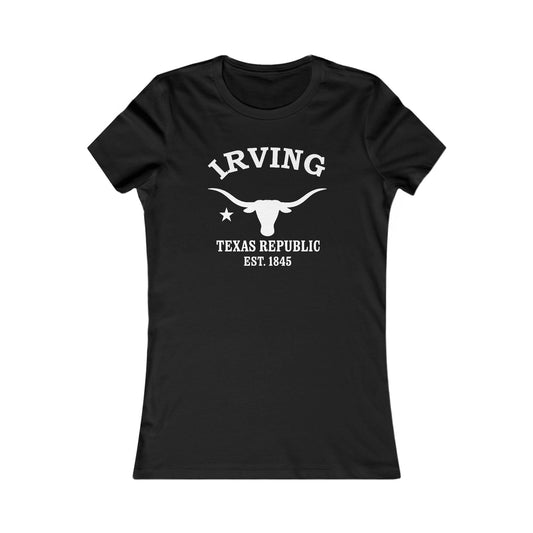
Our Irving logo carries Texas's longhorn and Lone Star, drawn in worn black and white above ‘Texas Republic — Est. 1845,’ the shared retro emblem of our Texas towns. The longhorn stands for ranching toughness and the star for the Lone Star State, and the 1845 date marks Texas statehood; the emblem is the through-line that links Irving to every other Texas town we make. What makes this one Irving is everything around it — the mustangs, the canals of Las Colinas, and a farm town that became a city of the world.
Today Irving is one of the most diverse cities in America — often said to hold the most varied ZIP code in the country — a global business hub in the heart of the Dallas–Fort Worth Metroplex. Its days run on canal walks and gallery openings, concerts at the Toyota Music Factory and miles of the Campion Trail, all in the shadow of nine bronze horses. It is a city that keeps reinventing itself, yet still points every visitor toward the same wild herd. Our Irving designs gather that into wearable form. Wear the history. The Mustangs of Las Colinas.

Irving, Texas — Travel Guide
Visiting Irving Today
Irving sits in the heart of the Dallas–Fort Worth Metroplex, right beside DFW Airport — about as central a base as North Texas offers. It pairs the canals and glass towers of Las Colinas with public art, riverside trails, and a lively entertainment district, all an easy hop from both downtowns.
Mustangs, Canals & the Metroplex
For visitors looking for things to do in Irving, Texas:
- See the Mustangs of Las Colinas at Williams Square, the world's largest equestrian sculpture.
- Ride a water taxi along the Mandalay Canal in Las Colinas, a Venetian-style waterway lined with shops.
- Tour the Irving Arts Center for rotating exhibits and performances for all ages.
- Bike or walk the Campion Trail, a greenbelt path along the Trinity River.
- Catch a show at the Toyota Music Factory, a district of venues, dining, and nightlife.
- Visit the Irving Archives & Museum and the adjacent Mustang Sculpture Exhibit.
- See Heritage House, a preserved early-1900s residence with original furnishings.
- Stroll Williams Square at dusk, when the Mustangs and the fountains around them are lit.
Why People Visit Irving
Irving offers art, water, and wild bronze horses in the middle of the Metroplex. Visitors come for the Mustangs, the canals, and the music, and stay for a central, easygoing base beside DFW with museums, sculpture plazas, and trails close at hand. It is both a cultural stop and a convenient home base, with year-round appeal in its parks, paths, and public spaces.
Wear the History
Kindred Cities
Greetings, friends from Boulogne-Billancourt, France (bienvenue), Merton, England and Marino, Italy (benvenuti) — Irving keeps company across Europe.
Irving wears its internationalism plainly — said to hold the most diverse ZIP code in the country — and its sister cities suit it. Boulogne-Billancourt is the affluent Paris suburb of Renault and the old film studios; Merton is the London borough that hosts Wimbledon; Marino is a wine town in the hills above Rome. Three European partners for a city built on global business and the Las Colinas skyline.
Come from any of them and Irving makes the welcome easy: a polished business city beside DFW Airport, the Mustangs of Las Colinas galloping through their plaza, and a dining scene that spans the world its residents came from. Come and visit us soon.
When you plan the trip, the Irving Convention & Visitors Bureau is the place to start.
Wear the History

For deeper reading on the Irving history described here — the 1903 founding by Otis Brown and J.O. Schulze, the naming for author Washington Irving, the farm-town years and the postwar suburban boom, the opening of DFW Airport, and the 1973 Las Colinas development with its 1984 Mustangs of Las Colinas — it may be useful to consult (1) the Irving Archives & Museum, (2) the Irving Public Library local history collection, (3) the Texas State Historical Association (Handbook of Texas), (4) the Dallas Historical Society, and (5) the Texas State Library and Archives Commission. For travel and visitor information, it may be useful to contact (1) the Irving Convention & Visitors Bureau, (2) the Irving Arts Center, (3) the Las Colinas Association, (4) the City of Irving Parks & Recreation Department (Campion Trail), and (5) Travel Texas, the state tourism office. Many of these hold photographs, plats, and oral histories specific to Irving and the Las Colinas development.
- Choosing a selection results in a full page refresh.
- Opens in a new window.