


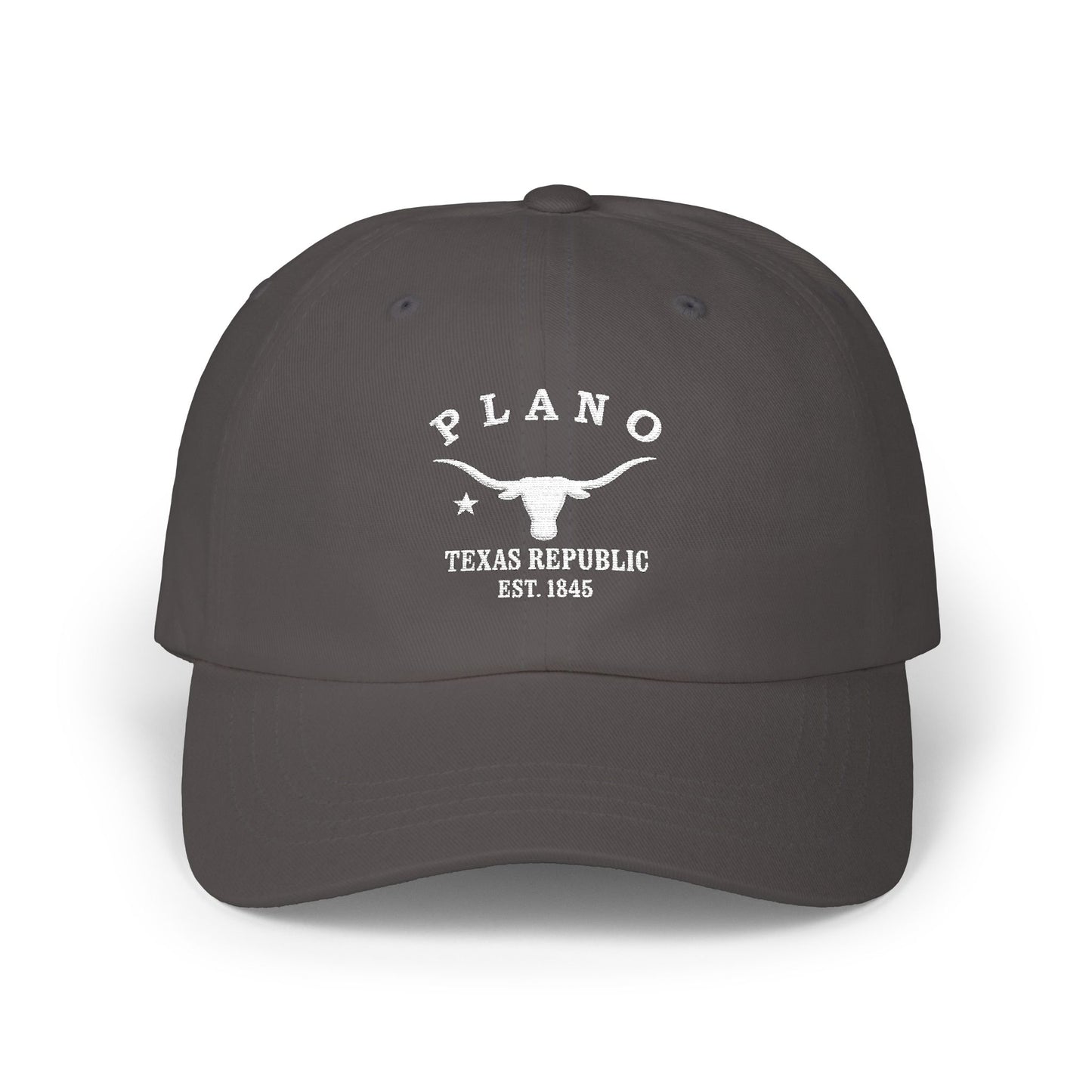
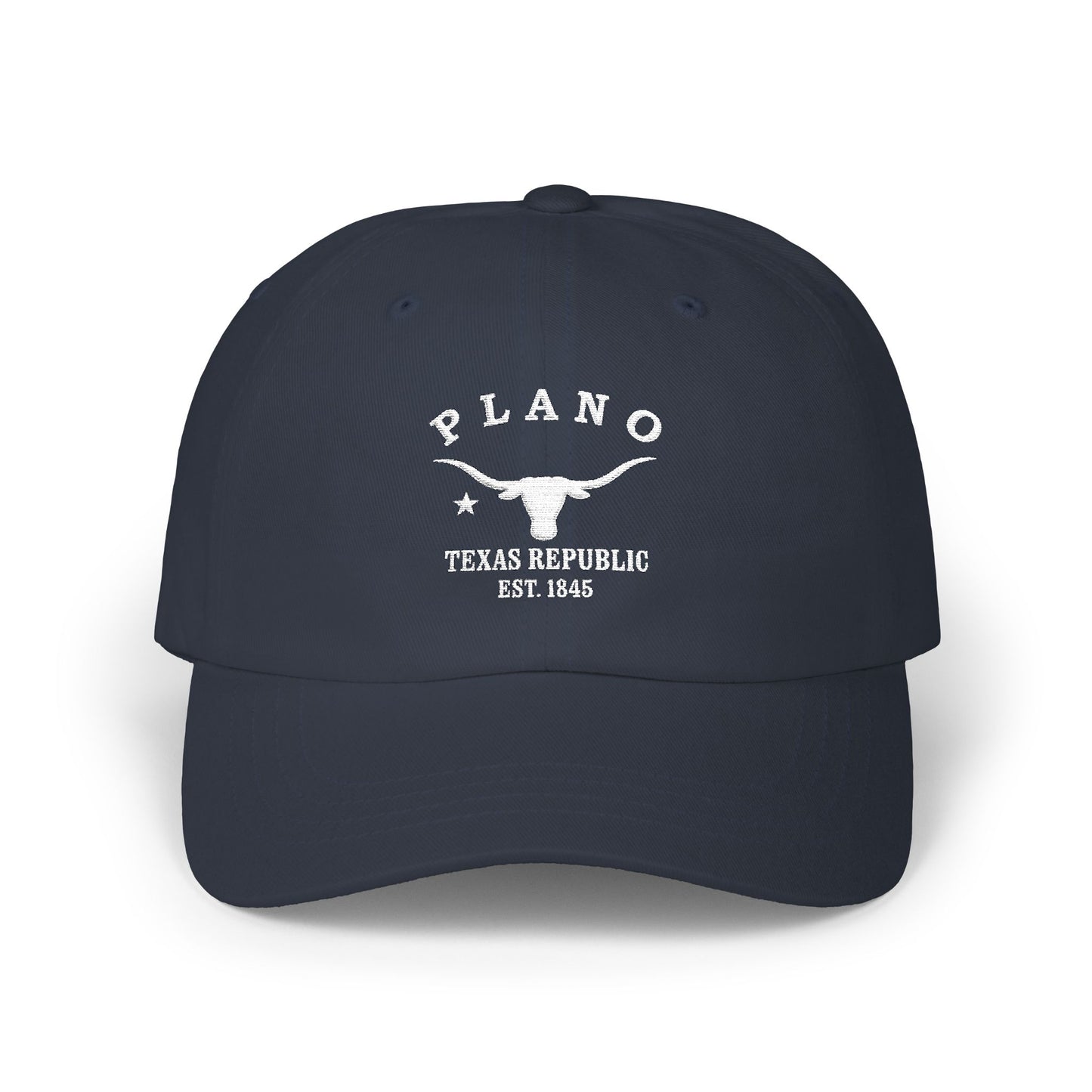
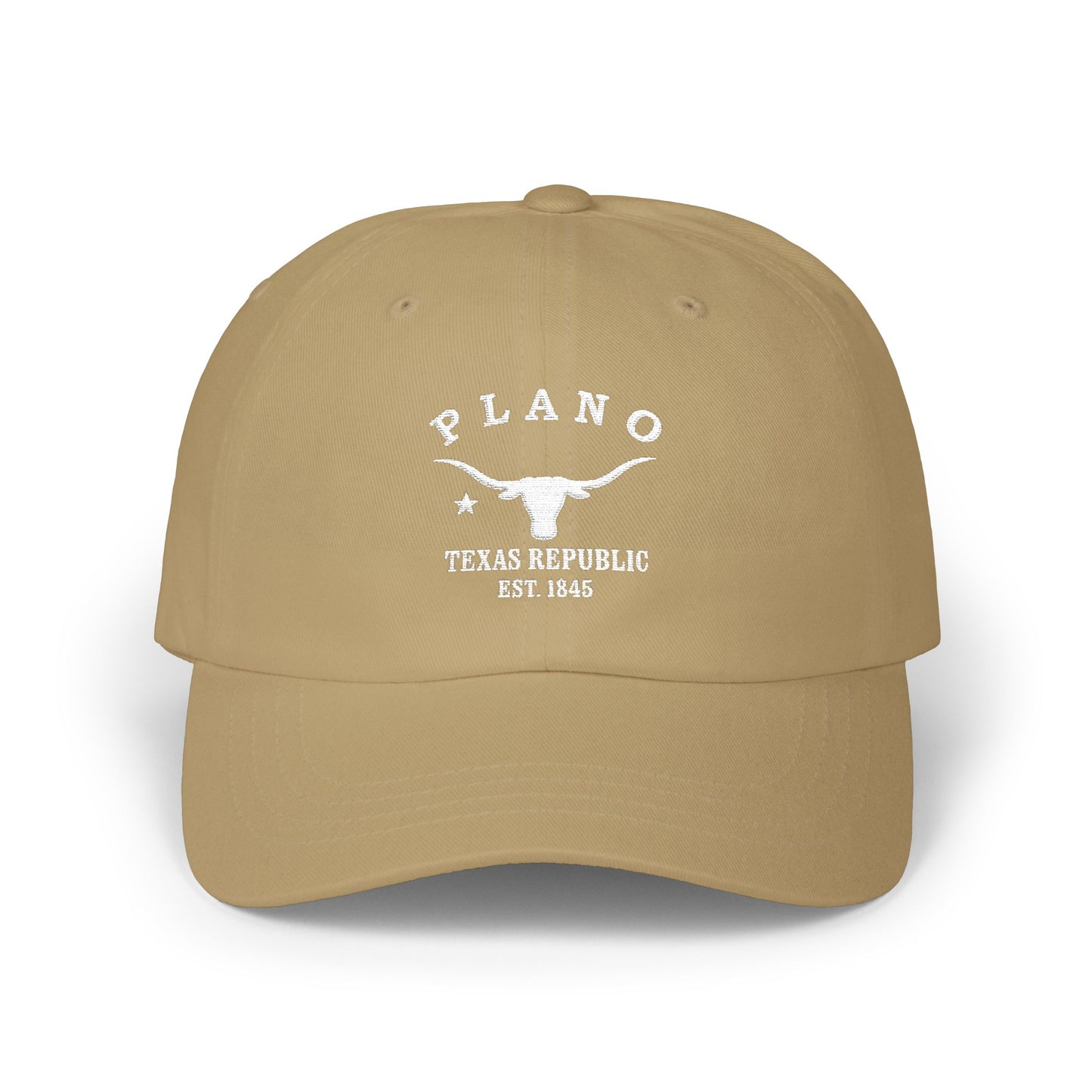
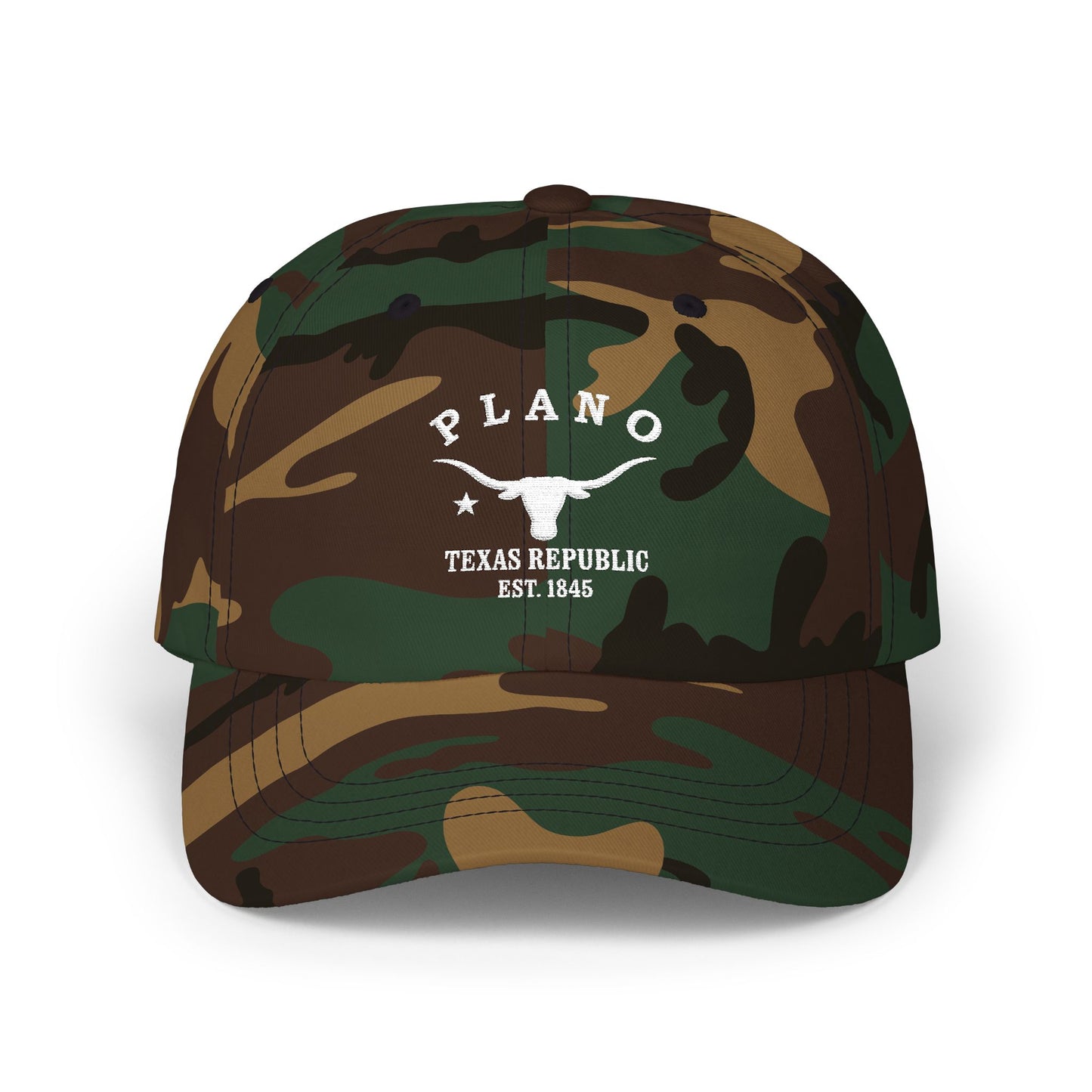
Today Plano is a city of a quarter-million people, transplants from across the country, and corporate towers — but its roots run straight down into the Blackland Prairie. Its story moves from the Peters' Colony farms and the 1872 railroad, through the fire of '81 and the brick rebuild, to the 1891 farmstead and the Sun Belt boom that made it the ninth-largest city in Texas. Our Plano designs gather that farm-town heritage into wearable form — the longhorn and star, the prairie, and the town that refused to burn away. Plano, Texas: Blackland roots, big Texas sky.
The prairie's grandest survivor sits a little west of downtown. In 1891 the Farrell family built a fourteen-room Victorian farmhouse — elaborate jigsaw trim, a windmill, barns, a blacksmith shop, a henhouse, and a country store — on a working ranch, the same year Plano organized its public school system. For decades the place was a sheep operation; 'Miss Ammie' Wilson, a champion sheep breeder, ran it into the 1970s and left it to the public rather than the developers. Today it survives as the Heritage Farmstead Museum, an accredited living-history site where the windmill still turns and the Blackland Prairie story is kept alive, room by restored room — a working farm preserved whole inside a modern metropolis.
Why People Visit Plano
Plano rewards visitors who want Texas history without the crowds of a tourist town — a genuine 1891 farmstead, a brick Main Street rebuilt after the great fire, an electric-railway museum, and nature preserves on the old Blackland Prairie. People come for the Heritage Farmstead and the downtown arts district, for the September balloons over the prairie, and for an easy, welcoming North-Texas day with real roots behind it.
