Every design is set in hand-lettered vintage type for that old-school, crate-label look. One sample color shown — black and white logo options on every piece. Recently in the national press. Enjoy!
-
Haleakala Hawaii Vintage Retro Premium Crewneck Sweatshirt - Black Logo
Regular price $48.00 USDRegular price -
Haleakala Hawaii Vintage Retro Premium Crewneck Sweatshirt - White Logo
Regular price $48.00 USDRegular price -
Haleakala Hawaii Vintage Retro Vinyl Sticker - Black Logo
Regular price From $6.00 USDRegular price -
Haleakala Hawaii Vintage Retro Ceramic Mug - Black Logo
Regular price From $16.00 USDRegular price -
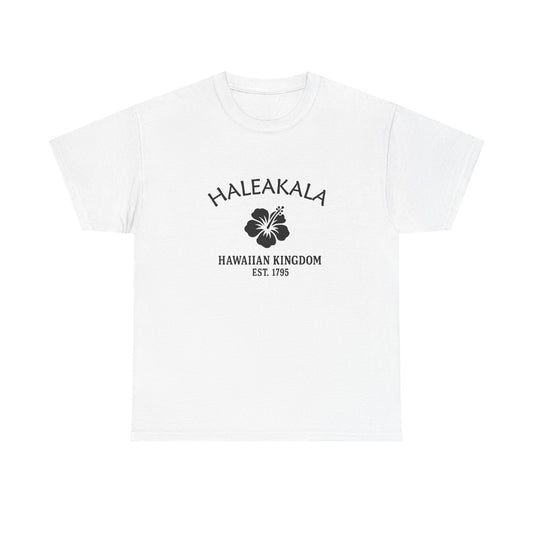
Haleakala Hawaii Vintage Retro Unisex Heavy Cotton Tee - White Logo
Regular price $22.00 USDRegular price -
Haleakala Hawaii Vintage Retro Unisex Heavy Cotton Tee - Black Logo
Regular price $22.00 USDRegular price -
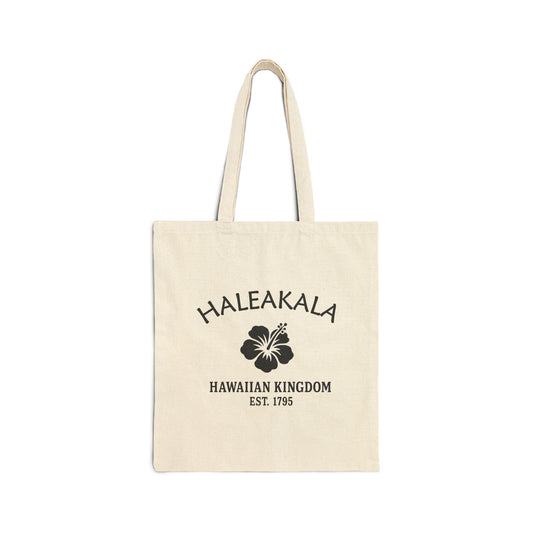
Haleakala Hawaii Vintage Retro Cotton Canvas Tote Bag - White Logo
Regular price $25.00 USDRegular price -
Haleakala Hawaii Vintage Retro Cotton Canvas Tote Bag - Black Logo
Regular price $25.00 USDRegular price -
Haleakala Hawaii Vintage Retro Thank You Card Set - Black Logo
Regular price From $25.00 USDRegular price -
Haleakala Hawaii Vintage Retro Cotton Jersey Baby Bodysuit - Black Logo
Regular price $26.00 USDRegular price -
-
Haleakala Hawaii Vintage Retro Womens Fitted Ringspun Cotton Tee - Black Logo
Regular price $28.00 USDRegular price -
Haleakala Hawaii Vintage Retro Unisex Cotton Jersey Tank Top - White Logo
Regular price $28.00 USDRegular price -
Haleakala Hawaii Vintage Retro Unisex Cotton Jersey Tank Top - Black Logo
Regular price $28.00 USDRegular price -
Haleakala Hawaii Vintage Retro Embroidered Cotton Cap - White Logo
Regular price $32.00 USDRegular price -
Haleakala Hawaii Vintage Retro Embroidered Cotton Cap - Black Logo
Regular price $32.00 USDRegular price -
Haleakala Hawaii Vintage Retro Unisex Heavy Crewneck Sweatshirt - Black Logo
Regular price $44.00 USDRegular price -
Haleakala Hawaii Vintage Retro Unisex Heavy Crewneck Sweatshirt - White Logo
Regular price $44.00 USDRegular price -
Haleakala Hawaii Vintage Retro Unisex Heavy Cotton Hoodie - White Logo
Regular price $56.00 USDRegular price -
Haleakala Hawaii Vintage Retro Unisex Embroidered Cotton Polo - Black Logo
Regular price $48.00 USDRegular price -
Haleakala Hawaii Vintage Retro Unisex Heavy Cotton Hoodie - Black Logo
Regular price $56.00 USDRegular price -
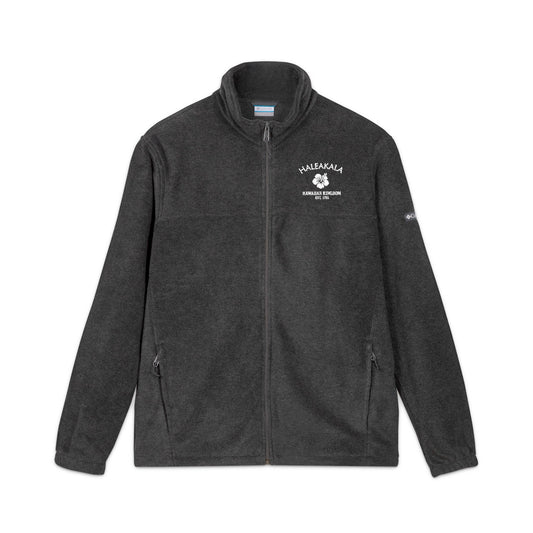
Haleakala Hawaii Vintage Retro Unisex Embroidered Fleece Jacket - White Logo
Regular price $98.00 USDRegular price -
Haleakala Hawaii Vintage Retro Back Printed Art Series Cotton Tee - Black Logo
Regular price $32.00 USDRegular price -
Haleakala Hawaii Vintage Retro Giclée Print Art Series Poster
Regular price From $38.00 USDRegular price






















Haleakalā Hawaii — Retro Vintage History
What’s with the Longer Days of Haleakalā? Stand on the summit and the day really does feel stretched — sunrise arrives over a sea of clouds, sunset lingers, and the light seems in no hurry at all. In the oldest stories, this is exactly as promised: the demigod Māui stood at this rim and snared the sun, winning its word to walk more slowly across the sky so that his mother Hina’s kapa cloth could dry. The name is the promise kept — Haleakalā, the House of the Sun — and every morning, in the cold thin air at ten thousand feet, the sun still rises slowly over the House built for it.
Wear the HistoryWhere you’re from. Where you love. Where you explored. Where you belong.
Haleakalā is a sacred place before it is a scenic one. To kānaka maoli — Native Hawaiians — the summit region is the Wao Akua, the realm of the gods, and their presence here is ancient: radiocarbon dating places people at the crater between 660 and 1030 CE, and the mountain has held ceremonial, navigational, and spiritual life from settlement to this day. It is a living cultural landscape, not a museum, and visitors are asked to tread lightly and with respect. The mountain itself is a great shield volcano — more than three-quarters of the island of Maui is Haleakalā — risen from the ocean floor over the last million years and quiet since its last eruption, sometime between 1480 and 1600.
QUICK FACTS — HALEAKALĀ, HAWAIʻI
Haleakalā means “House of the Sun” — in Hawaiian tradition, the demigod Māui snared the sun at this summit to lengthen the day.
The shield volcano of Haleakalā forms more than 75 percent of the island of Maui.
The summit, Puʻu ʻUlaʻula, stands 10,023 feet above the Pacific — reached from sea level in just 38 road miles.
Haleakalā’s “crater” is seven miles long, two miles wide, and 2,600 feet deep — an erosional valley, not a true volcanic crater.
Haleakalā last erupted between 1480 and 1600 and has been quiet ever since.
The silversword (ʻāhinahina) grows only on Haleakalā, blooms once after up to 50 years, then dies.
Haleakalā was protected within Hawaiʻi National Park on August 1, 1916, and became its own national park on July 1, 1961.
It sometimes snows at Haleakalā’s summit — one of the few places in Hawaiʻi that sees snowfall.
The measures of the place are hard to believe. The road climbs from sea level to the 10,023-foot summit at Puʻu ʻUlaʻula in just 38 miles — one of the steepest such ascents on Earth. At the top, the famous “crater” opens seven miles long, two miles wide, and some 2,600 feet deep — honestly speaking not a volcanic crater at all, but a vast erosional valley where two great watersheds wore through and met. It is cold up there; now and then, it even snows in Hawaiʻi. The first recorded non-Hawaiian ascent came in 1828, and travelers have been making the climb ever since.

On August 1, 1916, Haleakalā was set aside as part of Hawaiʻi National Park, and the modern era of the mountain began: Civilian Conservation Corps crews built the great crater trails in the 1930s — Keoneheʻeheʻe, the Sliding Sands, and Halemauʻu switchbacking down the wall — and on July 1, 1961, Haleakalā became a national park in its own right. The crater district joined the National Register of Historic Places in 1974, the park was named an International Biosphere Reserve in 1980, and its summit sky remains one of the darkest and clearest anywhere — which is why the stargazing is famous and the sunrise is a pilgrimage.
Life up here is found nowhere else. The silversword — ʻāhinahina — grows only on Haleakalā’s high slopes, waits as long as half a century to bloom once, and then dies; the nēnē, Hawaiʻi’s native goose, walks the cinder like it owns the place; and down at Hosmer Grove the native honeycreepers still flash through the trees. The park protects more endangered species than almost any other in the national park system.
And the mountain has a second face. Around the east flank, the Kīpahulu District drops through coastal rainforest to the sea: the Pools of ʻOheʻo step down the gulch toward the ocean — mid-century marketing dubbed them the “Seven Sacred Pools,” a made-up name the park itself discourages — and the Pīpīwai Trail climbs past banyans and through a creaking bamboo forest to 400-foot Waimoku Falls. The two districts do not connect by road inside the park: one mountain, two worlds — cinder desert above, rainforest below.
Our Haleakalā retro logo uses the Hawaiian hibiscus motif, the brand-wide flower of every Merlin Classics Hawaiʻi town, paired with the inscription "Hawaiian Kingdom — Est. 1795," referencing the unification of the islands under Kamehameha I at the Battle of Nuʻuanu. The black-and-white styling is retro, resembling vintage travel decals or crate labels. The motif honors Haleakalā's place inside the broader Hawaiʻi heritage frame, and pairs the kingdom-era anchor with the mountain that has been here since long before any flag flew over the islands. On merchandise the emblem conveys reverence, pride, and continuity, retro in tone, and connects Haleakalā to the family of Merlin Classics Hawaiʻi pages with one shared design language.
So Haleakalā gathers the House of the Sun and the promise of longer days, a sacred summit and an honest “crater,” a silversword that blooms once, snow above a tropical sea, and a sunrise that earns its reservation — and our Haleakalā designs gather that into wearable form. Whether you rode down the mountain at dawn, hiked the Sliding Sands, stood above the clouds once and never forgot it, or keep the House of the Sun on your list — wear it. Above the clouds since 1916.

Haleakalā Hawaiʻi — Travel Guide
Visiting Haleakalā Today
Haleakalā National Park is split into two non-connected districts: the Summit Area on the upper mountain, reached by Hawaiʻi Highway 378 (the Haleakalā Crater Road), and the Kīpahulu District down on the coast, reached via the Hāna Highway past Hāna town. The summit can be near-freezing with wind chill in winter and sees occasional snow above 10,000 feet; the Kīpahulu coast is warm rainforest year-round. Sunrise viewing at the summit requires an advance reservation through Recreation.gov from 3 a.m. to 7 a.m. Bring layers, water, and patience for the road — the drive from sea level to the summit climbs ten thousand feet in thirty-eight miles and is one of the more remarkable mountain drives on Earth.
Sunrise, Silversword, and the Pools of ʻOheʻo in Haleakalā
For visitors searching for things to do in Haleakalā Hawaiʻi:
- Watch sunrise at Puʻu ʻUlaʻula Overlook, the 10,023-foot summit of Haleakalā, with reservations made up to sixty days in advance through Recreation.gov — the iconic Haleakalā experience.
- Stop at the Haleakalā Visitor Center at 9,740 feet for crater overlooks, exhibits, ranger talks, and views of the cinder cone landscape from the rim.
- Hike the Sliding Sands Trail (Keoneheʻeheʻe) from the visitor center down onto the crater floor — descend through colored cinder fields and silversword stands, knowing the climb back out is steep and at altitude.
- Hike the Halemauʻu Trail along the crater rim and down to Hōlua, with sweeping views into Koʻolau Gap and the cloud forest below.
- See the ʻĀhinahina (Haleakalā silversword) at Kalahaku Overlook and along the upper trails — the endemic plant that grows only here, a silver rosette that lives for decades before its one extraordinary bloom.
- Look for nēnē, the Hawaiian goose and state bird, in the summit-area meadows — once nearly extinct, now slowly recovering on the upper mountain.
- Walk Hosmer Grove, the cool forest loop at 6,800 feet, with introduced and native trees and a chance to spot endemic Hawaiian forest birds like the ʻiʻiwi and ʻapapane.
- Pause at Leleiwi Overlook for views into the crater and, on a clear afternoon, the rare Brocken Spectre — a ringed shadow cast on the clouds below.
- Drive down to the Kīpahulu District at the coast and visit the Kīpahulu Visitor Center, the wet-side gateway to the lower park.
- Walk the short Kūloa Point Loop at Kīpahulu to the Pools of ʻOheʻo, the cascading freshwater pools where the ʻOheʻo Stream tumbles down to the Pacific.
- Hike the four-mile round-trip Pīpīwai Trail through the bamboo forest to Waimoku Falls, a four-hundred-foot ribbon of water in the back of the valley.
- Return to the summit after dark for stargazing — Haleakalā's summit sits under one of the darkest, clearest skies in the United States, and the constellations rise above the trade-wind clouds.
Why People Visit Haleakalā
Haleakalā offers a different Hawaiʻi — above the clouds, where the air is thin, the silence carries, and the sun rises over an ocean of mist at six in the morning. Travelers come for the sunrise at Puʻu ʻUlaʻula, the silversword on the upper slopes, the long hike down into the crater on Sliding Sands, the bamboo-forest walk to Waimoku Falls at Kīpahulu, the Pools of ʻOheʻo cascading down to the sea, and the dark-sky stargazing from the summit at night. It is contemplative, otherworldly, and unforgettable — a sacred mountain that has been holding sky over east Hawaiʻi for as long as anyone has counted.
Wear the History
Where you’re from. Where you love. Where you explored. Where you belong.
Kindred Cities
Welcome to everyone who has stood on a great volcano — on Teide (bienvenidos), on Etna (benvenuti), and here above the clouds on Haleakalā.
Some mountains are destinations in themselves, and Haleakalā keeps company with the world's other great volcanic summits. Teide crowns Tenerife as Spain's highest peak; Etna smoulders over Sicily as Europe's largest active volcano; Haleakalā rises more than ten thousand feet above Maui, its bare red crater catching the first light of the Pacific day. Three summits people climb before dawn just to watch the sun arrive.
Climb before dawn and Haleakalā pays you back: a summit road into thin cold air, a crater like another planet, silverswords that grow nowhere else on earth, and a sunrise worth the early start. Come and visit us soon.
When you plan the trip, the National Park Service's Haleakalā pages and the Hawaiʻi Visitors and Convention Bureau are the place to start.
Wear the History
Where you’re from. Where you love. Where you explored. Where you belong.

For deeper reading on Haleakalā — the House of the Sun and the Māui and Hina moʻolelo; the deep Native Hawaiian history of the summit region and its continuing cultural life; the August 1, 1916 establishment within Hawaiʻi National Park and the July 1, 1961 separation as Haleakalā National Park; the Civilian Conservation Corps trail era of the 1930s; the 1974 National Register listing and 1980 International Biosphere Reserve designation; the silversword and nēnē recovery stories; the dark-sky science of the summit; and the Kīpahulu District, the Pools of ʻOheʻo, the Pīpīwai bamboo forest, and Waimoku Falls — it may be useful to consult the National Park Service’s Haleakalā pages, the park’s cultural and natural resource publications, the Bishop Museum, and the University of Hawaiʻi’s Hawaiian collections. For travel and visitor information, the National Park Service and the Hawaiʻi Visitors and Convention Bureau are the places to start.