-
-
El Paso Texas Vintage Retro Embroidered Cotton Cap - Black Logo
Regular price $32.00 USDRegular price -
El Paso Texas Vintage Retro Unisex Heavy Cotton Hoodie - White Logo
Regular price $48.00 USDRegular price -
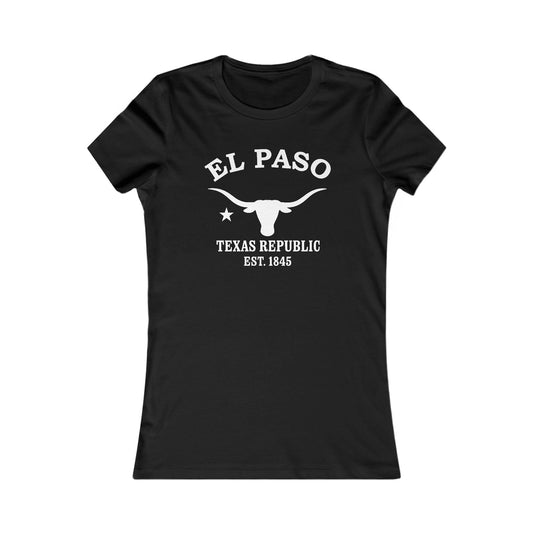
El Paso Texas Vintage Retro Womens Fitted Ringspun Cotton Tee - Black Logo
Regular price $28.00 USDRegular price -
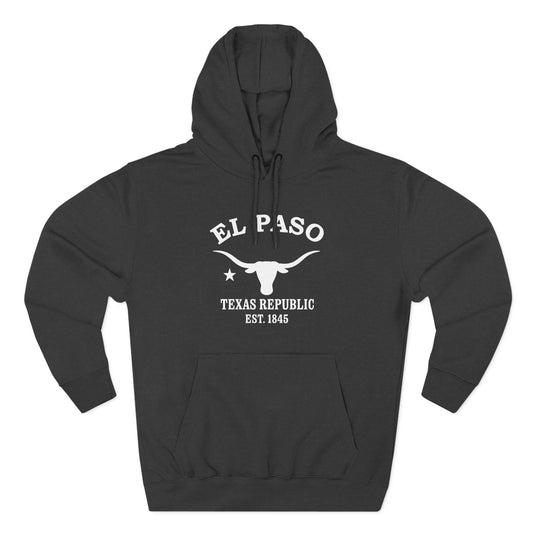
El Paso Texas Vintage Retro Unisex Heavy Cotton Hoodie - Black Logo
Regular price $48.00 USDRegular price -
El Paso Texas Vintage Retro Back Printed Art Series Cotton Tee - Black Logo
Regular price $32.00 USDRegular price -
El Paso Texas Vintage Retro Unisex Heavy Cotton Tee - Black Logo
Regular price $22.00 USDRegular price -
El Paso Texas Vintage Retro Embroidered Cotton Cap - White Logo
Regular price $32.00 USDRegular price -
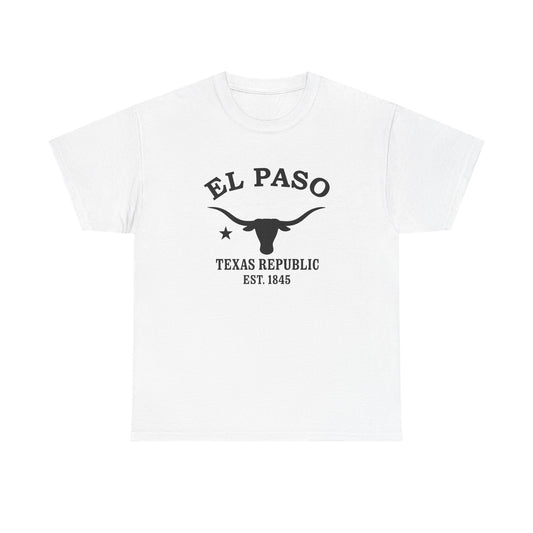
El Paso Texas Vintage Retro Unisex Heavy Cotton Tee - White Logo
Regular price $22.00 USDRegular price -
Shoreline Conversation - Tide & Light Series Giclée Unframed Art Print
Regular price From $34.00 USDRegular price -
Between Horse and Hound - Tide & Light Series Framed Art Print
Regular price From $96.00 USDRegular price -
El Paso Texas Vintage Retro Vinyl Sticker - Black Logo
Regular price From $6.00 USDRegular price -
El Paso Texas Vintage Retro Ceramic Mug - Black Logo
Regular price From $16.00 USDRegular price -
Shoreline Trio II - Tide & Light Series Giclée Unframed Art Print
Regular price From $34.00 USDRegular price -
Boy and Hound - Tide & Light Series Framed Art Print
Regular price From $96.00 USDRegular price -
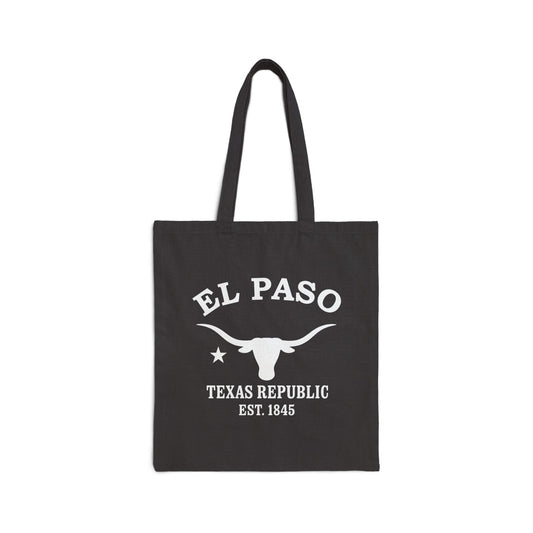
El Paso Texas Vintage Retro Cotton Canvas Tote Bag - Black Logo
Regular price $25.00 USDRegular price -
El Paso Texas Vintage Retro Cotton Canvas Tote Bag - White Logo
Regular price $25.00 USDRegular price -
Whitewater Leap - Tide & Light Series Giclée Unframed Art Print
Regular price From $34.00 USDRegular price -
Whitewater Run - Tide & Light Series Framed Art Print
Regular price From $96.00 USDRegular price -
El Paso Texas Vintage Retro Thank You Card Set - Black Logo
Regular price From $25.00 USDRegular price -
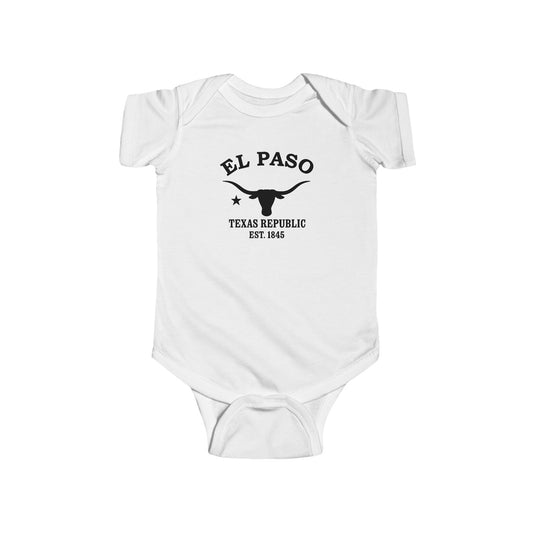
El Paso Texas Vintage Retro Cotton Jersey Baby Bodysuit - Black Logo
Regular price $26.00 USDRegular price -
Between Horse and Hound - Tide & Light Series Giclée Unframed Art Print
Regular price From $34.00 USDRegular price -
Between Two Hounds Portrait - Tide & Light Series Framed Art Print
Regular price From $112.00 USDRegular price -
El Paso Texas Vintage Retro Unisex Cotton Jersey Tank Top - Black Logo
Regular price $28.00 USDRegular price -
Shoreline Gathering - Tide & Light Series Giclée Unframed Art Print
Regular price From $44.00 USDRegular price -
Small Steps - Tide & Light Series Framed Art Print
Regular price From $112.00 USDRegular price -
El Paso Texas Vintage Retro Unisex Cotton Jersey Tank Top - White Logo
Regular price $28.00 USDRegular price -
Between Two Hounds Portrait - Tide & Light Series Giclée Unframed Art Print
Regular price From $44.00 USDRegular price -
Shoreline Gathering - Tide & Light Series Framed Art Print
Regular price From $112.00 USDRegular price -
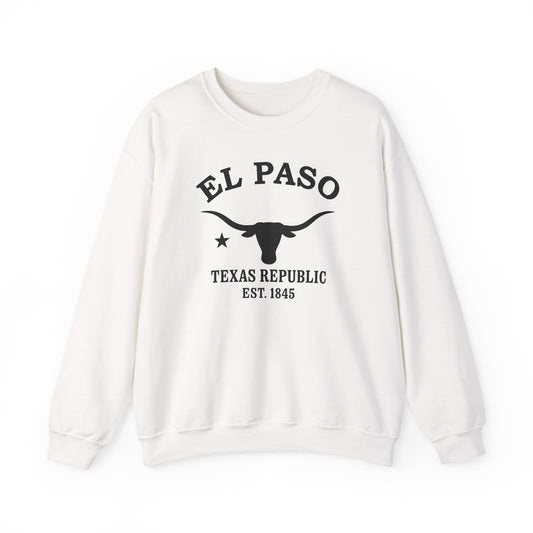
El Paso Texas Vintage Retro Unisex Heavy Crewneck Sweatshirt - Black Logo
Regular price $38.00 USDRegular price -
Whitewater Charge - Tide & Light Series Giclée Unframed Art Print
Regular price From $34.00 USDRegular price -
Whitewater Leap - Tide & Light Series Framed Art Print
Regular price From $96.00 USDRegular price -
El Paso Texas Vintage Retro Unisex Heavy Crewneck Sweatshirt - White Logo
Regular price $38.00 USDRegular price -
El Paso Texas Vintage Retro Giclée Print Art Series Poster
Regular price From $38.00 USDRegular price -
Small Steps - Tide & Light Series Giclée Unframed Art Print
Regular price From $44.00 USDRegular price -
Whitewater Charge - Tide & Light Series Framed Art Print
Regular price From $96.00 USDRegular price
























El Paso Texas — Retro Vintage History
The Pass of the North — a crossing in the mountains that has carried four centuries of history. El Paso sits in the gap where the Rio Grande breaks out of the southern Rockies, the natural pass that everything moving between Mexico and the American Southwest funneled through for four hundred years. A Spanish expedition named it "El Paso del Norte," the Pass of the North, in 1598; the oldest mission in Texas rose nearby a few generations later. Today it is the Sun City, set at the foot of the Franklin Mountains, with a star lit on the slope above it and a sun that almost never quits. This page tells the story of the Pass.
Wear the HistoryLong before any European arrived, Pueblo and desert peoples lived and traded along the Rio Grande at the Pass. In 1598 a Spanish expedition led by Juan de Onate reached the river and gave the crossing its lasting name — El Paso del Norte, the Pass of the North. The mission tradition followed: Fray Garcia de San Francisco founded the first mission of the Pass in 1659, and in 1682, after the Pueblo Revolt drove refugees and the Tigua south, the Ysleta and Socorro missions were built — the oldest in Texas, with Ysleta del Sur Pueblo recognized as the oldest town in the state. For four centuries the Pass was a crossroads on the Camino Real, the royal road of the Spanish Southwest.
The north bank settlement that became modern El Paso took shape after 1827, and in 1848 the Treaty of Guadalupe Hidalgo placed it in United States territory, with Fort Bliss established the same year. When the railroad arrived in 1881, El Paso boomed into a wide-open crossroads of the Old West. Through all of it the city kept the identity the Spanish had named: the Pass — a place defined by the crossing itself, by two languages and two countries sharing one desert valley, and by the mountains that frame it.
What's with the star on the mountain? Look up at the Franklin Mountains after dark and you'll see a giant star outlined in light on the slope above the city. The lighted Franklin Mountains Star is one of the largest illuminated stars in the country, and El Pasoans treat it as the city's own signature — switched on through the holidays and on special nights, visible for miles across the desert and clear into Mexico. It turns the whole mountain into a landmark you can read from the valley floor. There's no mystery to it, just a city that decided its mountain should wear a star — and the Sun City, fittingly, lights one up against the dark.

The Pass keeps its stories close. They'll tell you the name is literal — this really is the pass, the one gap where the river leaves the mountains. They'll point up at the star on the Franklins and out at the Mission Trail, where Ysleta has held services since the 1680s. They'll tell you El Paso runs on Mountain time while the rest of Texas runs on Central, because the Pass has always kept its own clock. And they'll tell you about the sun — that this is the Sun City, where the sky is clear almost every day of the year.
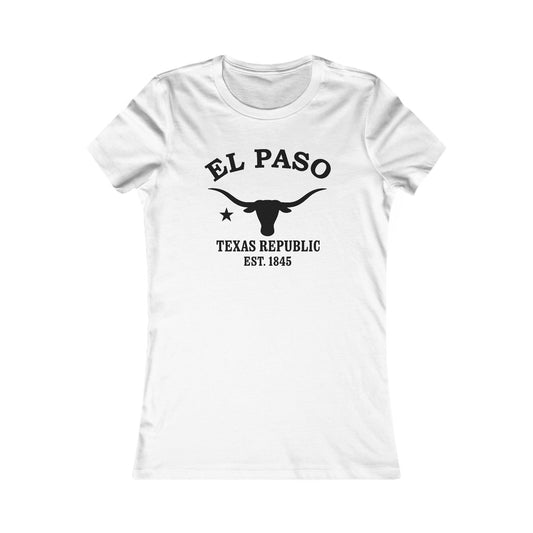
Our El Paso logo carries the Texas longhorn and Lone Star, the same emblem every Merlin Classics Texas place wears, set over "Texas Republic, Est. 1845." The longhorn and star are the Lone Star State's shorthand — toughness, independence, the open range — printed black-and-white with the worn look of an old cattle brand or a rodeo poster. What makes this one El Paso is the place behind it: the Pass of the North, the Franklin Mountains, the desert sun. On a tee or a cap it reads less like a souvenir and more like a piece of West Texas — Est. 1845, worn plain.
Today El Paso is the Sun City still — a borderland metropolis of mountains, missions, and desert light, proud of four centuries at the Pass and home to a large military community at the edge of the Franklins. Its story runs from the Pueblo and Tigua peoples of the river, through the 1598 naming of the Pass and the oldest mission in Texas, to a modern bicultural crossroads. Our El Paso designs gather that identity into wearable form — the Pass of the North, the Sun City, the star on the mountain. El Paso del Norte — the Pass of the North, a crossing for four hundred years.

El Paso Texas — Travel Guide
Visiting El Paso Texas Today
El Paso sits at the far western tip of Texas, in the gap where the Rio Grande leaves the mountains — the Pass of the North. It is a desert city of clear skies and big views, with the Franklin Mountains rising right out of downtown, the Mission Trail running southeast along the river, and the lighted star glowing on the slope after dark.
The Franklins, the Missions & the Sun City
For visitors searching for things to do in El Paso, Texas:
- Hike Franklin Mountains State Park, one of the largest urban parks in the country, with desert trails and overlooks above the city.
- Drive the Scenic Drive Overlook for the classic view of the valley, the mountains, and the lights of two countries at night.
- Follow the El Paso Mission Trail to Ysleta, the oldest mission in Texas, plus Socorro and the San Elizario chapel.
- Rest at San Jacinto Plaza, the historic downtown square with its sculpted alligators.
- Explore Hueco Tanks State Park for desert rock formations and world-class bouldering.
- Visit the El Paso Museum of Art downtown for regional collections and rotating exhibitions.
Why People Visit El Paso Texas
People come to El Paso for the desert light and the layered history — the Pass of the North, the oldest mission in Texas, the star on the mountain — and for the mountains, the Mission Trail, and the bicultural energy of a Sun City that shares one valley with its neighbor across the river. It is sunny, spacious, and deep: four centuries of the Southwest at the Pass.
Wear the History

For deeper reading on the El Paso, Texas history described here — the Pueblo and Tigua peoples of the Rio Grande, the 1598 naming of El Paso del Norte, the 1659 founding of the first mission of the Pass, the 1682 building of the Ysleta and Socorro missions (the oldest in Texas), the 1848 Treaty of Guadalupe Hidalgo and the establishment of Fort Bliss, and the 1881 arrival of the railroad — it may be useful to consult (1) the El Paso County Historical Society, (2) the El Paso Public Library's Border Heritage Center, (3) the Texas State Library and Archives and the Texas Historical Commission, (4) the El Paso County Clerk's records office, and (5) the Ysleta del Sur Pueblo cultural center for Tigua history. For travel and visitor information, it may be useful to contact (1) Visit El Paso, (2) the Texas Office of Tourism, (3) the City of El Paso Parks and Recreation department, (4) Texas State Parks for Franklin Mountains and Hueco Tanks, and (5) the El Paso Mission Trail Association.