Every design is set in hand-lettered vintage type for that old-school, crate-label look. One sample color shown — black and white logo options on every piece. Recently in the national press. Enjoy!
-
Austin Texas Vintage Retro Premium Crewneck Sweatshirt - Black Logo
Regular price $48.00 USDRegular price -
Austin Texas Vintage Retro Premium Crewneck Sweatshirt - White Logo
Regular price $48.00 USDRegular price -
Austin Texas Vintage Retro Womens Fitted Ringspun Cotton Tee - Black Logo
Regular price $28.00 USDRegular price -
-
Austin Texas Vintage Retro Unisex Heavy Cotton Tee - Black Logo
Regular price $22.00 USDRegular price -
Austin Texas Vintage Retro Unisex Heavy Cotton Tee - White Logo
Regular price $22.00 USDRegular price -
Austin Texas Vintage Retro Embroidered Cotton Cap - Black Logo
Regular price $32.00 USDRegular price -
Austin Texas Vintage Retro Embroidered Cotton Cap - White Logo
Regular price $32.00 USDRegular price -
Austin Texas Vintage Retro Unisex Heavy Cotton Hoodie - Black Logo
Regular price $56.00 USDRegular price -
Austin Texas Vintage Retro Unisex Heavy Cotton Hoodie - White Logo
Regular price $56.00 USDRegular price -
Austin Texas Vintage Retro Unisex Embroidered Cotton Polo - Black Logo
Regular price $48.00 USDRegular price -
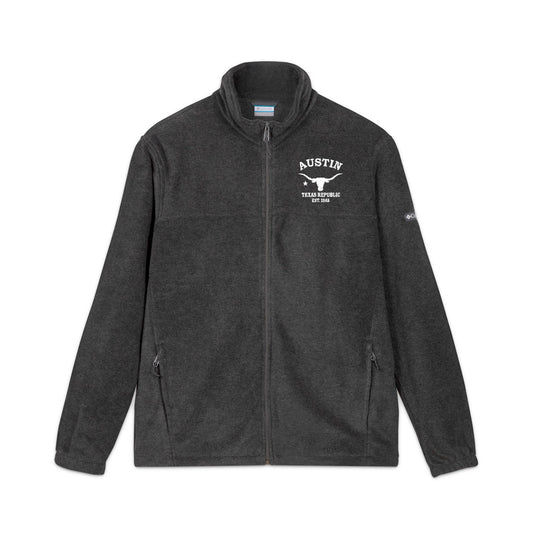
Austin Texas Vintage Retro Unisex Embroidered Fleece Jacket - White Logo
Regular price $98.00 USDRegular price -
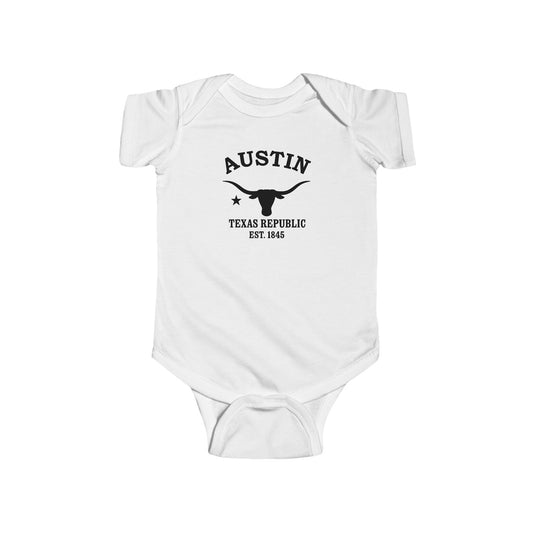
Austin Texas Vintage Retro Cotton Jersey Baby Bodysuit - Black Logo
Regular price $26.00 USDRegular price -
Austin Texas Vintage Retro Cotton Canvas Tote Bag - Black Logo
Regular price $25.00 USDRegular price -
Austin Texas Vintage Retro Cotton Canvas Tote Bag - White Logo
Regular price $25.00 USDRegular price -
Austin Texas Vintage Retro Vinyl Sticker - Black Logo
Regular price From $6.00 USDRegular price -
Austin Texas Vintage Retro Ceramic Mug - Black Logo
Regular price From $16.00 USDRegular price -
Austin Texas Vintage Retro Thank You Card Set - Black Logo
Regular price From $25.00 USDRegular price -
Austin Texas Vintage Retro Unisex Cotton Jersey Tank Top - Black Logo
Regular price $28.00 USDRegular price -
Austin Texas Vintage Retro Unisex Cotton Jersey Tank Top - White Logo
Regular price $28.00 USDRegular price -
Austin Texas Vintage Retro Back Printed Art Series Cotton Tee - Black Logo
Regular price $32.00 USDRegular price -
Austin Texas Vintage Retro Giclée Print Art Series Poster
Regular price From $38.00 USDRegular price -
Austin Texas Vintage Retro Unisex Heavy Crewneck Sweatshirt - Black Logo
Regular price $44.00 USDRegular price -
Austin Texas Vintage Retro Unisex Heavy Crewneck Sweatshirt - White Logo
Regular price $44.00 USDRegular price























Austin Texas — Retro Vintage History
What's with the Violet Crown? Long before it was the Live Music Capital, Austin earned an older, quieter name: the City of the Violet Crown. On clear evenings the low sun throws a band of violet and rose light across the Hill Country ridges that ring the town, and the western hills seem to wear a purple crown. The nickname dates to Austin's early decades and still fits — a capital city set among limestone hills, springs, and the Colorado River, where the day ends in color over the horizon.
Wear the HistoryComanche and Tonkawa peoples lived across this stretch of Central Texas long before any town. In the late 1830s a small settlement on the Colorado River called Waterloo caught the eye of the young Republic of Texas, and in 1839 it was renamed Austin — for Stephen F. Austin, the "Father of Texas" — and chosen as the capital of the independent republic. Surveyors laid a grid above the river, its streets named for Texas rivers and trees, and a frontier village became the seat of a nation.
What's with the Live Music Capital? Austin's music roots run deep and public — dance halls and honky-tonks, the scene that took hold around venues like Threadgill's in the 1930s, and generations of players who made the city a crossroads of country, blues, and folk. By the late twentieth century Austin had claimed the title "Live Music Capital of the World," and the vintage music-poster look became part of the city's visual identity — as much a part of Austin as the Capitol dome.

In 1845 Texas left the republic behind and joined the Union as the Lone Star State, and Austin stayed its capital. The Texas State Capitol that crowns Congress Avenue was completed in 1888, built of "sunset red" Texas granite and rising taller than the United States Capitol in Washington — the signature landmark of the capital city. Around it the original 1839 town has grown into a metropolis, but the river, the springs, and the Hill Country still set the city's rhythm.
Our Austin logo carries the Texas longhorn and the Lone Star over "Texas Republic · Est. 1845" — 1845 the year Texas joined the Union as the Lone Star State. The longhorn's sweeping horns stand for Texas frontier grit, and the single star for the independence that gave the Lone Star State its name. Printed in a distressed black-and-white that reads like old stockyard and state-fair signage, it's the Lone Star in shorthand. What makes this one Austin is the country behind it — the capital on the Colorado, the Hill Country springs, and the city of the violet crown.
Today Austin is the capital of Texas and a Hill Country city of springs, lakes, and live music — a frontier capital grown into a creative metropolis without losing the river that runs through it. Our Austin designs gather that identity — the Capitol dome, the Hill Country and Barton Springs, the live-music heritage, and the violet-crown light — into wearable form. Austin, Texas — capital of the Lone Star State, where the Colorado River winds through the Hill Country.

Austin, Texas — Travel Guide
Visiting Austin Today
Austin sits on the Colorado River where the Texas Hill Country meets Central Texas — a capital city of springs, lakes, and music, and a relaxed base with big landmarks, parkland, and water right downtown.
Capitol, Springs & Hill Country in Austin
For visitors looking for things to do in Austin, Texas:
- See the Texas State Capitol, the 1888 "sunset red" granite dome at the head of Congress Avenue.
- Cool off at Barton Springs, the spring-fed pool in Zilker Park.
- Walk or paddle the Lady Bird Lake trails along the Colorado River downtown.
- Watch the evening bat flight from the Congress Avenue Bridge in season.
- Trace early Texas history at the French Legation (1840) and the Bullock Texas State History Museum.
Why People Visit Austin
Austin balances Texas-capital history with easygoing Hill Country life — spring-fed swimming, river trails, big landmarks, and a deep live-music heritage. It's a relaxed, walkable base for Central Texas and the Hill Country.
Wear the History

For deeper reading on the Austin history described here — the Comanche and Tonkawa heritage of Central Texas, the 1839 Waterloo-to-Austin founding, the Republic-of-Texas capital era and the Archive War, the 1845 statehood, the 1888 State Capitol, and the city's live-music heritage — it may be useful to consult (1) the Austin History Center and the Austin Public Library local-history collection, (2) the Texas State Library and Archives Commission, (3) the Texas Historical Commission and the Bullock Texas State History Museum, (4) the City of Austin clerk's records office, and (5) the Briscoe Center for American History. For travel and visitor information, it may be useful to contact (1) Visit Austin (the city's convention and visitors bureau), (2) the Greater Austin Chamber of Commerce, (3) the City of Austin Parks and Recreation Department, (4) Texas Parks and Wildlife and the Texas State Parks office, and (5) regional road and NWS Austin/San Antonio advisories.
- Choosing a selection results in a full page refresh.
- Opens in a new window.