Every design is set in hand-lettered vintage type for that old-school, crate-label look. One sample color shown — black and white logo options on every piece. Recently in the national press. Enjoy!
-
Killeen Texas Vintage Retro Premium Crewneck Sweatshirt - Black Logo
Regular price $48.00 USDRegular price -
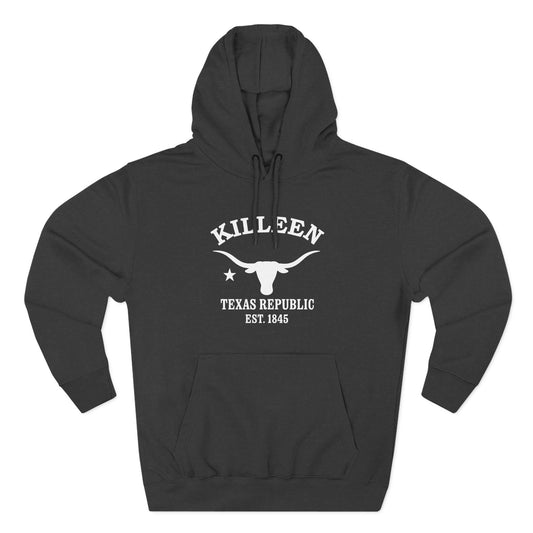
Killeen Texas Vintage Retro Premium Crewneck Sweatshirt - White Logo
Regular price $48.00 USDRegular price -
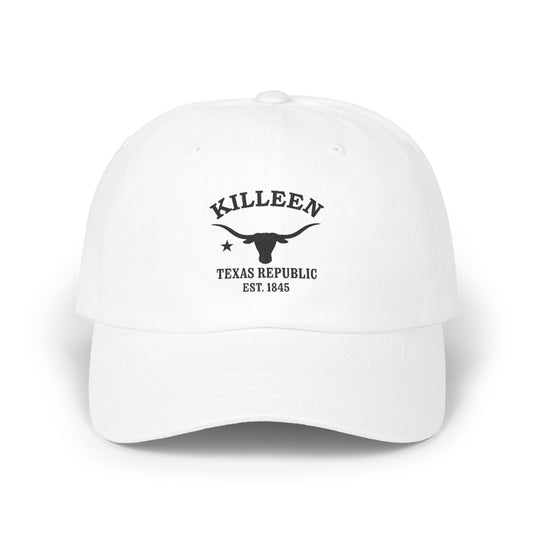
Killeen Texas Vintage Retro Embroidered Cotton Cap - White Logo
Regular price $32.00 USDRegular price -
Killeen Texas Vintage Retro Embroidered Cotton Cap - Black Logo
Regular price $32.00 USDRegular price -
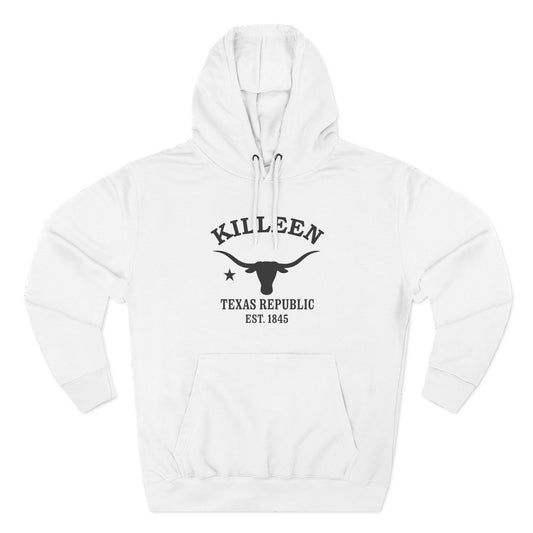
Killeen Texas Vintage Retro Unisex Heavy Cotton Hoodie - White Logo
Regular price $56.00 USDRegular price -
Killeen Texas Vintage Retro Unisex Heavy Cotton Hoodie - Black Logo
Regular price $56.00 USDRegular price -
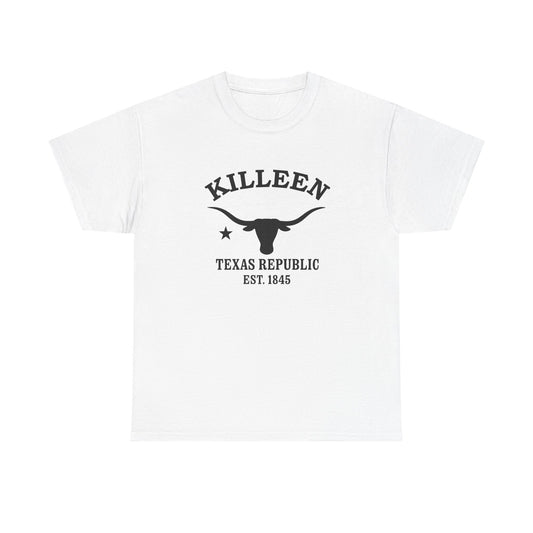
Killeen Texas Vintage Retro Unisex Heavy Cotton Tee - White Logo
Regular price $22.00 USDRegular price -
Killeen Texas Vintage Retro Unisex Heavy Cotton Tee - Black Logo
Regular price $22.00 USDRegular price -
Killeen Texas Vintage Retro Vinyl Sticker - Black Logo
Regular price From $6.00 USDRegular price -
-
Killeen Texas Vintage Retro Womens Fitted Ringspun Cotton Tee - Black Logo
Regular price $28.00 USDRegular price -
Killeen Texas Vintage Retro Unisex Embroidered Fleece Jacket - White Logo
Regular price $98.00 USDRegular price -
Killeen Texas Vintage Retro Back Printed Art Series Cotton Tee - Black Logo
Regular price $32.00 USDRegular price -
Killeen Texas Vintage Retro Giclée Print Art Series Poster
Regular price From $38.00 USDRegular price -
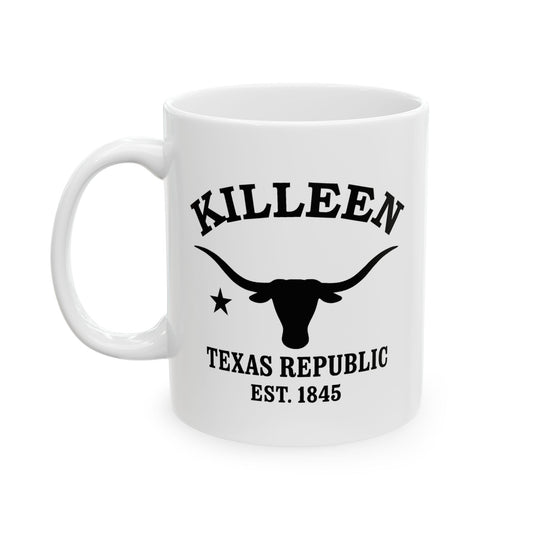
Killeen Texas Vintage Retro Ceramic Mug - Black Logo
Regular price From $16.00 USDRegular price -
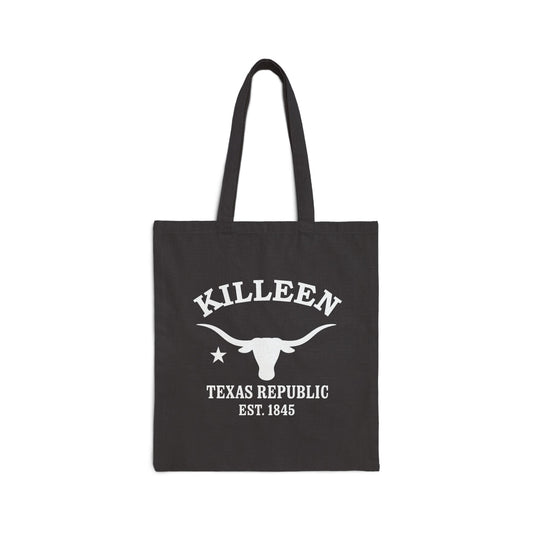
Killeen Texas Vintage Retro Cotton Canvas Tote Bag - White Logo
Regular price $25.00 USDRegular price -
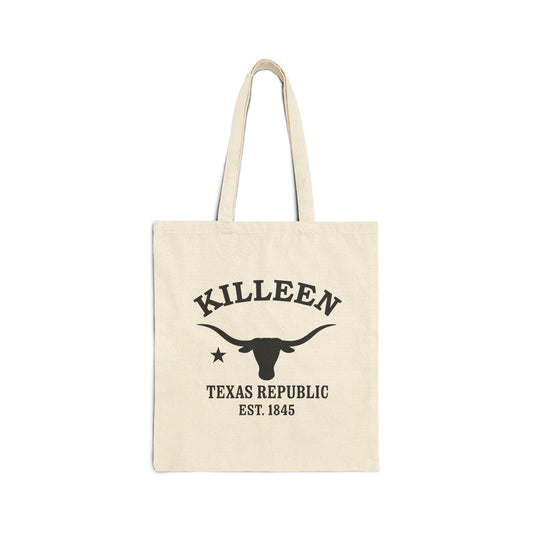
Killeen Texas Vintage Retro Cotton Canvas Tote Bag - Black Logo
Regular price $25.00 USDRegular price -
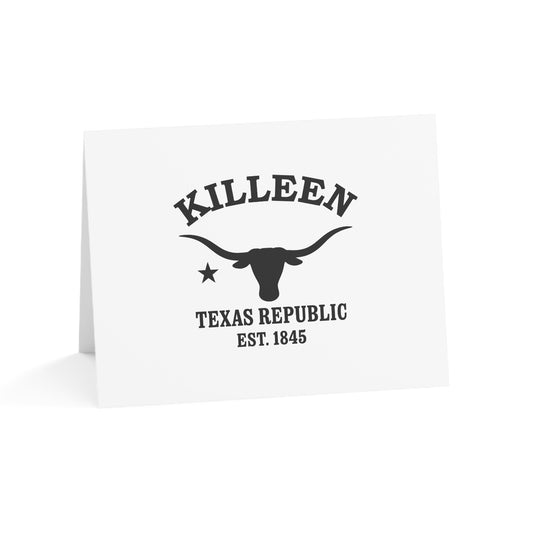
Killeen Texas Vintage Retro Thank You Card Set - Black Logo
Regular price From $25.00 USDRegular price -
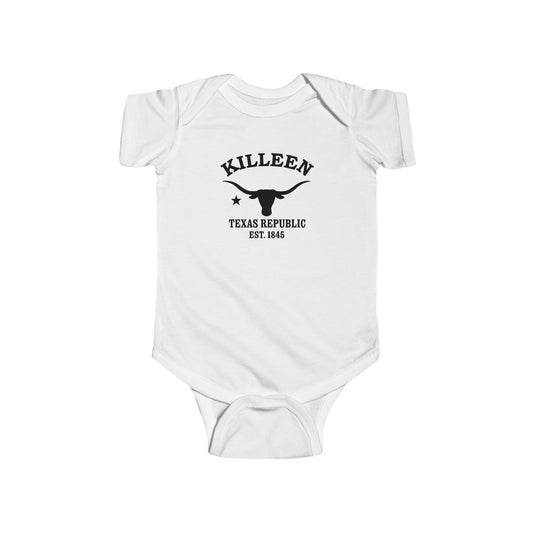
Killeen Texas Vintage Retro Cotton Jersey Baby Bodysuit - Black Logo
Regular price $26.00 USDRegular price -
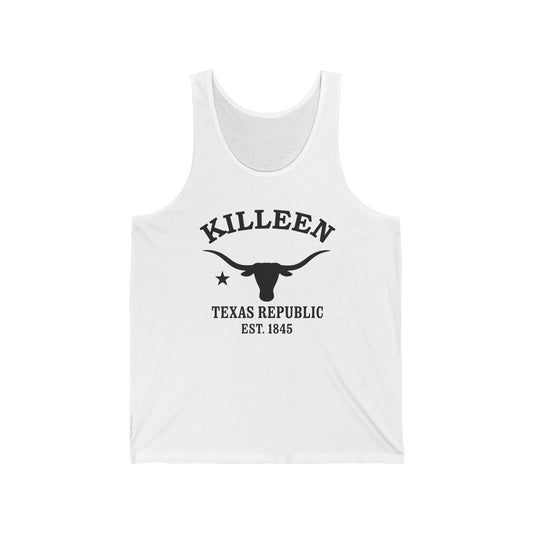
Killeen Texas Vintage Retro Unisex Cotton Jersey Tank Top - Black Logo
Regular price $28.00 USDRegular price -
Killeen Texas Vintage Retro Unisex Cotton Jersey Tank Top - White Logo
Regular price $28.00 USDRegular price -
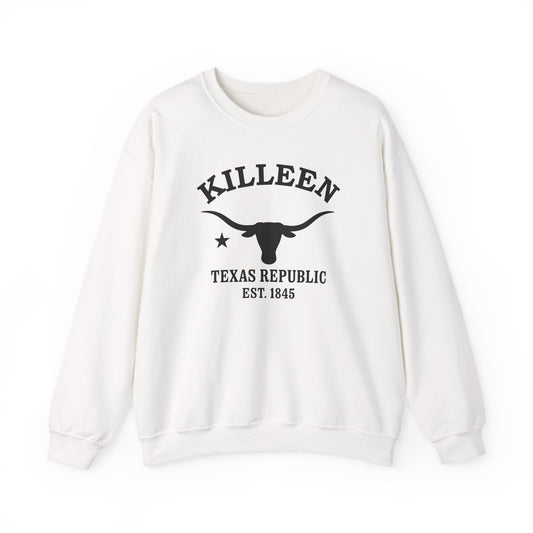
Killeen Texas Vintage Retro Unisex Heavy Crewneck Sweatshirt - Black Logo
Regular price $44.00 USDRegular price -
Killeen Texas Vintage Retro Unisex Heavy Crewneck Sweatshirt - White Logo
Regular price $44.00 USDRegular price -
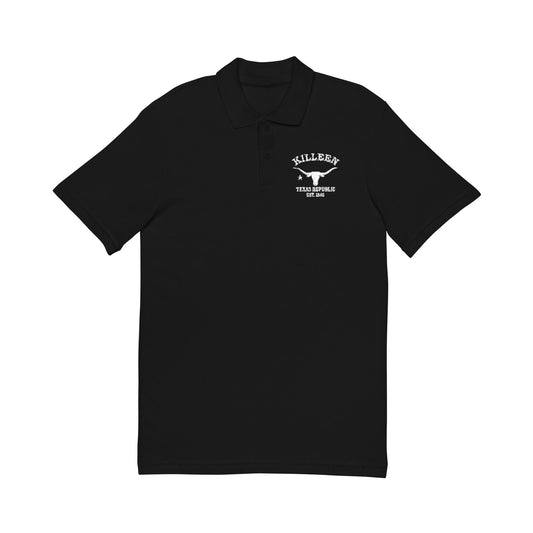
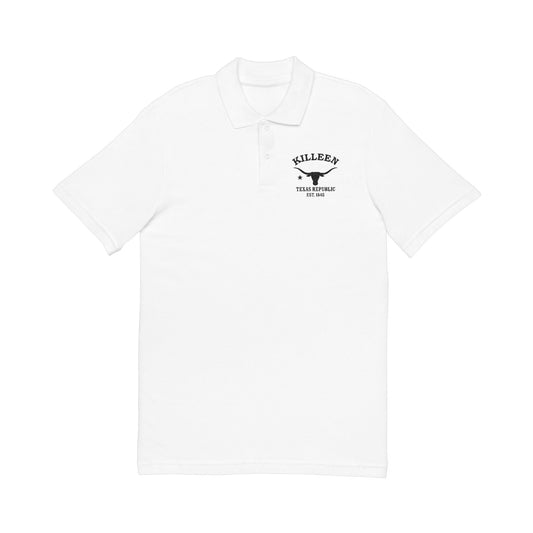
Killeen Texas Vintage Retro Unisex Embroidered Cotton Polo - Black Logo
Regular price $48.00 USDRegular price







Killeen Texas — Retro Vintage History
What's with the soldiers on horseback? Out at Fort Hood, in an age of tanks and helicopters, the 1st Cavalry Division still keeps a mounted unit: the Horse Cavalry Detachment, forty troopers who ride in full 19th-century cavalry kit — Stetson hats, spurs, sabers, the Colt revolver and Springfield carbine — on dark bay horses fitted with McClellan saddles the troopers stitch by hand in their own leather shop. They drill in public on the post, walking, trotting, and galloping through sabre charges lifted straight from the Army's 1883 cavalry manual. The division gave up its horses in 1943; this detachment, one of only a handful of mounted units left in the whole Army, exists to make sure the legend keeps riding. On the Texas prairie, the cavalry never quite dismounted.
Wear the HistoryKilleen began a long way from all that, as a stop on the rails. In 1881 the Gulf, Colorado & Santa Fe pushed its line across central Texas and laid out a townsite on the prairie, naming it for Frank P. Killeen, an official of the railroad. The young town farmed cotton, corn, and wheat and ran cattle on the surrounding land, shipping the harvest out on the trains that had created it. For sixty years Killeen was a quiet farming and ranching town of a few thousand people, its fortunes tied to crops, weather, and the rail schedule — a typical, hardy central-Texas community and nothing more.

Then the Army arrived, and everything changed at once. In 1942, with the country at war, the War Department chose the open country west of town for a vast new training base — Camp Hood — where soldiers learned to destroy tanks. Some three hundred farming and ranching families were given little time to sell up and move off land their people had worked for generations. At its wartime peak the camp held tens of thousands of troops. Almost overnight, a sleepy cotton town found itself at the edge of one of the largest military installations in the United States.
Camp Hood became Fort Hood, a permanent post, and Killeen grew up around its gate. Through the 1950s and 1960s the prairie filled with subdivisions, schools, and shops serving soldiers and their families; the town's population multiplied many times over. Fort Hood grew with it, spreading across some two hundred thousand acres to become the largest active-duty armored post in the country, headquarters of the III Armored Corps and the famed 1st Cavalry Division — a place soldiers came to call ‘The Great Place.’ By the end of the century the post anchored the whole regional economy, employing and housing tens of thousands and making Killeen one of the faster-growing cities in Texas. Town and post had become inseparable.
The 1st Cavalry Division — the ‘First Team’ — was born on horseback in 1921, patrolling the West Texas border, and did not give up its last horses until 1943. In 1972, with the cavalry long since riding tanks and helicopters, the division re-formed a small mounted unit at Fort Hood to keep the old heritage alive. Today the Horse Cavalry Detachment musters forty troopers and a string of dark bay horses, plus mules, a supply wagon, and an old field cannon. Its riders earn their spurs and their Stetsons, drill from the 1883 manual, and carry the division's motto wherever they parade: live the legend, and the legend is on horseback. Once a week the detachment opens its mounted drill to the public, and the crowd that gathers to watch the sabre charges is rarely small.
Our Killeen logo carries Texas's longhorn and Lone Star, drawn in worn black and white above ‘Texas Republic — Est. 1845,’ the shared retro emblem of our Texas towns. The longhorn stands for ranching toughness and the star for the Lone Star State, and the 1845 date marks Texas statehood; the emblem is the through-line that links Killeen to every other Texas town we make. The cavalry's Stetson-and-spurs tradition rhymes with it almost exactly — same hat, same boots, same hard country. What makes this one Killeen is the post at its gate and the horses still drilling behind it.
Today Killeen is a young, diverse army town in the heart of central Texas — home to soldiers, veterans, and a large Korean-American community whose ties reach back through Fort Hood's long rotations to Korea. Its days mix lakeside afternoons and museum mornings with the rhythm of a working post, all under the same Texas sky the cavalry rode out under. Our Killeen designs gather that into wearable form. Wear the history. The last of the cavalry still rides.

Killeen, Texas — Travel Guide
Visiting Killeen Today
Killeen sits in the heart of central Texas, at the gate of Fort Hood between Killeen and Copperas Cove and about an hour north of Austin. It pairs the heritage of a major army post with lakes, parks, and museums — easy regional outings with the hill country close at hand.
The Cavalry, the Lake & the Pavilion
For visitors looking for things to do in Killeen, Texas:
- Catch the 1st Cavalry Division Horse Cavalry Detachment's mounted drill at Fort Hood (check the current public schedule and base access).
- Tour the 1st Cavalry Division Museum and its Crossed Sabers shop for division history and cavalry lore.
- See a show at the Mayborn Science Theater, one of the largest planetariums in Texas.
- Fish, swim, or picnic at Stillhouse Hollow Lake, with clear water and hill-country views.
- Walk Lions Club Park, with sports fields, paved paths, and shady lawns.
- Visit the Han Mi Pavilion, a traditional Korean structure honoring Killeen's sister-city bond with Osan.
Why People Visit Killeen
Killeen balances military storylines with relaxed outdoor time. Visitors pair the cavalry museum and the mounted drill with lakeside picnics and easy park days, then round it off with a Korean meal in one of the city's many family-run spots. It is practical, family-friendly, and close to the water, with year-round appeal in its parks, paths, and public spaces. History and everyday culture sit side by side here in a welcoming way.
Wear the History
Kindred Cities
Greetings, friends from Osan, South Korea (환영합니다) — a Korean partner bound to us by the uniform.
Killeen and Osan are joined by the army that links Texas to Korea. Killeen grew up at the gate of Fort Hood, one of the world's largest military posts; Osan, south of Seoul, hosts a major US air base and the ground where American and Korean forces first fought together in 1950. Soldiers from Killeen have rotated through Korea for generations — the sister-city tie just named a bond already worn into both towns.
Killeen and Osan became sisters in 1996, and in 2018 Korean craftsmen raised the Han Mi Pavilion in Killeen — a traditional Korean structure standing as a permanent emblem of a friendship built, first of all, by soldiers.
Come from Osan and Killeen will feel like the other end of a familiar posting: an army town through and through, a strong Korean-American community, and Texas hospitality with a Korean table never far away. Come and visit us soon.
When you plan the trip, the Killeen Convention & Visitors Bureau is the place to start.
Wear the History

For deeper reading on the Killeen history described here — the 1881 founding as a Santa Fe railroad town named for Frank P. Killeen, the farming-and-ranching decades, the 1942 establishment of Camp Hood and the rise of Fort Hood, and the 1st Cavalry Division's Horse Cavalry Detachment formed in 1972 — it may be useful to consult (1) the Killeen City Library System local history collection, (2) the 1st Cavalry Division Museum and Association, (3) the Texas State Historical Association (Handbook of Texas), (4) the Bell County Museum in nearby Belton, and (5) the Texas State Library and Archives Commission. For travel and visitor information, it may be useful to contact (1) the Killeen Convention & Visitors Bureau, (2) the Greater Killeen Chamber of Commerce, (3) the City of Killeen Parks & Recreation Department, (4) the U.S. Army Corps of Engineers (Stillhouse Hollow Lake), and (5) Travel Texas, the state tourism office.
- Choosing a selection results in a full page refresh.
- Opens in a new window.