Stamford Connecticut — Retro Vintage History
What's with the Fish Church? Rising over downtown Stamford is a building shaped like a fish — the First Presbyterian Church, designed by the modern architect Wallace Harrison and dedicated in 1958, its sanctuary a hull of folded concrete filled with more than twenty thousand pieces of stained glass and lit like the inside of a sapphire. A 260-foot carillon tower stands beside it. It became a National Historic Landmark in 2021, and it is the most surprising thing on the skyline of a city that has been remaking itself for four centuries — ever since it was a harbor the Siwanoy called Rippowam. This is Stamford, Connecticut, on Long Island Sound.
Wear the HistoryBefore it was Stamford, this harbor at the mouth of the river was Rippowam, home of the Siwanoy. In 1640 the land was deeded to the New Haven Colony's Capt. Nathaniel Turner by the Siwanoy leaders Ponus and Wascussee, and in 1641 about two dozen Puritan families from Wethersfield came down to settle it, led by the Rev. Richard Denton. They renamed it Stamford in 1642, after a town in Lincolnshire, England. The Rippowam name endures — for the river that still runs through downtown, and for the people who were here first.
Stamford grew up on the water. Through the colonial and early American years it lived by merchandising by sea — trading down the Sound to New York and out to the West Indies — and by the farms and mills inland. It saw a quieter echo of the Salem hysteria in a 1692 witch trial, sent the town of Darien off on its own in 1820, and by the mid-1800s had the railroad and the harbor working together. Today it is Connecticut's second-largest city, a Long Island Sound port about thirty-five miles up the shore from Manhattan.

In 1868 Yale & Towne began making Yale locks here, and Stamford became a manufacturing city as much as a harbor one. The rail line to New York turned it into a commuter town and, later, a corporate-headquarters city — but underneath the office towers it is still the harbor town on the Sound, with the oyster beds, the lighthouse of 1882, and Shippan Point reaching out into the water.
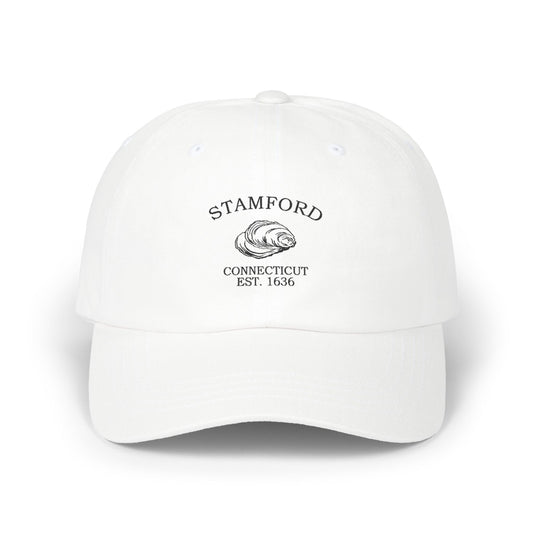
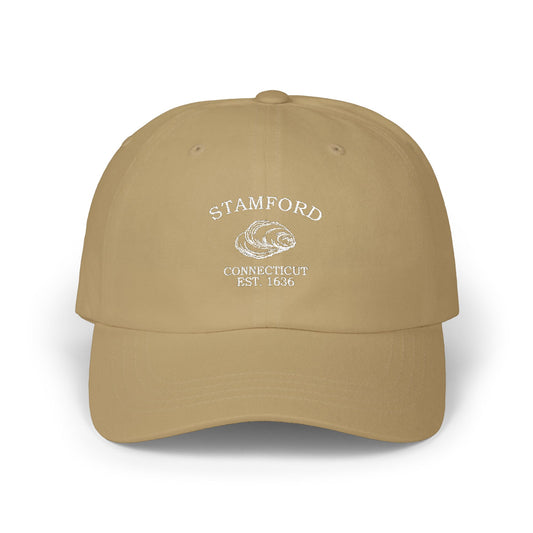
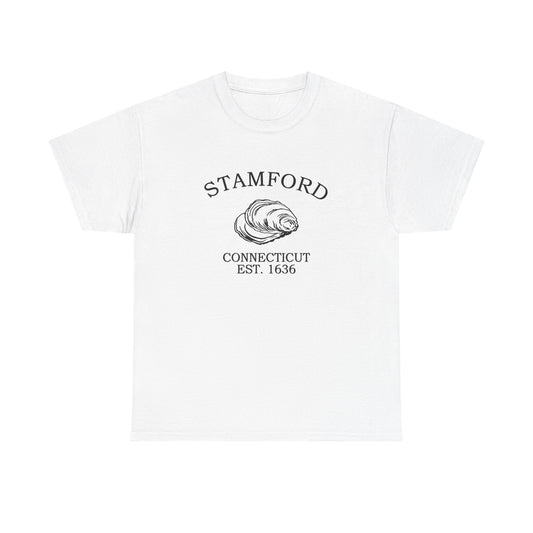
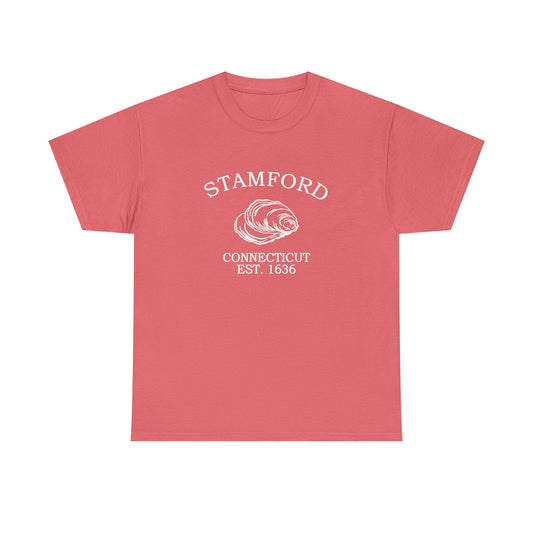
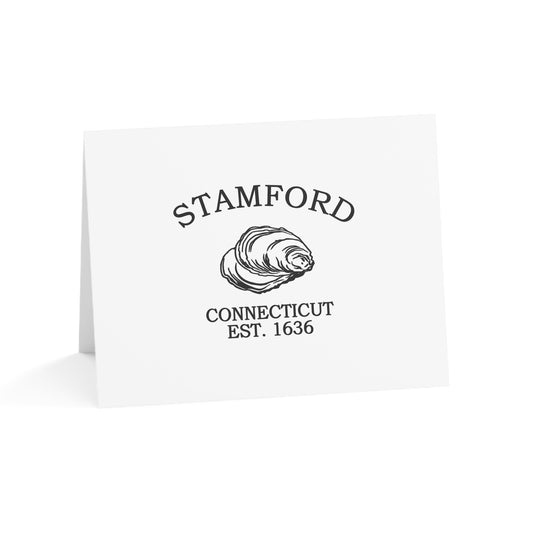
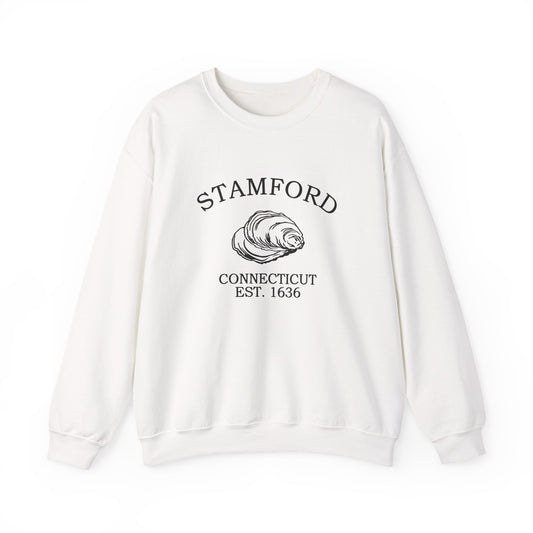
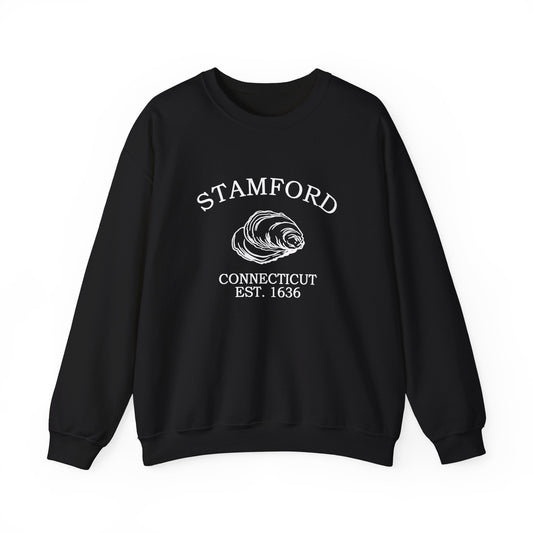
Our Stamford design carries an oyster shell beneath an arched STAMFORD and the line Connecticut · Est. 1636, printed in a worn, woodcut style. The oyster is Long Island Sound itself — the shellfish water this harbor town was built beside — and the 1636 date marks Connecticut's colonial founding. It reads like an old harbor-crate stamp: not the commuter-rail Stamford of the timetables, but Rippowam on the Sound, the colonial port under a modern city.
Today Stamford is a city of glass towers and harbor light — Connecticut's second city, a Gold Coast hub on Long Island Sound that still runs on the water and the rail line to New York. Its story runs from Rippowam and the 1641 founding through the locks and the railroad to the fish-shaped church on the skyline. Our Stamford, Connecticut designs gather that identity into wearable form — the oyster, the harbor, the colonial port. Stamford, CT — Rippowam on the Sound, a harbor town since 1641.

Stamford, CT — Travel Guide
Visiting Stamford, CT Today
Stamford pairs a working Long Island Sound harbor with a lively downtown, shoreline parks, and river greenways. Visitors come for the harbor and beaches, colonial and maritime history, the famous Fish Church, and an easy train ride up the Sound from New York.
Harbor, Parks & Heritage
For visitors planning things to do in Stamford, CT:
- See the Fish Church (First Presbyterian) — a fish-shaped National Historic Landmark of modern architecture.
- Walk Cove Island Park along Long Island Sound, with beaches, bird sanctuary, and bike paths.
- Stroll Mill River Park downtown, on the Rippowam River with bridges and lawns.
- Explore the Bartlett Arboretum and the Stamford Museum & Nature Center.
- Follow the Harbor Point boardwalk past the marinas and out toward Shippan Point.
Why People Visit Stamford, CT
Stamford balances harbor and city — sailboats on the Sound, a downtown skyline, and four centuries of history from Rippowam to the rail line. It is a Gold Coast harbor town an hour from Manhattan, with the water, the parks, and that one-of-a-kind church on the hill.
Wear the History

For deeper history research on Stamford, Connecticut, useful contacts include (1) the Stamford Historical Society, (2) the Ferguson Library local-history collection, (3) the Connecticut State Library and State Archives, (4) the Stamford Town & City Clerk's records office, and (5) the Stamford Historic Neighborhood Preservation Program. For travel information, useful contacts include (1) the Stamford Downtown Special Services District, (2) Visit Fairfield County CT, (3) the City of Stamford parks and recreation office, (4) the Connecticut State Parks office, and (5) the Stamford Transportation Center (Metro-North/Amtrak) information desk.
Shop the Stamford Connecticut collection
View full collection-
Stamford Connecticut Vintage Retro Premium Crewneck Sweatshirt - Black Logo
Regular price $48.00 USDRegular price -
Stamford Connecticut Vintage Retro Premium Crewneck Sweatshirt - White Logo
Regular price $48.00 USDRegular price -
Stamford Connecticut Vintage Retro Unisex Embroidered Cotton Polo - Black Logo
Regular price $48.00 USDRegular price -
Stamford Connecticut Vintage Retro Unisex Heavy Cotton Hoodie - Black Logo
Regular price $56.00 USDRegular price -
Stamford Connecticut Vintage Retro Unisex Heavy Cotton Hoodie - White Logo
Regular price $56.00 USDRegular price -
Stamford Connecticut Vintage Retro Womens Fitted Ringspun Cotton Tee - Black Logo
Regular price $28.00 USDRegular price -
-
Stamford Connecticut Vintage Retro Embroidered Cotton Cap - Black Logo
Regular price $32.00 USDRegular price -
Stamford Connecticut Vintage Retro Embroidered Cotton Cap - White Logo
Regular price $32.00 USDRegular price -
Stamford Connecticut Vintage Retro Unisex Heavy Cotton Tee - Black Logo
Regular price $22.00 USDRegular price -
Stamford Connecticut Vintage Retro Unisex Heavy Cotton Tee - White Logo
Regular price $22.00 USDRegular price -
Stamford Connecticut Vintage Retro Cotton Canvas Tote Bag - Black Logo
Regular price $25.00 USDRegular price -
Stamford Connecticut Vintage Retro Cotton Canvas Tote Bag - White Logo
Regular price $25.00 USDRegular price -
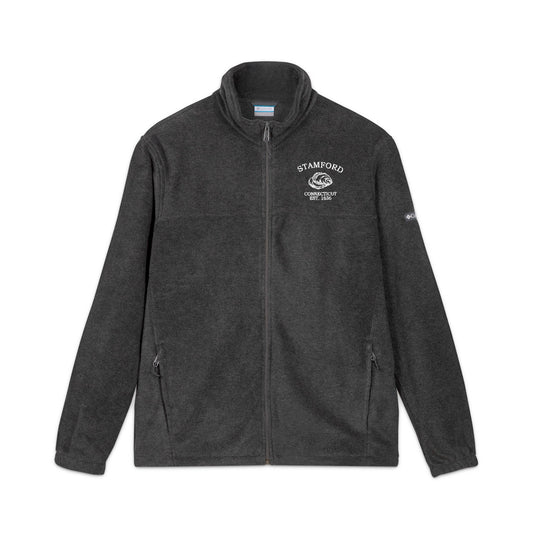
Stamford Connecticut Vintage Retro Unisex Embroidered Fleece Jacket - White Logo
Regular price $98.00 USDRegular price -
Stamford Connecticut Vintage Retro Vinyl Sticker - Black Logo
Regular price From $6.00 USDRegular price -
Stamford Connecticut Vintage Retro Ceramic Mug - Black Logo
Regular price From $16.00 USDRegular price -
Stamford Connecticut Vintage Retro Thank You Card Set - Black Logo
Regular price From $25.00 USDRegular price -
Stamford Connecticut Vintage Retro Cotton Jersey Baby Bodysuit - Black Logo
Regular price $26.00 USDRegular price -
Stamford Connecticut Vintage Retro Unisex Cotton Jersey Tank Top - Black Logo
Regular price $28.00 USDRegular price -
Stamford Connecticut Vintage Retro Unisex Cotton Jersey Tank Top - White Logo
Regular price $28.00 USDRegular price -
Stamford Connecticut Vintage Retro Unisex Heavy Crewneck Sweatshirt - Black Logo
Regular price $44.00 USDRegular price -
Stamford Connecticut Vintage Retro Unisex Heavy Crewneck Sweatshirt - White Logo
Regular price $44.00 USDRegular price -
Stamford Connecticut Vintage Retro Back Printed Art Series Cotton Tee - Black Logo
Regular price $32.00 USDRegular price