


Stamford grew up on the water. Through the colonial and early American years it lived by merchandising by sea — trading down the Sound to New York and out to the West Indies — and by the farms and mills inland. It saw a quieter echo of the Salem hysteria in a 1692 witch trial, sent the town of Darien off on its own in 1820, and by the mid-1800s had the railroad and the harbor working together. Today it is Connecticut's second-largest city, a Long Island Sound port about thirty-five miles up the shore from Manhattan.
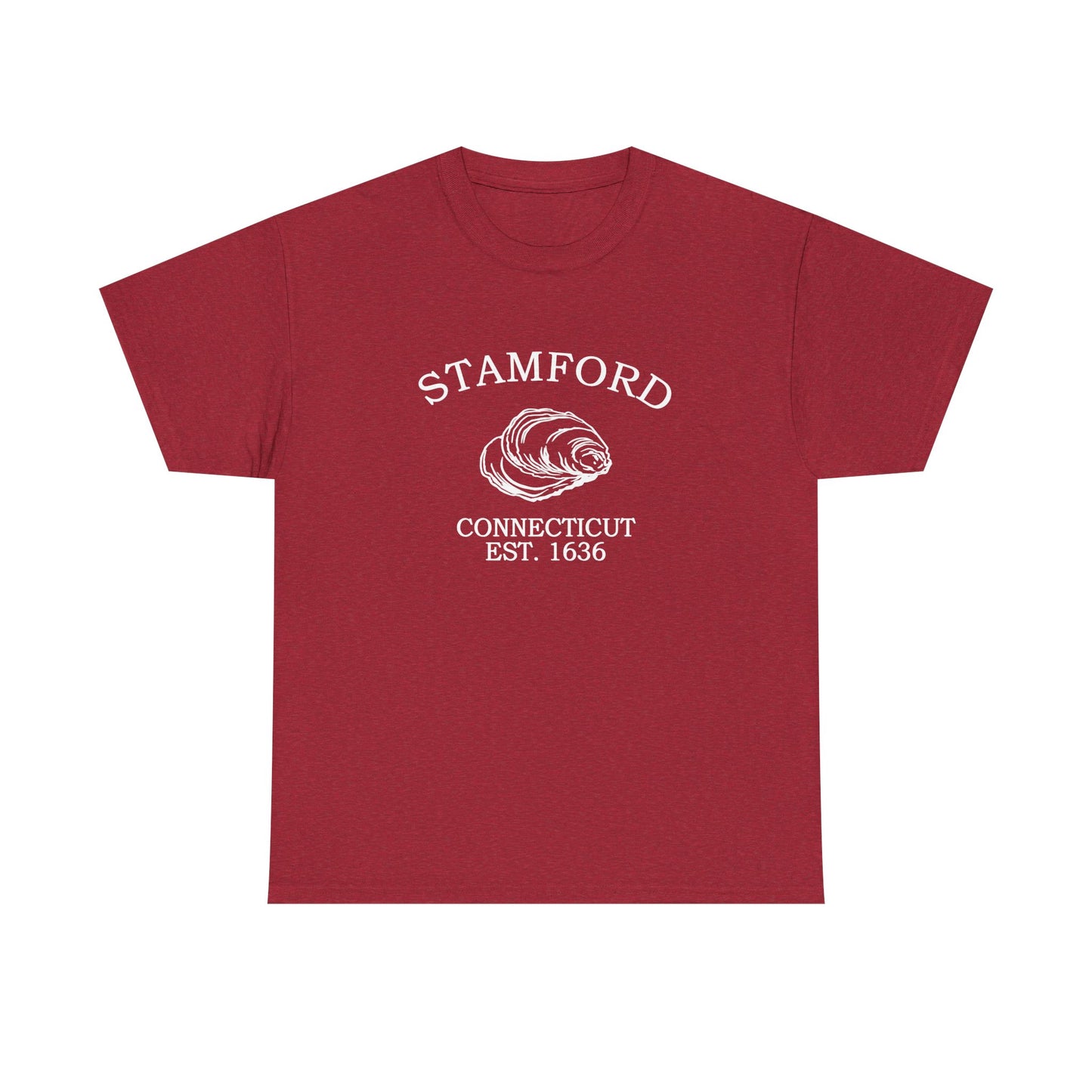
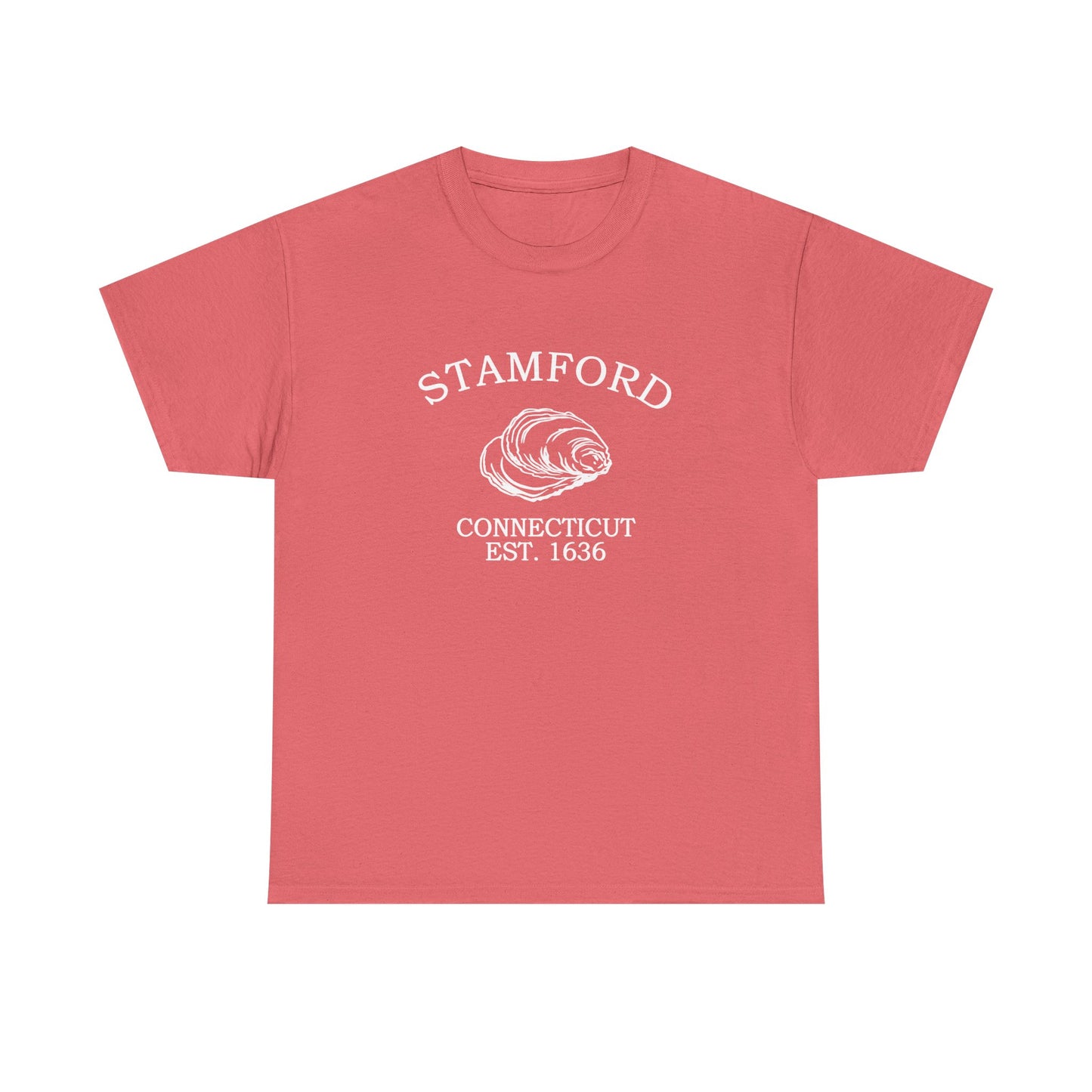
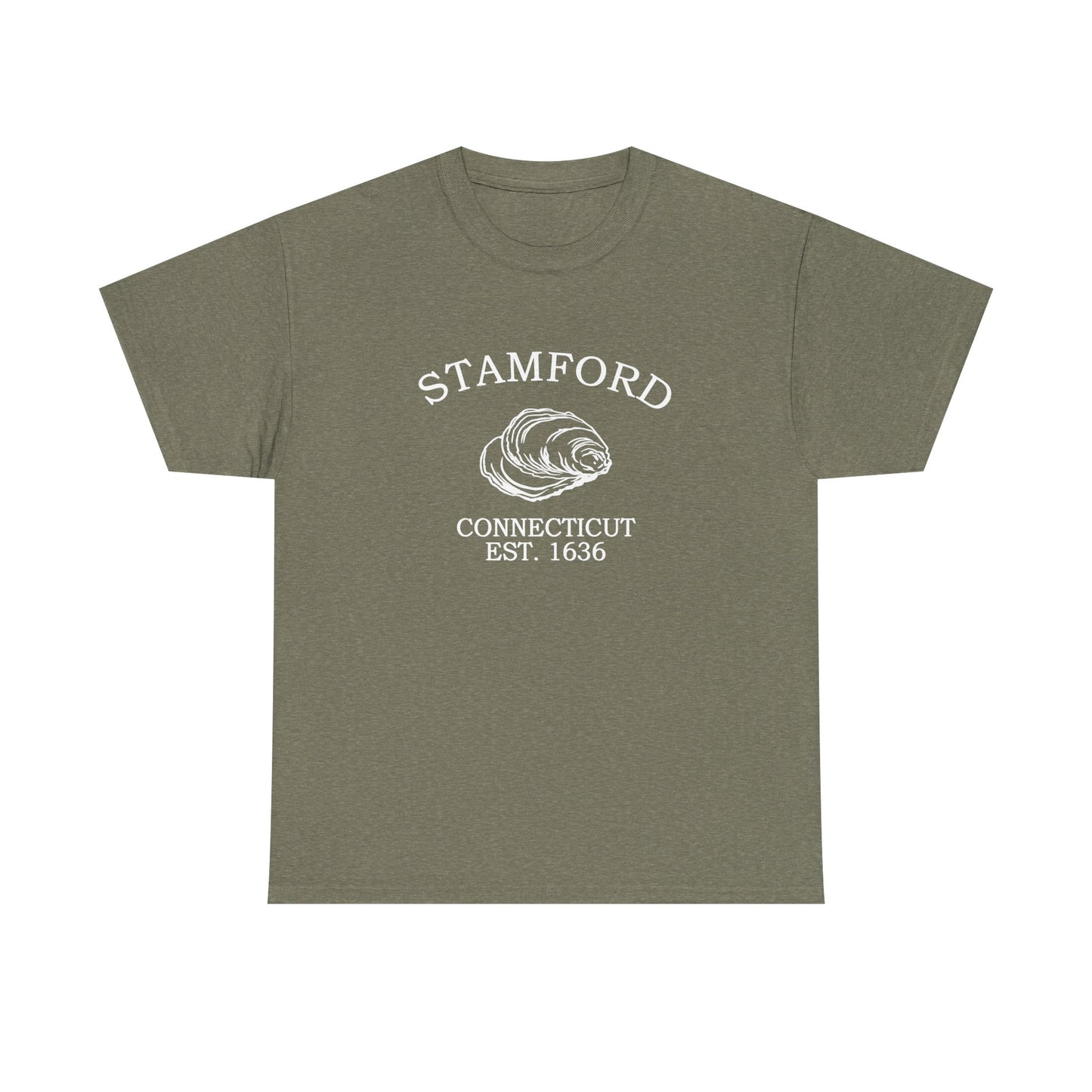
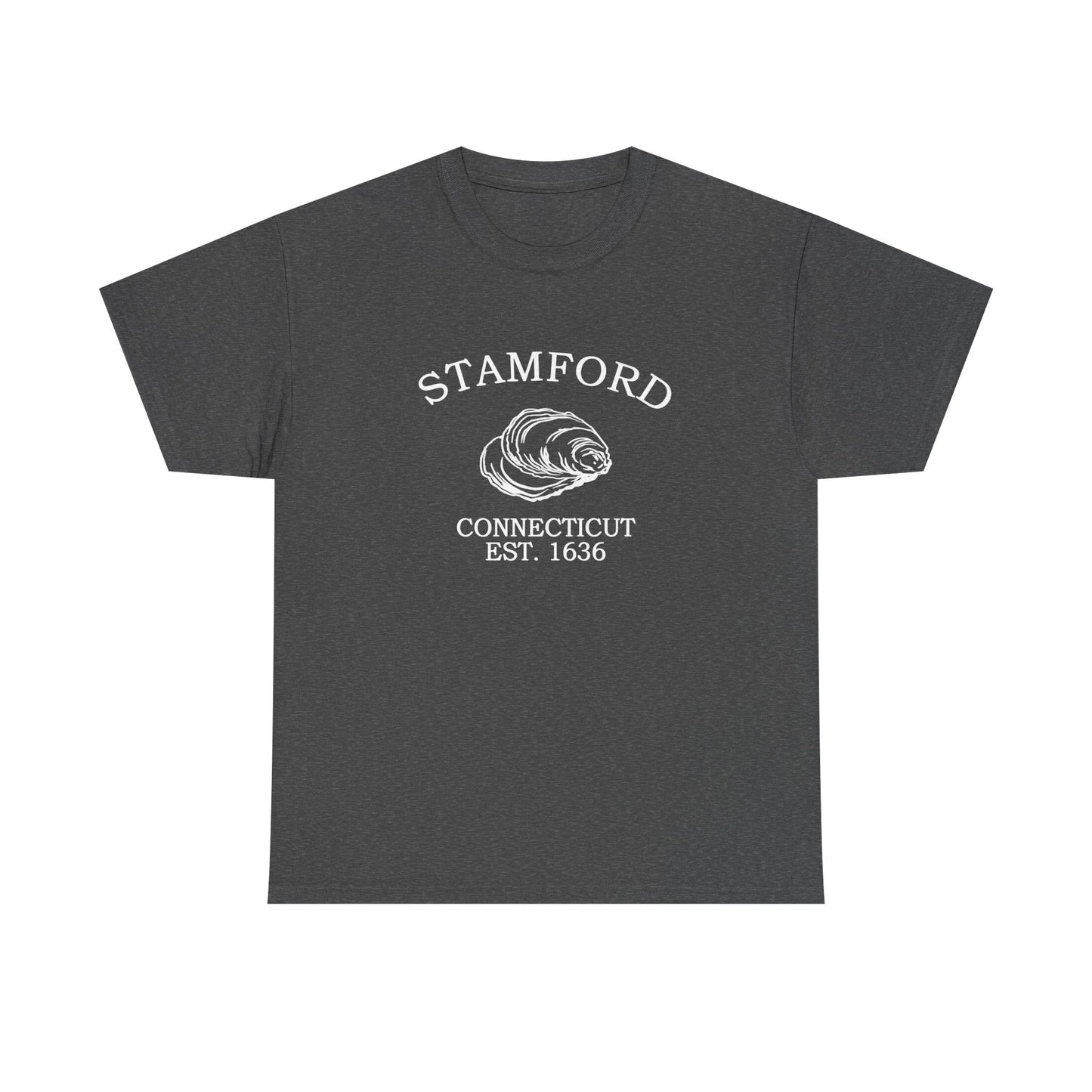
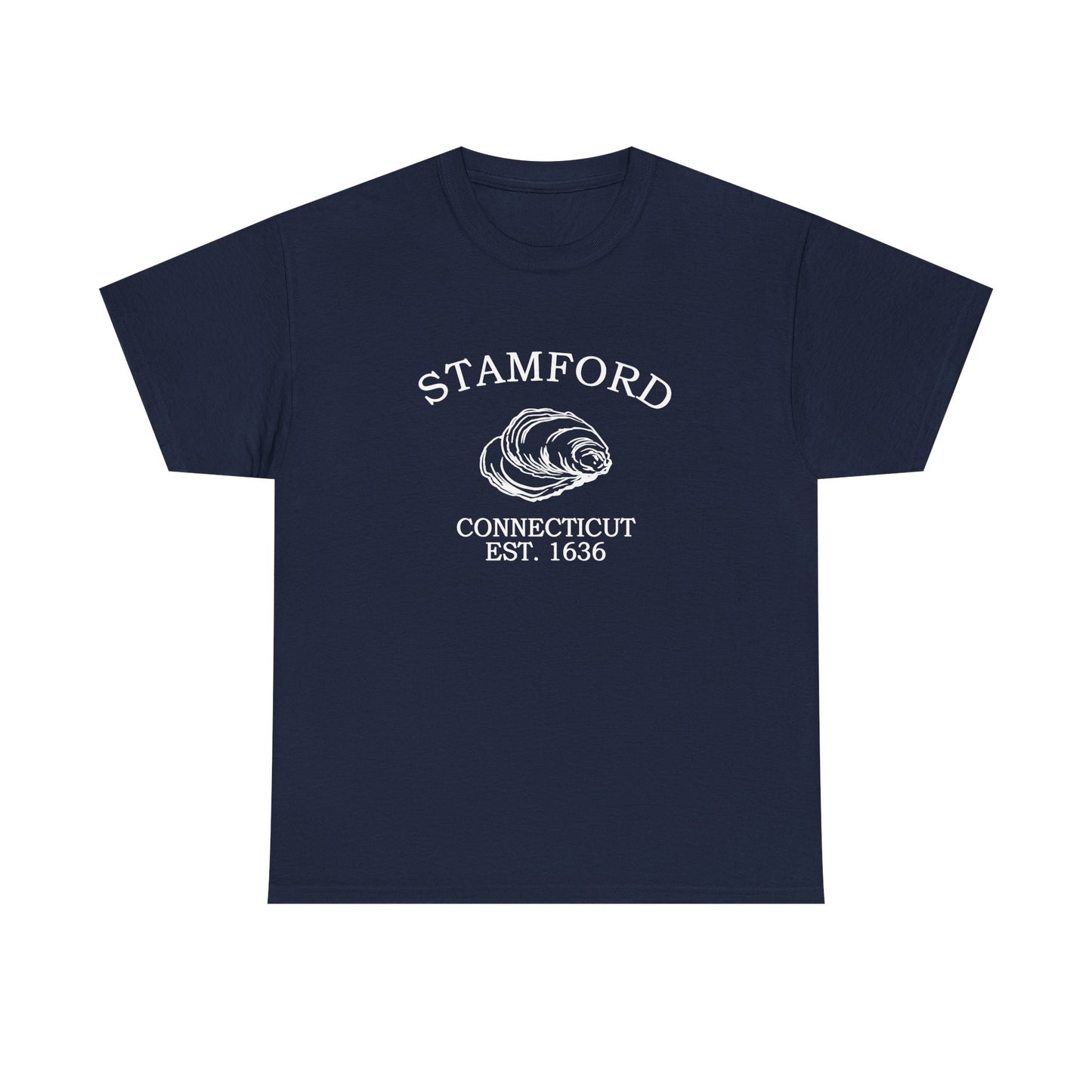
Our Stamford design carries an oyster shell beneath an arched STAMFORD and the line Connecticut · Est. 1636, printed in a worn, woodcut style. The oyster is Long Island Sound itself — the shellfish water this harbor town was built beside — and the 1636 date marks Connecticut's colonial founding. It reads like an old harbor-crate stamp: not the commuter-rail Stamford of the timetables, but Rippowam on the Sound, the colonial port under a modern city.
Why People Visit Stamford, CT
Stamford balances harbor and city — sailboats on the Sound, a downtown skyline, and four centuries of history from Rippowam to the rail line. It is a Gold Coast harbor town an hour from Manhattan, with the water, the parks, and that one-of-a-kind church on the hill.
