
Today Stamford is a city of glass towers and harbor light — Connecticut's second city, a Gold Coast hub on Long Island Sound that still runs on the water and the rail line to New York. Its story runs from Rippowam and the 1641 founding through the locks and the railroad to the fish-shaped church on the skyline. Our Stamford, Connecticut designs gather that identity into wearable form — the oyster, the harbor, the colonial port. Stamford, CT — Rippowam on the Sound, a harbor town since 1641.
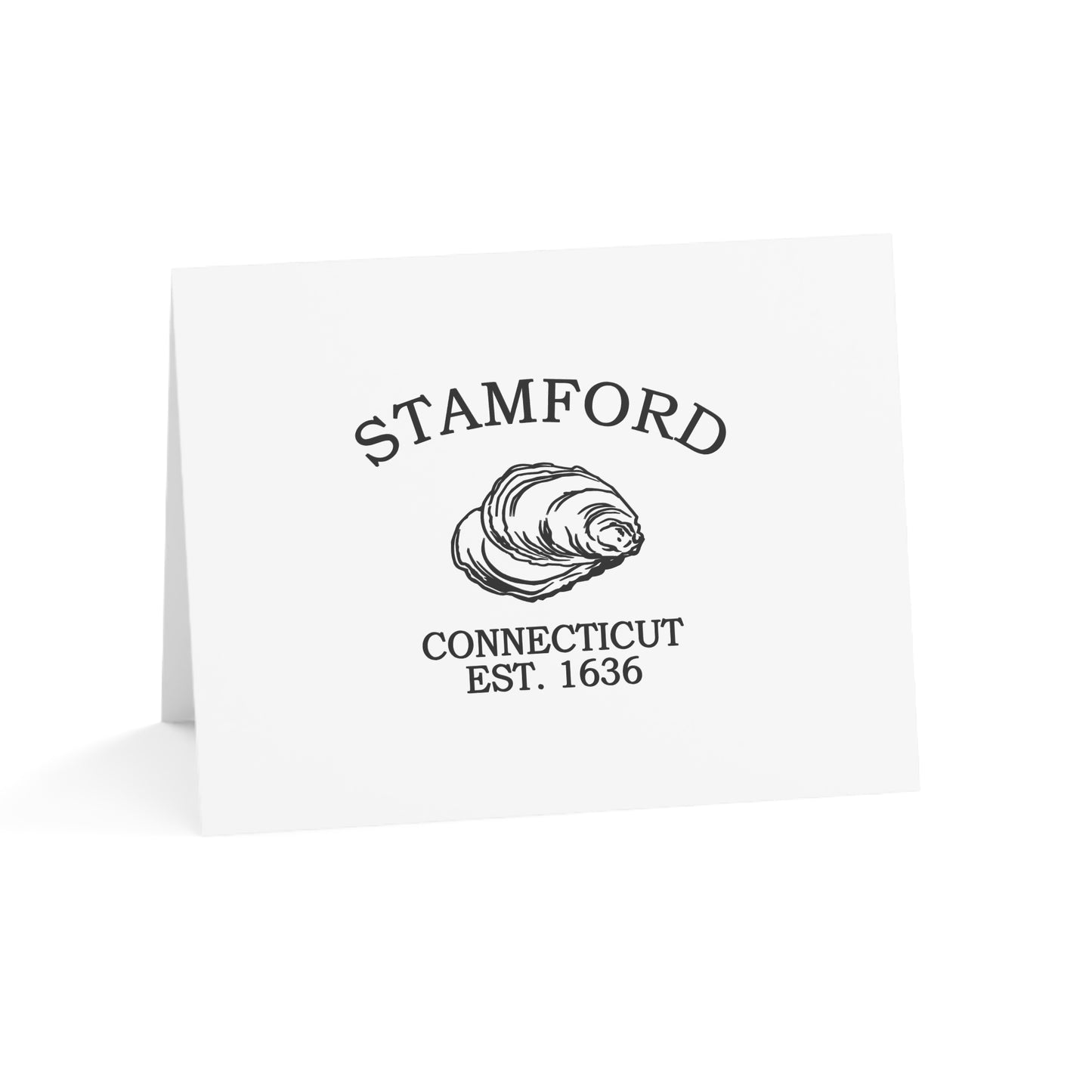
Our Stamford design carries an oyster shell beneath an arched STAMFORD and the line Connecticut · Est. 1636, printed in a worn, woodcut style. The oyster is Long Island Sound itself — the shellfish water this harbor town was built beside — and the 1636 date marks Connecticut's colonial founding. It reads like an old harbor-crate stamp: not the commuter-rail Stamford of the timetables, but Rippowam on the Sound, the colonial port under a modern city.
Why People Visit Stamford, CT
Stamford balances harbor and city — sailboats on the Sound, a downtown skyline, and four centuries of history from Rippowam to the rail line. It is a Gold Coast harbor town an hour from Manhattan, with the water, the parks, and that one-of-a-kind church on the hill.
