


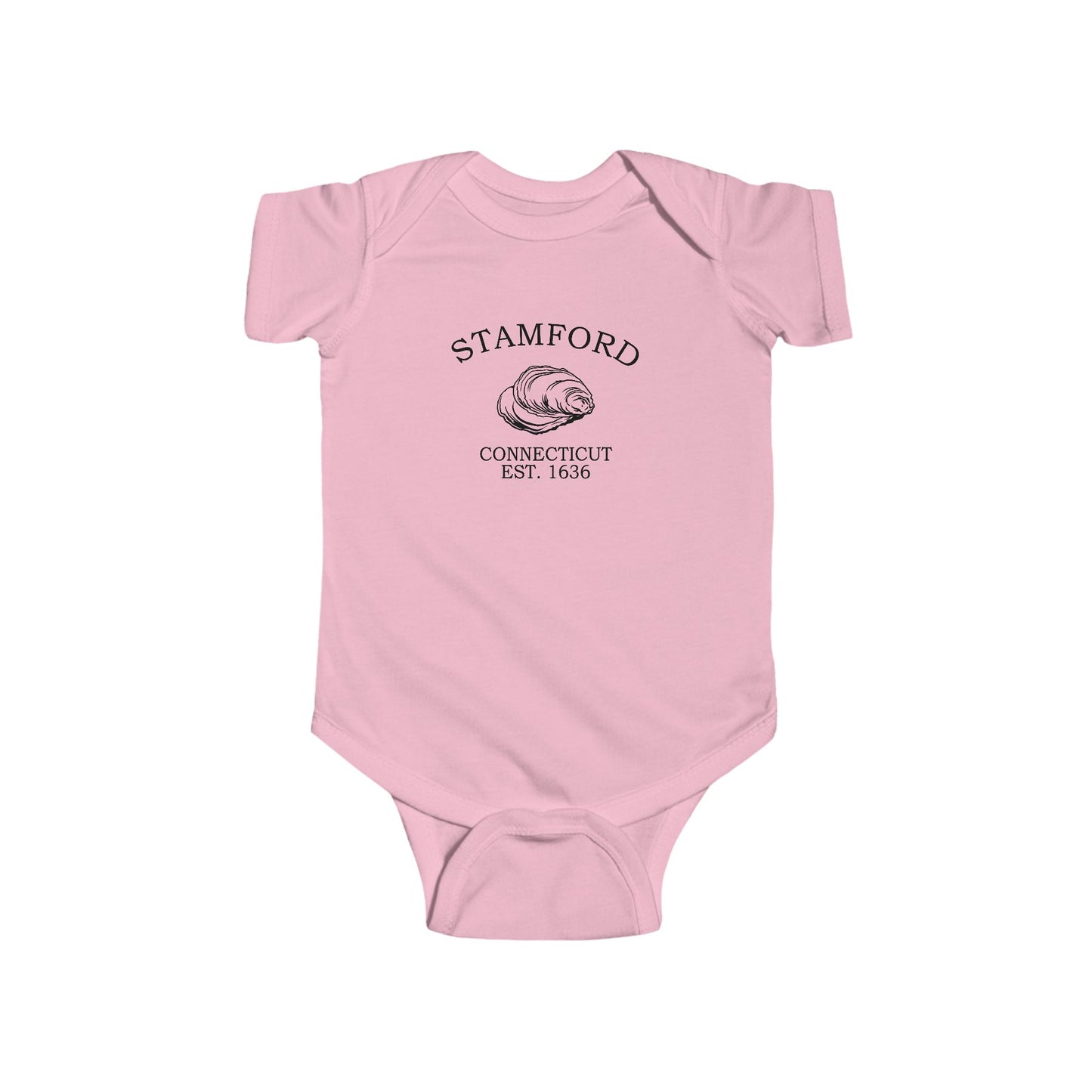

Stamford grew up on the water. Through the colonial and early American years it lived by merchandising by sea — trading down the Sound to New York and out to the West Indies — and by the farms and mills inland. It saw a quieter echo of the Salem hysteria in a 1692 witch trial, sent the town of Darien off on its own in 1820, and by the mid-1800s had the railroad and the harbor working together. Today it is Connecticut's second-largest city, a Long Island Sound port about thirty-five miles up the shore from Manhattan.
Today Stamford is a city of glass towers and harbor light — Connecticut's second city, a Gold Coast hub on Long Island Sound that still runs on the water and the rail line to New York. Its story runs from Rippowam and the 1641 founding through the locks and the railroad to the fish-shaped church on the skyline. Our Stamford, Connecticut designs gather that identity into wearable form — the oyster, the harbor, the colonial port. Stamford, CT — Rippowam on the Sound, a harbor town since 1641.
Why People Visit Stamford, CT
Stamford balances harbor and city — sailboats on the Sound, a downtown skyline, and four centuries of history from Rippowam to the rail line. It is a Gold Coast harbor town an hour from Manhattan, with the water, the parks, and that one-of-a-kind church on the hill.
