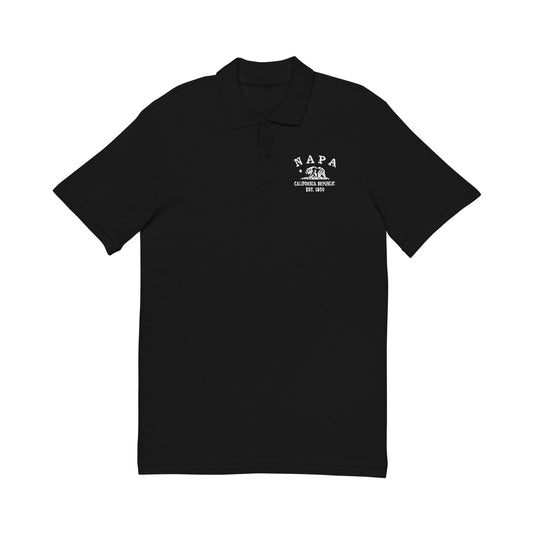
Napa California — Retro Vintage History
Napa was settled by a contract too — just signed in glasses instead of ink. On May 24, 1976, in Paris, wine merchant Steven Spurrier poured California wines against the great châteaux of France in a blind tasting before a panel of French judges — and when the scores came back, a Napa Valley cabernet and a Napa Valley chardonnay stood first. The Judgment of Paris, the papers called it. The judges were stunned, the wine world was rearranged overnight, and a quiet farm valley in Northern California became the most famous wine country in America. Napa has been pouring with that kind of confidence ever since.
Wear the HistoryWhere you’re from. Where you love. Where you explored. Where you belong.
What’s with the name? Long before the vines, this was the homeland of the Wappo and Patwin peoples — the name Napa itself comes from a Patwin word whose exact meaning is still debated — and, as across California, colonization took a devastating toll on them; their descendants remain part of the valley’s story today. The Mexican rancho era carved the land into grants like Rancho Entre Napa, and in 1847 a twenty-one-year-old settler named Nathan Coombs laid out “Nappa City” at the confluence of the Napa River and Napa Creek — the uppermost point a boat could navigate, which made it a natural landing. The steamboat Dolphin reached town in 1850, and Napa incorporated in 1872.
QUICK FACTS — NAPA, CA
Napa was laid out in 1847 by Nathan Coombs — originally spelled “Nappa City” — at the uppermost navigable point of the Napa River.
The name Napa comes from a Patwin word; its exact meaning is still debated.
The steamboat Dolphin reached Napa in 1850, opening river trade to San Francisco Bay.
John Patchett opened Napa County’s first commercial winery in 1859 — inside what is now the city of Napa.
The 1861 stone winery up-valley still operates — among the oldest commercial wineries in California.
Napa incorporated as a city in 1872, the seat of Napa County.
On May 24, 1976, Napa Valley wines took first place over French wines in the Paris blind tasting — the Judgment of Paris.
Napa Valley runs thirty miles between the Mayacamas and Vaca ranges, with more than 400 wineries today.
The river built the first Napa: a Main Street that by the 1850s bustled with saddle horses and gold-country trade, a railroad north to the valley towns by 1868, and a courthouse square at the center of the new county seat. And the vines took root early — John Patchett opened the county’s first commercial winery in 1859, inside what is now the city itself, and the 1861 stone winery founded up-valley by Charles Krug still presses grapes today, among the oldest in California.

The valley’s wine story then ran boom, bust, and rebirth: a national reputation by the 1880s, devastation by the phylloxera blight in the 1890s, and near-erasure under Prohibition from 1920 to 1933, when all but a handful of cellars went dark. The revival came in waves — Robert Mondavi’s 1966 winery opening announced a modern renaissance — and after the 1976 Judgment of Paris the valley never looked back: more than 400 wineries now work the thirty miles above town. Napa has taken its shakes, too — a 2014 earthquake rattled the historic downtown hard — and the city repaired its bricks and poured on.
The geography is the label come to life: a valley thirty miles long and one to five wide, the Mayacamas Mountains on the west and the Vaca range on the east, Highway 29 — the old Wine Road — running up the valley floor with the Silverado Trail as its quieter twin on the eastern benchland. Mount St. Helena closes the head of the valley at 4,343 feet, Lake Berryessa fills the high country to the east, and on many mornings a low fog slides up from San Pablo Bay and settles between the vine rows until the sun burns it through.
Napa’s lore lives in that fog — the “valley ghosts,” locals call the morning mist that drifts between the vines — and in the phantom vineyards of Prohibition: growers who kept their vines alive through the dry years on sacramental-wine permits and quiet faith, so the valley could bloom again when the law came back around. Older still are the river tales — steamboat pilots racing the tide up from the bay, and a Main Street that once tied a hundred saddle horses to its fences on an ordinary afternoon.
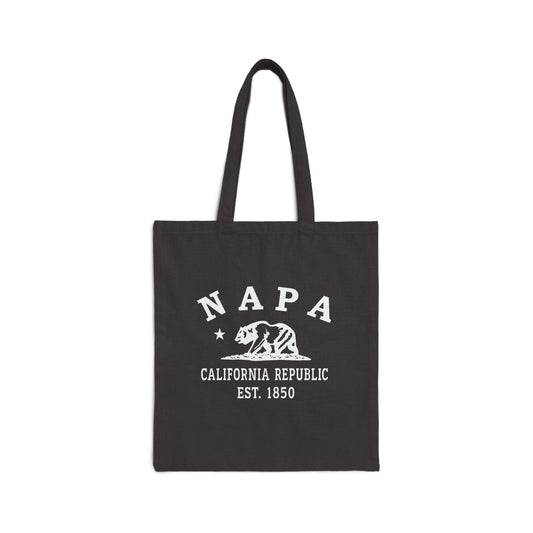
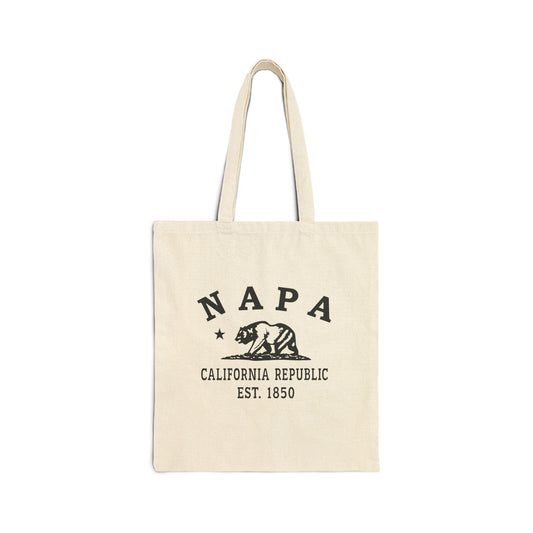
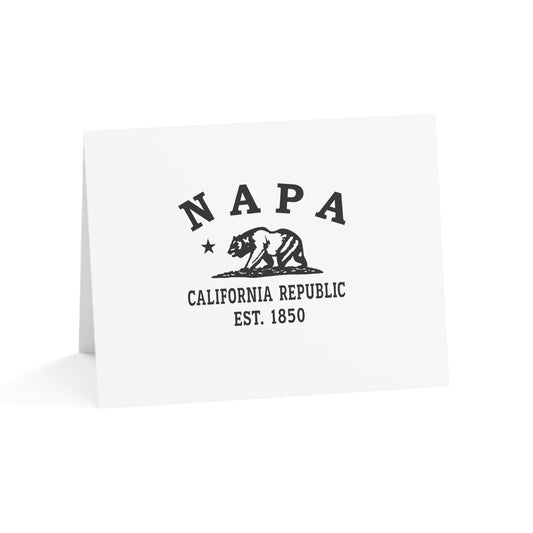
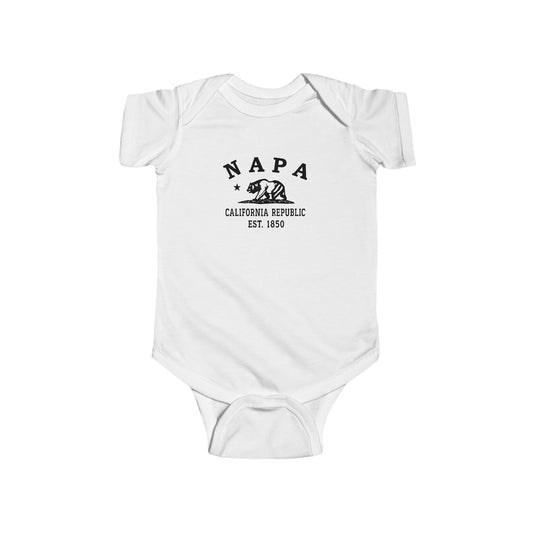
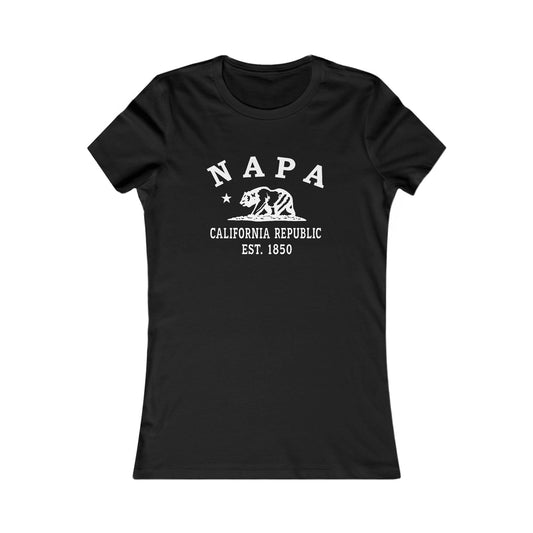
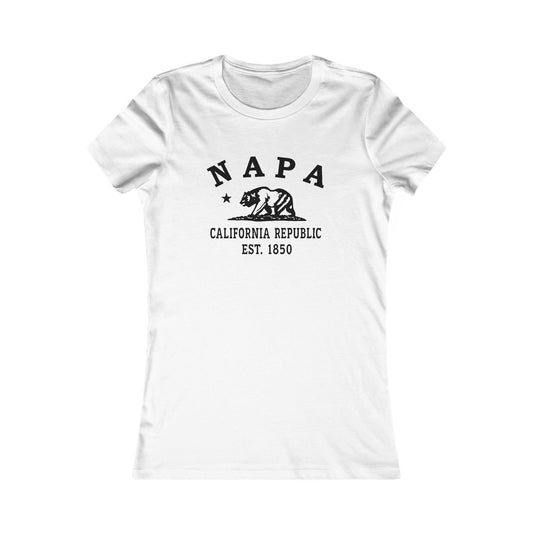
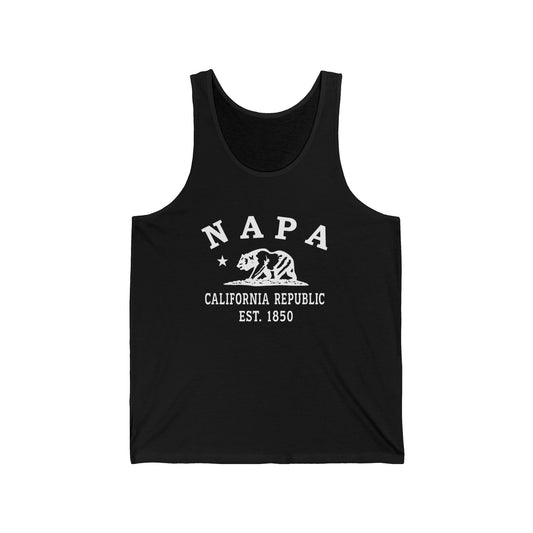
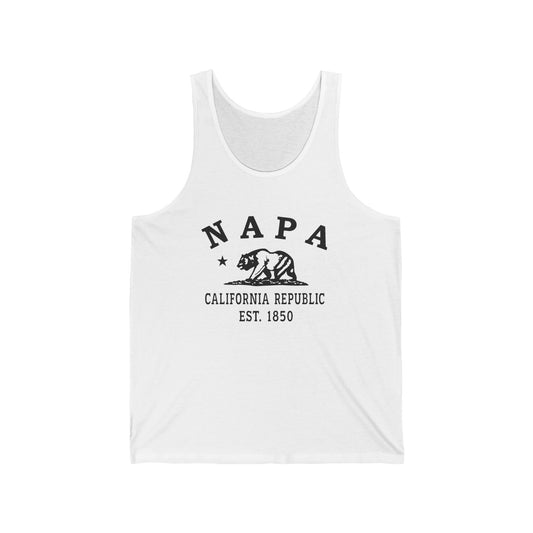
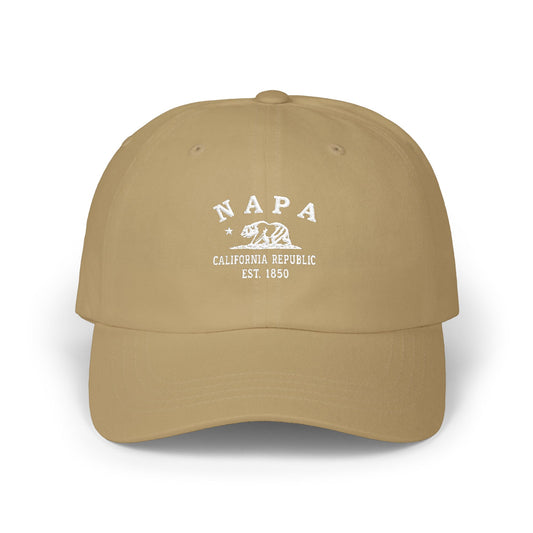
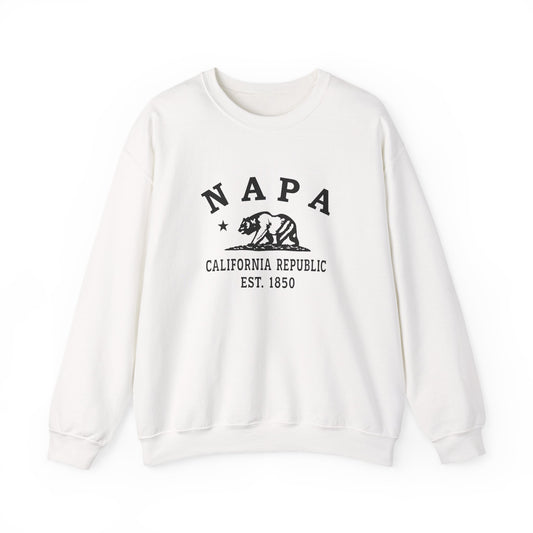
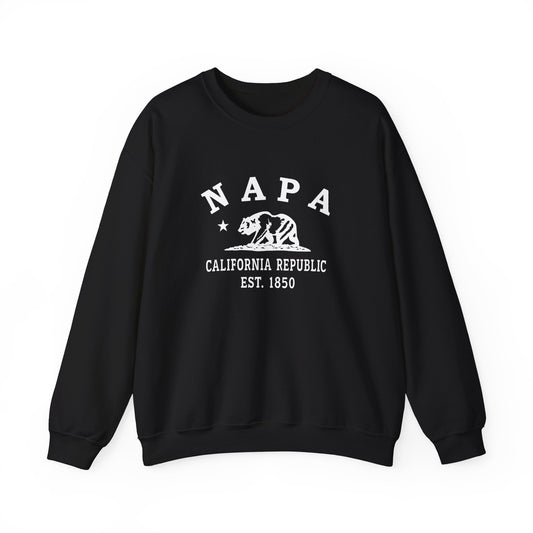
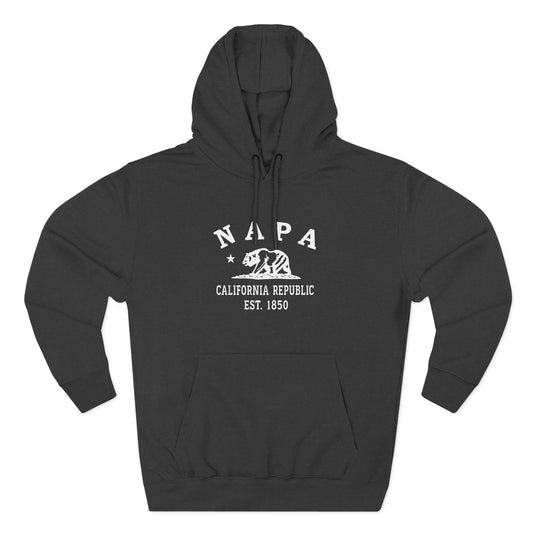
Our Napa retro logo uses California's bear and star motif, symbolizing resilience, independence, and pride. The bear reflects wilderness toughness and agricultural endurance, while the star recalls California Republic heritage. "1850" ties the motif to statehood pride. Its black-and-white styling is retro, resembling WPA posters and vineyard crate labels. The motif bridges Napa's dual identity: frontier farm hub and suburban wine capital. On merchandise, it conveys authenticity, resilience, and pride, retro vintage in tone. The bear and star emblem honors Napa's layered story, making it a vintage symbol of California heritage. Retro in style, it reflects resilience and cultural strength.
So Napa gathers a Patwin name, a river landing laid out in 1847, the county’s first wine cellar of 1859, vines that outlasted blight and Prohibition alike, and one Paris afternoon in 1976 that rearranged the wine world — and our Napa designs pour all of it into wearable form. Whether Napa is your hometown, your valley, your harvest season, or the place you learned what a morning fog can do to a row of vines, wear the history. Pressing grapes since 1861.

Napa California — Travel Guide
Visiting Napa California Today
Napa is a riverfront city at the southern end of a 30-mile valley between the Mayacamas Mountains and the Vaca Mountains in northern California, about 50 miles northeast of San Francisco. Highway 29 runs north up the valley's western edge — the Wine Road, lined with the founding-era estates — and the Silverado Trail runs the eastern edge a few miles uphill. The fog rolls in off San Pablo Bay nightly and lifts off by mid-morning. Harvest season runs August through October and is the peak travel window; the spring shoulder is quieter and the wildflowers on Mount St. Helena are at their best in April and May.
The Valley That Beat Bordeaux, the 1861 Founding Winery, and the Mountains on Either Side
For visitors searching for things to do in Napa California:
- Drive Highway 29, the historic Wine Road that runs north out of the city of Napa up the western edge of the valley past the founding-era estates between Yountville and St. Helena.
- Drive the Silverado Trail, the quieter parallel route a few miles up the eastern hillside, with the long-view back across the valley floor toward the Mayacamas.
- Drive past the 1861 stone winery on Highway 29 in St. Helena — founded by Charles Krug and among the oldest commercial wineries in California, still pressing grapes more than a century and a half later.
- Browse the Oxbow district on the downtown riverbend — the market halls, oyster bars, and coffee roasters of Napa’s eating-city era, a few steps from the river walk.
- See the exterior of the 1884 Rhine House on Highway 29 in St. Helena — the German-style mansion that is one of the valley's signature architectural landmarks.
- See the Napa Valley Opera House on Main Street in downtown Napa — the restored 1879 performing-arts landmark in the heart of the riverfront district.
- Walk the Napa River Walk and the downtown riverfront — promenades, plazas, and bridges along the river through the historic heart of the city.
- Hike Skyline Wilderness Park on the southeastern edge of the city — 850 acres of oak woodlands, lake loops, and hilltop views back across the valley.
- Drive north to Calistoga at the head of the valley for the mineral hot springs, the geyser country, and the long view south down the length of Napa Valley.
- Drive northeast to Lake Berryessa for the boating, the fishing, and the high-country views east of the valley floor.
- Climb (or drive partway up) Mount St. Helena, the 4,343-foot peak that closes the head of the valley — Robert Louis Stevenson State Park preserves the trail and the slopes where Stevenson honeymooned in 1880.
- Plan a visit during harvest season (August through October) for the crush, the cellar work, and the late-October press — the peak of the valley's working rhythm.
Why People Visit Napa California
Napa offers a 30-mile valley between two mountain ranges, an 1861 stone winery among California’s oldest still pressing on Highway 29, the modernist estates of the 1966 renaissance, and the legacy of the 1976 Judgment of Paris when the valley's wines beat Bordeaux and Burgundy on neutral ground and rewired the global wine map. Visitors come for the wine, the Mayacamas-and-Vacas geography, the diurnal fog and the long hang time, the historic estates, the Calistoga geysers, Lake Berryessa, Mount St. Helena, and the simple riverfront pleasure of the city of Napa itself. It is the valley that everyone has heard of, and it earns the reputation every harvest.
Wear the History
Where you’re from. Where you love. Where you explored. Where you belong.
Kindred Cities
Welcome, friends from Iwanuma (ようこそ) — our partner in Japan for half a century now.
Napa and Iwanuma have been friends since the 1970s, two farming valleys an ocean apart. Iwanuma sits on the Miyagi coast north of Sendai — rice country and iris gardens, rebuilt with grit after the 2011 tsunami; Napa is California's wine valley, itself shaken and restored after its own 2014 earthquake. Cherry blossoms from Iwanuma bloom at Napa's City Hall, planted to mark a friendship that has weathered a great deal.
Napa and Iwanuma signed their sister-city bond in 1973 and planted a cherry tree at Napa City Hall to seal it. Fittingly for two earthquake-tested towns, they have sent relief and goodwill across the Pacific in both directions ever since.
Come from Iwanuma and Napa will feel like a kindred valley: farmland turned world-famous, cherry blossoms in spring, and a community that, like yours, knows how to rebuild and carry on. Come and visit us soon.
When you plan the trip, Visit Napa Valley is the place to start.
Wear the History
Where you’re from. Where you love. Where you explored. Where you belong.

For deeper reading on Napa, California history — the Wappo and Patwin homeland and the Patwin origin of the name; the rancho era and the 1847 laying out of “Nappa City” by Nathan Coombs at the head of river navigation; the steamboat and railroad decades; John Patchett’s 1859 winery and the 1861 stone cellars up-valley; the phylloxera blight, Prohibition, and the modern renaissance that led to the Judgment of Paris on May 24, 1976; the 1872 incorporation and the courthouse-square county seat; and the geography of the thirty-mile valley between the Mayacamas and Vaca ranges — it may be useful to consult the Napa County Historical Society, the Napa Valley Museum, the City of Napa’s published town history, and the Bancroft Library’s California collections. For travel and visitor information, Visit Napa Valley and the City of Napa are the places to start.
Shop the Napa California collection
View full collection-
Napa California Vintage Retro Premium Crewneck Sweatshirt - White Logo
Regular price $48.00 USDRegular price -
Napa California Vintage Retro Premium Crewneck Sweatshirt - Black Logo
Regular price $48.00 USDRegular price -
Napa California Vintage Retro Vinyl Sticker - Black Logo
Regular price From $6.00 USDRegular price -
Napa California Vintage Retro Ceramic Mug - Black Logo
Regular price From $16.00 USDRegular price -
Napa California Vintage Retro Unisex Heavy Cotton Tee - Black Logo
Regular price $22.00 USDRegular price -
Napa California Vintage Retro Unisex Heavy Cotton Tee - White Logo
Regular price $22.00 USDRegular price -
Napa California Vintage Retro Cotton Canvas Tote Bag - White Logo
Regular price $25.00 USDRegular price -
Napa California Vintage Retro Cotton Canvas Tote Bag - Black Logo
Regular price $25.00 USDRegular price -
Napa California Vintage Retro Thank You Card Set - Black Logo
Regular price From $25.00 USDRegular price -
Napa California Vintage Retro Cotton Jersey Baby Bodysuit - Black Logo
Regular price $26.00 USDRegular price -
-
Napa California Vintage Retro Womens Fitted Ringspun Cotton Tee - Black Logo
Regular price $28.00 USDRegular price -
Napa California Vintage Retro Unisex Cotton Jersey Tank Top - White Logo
Regular price $28.00 USDRegular price -
Napa California Vintage Retro Unisex Cotton Jersey Tank Top - Black Logo
Regular price $28.00 USDRegular price -
Napa California Vintage Retro Embroidered Cotton Cap - White Logo
Regular price $32.00 USDRegular price -
Napa California Vintage Retro Embroidered Cotton Cap - Black Logo
Regular price $32.00 USDRegular price -
Napa California Vintage Retro Back Printed Art Series Cotton Tee - Black Logo
Regular price $32.00 USDRegular price -
Napa California Vintage Retro Unisex Heavy Crewneck Sweatshirt - Black Logo
Regular price $44.00 USDRegular price -
Napa California Vintage Retro Unisex Heavy Crewneck Sweatshirt - White Logo
Regular price $44.00 USDRegular price -
Napa California Vintage Retro Giclée Print Art Series Poster
Regular price From $38.00 USDRegular price -
Napa California Vintage Retro Unisex Heavy Cotton Hoodie - White Logo
Regular price $56.00 USDRegular price -
Napa California Vintage Retro Unisex Embroidered Cotton Polo - Black Logo
Regular price $48.00 USDRegular price -
Napa California Vintage Retro Unisex Heavy Cotton Hoodie - Black Logo
Regular price $56.00 USDRegular price