Every design is set in hand-lettered vintage type for that old-school, crate-label look. One sample color shown — black and white logo options on every piece. Recently in the national press. Enjoy!
-
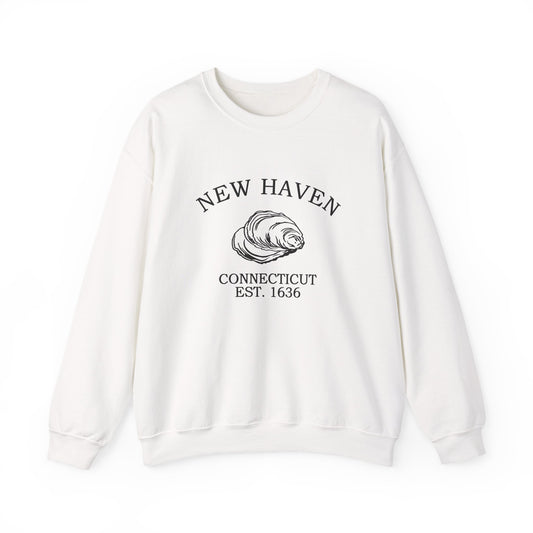
New Haven Connecticut Vintage Retro Premium Crewneck Sweatshirt - Black Logo
Regular price $48.00 USDRegular price -
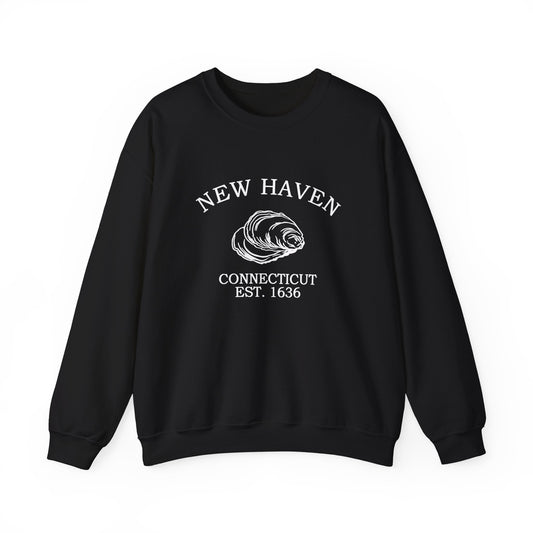
New Haven Connecticut Vintage Retro Premium Crewneck Sweatshirt - White Logo
Regular price $48.00 USDRegular price -
New Haven Connecticut Vintage Retro Unisex Heavy Cotton Hoodie - Black Logo
Regular price $56.00 USDRegular price -
New Haven Connecticut Vintage Retro Unisex Heavy Cotton Hoodie - White Logo
Regular price $56.00 USDRegular price -
-
New Haven Connecticut Vintage Retro Minuteman Holiday Cotton Tee - White Logo
Regular price $36.00 USDRegular price -
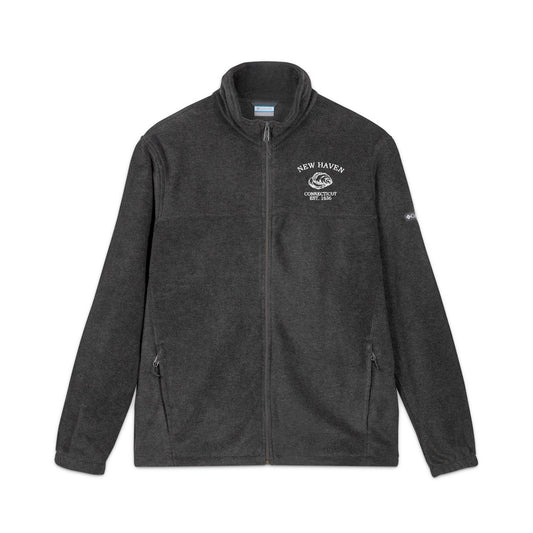
New Haven Connecticut Vintage Retro Unisex Embroidered Fleece Jacket - White Logo
Regular price $98.00 USDRegular price -
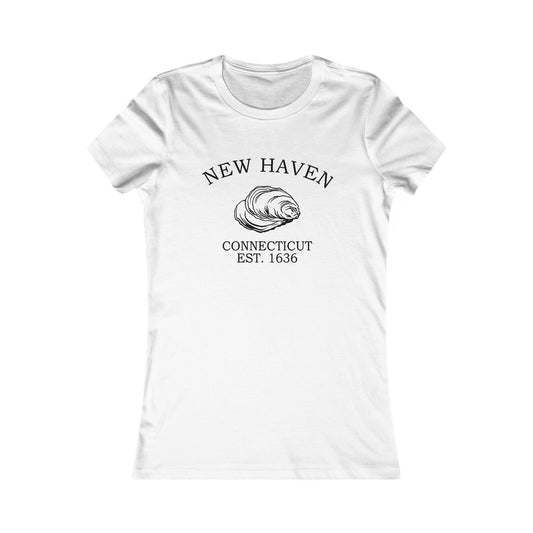
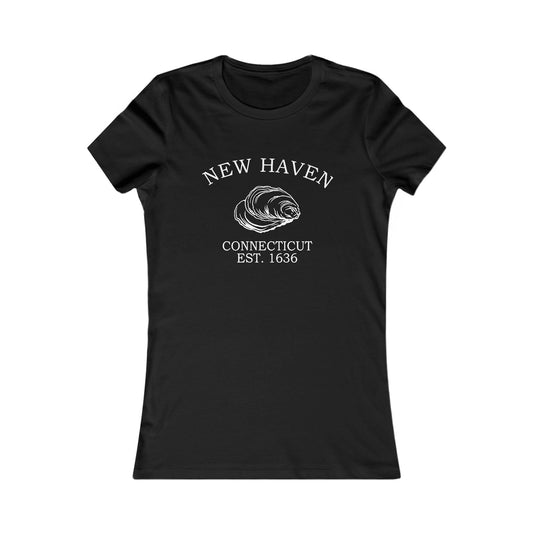
New Haven Connecticut Vintage Retro Womens Fitted Ringspun Cotton Tee - Black Logo
Regular price $28.00 USDRegular price -
-
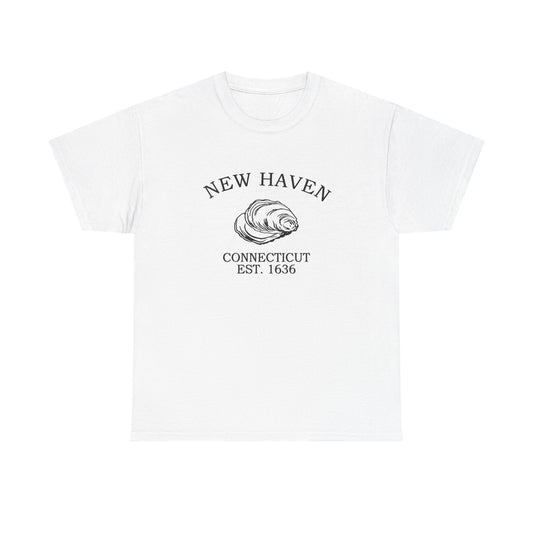
New Haven Connecticut Vintage Retro Unisex Heavy Cotton Tee - Black Logo
Regular price $22.00 USDRegular price -
New Haven Connecticut Vintage Retro Unisex Heavy Cotton Tee - White Logo
Regular price $22.00 USDRegular price -
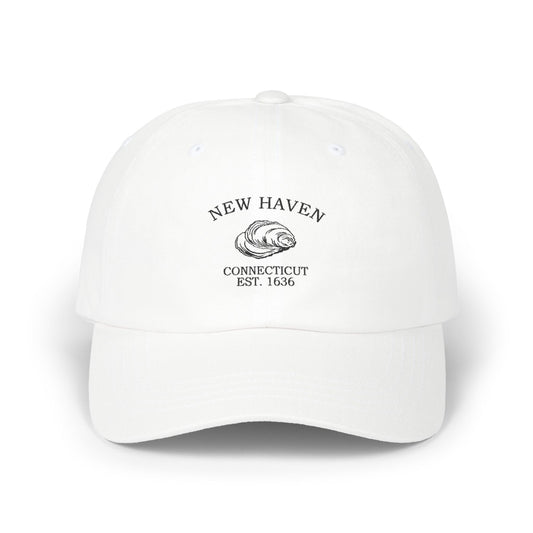
New Haven Connecticut Vintage Retro Embroidered Cotton Cap - Black Logo
Regular price $32.00 USDRegular price -
New Haven Connecticut Vintage Retro Embroidered Cotton Cap - White Logo
Regular price $32.00 USDRegular price -
New Haven Connecticut Vintage Retro Cotton Canvas Tote Bag - Black Logo
Regular price $25.00 USDRegular price -
New Haven Connecticut Vintage Retro Cotton Canvas Tote Bag - White Logo
Regular price $25.00 USDRegular price -
New Haven Connecticut Vintage Retro Back Printed Art Series Cotton Tee - Black Logo
Regular price $32.00 USDRegular price -
New Haven Connecticut Vintage Retro Giclée Print Art Series Poster
Regular price From $38.00 USDRegular price -
New Haven Connecticut Vintage Retro Unisex Heavy Crewneck Sweatshirt - Black Logo
Regular price $44.00 USDRegular price -
New Haven Connecticut Vintage Retro Unisex Heavy Crewneck Sweatshirt - White Logo
Regular price $44.00 USDRegular price -
New Haven Connecticut Vintage Retro Vinyl Sticker - Black Logo
Regular price From $6.00 USDRegular price -
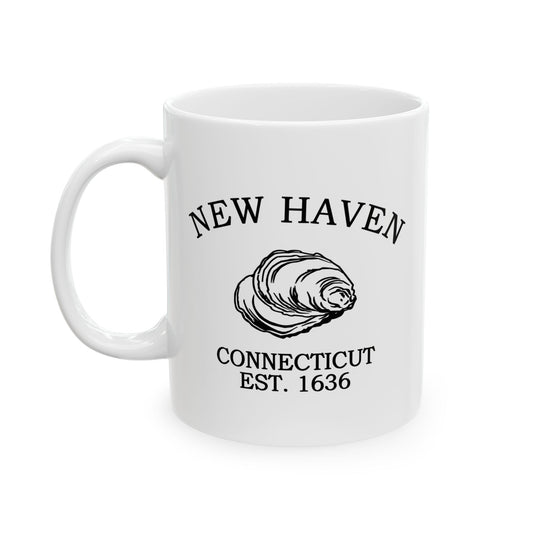
New Haven Connecticut Vintage Retro Ceramic Mug - Black Logo
Regular price From $16.00 USDRegular price -
New Haven Connecticut Vintage Retro Thank You Card Set - Black Logo
Regular price From $25.00 USDRegular price -
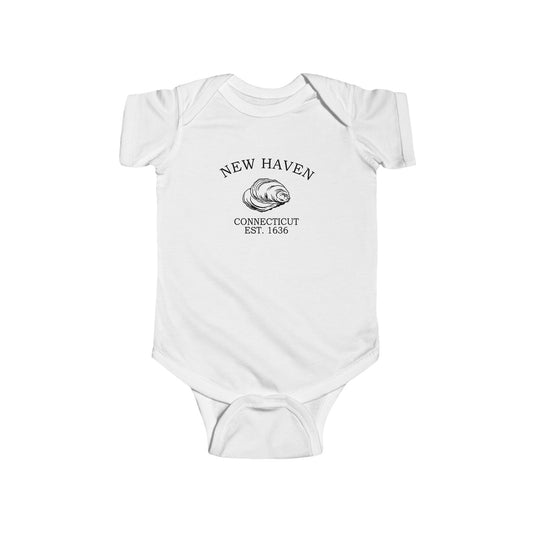
New Haven Connecticut Vintage Retro Cotton Jersey Baby Bodysuit - Black Logo
Regular price $26.00 USDRegular price -
New Haven Connecticut Vintage Retro Unisex Cotton Jersey Tank Top - Black Logo
Regular price $28.00 USDRegular price -
New Haven Connecticut Vintage Retro Unisex Cotton Jersey Tank Top - White Logo
Regular price $28.00 USDRegular price -
New Haven Connecticut Vintage Retro Unisex Embroidered Cotton Polo - Black Logo
Regular price $48.00 USDRegular price











New Haven Connecticut — Retro Vintage History
The Elm City — America's first planned city, nine perfect squares laid out around a green in 1638. New Haven sits on Long Island Sound between the twin traprock ridges of East and West Rock — the Elm City of Connecticut. English Puritans laid it out in 1638 as the first planned city in America, nine squares around the New Haven Green, and within a generation it was hiding the men who had signed a king's death warrant in a cave on West Rock. Co-capital of Connecticut for the better part of two centuries, a Sound port lit by an 1847 brownstone lighthouse, and the birthplace of New Haven-style apizza. This page tells the story of the Elm City.
Wear the HistoryThe harbor was long the homeland of the Quinnipiac people. In 1638 a company of English Puritans led by the Reverend John Davenport and the merchant Theophilus Eaton founded New Haven, and the surveyor John Brockett laid out its nine-square grid around the Green — the first planned town in America. For a time it was its own colony, a strict Puritan theocracy, until it was folded into Connecticut in 1664 and later shared the role of state capital with Hartford. The elms its settlers planted arched over the streets and gave the city its enduring name, and Yale College arrived in 1716. Out on the water, the harbor made New Haven a trading and oystering port, and in the nineteenth century a center of manufacturing.
The Elm City carried its history out loud. The Green and its three churches still mark the center square of Brockett's 1638 plan; the ridges of East and West Rock still rise over the rooftops; and the 1847 Five Mile Point Light still stands at the harbor mouth in Lighthouse Point Park, with its old carousel and its migrating birds. Somewhere along the way the city perfected the coal-fired, charred-crust pizza it calls apizza, argued over more passionately here than almost anywhere. Through four centuries, New Haven kept its colonial bones and its salt-water edge.
What's with the Judges' Cave? In 1661, three of the men who had signed the death warrant of King Charles I fled to New Haven — Edward Whalley, William Goffe, and later John Dixwell. When the new king's agents came hunting them, the regicides hid in a cleft of boulders on West Rock above the town, a spot still called Judges' Cave, kept supplied by sympathetic townspeople and by the colony's own minister, John Davenport, who is said to have preached "hide the outcasts." They were never caught. Three downtown streets — Whalley, Goffe, and Dixwell — still carry their names today. A planned Puritan town that quietly sheltered the men who beheaded a king: that's why the Elm City wears its history with an edge.

New Haven's stories run with the harbor and the ridges. They'll tell you the elms once arched right over the streets, which is how the Elm City got its name. They'll tell you about the Great Shippe that sailed for England in 1646 and was never seen again — except, the legend says, as a phantom ship in the clouds over the harbor. They'll point up at West Rock and the regicides' cave, and down at the brownstone lighthouse on the Sound, and then they'll argue, at length, about whose apizza is best.
Our New Haven logo carries the same emblem every Merlin Classics Connecticut place wears — a Long Island Sound oyster, above "New Haven, Connecticut, Est. 1636," rendered in hand-printed black and white with a worn, vintage feel. The oyster is Connecticut's shoreline mark, the through-line that ties New Haven to every other Connecticut place we make — a nod to the Sound that built these towns. What makes this one New Haven is everything around it: the Elm City, the nine-square Green, the regicides' cave on West Rock. On a tee or a cap it reads less like a souvenir and more like a piece of the Connecticut shore — Est. 1636, worn plain.
Today New Haven is the Elm City still — a harbor-and-ridge city of museums, theaters, and the most argued-over pizza in the country, anchored by four centuries of history. Its story runs from a Quinnipiac homeland through the first planned city in America, the regicides on West Rock, and a Long Island Sound port. Our New Haven designs gather that identity into wearable form — the Elm City, the nine-square Green, the oyster shore. From the nine-square Green to the regicides' cave on West Rock, wear a little of the Elm City's four centuries.

New Haven Connecticut — Travel Guide
Visiting New Haven Connecticut Today
New Haven sits on Long Island Sound in south-central Connecticut, about 75 miles up the Metro-North line from New York. It is a compact harbor-and-ridge city — the Green at its center, the traprock ridges of East and West Rock above it, the lighthouse on the Sound below — easy to walk and deep in colonial history, museums, and the city's famous apizza.
The Green, Judges' Cave & the Harbor
For visitors searching for things to do in New Haven, Connecticut:
- Walk the New Haven Green, the 1638 central common of the nine-square plan, framed by its three historic churches.
- Hike West Rock to Judges' Cave, the regicides' hideout, along the Regicides Trail.
- Climb East Rock Park for the classic view over the city and the harbor.
- Visit Lighthouse Point Park for the 1847 Five Mile Point Light, the historic carousel, and Atlantic-flyway birding.
- Stroll Wooster Square for spring cherry blossoms and brownstones.
- See the free downtown museums — the Yale University Art Gallery and the Peabody Museum.
- Try a New Haven-style apizza, the city's signature charred, coal-fired pizza.
Why People Visit New Haven Connecticut
People come to New Haven for the layered history and the harbor — the first planned city in America, the regicides' cave, the lighthouse on the Sound — and for the museums, theaters, and the apizza the city argues about endlessly. It is compact, walkable, and deep: four centuries of New England on Long Island Sound.
Wear the History

For deeper reading on the New Haven, Connecticut history described here — the Quinnipiac homeland of the harbor, the 1638 Puritan founding and nine-square plan, the 1646 'Great Shippe' legend, the 1661 sheltering of the regicides at Judges' Cave, the 1779 Battle of New Haven, and the 1847 Five Mile Point Light — it may be useful to consult (1) the New Haven Museum (New Haven Colony Historical Society), (2) the New Haven Free Public Library local-history room, (3) the Connecticut State Library and the State Historic Preservation Office, (4) the New Haven City and Town Clerk's records office, and (5) the Connecticut Historical Society. For travel and visitor information, it may be useful to contact (1) Visit New Haven, (2) the Connecticut Office of Tourism, (3) the City of New Haven Parks department for the Green, East Rock, and Lighthouse Point, (4) Connecticut State Parks for West Rock Ridge and Judges' Cave, and (5) the New Haven Preservation Trust.
- Choosing a selection results in a full page refresh.
- Opens in a new window.