Every design is set in hand-lettered vintage type for that old-school, crate-label look. One sample color shown — black and white logo options on every piece. Recently in the national press. Enjoy!
-
Lanai Hawaii Vintage Retro Premium Crewneck Sweatshirt - Black Logo
Regular price $48.00 USDRegular price -
Lanai Hawaii Vintage Retro Premium Crewneck Sweatshirt - White Logo
Regular price $48.00 USDRegular price -
Lanai Hawaii Vintage Retro Womens Fitted Ringspun Cotton Tee - Black Logo
Regular price $28.00 USDRegular price -
-
Lanai Hawaii Vintage Retro Embroidered Cotton Cap - Black Logo
Regular price $32.00 USDRegular price -
Lanai Hawaii Vintage Retro Embroidered Cotton Cap - White Logo
Regular price $32.00 USDRegular price -
Lanai Hawaii Vintage Retro Unisex Heavy Cotton Hoodie - Black Logo
Regular price $56.00 USDRegular price -
Lanai Hawaii Vintage Retro Unisex Heavy Cotton Hoodie - White Logo
Regular price $56.00 USDRegular price -
Lanai Hawaii Vintage Retro Unisex Embroidered Fleece Jacket - White Logo
Regular price $98.00 USDRegular price -
Lanai Hawaii Vintage Retro Vinyl Sticker - Black Logo
Regular price From $6.00 USDRegular price -
Lanai Hawaii Vintage Retro Back Printed Art Series Cotton Tee - Black Logo
Regular price $32.00 USDRegular price -
Lanai Hawaii Vintage Retro Giclée Print Art Series Poster
Regular price From $38.00 USDRegular price -
Lanai Hawaii Vintage Retro Unisex Heavy Cotton Tee - White Logo
Regular price $22.00 USDRegular price -
Lanai Hawaii Vintage Retro Unisex Heavy Cotton Tee - Black Logo
Regular price $22.00 USDRegular price -
Lanai Hawaii Vintage Retro Ceramic Mug - Black Logo
Regular price From $16.00 USDRegular price -
Lanai Hawaii Vintage Retro Cotton Canvas Tote Bag - Black Logo
Regular price $25.00 USDRegular price -
Lanai Hawaii Vintage Retro Cotton Canvas Tote Bag - White Logo
Regular price $25.00 USDRegular price -
Lanai Hawaii Vintage Retro Thank You Card Set - Black Logo
Regular price From $25.00 USDRegular price -
Lanai Hawaii Vintage Retro Cotton Jersey Baby Bodysuit - Black Logo
Regular price $26.00 USDRegular price -
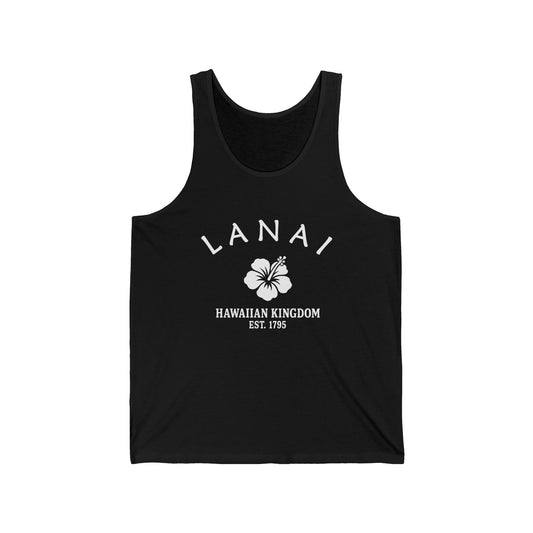
Lanai Hawaii Vintage Retro Unisex Cotton Jersey Tank Top - Black Logo
Regular price $28.00 USDRegular price -
Lanai Hawaii Vintage Retro Unisex Cotton Jersey Tank Top - White Logo
Regular price $28.00 USDRegular price -
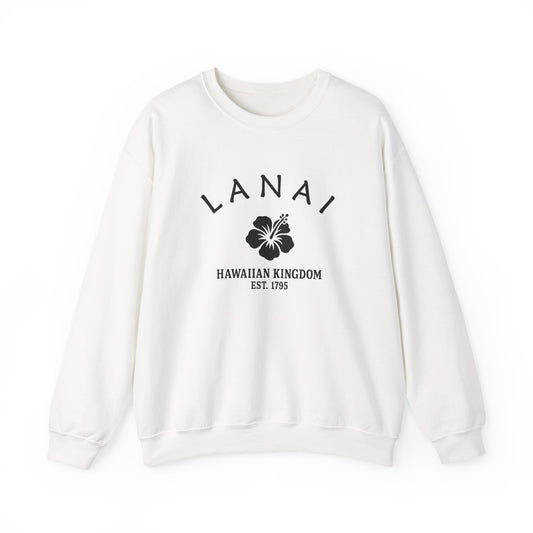
Lanai Hawaii Vintage Retro Unisex Heavy Crewneck Sweatshirt - Black Logo
Regular price $44.00 USDRegular price -
Lanai Hawaii Vintage Retro Unisex Heavy Crewneck Sweatshirt - White Logo
Regular price $44.00 USDRegular price -
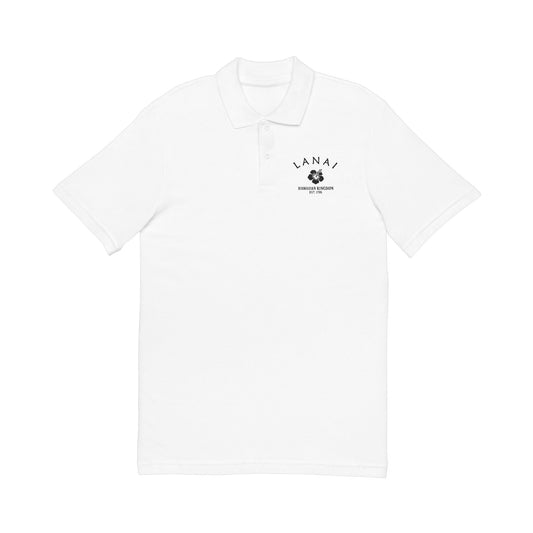
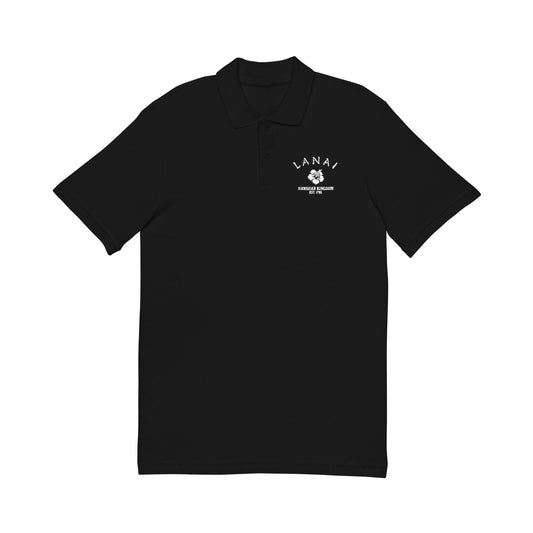
Lanai Hawaii Vintage Retro Unisex Embroidered Cotton Polo - Black Logo
Regular price $48.00 USDRegular price












Lānaʻi Hawaii — Retro Vintage History
What's with the Garden of the Gods? Out on the dry northwest of Lānaʻi, past the old pineapple roads and a dryland forest, the ground opens into a windswept plateau of red earth scattered with balanced boulders and rock towers — a Mars-bright landscape that looks like nothing else in Hawaiʻi. Visitors since 1912 have called it the Garden of the Gods, but its older Hawaiian name is Keahiakawelo, "the fire of Kawelo." The story holds that Kawelo, a kahuna of Lānaʻi, kept a sacred fire burning here against the ill-will prayers of a rival priest on Molokaʻi across the channel; to keep the flame alive he is said to have fed it every plant on the plateau, until only bare earth and stone remained. He won, and his people were safe. It is a storied place — a wahi pana — and the strange red ground is said to carry the legend still.
Wear the HistoryLānaʻi's oldest stories begin with the spirits. For generations the island was shunned as a haunted place, until — as Hawaiians tell it — a chief's son named Kaululaʻau was banished here from Maui and, one by one, drove the akua ʻino, the island's evil spirits, into the sea, making Lānaʻi safe to settle. The people who came lived by the reef and the fishing grounds, and nowhere more than at Kaunolū on the southern sea cliffs — an ancient village that Kamehameha I favored as a fishing retreat. Its ruins survive today as a National Historic Landmark: stone house platforms, the great Halulu Heiau, rock carvings, and Kahekili's Leap, the cliff where warriors once dove to the sea far below. These are sacred and storied grounds, named here with respect.
Above the south-shore beach of Hulopoʻe rises Puʻupehe, the sea-cut lava tower that visitors call Sweetheart Rock, wrapped in its own old island legend. In 1854 a party of Mormon settlers laid out a short-lived colony in the upland Palawai Basin, and through the later 1800s the dry plains drew cattle ranchers; for a couple of years around 1900 a small sugar venture tried its luck at Keomoku on the east shore. But Lānaʻi stayed quiet and lightly peopled — a big, dry island just across the water from Maui, waiting on the crop that would remake it.

That crop was pineapple. In 1922 James Dole, the Hawaiian Pineapple Company man already known as the Pineapple King, bought most of Lānaʻi for about $1.1 million — a price many thought a fool's bargain for a dry, rocky island. He was right and they were wrong: Dole planted some twenty thousand acres of the red uplands in pineapple and turned Lānaʻi into the largest pineapple plantation on Earth, a single island that by the 1930s grew roughly three-quarters of the world's supply. For seventy years this was the Pineapple Isle, and the spiky fruit made "Hawaiʻi" and "pineapple" mean nearly the same thing.
A plantation that size needed a town, and from 1923 Dole laid out Lānaʻi City — a planned company town of tidy cottages on a cool central plateau, gathered around the green rectangle of Dole Park. Workers came from the Philippines, Japan, China, Korea, Portugal, and Puerto Rico, and out of that mix grew the close, multicultural community that still defines the island. The fruit rolled down to Kaumalapaʻu Harbor, built in the 1920s, and shipped to the Honolulu canneries. Castle & Cooke took over in 1961, but cheaper pineapple from overseas slowly undercut the island; the last big harvest came in 1992, and the fields went quiet.
What the plantation left behind is its own kind of beauty. Around the town and along the high spine of the island stand thousands of Cook pines, planted by the New Zealand naturalist and ranch manager George Munro to comb moisture from the fog and feed the island's springs. His name lives on in the Munro Trail, the narrow ridge road that climbs through the pines to Lānaʻihale, at 3,370 feet the island's high point, with the neighbor islands laid out in every direction. From there the land falls away to the red badlands of Keahiakawelo and the empty roads that make Lānaʻi feel like the island the world forgot.
Our Lānaʻi logo carries the Hawaiian hibiscus over "Hawaiian Kingdom · Est. 1795," the shared emblem of every Merlin Classics Hawaiʻi place, marking the 1795 unification of the islands under Kamehameha. Printed in clean retro black-and-white like an old crate label, the hibiscus stands for the islands as a whole; what makes this one Lānaʻi is everything around it — the golden pineapple past and the old Lānaʻi City storefronts, the Cook-pine ridge, and the red rock of the Garden of the Gods.

Today Lānaʻi is the quiet island: one small town, no traffic lights, two secluded resorts set against a back country of red dirt and empty roads. Bought almost whole by Larry Ellison in 2012, it is being remade around sustainability and tourism, but its character is older and slower than that — the smallest publicly accessible inhabited Hawaiian island, keeping its end-of-the-world calm. Our Lānaʻi designs gather that into wearable form. Lānaʻi, Hawaiʻi — the Pineapple Isle, where the world's quietest island keeps its golden past.
Lānaʻi, Hawaiʻi — Travel Guide
Visiting Lānaʻi Today
Lānaʻi sits just across the channel from Maui — a short ferry or flight away — and feels a world apart: one cool upland town, two resorts, and a wild red-dirt interior of unpaved roads. It is dry, quiet, and uncrowded, the kind of island that rewards a slow day and a four-wheel drive.
The Garden of the Gods, the Ridge & the Sea
For visitors looking for things to do on Lānaʻi, Hawaiʻi:
- Drive out to Keahiakawelo (Garden of the Gods) for its red-rock moonscape — a storied place to treat with respect, best at sunset.
- Take the Munro Trail along the Cook-pine ridge to Lānaʻihale, the island's 3,370-foot high point, for views of the neighbor islands.
- Snorkel and swim at Hulopoʻe Bay, a protected marine preserve, and walk to Puʻupehe (Sweetheart Rock).
- Visit ancient Kaunolū — a National Historic Landmark village with Halulu Heiau and Kahekili's Leap — with care for the sacred site.
- Stroll Lānaʻi City around Dole Park, and stop in at the Lānaʻi Culture & Heritage Center in Dole's old administration building.
- Stop by the Lānaʻi Cat Sanctuary, the island's beloved open-air refuge.
Why People Visit Lānaʻi
Lānaʻi offers the rarest thing in Hawaiʻi: an island that still feels empty. It pairs a deep heritage — ancient fishing villages, a storied red-rock landscape, and the golden plantation past — with near-solitary beaches, pine-shaded uplands, and a single small town. It is quiet, scenic, and unhurried, made for travelers who want an island to themselves.
Wear the History
Kindred Cities
Welcome to visitors from Sardinia, Italy (benvenuti) and Mallorca, Spain (bienvenidos) — kindred islands that are whole worlds unto themselves.
An island can be a world apart, and Lānaʻi belongs with the Mediterranean's most singular. Sardinia guards a wild, ancient interior behind its glittering coast; Mallorca pairs resort bays with the rugged Tramuntana mountains; Lānaʻi, smallest of Hawaiʻi's inhabited isles, sets two quiet luxury resorts against a red-dirt back country of empty roads, old pineapple lands and the boulder garden the Hawaiians call Keahiakawelo. Coast and wilderness on one small island.
Lānaʻi is built for the traveller who wants an island to themselves: a single small town, two secluded resorts, near-empty roads into a wild interior, and the kind of quiet larger islands lost long ago. Come and visit us soon.
When you plan the trip, the Maui Visitors Bureau is the place to start.
Wear the History

For deeper reading on the Lānaʻi history described here — the legend of Kaululaʻau and the ancient fishing village of Kaunolū with Halulu Heiau, the storied landscape of Keahiakawelo, the 1922 arrival of James Dole's pineapple plantation and the building of Lānaʻi City, the Cook pines and the Munro Trail, and the island's modern reinvention — it may be useful to consult (1) the Lānaʻi Culture & Heritage Center, (2) the Hawaiʻi State Archives, (3) the Bishop Museum, (4) the University of Hawaiʻi collections, and (5) Maui County records. For travel and visitor information, it may be useful to contact (1) the Maui Visitors Bureau, (2) the Hawaiʻi Tourism Authority, (3) the Lānaʻi Culture & Heritage Center, (4) Hawaiʻi State Parks, and (5) the National Weather Service for Maui County forecasts.