Every design is set in hand-lettered vintage type for that old-school, crate-label look. One sample color shown — black and white logo options on every piece. Recently in the national press. Enjoy!
-
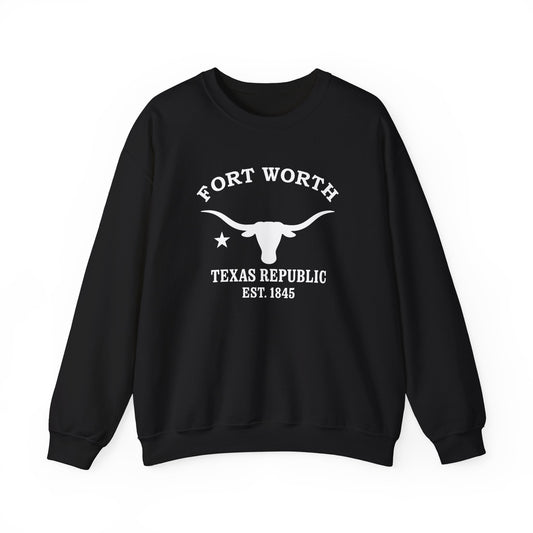
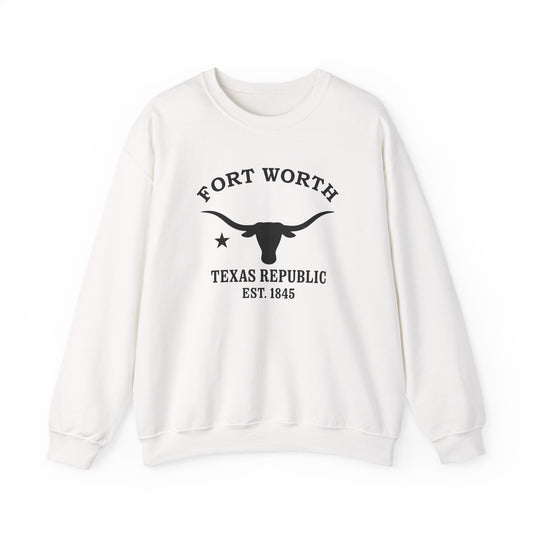
Fort Worth Texas Vintage Retro Premium Crewneck Sweatshirt - Black Logo
Regular price $48.00 USDRegular price -
Fort Worth Texas Vintage Retro Premium Crewneck Sweatshirt - White Logo
Regular price $48.00 USDRegular price -
-
Between Horse and Hound - Silhouette Art Framed Art Print
Regular price From $96.00 USDRegular price -
Whitewater Charge - Silhouette Art Giclée Unframed Art Print
Regular price From $34.00 USDRegular price -
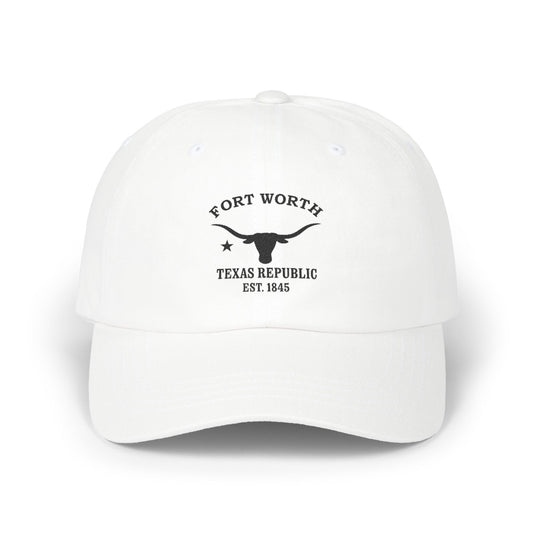
Fort Worth Texas Vintage Retro Embroidered Cotton Cap - Black Logo
Regular price $32.00 USDRegular price -
Fort Worth Texas Vintage Retro Unisex Heavy Crewneck Sweatshirt - White Logo
Regular price $44.00 USDRegular price -
Between Two Hounds Portrait - Silhouette Art Framed Art Print
Regular price From $112.00 USDRegular price -
Hand on the Mane - Silhouette Art Giclée Unframed Art Print
Regular price From $34.00 USDRegular price -
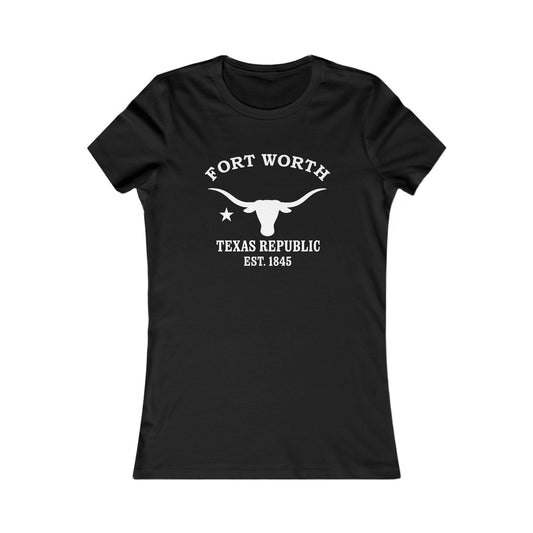
Fort Worth Texas Vintage Retro Womens Fitted Ringspun Cotton Tee - Black Logo
Regular price $28.00 USDRegular price -
Fort Worth Texas Vintage Retro Giclée Print Art Series Poster
Regular price From $38.00 USDRegular price -
Between Horse and Hound - Silhouette Art Giclée Unframed Art Print
Regular price From $34.00 USDRegular price -
Shoreline Trio II - Silhouette Art Framed Art Print
Regular price From $96.00 USDRegular price -
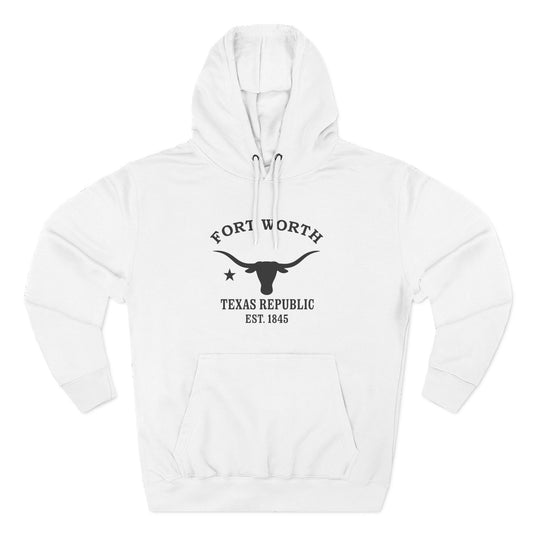
Fort Worth Texas Vintage Retro Unisex Heavy Cotton Hoodie - White Logo
Regular price $56.00 USDRegular price -
Fort Worth Texas Vintage Retro Unisex Embroidered Cotton Polo - Black Logo
Regular price $48.00 USDRegular price -
Hand on the Mane - Silhouette Art Framed Art Print
Regular price From $96.00 USDRegular price -
Horse at Low Tide - Silhouette Art Giclée Unframed Art Print
Regular price From $34.00 USDRegular price -
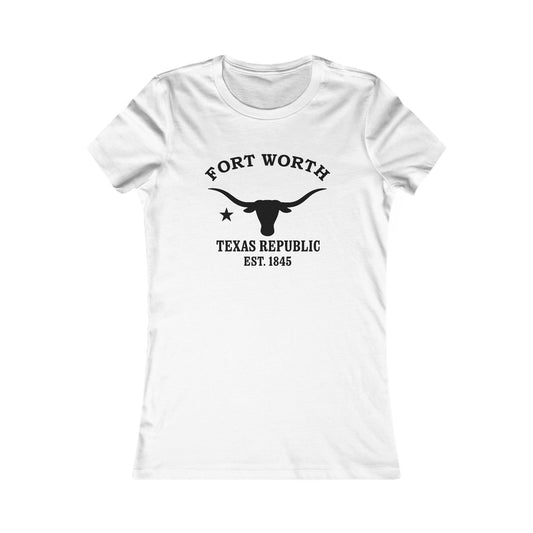
Fort Worth Texas Vintage Retro Unisex Heavy Cotton Tee - Black Logo
Regular price $22.00 USDRegular price -
Fort Worth Texas Vintage Retro Unisex Heavy Cotton Tee - White Logo
Regular price $22.00 USDRegular price -
Shoreline Trio - Silhouette Art Framed Art Print
Regular price From $96.00 USDRegular price -
Shoreline Gathering - Silhouette Art Giclée Unframed Art Print
Regular price From $44.00 USDRegular price -
Fort Worth Texas Vintage Retro Unisex Heavy Cotton Hoodie - Black Logo
Regular price $56.00 USDRegular price -
Horse at Low Tide - Silhouette Art Framed Art Print
Regular price From $96.00 USDRegular price -
Three Dogs, Still Water - Silhouette Art Giclée Unframed Art Print
Regular price From $44.00 USDRegular price -
Fort Worth Texas Vintage Retro Embroidered Cotton Cap - White Logo
Regular price $32.00 USDRegular price -
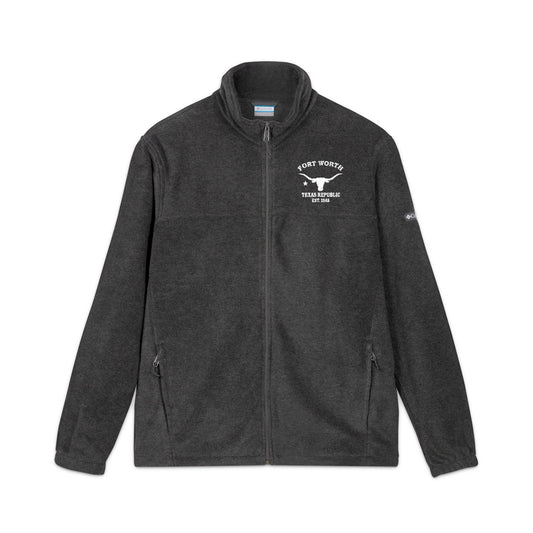
Fort Worth Texas Vintage Retro Unisex Embroidered Fleece Jacket - White Logo
Regular price $98.00 USDRegular price -
Whitewater Leap - Silhouette Art Giclée Unframed Art Print
Regular price From $34.00 USDRegular price -
Whitewater Charge - Silhouette Art Framed Art Print
Regular price From $96.00 USDRegular price -
Fort Worth Texas Vintage Retro Back Printed Art Series Cotton Tee - Black Logo
Regular price $32.00 USDRegular price -
Fort Worth Texas Vintage Retro Unisex Heavy Crewneck Sweatshirt - Black Logo
Regular price $44.00 USDRegular price -
Shoreline Trio - Silhouette Art Giclée Unframed Art Print
Regular price From $34.00 USDRegular price -
Shoreline Gathering - Silhouette Art Framed Art Print
Regular price From $112.00 USDRegular price -
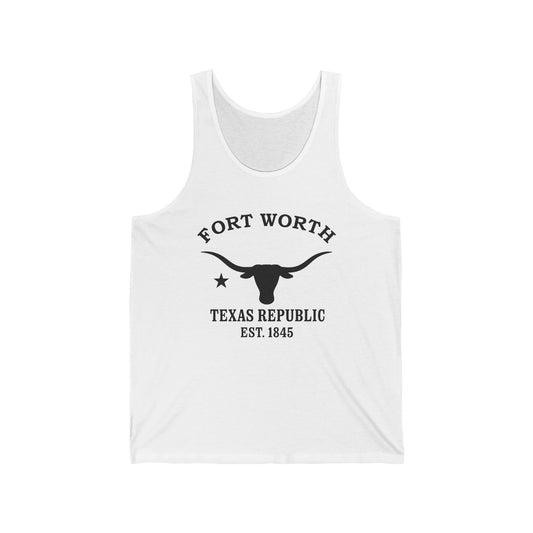
Fort Worth Texas Vintage Retro Unisex Cotton Jersey Tank Top - Black Logo
Regular price $28.00 USDRegular price -
Fort Worth Texas Vintage Retro Unisex Cotton Jersey Tank Top - White Logo
Regular price $28.00 USDRegular price -
Small Steps - Silhouette Art Framed Art Print
Regular price From $112.00 USDRegular price



















Fort Worth Texas — Retro Vintage History
What's with "Where the West Begins"? Fort Worth sits on a low rise above the Trinity River where the wooded country of East Texas runs out and the open plains take over — the literal seam between the timbered East and the rolling West. Locals have called it "Where the West Begins" for more than a century, and they mean it geographically: this is the edge of the Cross Timbers, the last stand of oak before the grassland opens toward the horizon. It is no accident that the cattle drives, the Stockyards, and the cowboy culture all took root here. Fort Worth is where the map stops being one thing and starts being another.
Wear the HistoryThe fort came first. On June 6, 1849, a company of U.S. Army dragoons under Major Ripley Arnold raised a camp on a bluff above the Clear Fork of the Trinity, one of a line of frontier posts strung along the edge of settlement. That autumn it was named Fort Worth, for Major General William Jenkins Worth, a hero of the recent war with Mexico who had died earlier that year. The soldiers stayed only a few years — by 1853 the frontier had moved west and the army moved with it — but the civilians who took over the empty buildings stayed, and a town grew up around the old parade ground.

What made the town was cattle. From 1867, drovers pushed longhorns north out of South Texas toward the railheads of Kansas along the Chisholm Trail, and Fort Worth was the last real stop before the long dry run to the Red River. Cowboys laid in supplies, watered their herds, and blew off steam in the saloons and dance halls of a rowdy district that earned the name Hell's Half Acre. Over some seventeen years more than five million cattle walked through town. Fort Worth fed them, outfitted their drovers, and took a nickname it has never shed: Cowtown.
The railroad turned the cattle stop into a cattle capital. The first Texas & Pacific locomotive rolled in on July 19, 1876, and within a generation Fort Worth had built the Union Stockyards north of the river, where longhorns could be penned, sold, and shipped by rail instead of driven on foot. The great packing houses of Swift and Armour followed, and the Stockyards became one of the busiest livestock markets in the country. The brick Exchange building, the cattle pens, and the coliseum that still stand on Exchange Avenue date from that era — the heart of Cowtown, preserved as a living National Historic District where the longhorns still walk twice a day.
Cowtown built its own celebrations. In 1896 the city held its first Stock Show, a livestock exhibition that grew into the Fort Worth Stock Show & Rodeo — one of the oldest and largest in the country, running every winter for more than a century. The early-1900s oil boom poured new money into town, and frontier legend mixed with it: the Sundance Kid and his Wild Bunch passed through Fort Worth, posing in 1900 for the famous "Fort Worth Five" photograph, and the downtown entertainment district that rose later took the name Sundance Square in their memory.
Today Fort Worth wears two hats at once. North of downtown, the Stockyards keep the cowboy past alive in brick and neon; west of it, the Cultural District holds some of the finest museums in America — Louis Kahn's Kimbell, Tadao Ando's Modern, and the Amon Carter — within walking distance of one another. Between them sit Sundance Square, the Fort Worth Water Gardens, and the Botanic Garden, the oldest in Texas. A fast-growing city of skyscrapers and aerospace plants, Fort Worth has held onto the thing that made it: the sense that you are standing exactly where the West begins.
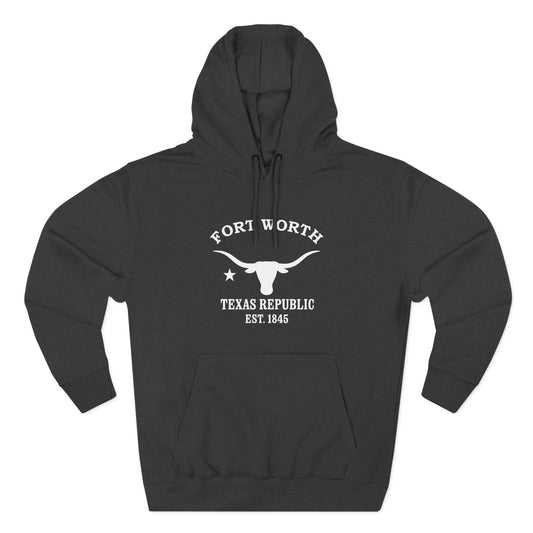
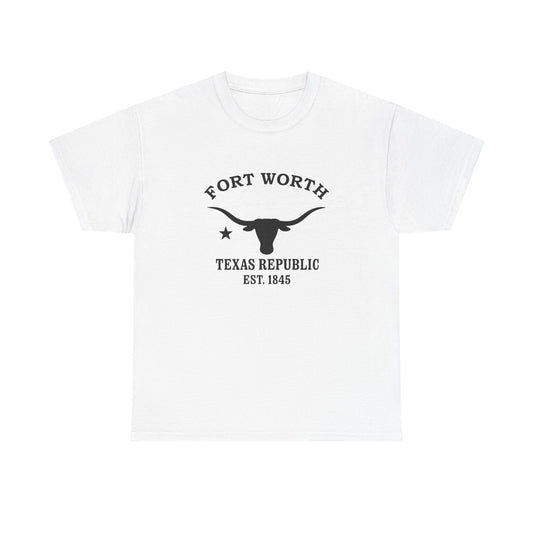
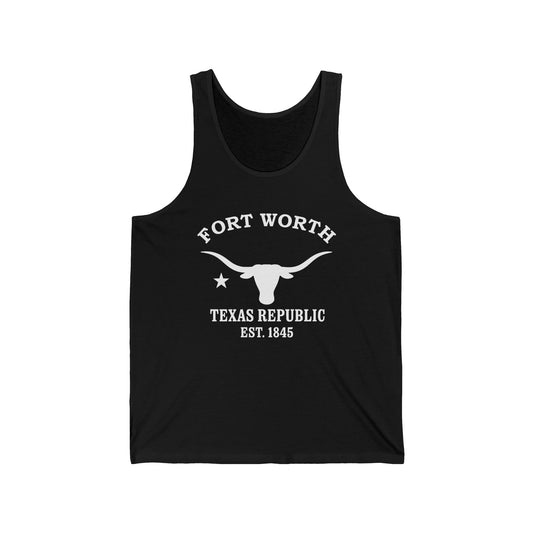
Our Fort Worth logo carries the Texas longhorn and the Lone Star above "Texas Republic — Est. 1845," the shared retro emblem of our Texas towns; the longhorn is pure Cowtown, and 1845 marks the year Texas joined the Union — the state's birthday, not the city's, which came four years later in 1849. Rendered in worn black-and-white, like an old rodeo poster, a cattle brand, or stockyard signage, it ties Fort Worth to every other Texas town we make. What makes this one Fort Worth is the story behind it — the fort, the Chisholm Trail, and the place where the West begins.
So Fort Worth gathers a frontier fort, a cattle trail, and a living stockyard onto the banks of the Trinity. Our Fort Worth designs gather that into wearable form. Wear the history. Fort Worth, Texas — Cowtown, where the West begins and the cattle still walk Exchange Avenue.

Fort Worth, Texas — Travel Guide
Visiting Fort Worth Today
Fort Worth sits on the Trinity River in North Texas, the place where the wooded East meets the open plains — Cowtown, with the Stockyards on one side of downtown and a world-class Cultural District on the other.
The Stockyards, the Kimbell & Sundance Square
For visitors looking for things to do in Fort Worth, Texas:
- Walk the Fort Worth Stockyards for the twice-daily longhorn cattle drive, brick streets, and heritage shops.
- Tour the Kimbell Art Museum, Louis Kahn's masterpiece, alongside the Modern and the Amon Carter in the Cultural District.
- Stroll Sundance Square downtown, with theaters, restaurants, and restored frontier facades.
- See the Fort Worth Water Gardens, a dramatic modern landscape of terraced pools.
- Wander the Fort Worth Botanic Garden, the oldest in Texas, and its Japanese Garden.
- Catch the Fort Worth Stock Show & Rodeo each winter at the Will Rogers Memorial Center.
Why People Visit Fort Worth
Visitors come to Fort Worth for the rare combination it offers: a real working cowboy past in the Stockyards, where the longhorns still walk, and a world-class art scene minutes away in the Cultural District. Add Sundance Square, the Water Gardens, the Botanic Garden, and the winter rodeo, and a single day can hold cattle pens and fine paintings. Proud, friendly, and unmistakably Texan, Fort Worth rewards anyone who wants the West and the wider world in the same town.
Wear the History
Kindred Cities
Welcome, friends from Nagaoka, Japan (ようこそ), Nîmes, France (bienvenue), Trier, Germany (willkommen) and Reggio Emilia, Italy (benvenuti) — sisters on four shores.
Cowtown casts a wide net. Nagaoka is the fireworks capital of Japan; Nîmes a Roman city of southern France; Trier the oldest city in Germany; Reggio Emilia the Italian home of Parmigiano and the birthplace of the tricolore flag. Fort Worth — stockyards, museums and rodeo — trades students and culture with all four, but the Japanese tie burns brightest.
Nagaoka, signed in 1987, is Fort Worth's most active tie — and for the 25th anniversary the fireworks capital of Japan shipped some $100,000 of its shells to light Fort Worth's Fourth of July. Hundreds still cross the Pacific each year.
Arrive from Nagaoka, and the welcome here is warm and well-worn — decades of host families, a downtown of museums, and the Stockyards where the cattle still walk the brick. Texas does fireworks too, thanks to you. Come and visit us soon.
When you plan the trip, Visit Fort Worth — the city's official tourism bureau — is the place to start.
Wear the History

For deeper reading on the Fort Worth history described here — the 1849 founding of Camp Worth at the Trinity forks and its namesake General William Jenkins Worth, the Chisholm Trail cattle drives that made it "Cowtown," the 1876 arrival of the Texas & Pacific Railway and the rise of the Stockyards, and the first Stock Show in 1896 — it may be useful to consult (1) the Tarrant County Archives, (2) the Fort Worth Public Library local history and genealogy unit, (3) the Texas State Historical Association (Handbook of Texas), (4) the Fort Worth Stockyards National Historic District, and (5) the Amon Carter Museum of American Art research library. For travel and visitor information, it may be useful to contact (1) Visit Fort Worth, (2) the Fort Worth Stock Show & Rodeo, (3) the Fort Worth Botanic Garden, (4) the Fort Worth Parks and Recreation Department, and (5) the North Texas regional visitor information desk.