


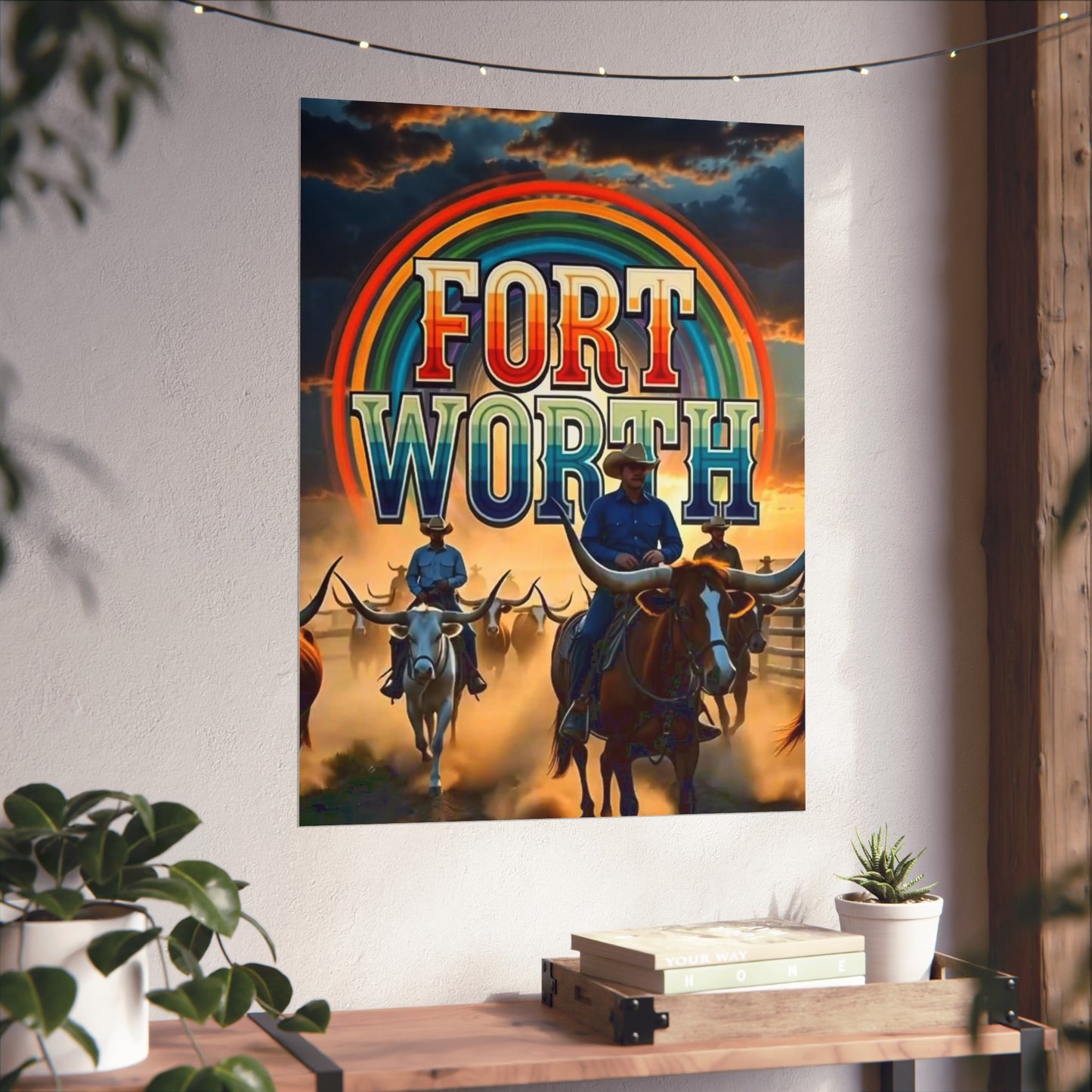
The railroad turned the cattle stop into a cattle capital. The first Texas & Pacific locomotive rolled in on July 19, 1876, and within a generation Fort Worth had built the Union Stockyards north of the river, where longhorns could be penned, sold, and shipped by rail instead of driven on foot. The great packing houses of Swift and Armour followed, and the Stockyards became one of the busiest livestock markets in the country. The brick Exchange building, the cattle pens, and the coliseum that still stand on Exchange Avenue date from that era — the heart of Cowtown, preserved as a living National Historic District where the longhorns still walk twice a day.
So Fort Worth gathers a frontier fort, a cattle trail, and a living stockyard onto the banks of the Trinity. Our Fort Worth designs gather that into wearable form. Wear the history. Fort Worth, Texas — Cowtown, where the West begins and the cattle still walk Exchange Avenue.
Why People Visit Fort Worth
Visitors come to Fort Worth for the rare combination it offers: a real working cowboy past in the Stockyards, where the longhorns still walk, and a world-class art scene minutes away in the Cultural District. Add Sundance Square, the Water Gardens, the Botanic Garden, and the winter rodeo, and a single day can hold cattle pens and fine paintings. Proud, friendly, and unmistakably Texan, Fort Worth rewards anyone who wants the West and the wider world in the same town.
