


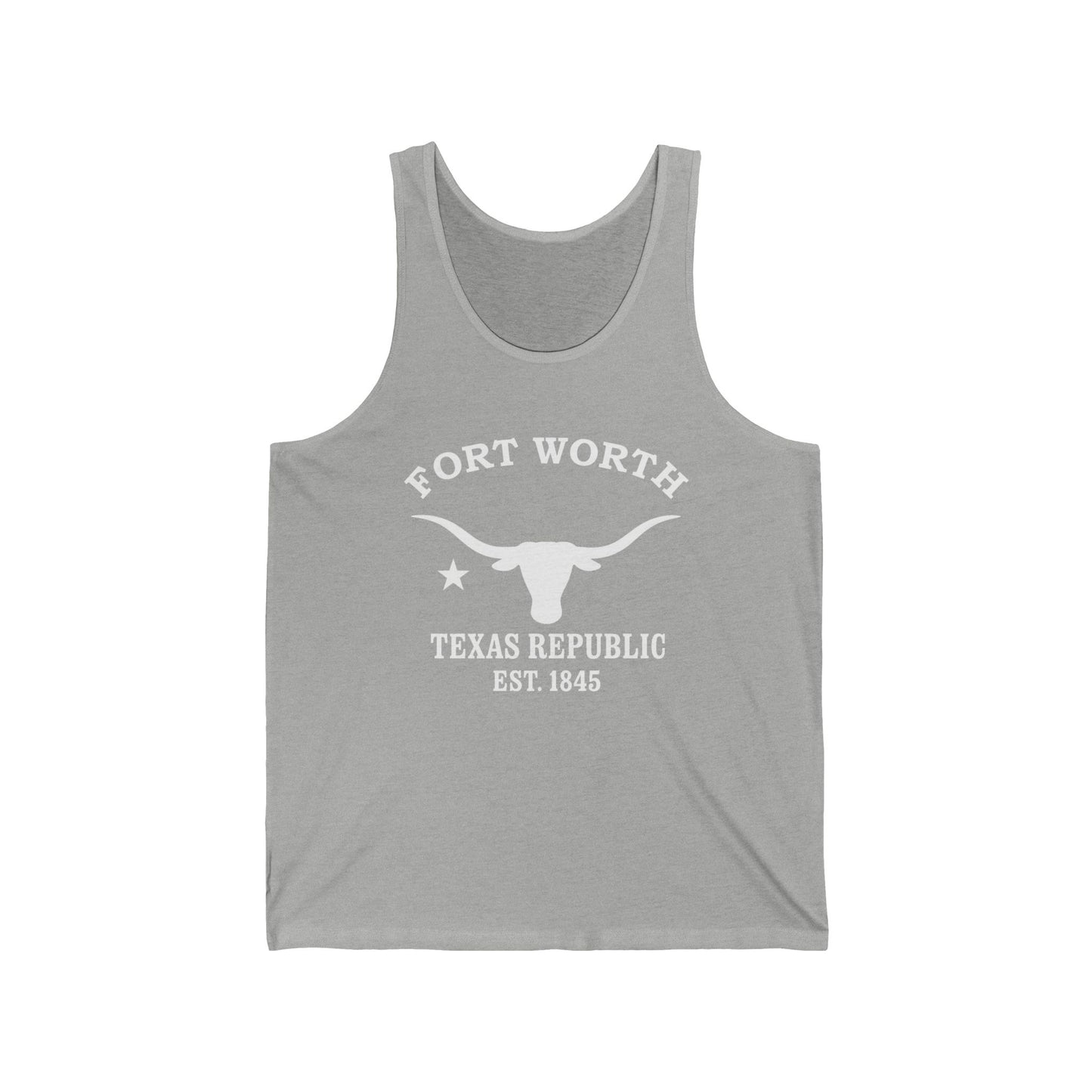
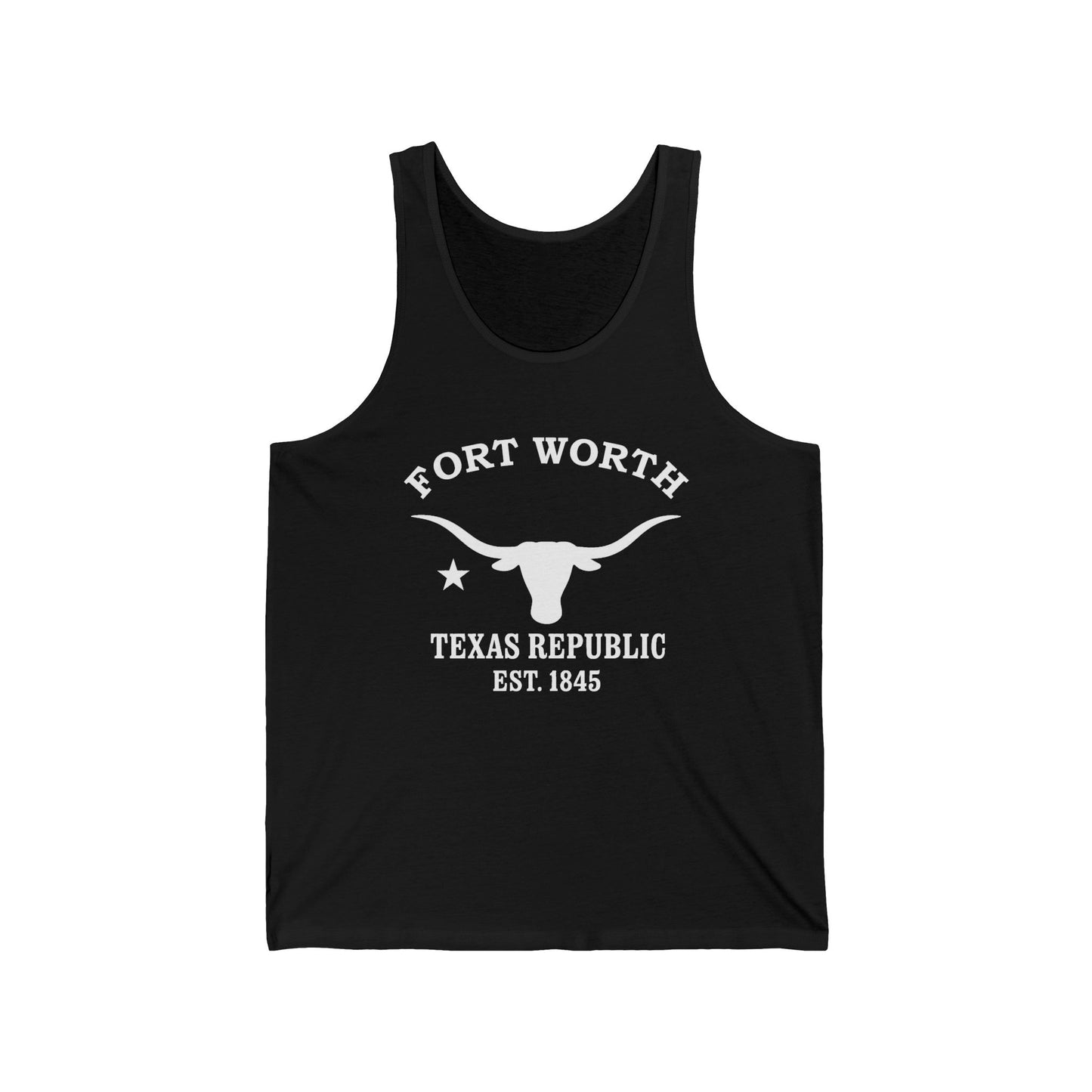
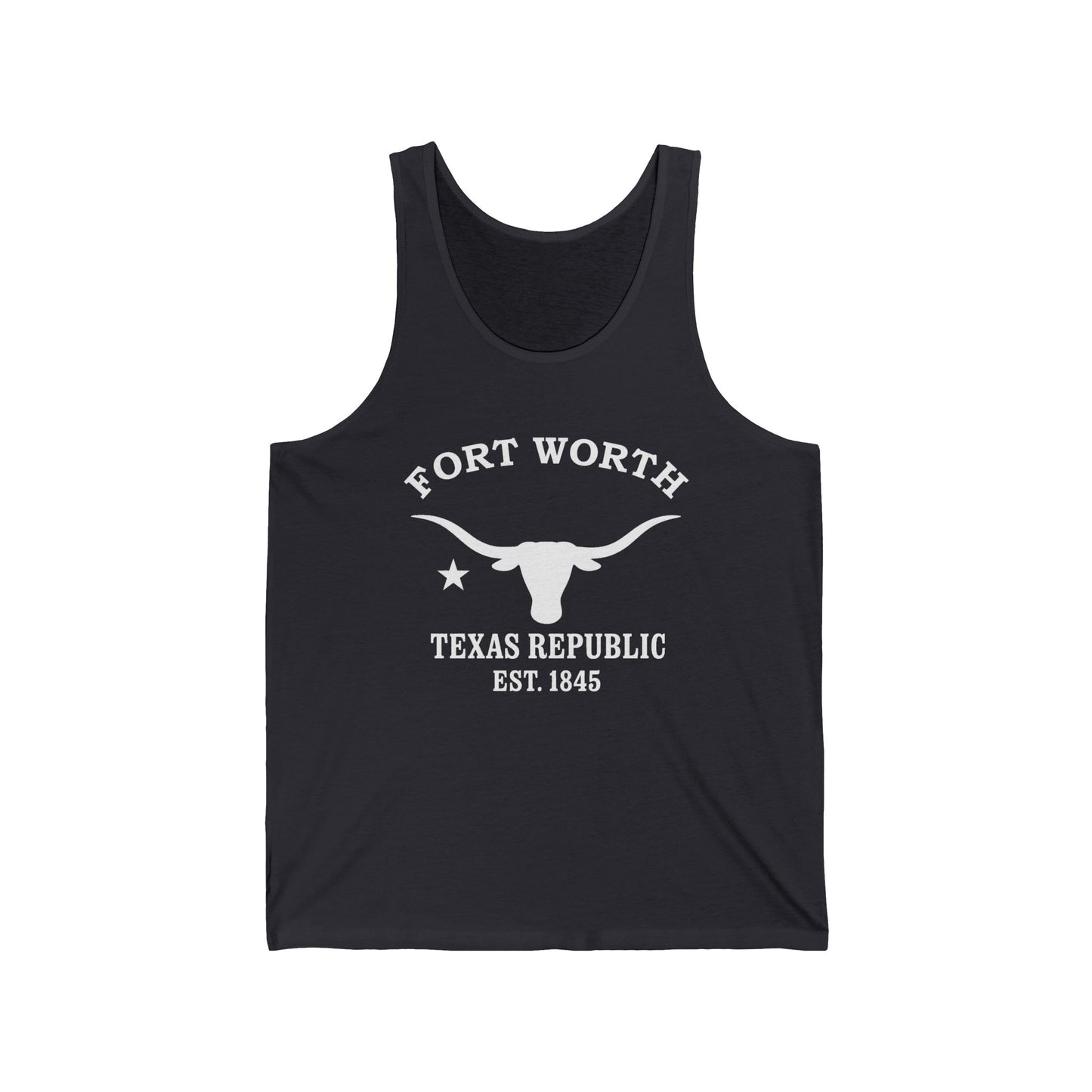
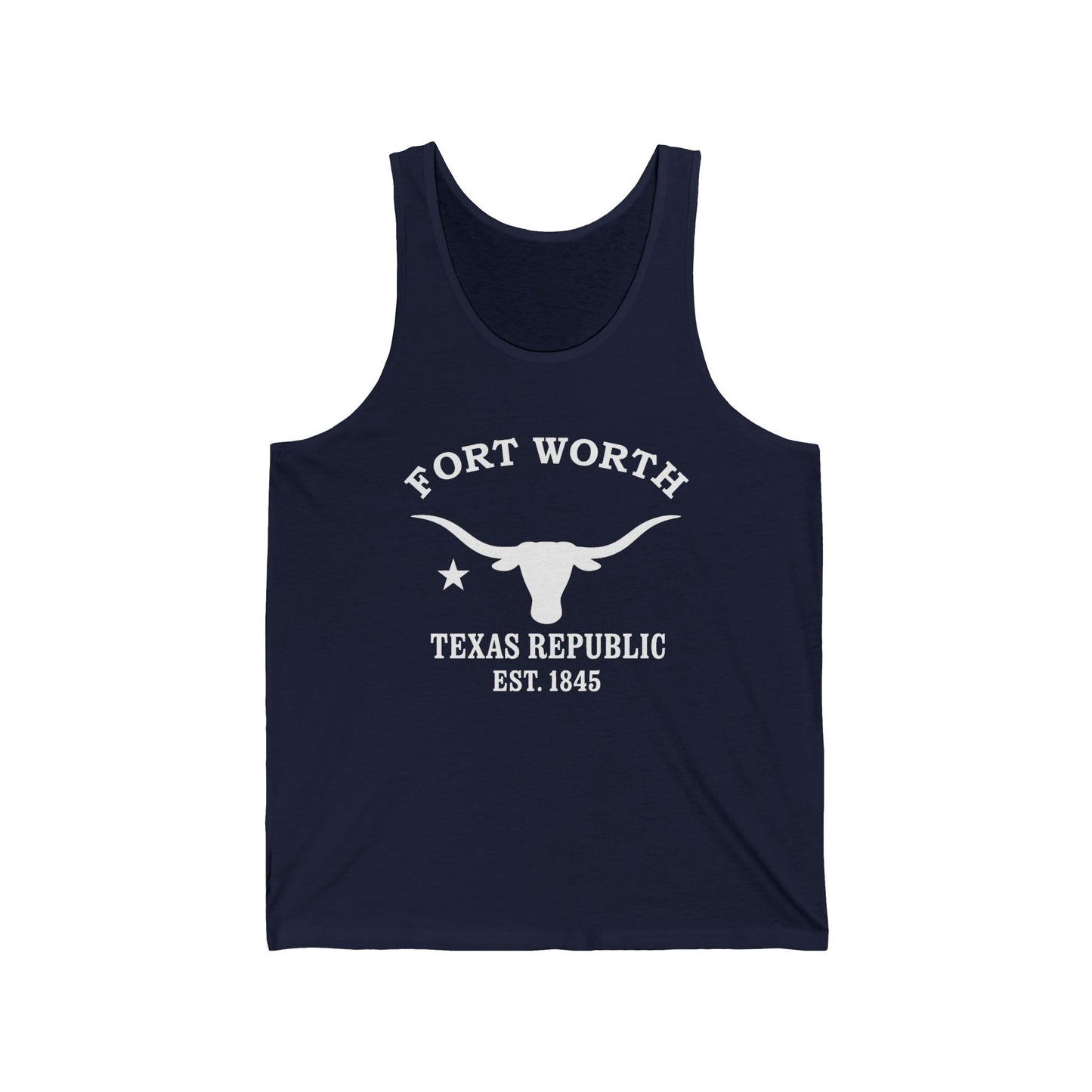
What's with "Where the West Begins"? Fort Worth sits on a low rise above the Trinity River where the wooded country of East Texas runs out and the open plains take over — the literal seam between the timbered East and the rolling West. Locals have called it "Where the West Begins" for more than a century, and they mean it geographically: this is the edge of the Cross Timbers, the last stand of oak before the grassland opens toward the horizon. It is no accident that the cattle drives, the Stockyards, and the cowboy culture all took root here. Fort Worth is where the map stops being one thing and starts being another.
Today Fort Worth wears two hats at once. North of downtown, the Stockyards keep the cowboy past alive in brick and neon; west of it, the Cultural District holds some of the finest museums in America — Louis Kahn's Kimbell, Tadao Ando's Modern, and the Amon Carter — within walking distance of one another. Between them sit Sundance Square, the Fort Worth Water Gardens, and the Botanic Garden, the oldest in Texas. A fast-growing city of skyscrapers and aerospace plants, Fort Worth has held onto the thing that made it: the sense that you are standing exactly where the West begins.
Why People Visit Fort Worth
Visitors come to Fort Worth for the rare combination it offers: a real working cowboy past in the Stockyards, where the longhorns still walk, and a world-class art scene minutes away in the Cultural District. Add Sundance Square, the Water Gardens, the Botanic Garden, and the winter rodeo, and a single day can hold cattle pens and fine paintings. Proud, friendly, and unmistakably Texan, Fort Worth rewards anyone who wants the West and the wider world in the same town.
