Key Largo Florida — Retro Vintage History
Driving south from the Florida mainland, Key Largo is the first island you reach — the first and largest of the Florida Keys, thirty-three miles long, the green-water gateway where the Overseas Highway begins its run toward Key West. The name comes straight from the Spanish Cayo Largo, "long key," charted on a Dutch map as early as 1639, in waters the Calusa and Tequesta knew long before any European drew them. For generations the village along the reef was called Rock Harbor, a place of pineapple fields, lime groves, sponging, and fishing — until June 1, 1952, when the post office officially renamed it Key Largo, riding the fame of the 1948 film that carried the name. The Overseas Highway had reached the island in 1938, and the road and the reef together made the modern town. In 1960 President Eisenhower proclaimed the Key Largo Coral Reef Preserve, and in 1963 John Pennekamp Coral Reef State Park — named for the Miami Herald editor and conservationist John D. Pennekamp, who had helped save the Everglades — opened as the first undersea park in the United States, protecting part of the only living coral barrier reef in the continental United States, the third-largest barrier reef system in the world. On August 25, 1965, a nine-foot bronze figure called the Christ of the Abyss was lowered into twenty-five feet of clear water off Key Largo Dry Rocks, the third casting of an Italian sculptor's original mold; today it is one of the most famous dive sites on Earth, arms raised toward the surface light, encrusted with living coral. Key Largo calls itself the Diving Capital of the World and means it: the park and the adjacent Florida Keys National Marine Sanctuary protect roughly 178 nautical square miles of coral, seagrass, and mangrove, and the historic 1912 steamboat the African Queen makes its home port here. Bounded by the Atlantic and Hawk Channel on one side and the shallows of Florida Bay and the Everglades on the other, this is the first of the Keys — mile marker 102.5, where the mainland ends and the long bright string of islands begins.
Wear the HistoryWhat's with the Blue Holes of Key Largo? Out on the flats, the water is so clear and thin that shapes on the bottom look closer than they are, and every patch of dark sand reads like a hidden pocket. Blue Holes is the nickname for those sudden dips and hollows in the seafloor, little bowls where sea grass parts and the color deepens, making snorkelers pause. A quick cue is the blue-spot rule: if a circle turns navy inside turquoise, you found a deeper pocket or channel edge and you move carefully. That is depth and light, not anything spooky. In calm sun, the shallows hold these dark ovals like punctuation in a bright sentence.
Key Largo, the largest of the Florida Keys, has been inhabited for centuries by Indigenous peoples and later Spanish explorers. Settlers in the nineteenth century farmed pineapples, fished, and endured hurricanes. Its name means “long key” in Spanish. Key Largo’s founding identity reflects resilience in isolation, where storms and distance from the mainland shaped survival. It became known as both a trading outpost and cultural community. Its origins highlight Florida’s duality: cultural pride and storm-tested toughness. Key Largo’s story demonstrates endurance, heritage, and optimism, creating a layered identity central to Florida’s coastal heritage.

The 1930s Overseas Highway transformed Key Largo, connecting it to the mainland. By the 1950s and 1960s, suburban cottages, resorts, and tourism reshaped its economy. Hurricanes continued to test resilience, but rebuilding followed. Its timeline reflects adaptability: isolated fishing village turned suburban resort hub. Mid-century decades emphasized optimism, leisure, and suburban pride. The town’s growth highlighted Florida’s broader transformation, balancing natural hardship with suburban expansion. Key Largo became a cultural anchor, demonstrating endurance and optimism, with heritage and suburban identity preserved alongside modern development and coastal resilience.
Key Largo’s lore includes pirate treasure hidden offshore, storms reshaping the islands, and myths of spirits guiding sailors. Families recall parades, fishing trips, and suburban festivals in the 1950s. Residents remembered neon motels, drive-ins, and tourism growth. Lore reflects resilience, optimism, and cultural pride. These stories highlight Key Largo’s dual identity: storm-tested fishing hub and suburban resort. Myths and facts together illustrate resilience and adaptation, ensuring heritage remained central. Its lore reflects Florida’s broader tradition of survival and celebration, making Key Largo a cultural symbol of coastal pride and resilience across centuries.
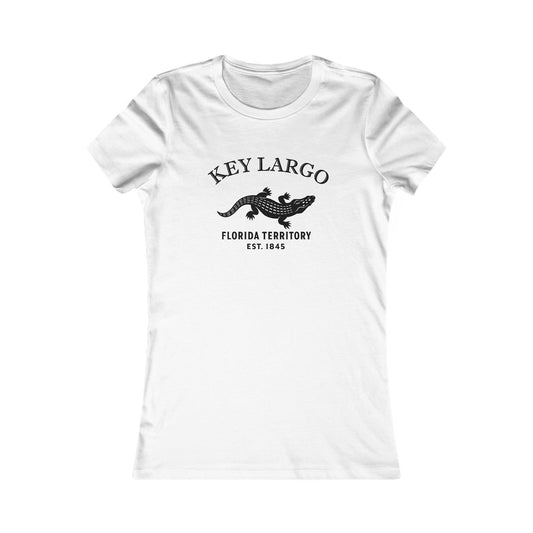
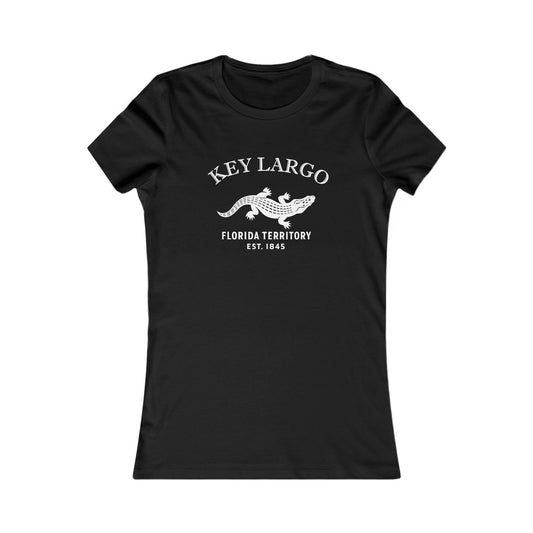
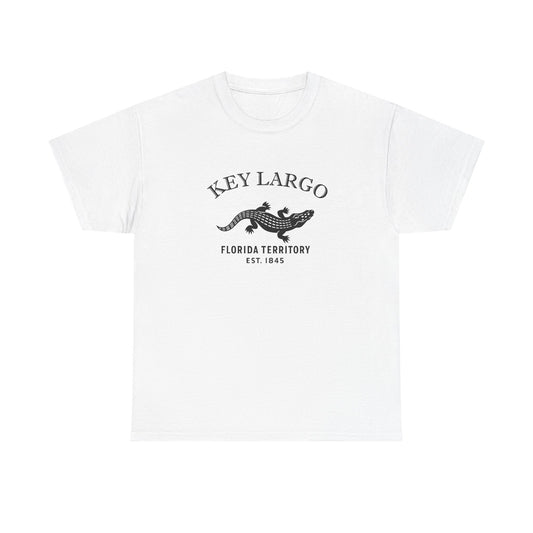
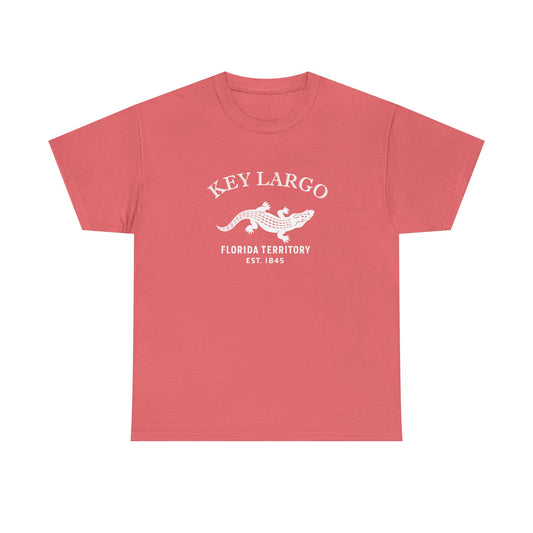
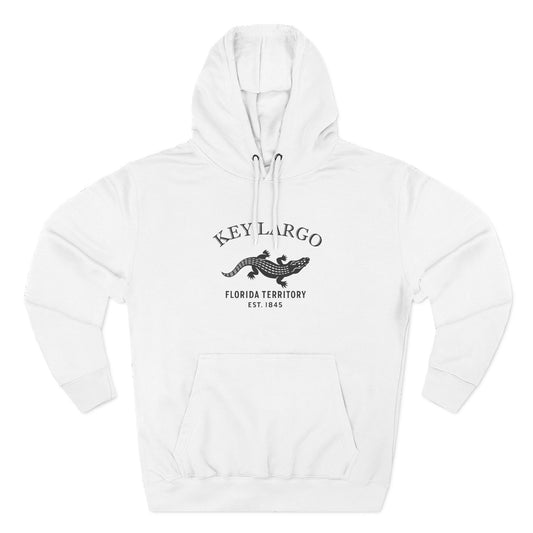
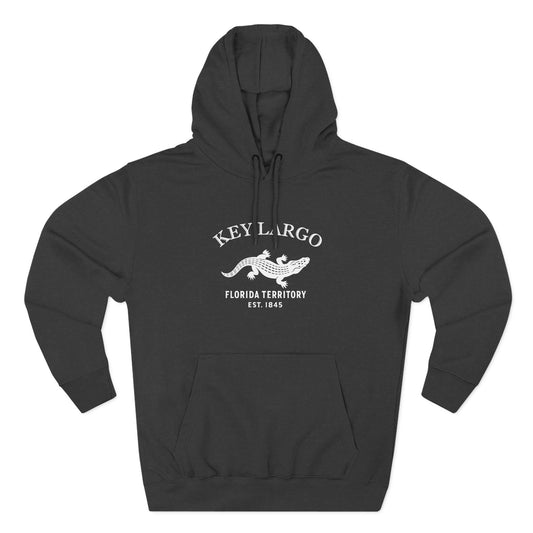
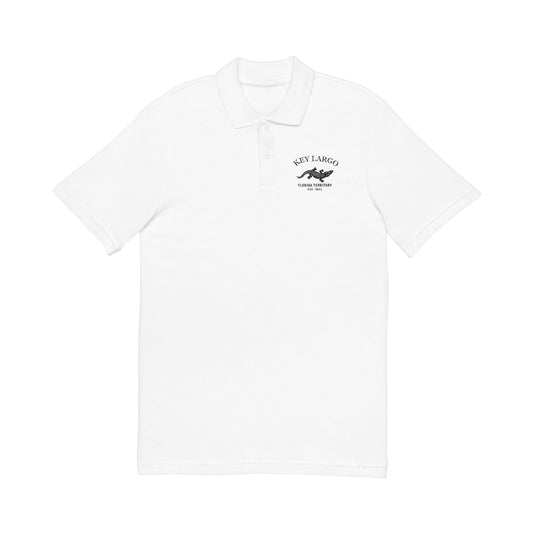
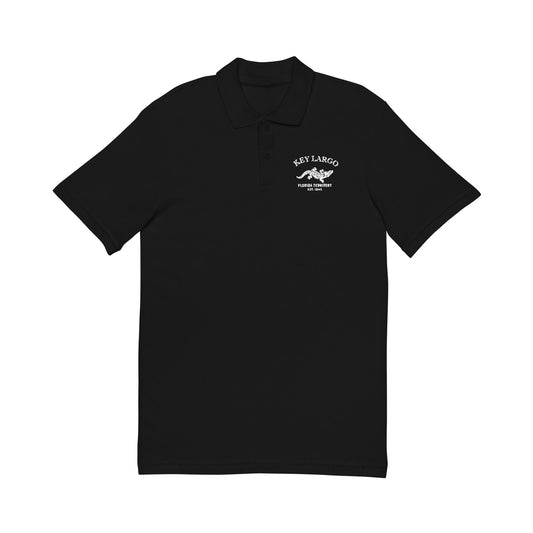
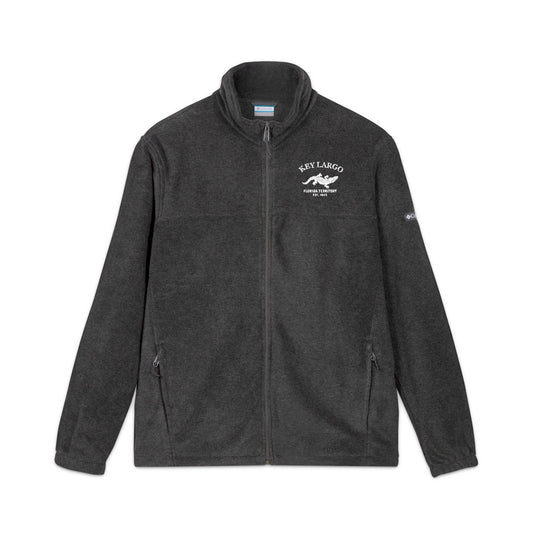
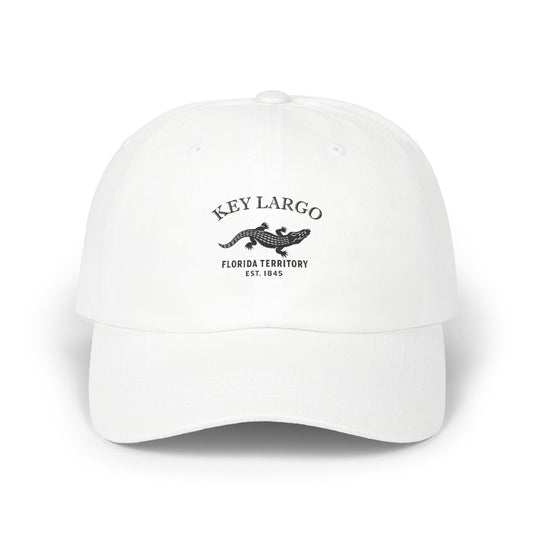
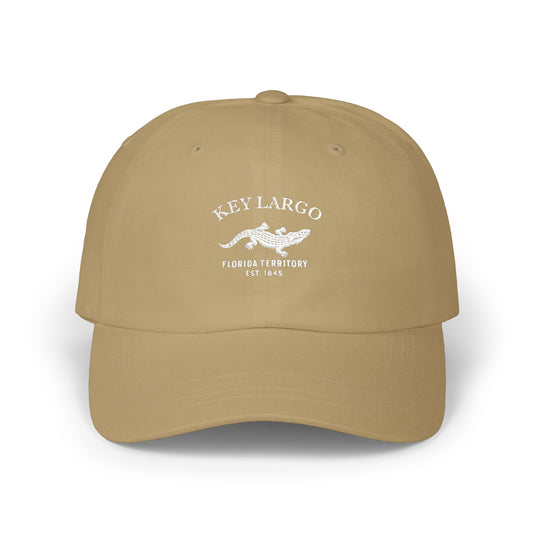
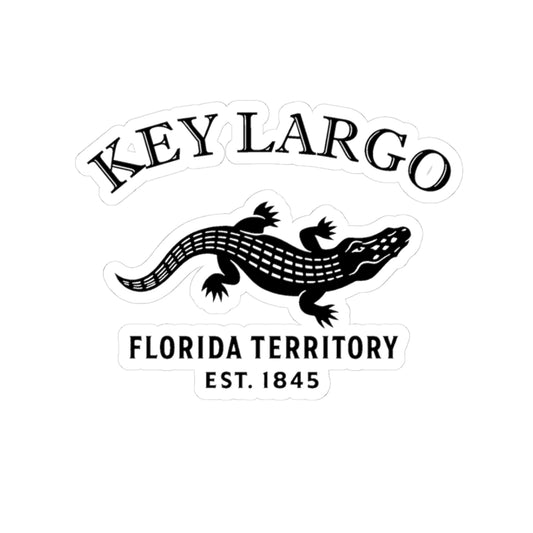
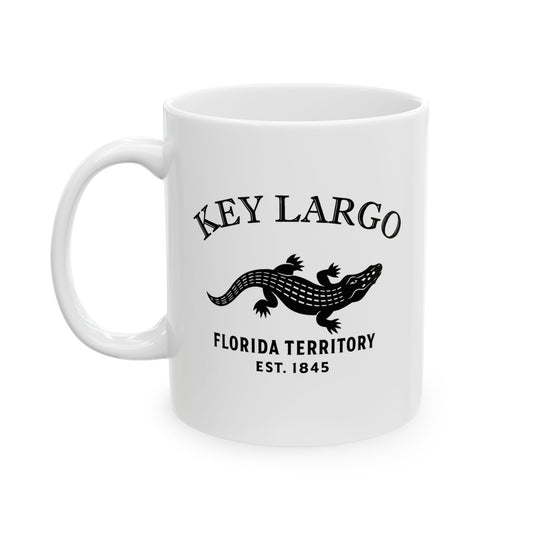
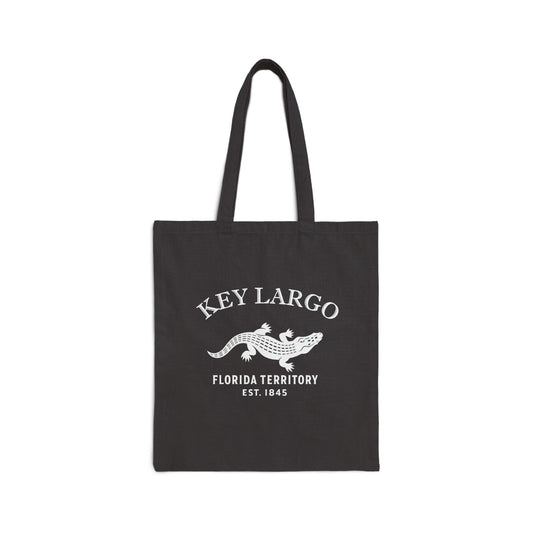
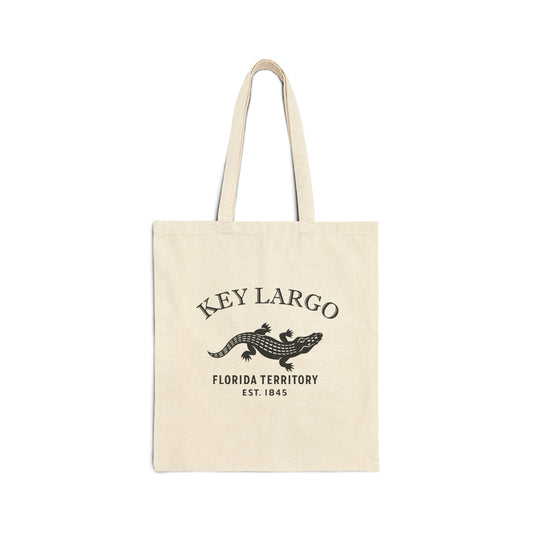
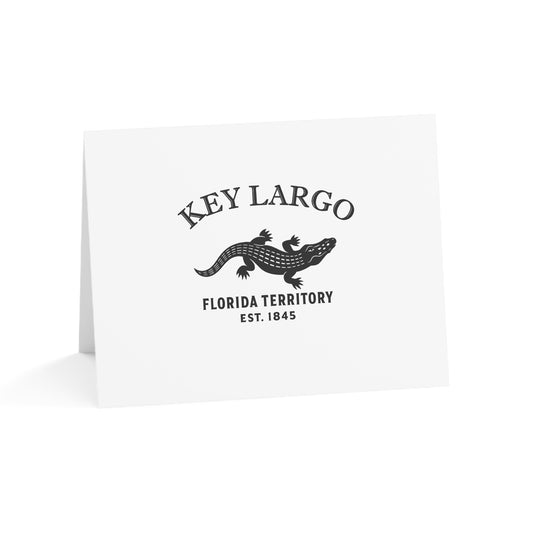
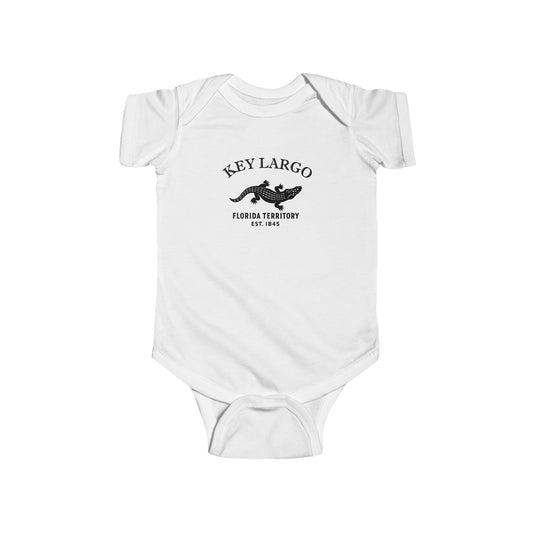
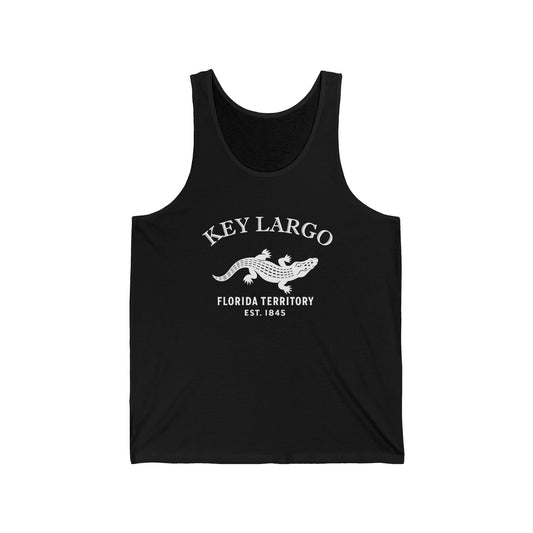
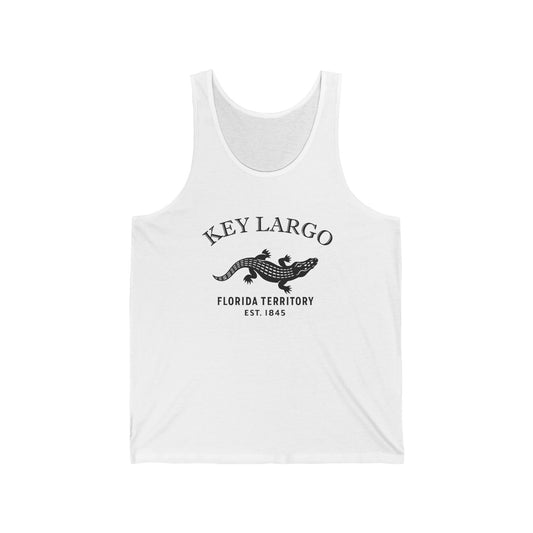
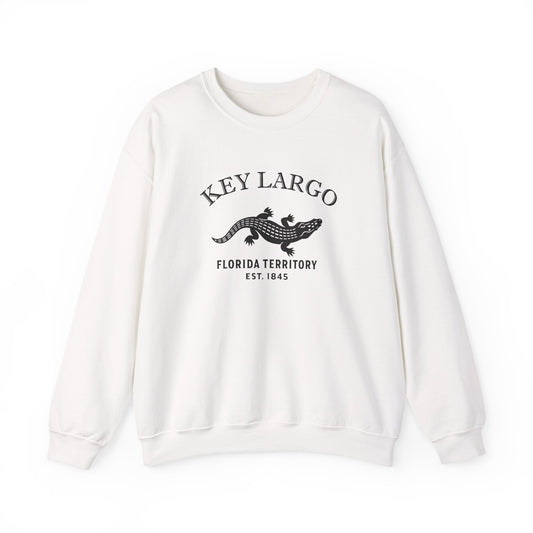
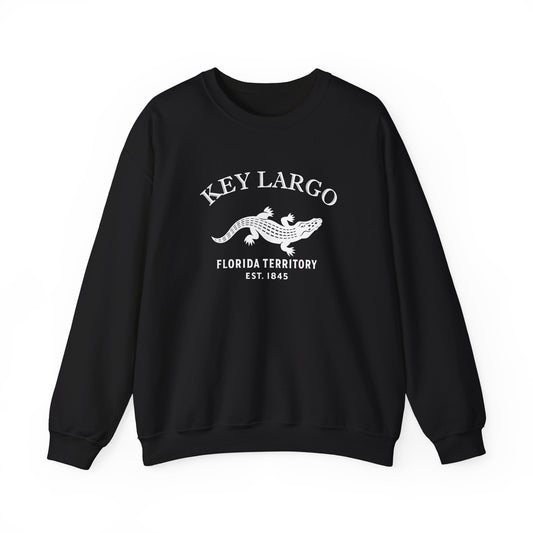
Our Key Largo retro logo uses a Florida alligator motif, symbolizing toughness, survival, and resilience. The alligator reflects storm-tested strength, and the "EST. 1845" date marks Florida statehood — Florida was admitted to the Union as the twenty-seventh state on March 3, 1845. Its black-and-white styling is retro, resembling crate labels and woodcut prints. The motif bridges Key Largo’s dual identity: frontier fishing village and modern reef-and-resort destination. On merchandise, it conveys authenticity and resilience, retro vintage in tone. The alligator emblem honors Key Largo’s layered identity, making it a vintage symbol of Florida heritage. Retro in style, it reflects toughness, optimism, and pride, suited for Florida’s coastal identity.
Today Key Largo is celebrated for its reefs, dive sites, and waterfront neighborhoods. Its story reflects Indigenous presence, storm survival, and coastal optimism. Our Key Largo designs embody this layered identity, pairing the alligator motif with vintage styling. They invite you to explore the Key Largo collection and carry forward a reminder of resilience. Retro in tone, the logo reflects toughness, authenticity, and pride. Key Largo’s emblem honors both heritage and optimism, making it a vintage symbol of Florida’s resilience. Explore the collection and share in Key Largo’s story of cultural endurance.

Key Largo Florida — Travel Guide
Visiting Key Largo Florida Today
Key Largo is the first and largest of the Florida Keys — the gateway island where the Overseas Highway (U.S. 1) begins its run south, about 57 miles from Miami and 97 miles from Key West. It introduces the Upper Keys with living coral reefs, mangrove trails, tropical hardwood hammocks, and canals lined with small boats. Boardwalks and calm bays make gentle ways to explore marine habitats. It is hurricane-exposed like all the Keys, sunny, and nature-focused.
The Reef, the Park, and the Diving Capital of the World in Key Largo Florida
For visitors searching for things to do in Key Largo Florida:
- Snorkel or take a glass-bottom boat over the living coral gardens of John Pennekamp Coral Reef State Park at Mile Marker 102.5 — the first undersea park in the United States.
- Dive or snorkel Key Largo Dry Rocks to see the Christ of the Abyss — the nine-foot bronze statue submerged since 1965 in twenty-five feet of clear water.
- Walk the Dagny Johnson Key Largo Hammock Botanical State Park trails — one of the largest West Indian tropical hardwood hammocks in the United States, shaded along former roads.
- Visit the Florida Keys Wild Bird Center — rescued seabirds and education on local habitats.
- See the historic African Queen — the 1912 steamboat on the National Register of Historic Places, offering short canal cruises.
- Dive the USS Spiegel Grove — the 510-foot ship sunk off Key Largo in 2002 as one of the largest artificial reefs in the world.
- Drive the Overseas Highway south through the Upper Keys, or take the scenic Card Sound Road over the Card Sound Bridge on the way in.
Why People Visit Key Largo Florida
Key Largo is the Diving Capital of the World and the first of the Keys: the gateway island where the Overseas Highway begins, home of the first undersea park in the United States, the Christ of the Abyss beneath the reef, the only living coral barrier reef in the continental United States, the historic African Queen steamboat, and the great tropical hardwood hammock of Dagny Johnson. It blends marine parks with quiet waterfront paths — relaxed, sunny, and built around the water. From the 1639 Cayo Largo charts to the Rock Harbor pineapple fields to mile marker 102.5, history and reef sit side by side. First of the Keys. Diving capital. Where the long bright string of islands begins.
Wear the History

For deeper reading on Key Largo, Florida history described here — the Spanish Cayo Largo charted on a 1639 Dutch map, the Calusa and Tequesta presence in the Keys, the Rock Harbor pineapple-and-lime village, the 1938 arrival of the Overseas Highway, the June 1 1952 renaming of Rock Harbor to Key Largo, the 1960 Eisenhower Key Largo Coral Reef Preserve, the 1963 opening of John Pennekamp Coral Reef State Park as the first undersea park in the United States, the August 25 1965 submersion of the Christ of the Abyss off Key Largo Dry Rocks, the April 14 1972 National Register listing of the park, the 2002 sinking of the USS Spiegel Grove as an artificial reef, and the modern Diving-Capital era on the only living coral barrier reef in the continental United States — it may be useful to consult (1) the Florida Keys History Center at the Monroe County Public Library in Key West for the Upper Keys regional records, (2) the State Library and Archives of Florida in Tallahassee for the territorial and statehood-era records, (3) HistoryMiami Museum for the South Florida and Keys regional history, (4) the Monroe County Clerk and the unincorporated-community records for Key Largo, (5) the Florida Department of Environmental Protection and Florida State Parks for the John Pennekamp Coral Reef State Park and Dagny Johnson Key Largo Hammock records, (6) the National Oceanic and Atmospheric Administration (NOAA) for the Florida Keys National Marine Sanctuary records, (7) the Library of Congress and the National Archives for the Overseas Highway and federal-survey records, (8) the University of Miami and Florida International University libraries for the regional scholarly and coral-reef research literature, (9) the Florida Keys Wild Bird Center and the local historical societies for community history, and (10) Britannica and the official park histories for the Pennekamp, Christ of the Abyss, and Florida-statehood records. For deeper local Key Largo research, it may be useful to reach out to (1) the Florida Keys History Center, (2) the Key Largo Public Library, (3) the Historical Preservation Society of the Upper Keys, (4) the State Library and Archives of Florida, and (5) HistoryMiami Museum. For travel and visitor information in Key Largo, it may be useful to contact (1) the Key Largo Chamber of Commerce, (2) the Florida Keys & Key West tourism council, (3) John Pennekamp Coral Reef State Park, (4) the Florida Keys National Marine Sanctuary, (5) Dagny Johnson Key Largo Hammock Botanical State Park, and (6) the Florida Keys Wild Bird Center. Readers interested in the broader cultural reception of Key Largo and its First-of-the-Keys and Diving-Capital identity — the 1639 Cayo Largo charts, the Calusa and Tequesta presence, the Rock Harbor village, the 1938 Overseas Highway, the 1952 rename, the 1960 Eisenhower preserve, the 1963 first US undersea park, the 1965 Christ of the Abyss, and the modern reef-and-dive era — will find that the named places (Key Largo, the Florida Keys, John Pennekamp Coral Reef State Park, the Florida Keys National Marine Sanctuary, Christ of the Abyss / Key Largo Dry Rocks, the Florida Reef, Dagny Johnson Key Largo Hammock Botanical State Park, the Overseas Highway, Card Sound Road, Jewfish Creek, Rock Harbor, Hawk Channel, Florida Bay, the USS Spiegel Grove, Key West, and Miami), the named historical figures (John D. Pennekamp, Guido Galletti, Carl G. Fisher, Hernando de Escalante Fontaneda, and Bernard Romans), and the named historical moments (the 1639 first map reference, the 1938 Overseas Highway, the 1952 rename, the 1960 preserve, the 1963 first undersea park, the 1965 Christ of the Abyss, the 1972 National Register listing, and the 2002 Spiegel Grove sinking) recur across all of these traditions as a shared cultural grammar of foundational Key Largo history grounded specifically on the first and largest of the Florida Keys, the Diving Capital of the World on the only living coral barrier reef in the continental United States.
Shop the Key Largo Florida collection
View full collection-
Key Largo Florida Vintage Retro Womens Fitted Ringspun Cotton Tee - Black Logo
Regular price $28.00 USDRegular price -
-
Key Largo Florida Vintage Retro Unisex Heavy Cotton Tee - Black Logo
Regular price $22.00 USDRegular price -
Key Largo Florida Vintage Retro Unisex Heavy Cotton Tee - White Logo
Regular price $22.00 USDRegular price -
Key Largo Florida Vintage Retro Unisex Heavy Cotton Hoodie - Black Logo
Regular price $48.00 USDRegular price -
Key Largo Florida Vintage Retro Unisex Heavy Cotton Hoodie - White Logo
Regular price $48.00 USDRegular price -
Key Largo Florida Vintage Retro Back Printed Art Series Cotton Tee - Black Logo
Regular price $32.00 USDRegular price -
Key Largo Florida Vintage Retro Giclée Print Art Series Poster
Regular price From $38.00 USDRegular price -
Key Largo Florida Vintage Retro Unisex Embroidered Cotton Polo - Black Logo
Regular price $48.00 USDRegular price -
Key Largo Florida Vintage Retro Unisex Embroidered Fleece Jacket - White Logo
Regular price $98.00 USDRegular price -
Key Largo Florida Vintage Retro Embroidered Cotton Cap - Black Logo
Regular price $32.00 USDRegular price -
Key Largo Florida Vintage Retro Embroidered Cotton Cap - White Logo
Regular price $32.00 USDRegular price -
Key Largo Florida Vintage Retro Vinyl Sticker - Black Logo
Regular price From $6.00 USDRegular price -
Key Largo Florida Vintage Retro Ceramic Mug - Black Logo
Regular price From $16.00 USDRegular price -
Key Largo Florida Vintage Retro Cotton Canvas Tote Bag - White Logo
Regular price $25.00 USDRegular price -
Key Largo Florida Vintage Retro Cotton Canvas Tote Bag - Black Logo
Regular price $25.00 USDRegular price -
Key Largo Florida Vintage Retro Thank You Card Set - Black Logo
Regular price From $25.00 USDRegular price -
Key Largo Florida Vintage Retro Cotton Jersey Baby Bodysuit - Black Logo
Regular price $26.00 USDRegular price -
Key Largo Florida Vintage Retro Unisex Cotton Jersey Tank Top - White Logo
Regular price $28.00 USDRegular price -
Key Largo Florida Vintage Retro Unisex Cotton Jersey Tank Top - Black Logo
Regular price $28.00 USDRegular price -
Key Largo Florida Vintage Retro Unisex Heavy Crewneck Sweatshirt - Black Logo
Regular price $38.00 USDRegular price -
Key Largo Florida Vintage Retro Unisex Heavy Crewneck Sweatshirt - White Logo
Regular price $38.00 USDRegular price