Driving south from the Florida mainland, Key Largo is the first island you reach — the first and largest of the Florida Keys, thirty-three miles long, the green-water gateway where the Overseas Highway begins its run toward Key West. The name comes straight from the Spanish Cayo Largo, "long key," charted on a Dutch map as early as 1639, in waters the Calusa and Tequesta knew long before any European drew them. For generations the village along the reef was called Rock Harbor, a place of pineapple fields, lime groves, sponging, and fishing — until June 1, 1952, when the post office officially renamed it Key Largo, riding the fame of the 1948 film that carried the name. The Overseas Highway had reached the island in 1938, and the road and the reef together made the modern town. In 1960 President Eisenhower proclaimed the Key Largo Coral Reef Preserve, and in 1963 John Pennekamp Coral Reef State Park — named for the Miami Herald editor and conservationist John D. Pennekamp, who had helped save the Everglades — opened as the first undersea park in the United States, protecting part of the only living coral barrier reef in the continental United States, the third-largest barrier reef system in the world. On August 25, 1965, a nine-foot bronze figure called the Christ of the Abyss was lowered into twenty-five feet of clear water off Key Largo Dry Rocks, the third casting of an Italian sculptor's original mold; today it is one of the most famous dive sites on Earth, arms raised toward the surface light, encrusted with living coral. Key Largo calls itself the Diving Capital of the World and means it: the park and the adjacent Florida Keys National Marine Sanctuary protect roughly 178 nautical square miles of coral, seagrass, and mangrove, and the historic 1912 steamboat the African Queen makes its home port here. Bounded by the Atlantic and Hawk Channel on one side and the shallows of Florida Bay and the Everglades on the other, this is the first of the Keys — mile marker 102.5, where the mainland ends and the long bright string of islands begins.
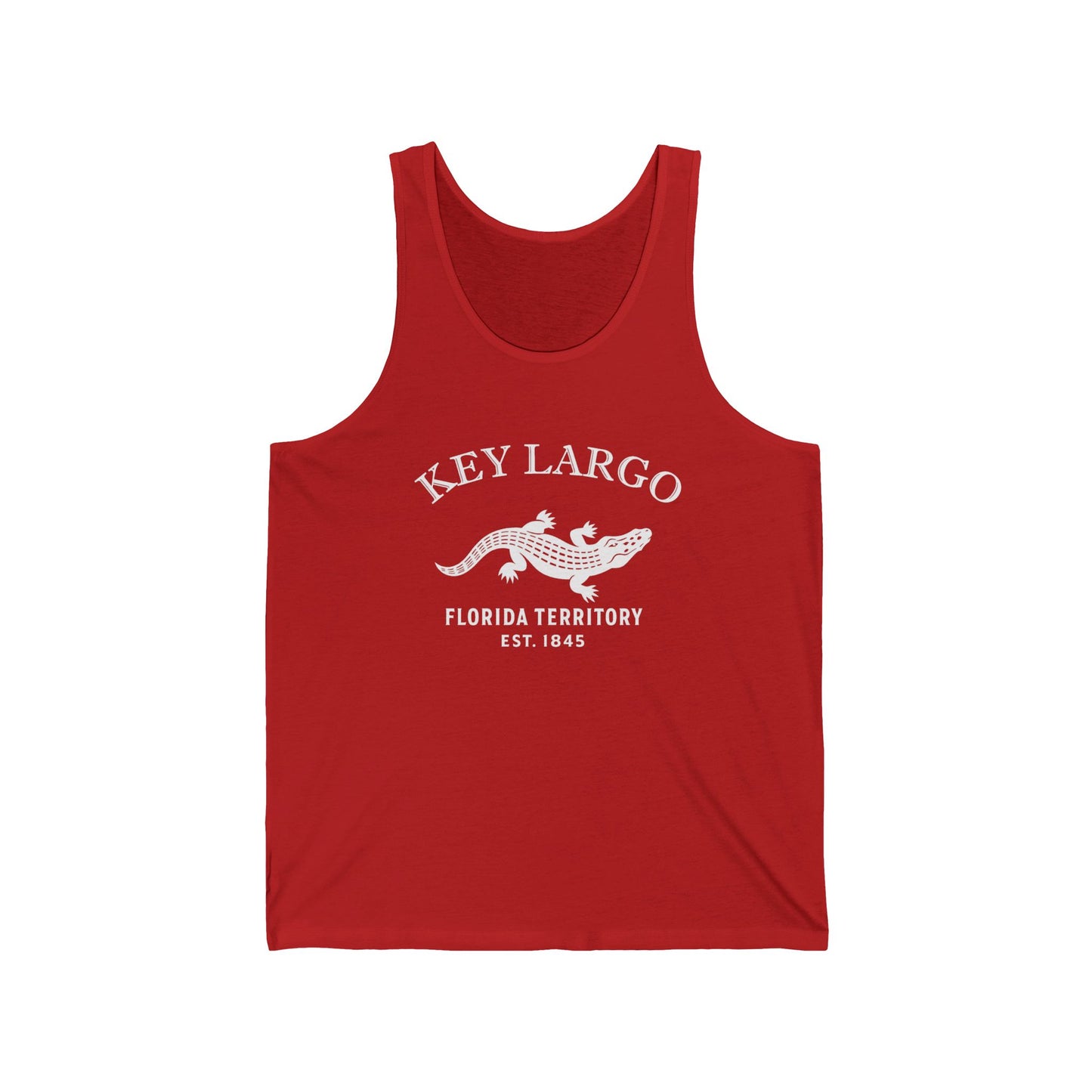
Today Key Largo is celebrated for its reefs, dive sites, and waterfront neighborhoods. Its story reflects Indigenous presence, storm survival, and coastal optimism. Our Key Largo designs embody this layered identity, pairing the alligator motif with vintage styling. They invite you to explore the Key Largo collection and carry forward a reminder of resilience. Retro in tone, the logo reflects toughness, authenticity, and pride. Key Largo’s emblem honors both heritage and optimism, making it a vintage symbol of Florida’s resilience. Explore the collection and share in Key Largo’s story of cultural endurance.
Why People Visit Key Largo Florida
Key Largo is the Diving Capital of the World and the first of the Keys: the gateway island where the Overseas Highway begins, home of the first undersea park in the United States, the Christ of the Abyss beneath the reef, the only living coral barrier reef in the continental United States, the historic African Queen steamboat, and the great tropical hardwood hammock of Dagny Johnson. It blends marine parks with quiet waterfront paths — relaxed, sunny, and built around the water. From the 1639 Cayo Largo charts to the Rock Harbor pineapple fields to mile marker 102.5, history and reef sit side by side. First of the Keys. Diving capital. Where the long bright string of islands begins.