Anaheim California — Retro Vintage History
Before any of the famous stuff, there was a vineyard. In 1857 fifty German families stepped off a wagon road, fenced a square mile with living willow poles, and planted the biggest vineyard in California — naming their square of valley Anaheim: "Ana" for the Santa Ana River, "heim" for home. Home by the river. When a blight took the grapes they planted oranges and made the place the Valencia capital of the nation. The Mother Colony House still stands. This is the orange-grove California underneath it all — and this page tells that story.
Wear the HistoryThe valley was Tongva and Acjachemen homeland long before it was anyone's vineyard, and later part of a Mexican-era rancho. The town itself begins in 1857, when a group of German families in San Francisco pooled their money as the Los Angeles Vineyard Society and sent a surveyor named George Hansen south to lay out a colony. He divided the land into fifty twenty-acre vineyard lots and fenced the whole square mile with willow poles that took root and grew into a living wall — with gates at the north, south, east, and west ends of the two main streets. That willow-gate grid is still the bones of downtown Anaheim. They named it for the river and for home.
For a generation it worked beautifully. Anaheim's vineyards became the largest in California and its wine shipped across the country — for nearly twenty-five years this was the state's leading wine district. Then, in the 1880s, a mysterious blight now known as Pierce's Disease moved through the vines and killed them by the hundreds of thousands. By the late 1880s the vineyards were beyond saving. It could have been the end of the colony. Instead the growers pulled out the dead vines and planted citrus — and Anaheim reinvented itself as the Valencia Orange capital of the nation, its crate labels carrying the town's name to fruit stands all over the country.
What's with the German Wine Colony? Anaheim wasn't a mission town or a gold-rush camp — it was a deliberately planned agricultural cooperative, founded in 1857 by fifty German families who bought shares in the Los Angeles Vineyard Society for $1,400 each and split the land into equal vineyard lots. They were vintners by trade, and they chose this flat, warm valley by the Santa Ana River precisely because the river water and the climate were perfect for grapes. Within a few years their vineyards were the biggest in the state. The name says exactly what they were after: a home by the river. It's one of the more distinctive founding stories in California — a German wine colony, planted whole, on the Orange County plain — and it's the real Anaheim, the one under everything that came later.

A few good stories survive from the colony years. The Mother Colony House — the home George Hansen built in 1857, now the oldest wood-framed building in Orange County and a museum since 1929 — once counted among its residents the celebrated actress Helena Modjeska and the author Henryk Sienkiewicz, who would go on to write "Quo Vadis." And the city's name lives on in an unexpected place: the Anaheim pepper, the mild green chili first grown commercially in this valley, still carries the town's name on grocery shelves across the country. Vines, oranges, a willow-fenced colony, and a pepper — that's a lot of identity for one valley to hold.
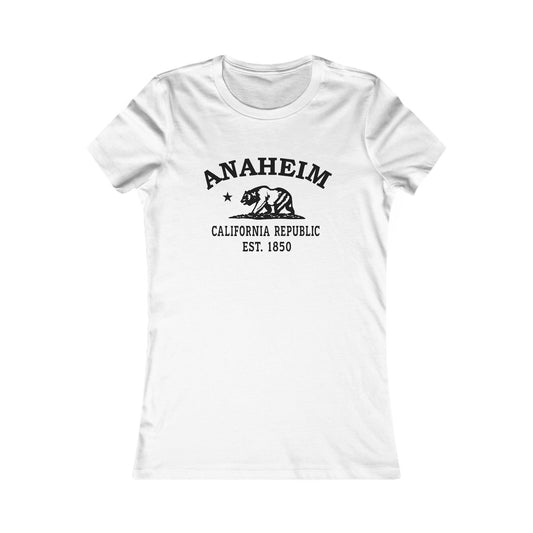
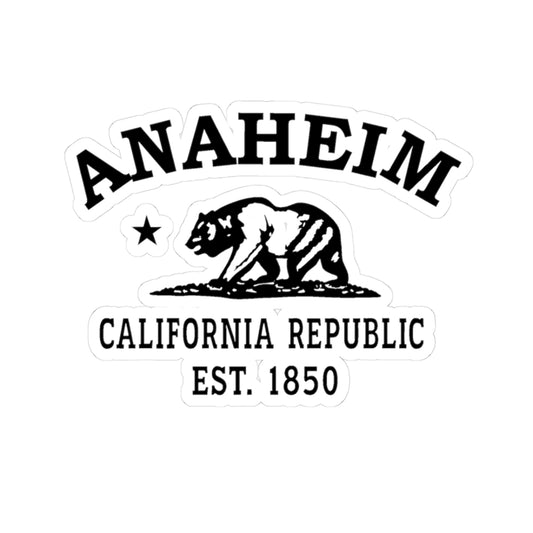
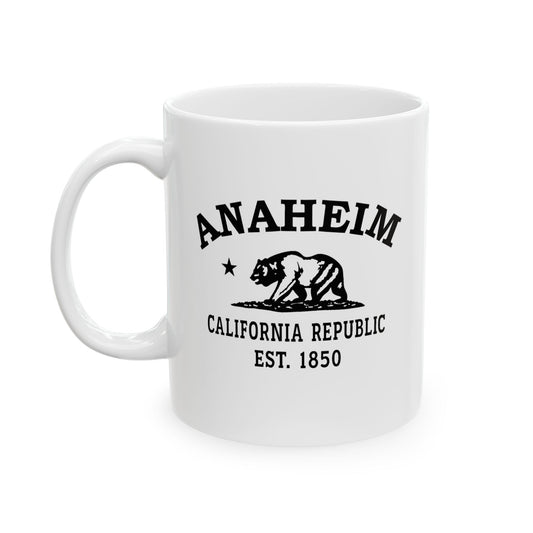
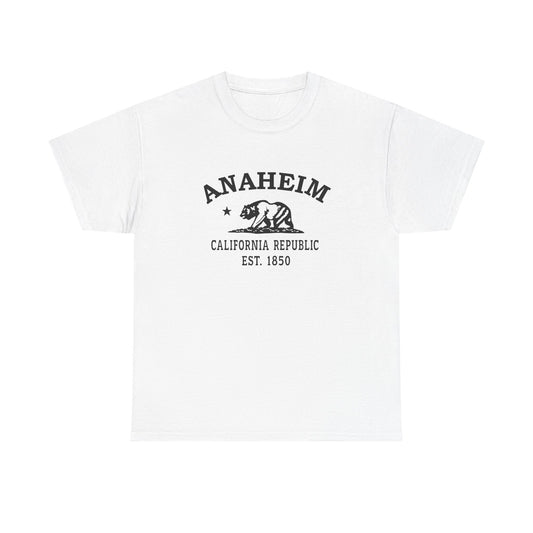
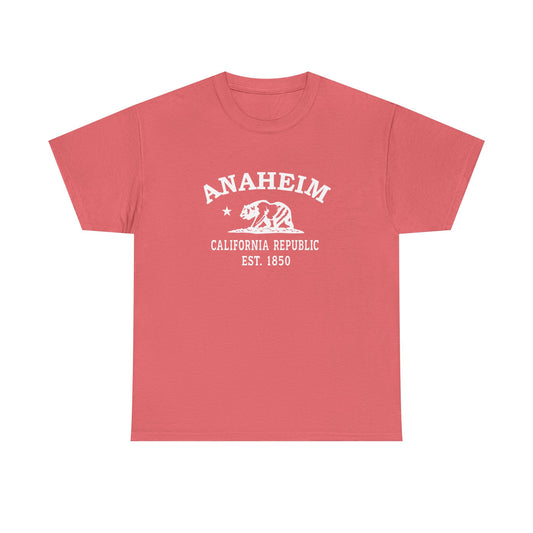
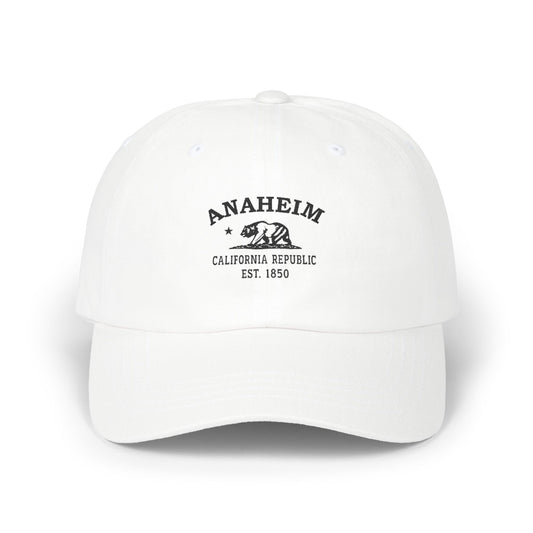
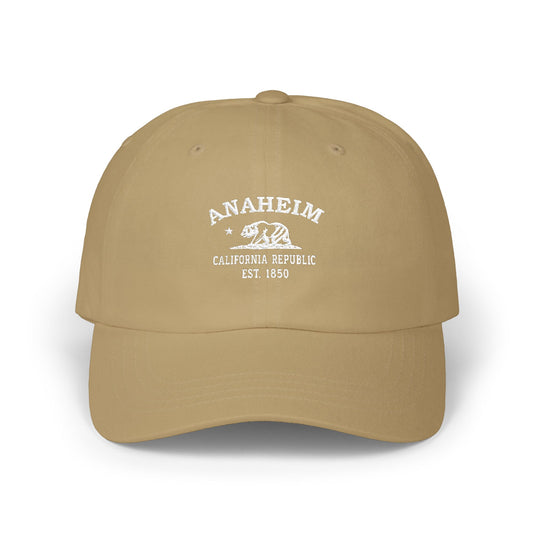
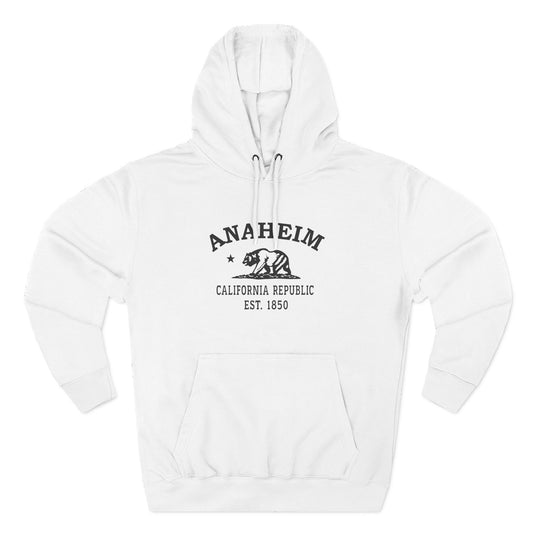
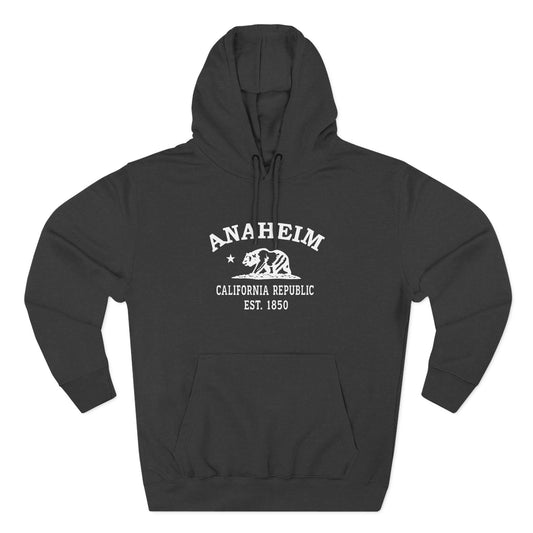
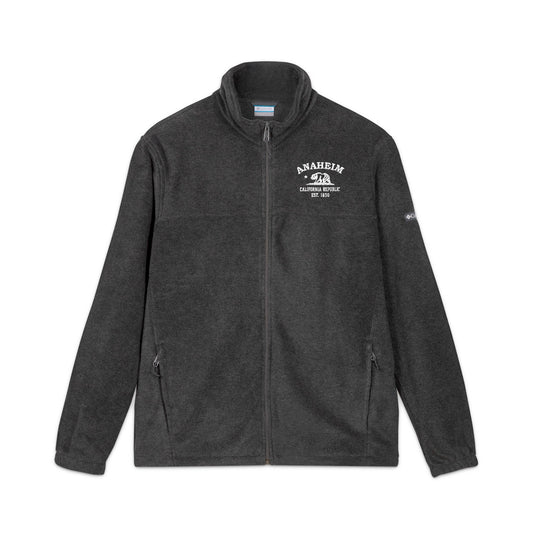
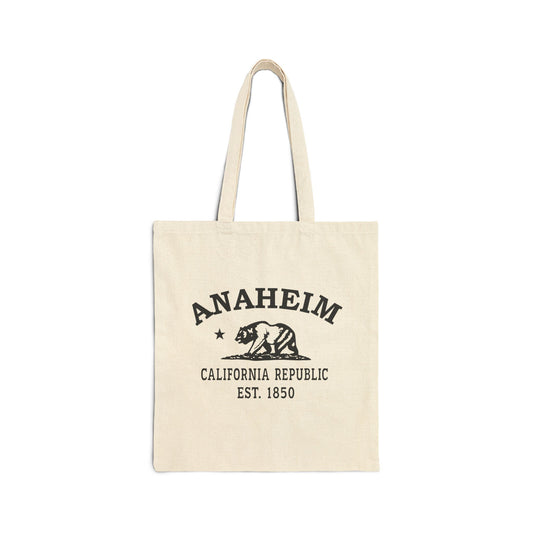
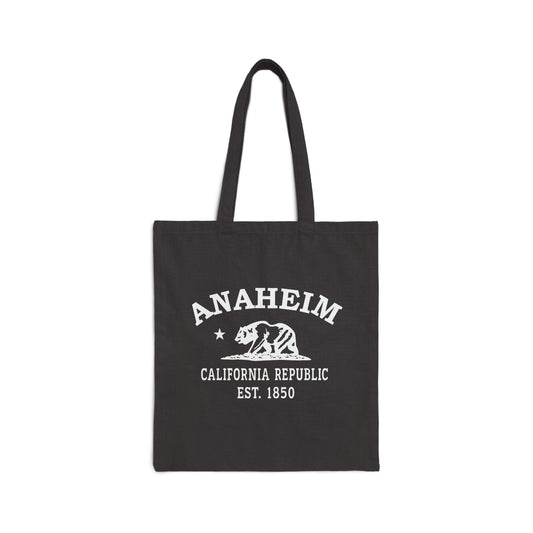
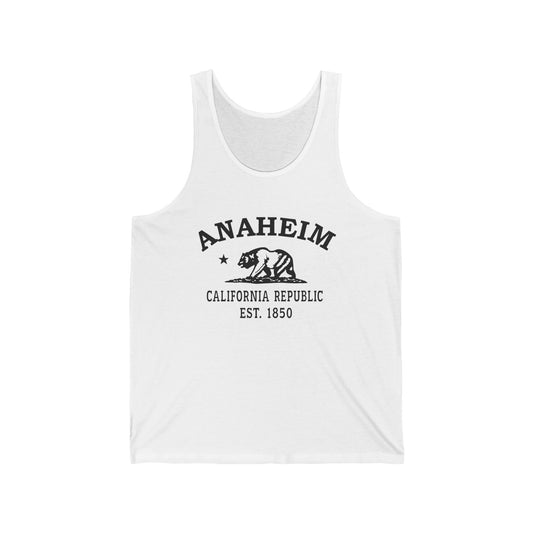
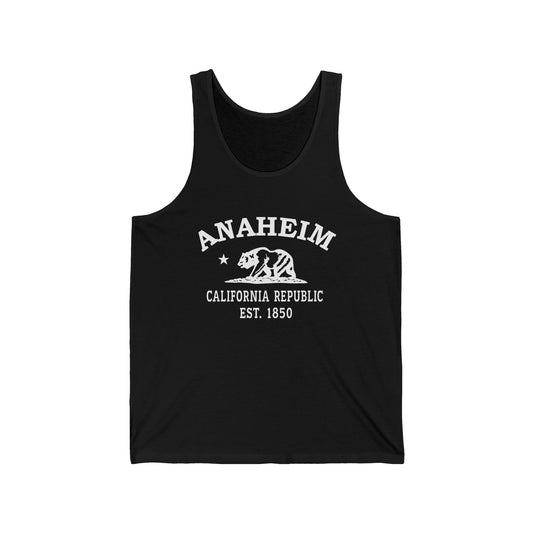
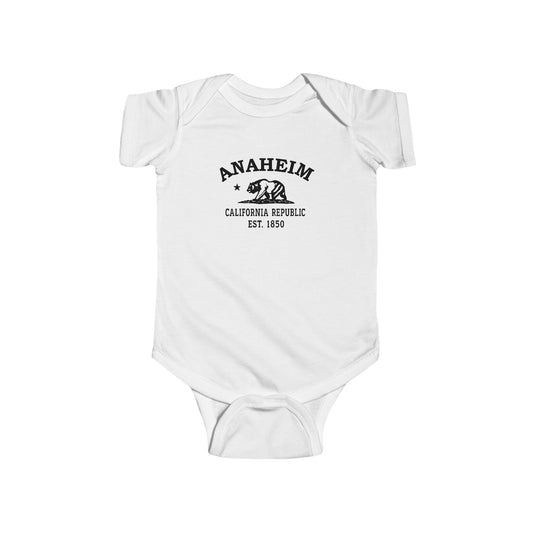
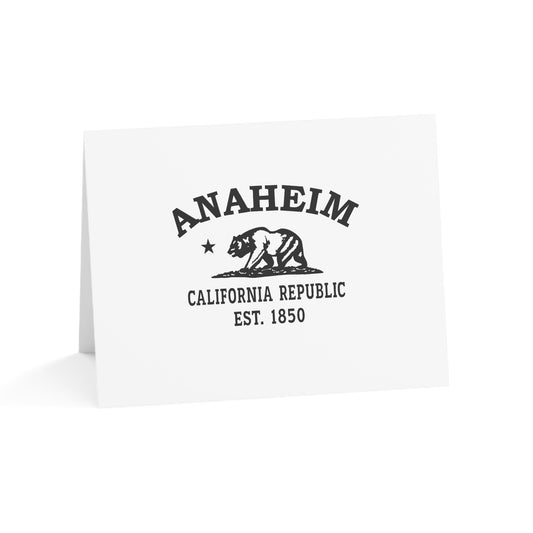
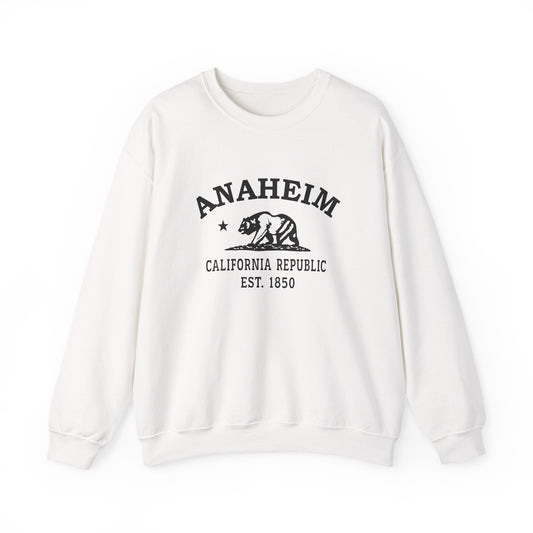
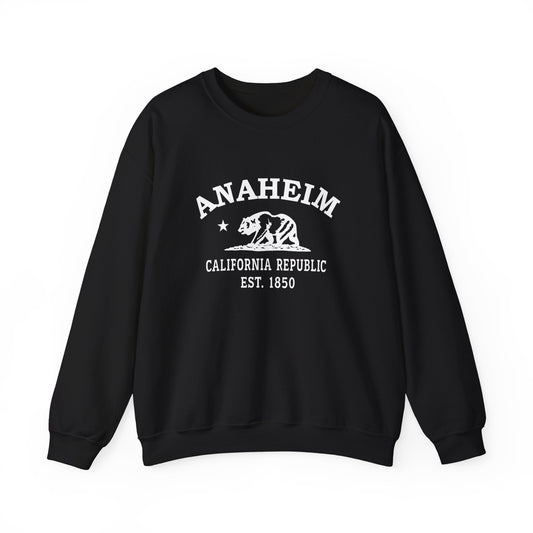
Our Anaheim logo carries California's bear and star over "1850," the year of statehood and the shared emblem of every Merlin Classics California place. The bear and the lone star are the state in shorthand — independence, the Republic, the frontier — printed black-and-white with the worn look of an old crate label, a WPA poster, a piece of farm signage. What makes this one Anaheim is the place behind it: the German wine colony, the willow gates, the Valencia groves, the home by the river. On a tee or a cap it reads like a piece of orange-grove California — Est. 1850 on the emblem, with an 1857 colony story underneath.
Today Anaheim is the biggest city in Orange County, but underneath the modern surface is the oldest civic story in the county: a German wine colony that became the Valencia Orange capital of the nation. Its history runs from the Tongva valley and the 1857 willow-gate colony through California's largest vineyard, the Pierce's-Disease blight, and the citrus reinvention. Our Anaheim designs gather that identity into wearable form — the colony, the oranges, the bear-and-star, the home by the river. From the German vineyards to the Valencia groves — wear a little of Anaheim's home by the Santa Ana River.

Anaheim California — Travel Guide
Visiting Anaheim California Today
Anaheim sits in northern Orange County on the Santa Ana River, about 26 miles southeast of downtown Los Angeles, with the Anaheim Hills rising on its eastern edge. Beyond the big modern attractions, the old colony town is still here — the Mother Colony House, Founders' Park, the restored Packing House, and a downtown laid out on the original willow-gate grid.
Heritage, Parks & the Old Colony in Anaheim California
For visitors searching for things to do in Anaheim, California:
- Tour the Mother Colony House (1857), the oldest wood-framed building in Orange County.
- Walk Founders' Park beneath the Landmark Moreton Bay fig and the recreated 19th-century grounds.
- Browse the Anaheim Packing House, a restored 1919 citrus-era packing building turned food hall.
- Stroll the Center Street Promenade and the historic downtown colony grid.
- Relax at Pearson Park, with its lawns, amphitheater, and shaded neighborhood paths.
Why People Visit Anaheim California
Most people come to Anaheim for the modern attractions — but the city rewards anyone who looks for the older layer underneath: a planned German wine colony that became an orange-grove capital, with a 19th-century museum house, a heritage park, and a downtown still shaped by a willow fence planted in 1857. It's bright, warm, and welcoming, and its real history sits quietly right alongside the famous stuff.
Wear the History

For deeper reading on the Anaheim, California history described here — the Tongva and Acjachemen valley, the 1857 German wine colony and the Los Angeles Vineyard Society, George Hansen and the willow-gate Mother Colony, California's largest vineyard and the 1880s Pierce's-Disease blight, the citrus pivot that made Anaheim the Valencia Orange capital, the Mother Colony House (now an Orange County museum) and its residents Helena Modjeska and Henryk Sienkiewicz, and the Anaheim pepper — it may be useful to consult (1) the Anaheim Heritage Center and the Mother Colony House (Anaheim Public Library Heritage Services), (2) the Anaheim Historical Society, (3) the California State Library and the California Office of Historic Preservation, (4) the City of Anaheim records office, and (5) the Orange County Archives and the local-history collections at California State University, Fullerton. For travel and visitor information, it may be useful to contact (1) Visit Anaheim, (2) Visit California, (3) the City of Anaheim Community Services / parks department, (4) the California State Parks office, and (5) the regional transportation and visitor desks.
Shop the Anaheim California collection
View full collection-
Anaheim California Vintage Retro Womens Fitted Ringspun Cotton Tee - Black Logo
Regular price $28.00 USDRegular price -
-
Anaheim California Vintage Retro Vinyl Sticker - Black Logo
Regular price From $6.00 USDRegular price -
Anaheim California Vintage Retro Ceramic Mug - Black Logo
Regular price From $16.00 USDRegular price -
Anaheim California Vintage Retro Unisex Heavy Cotton Tee - Black Logo
Regular price $22.00 USDRegular price -
Anaheim California Vintage Retro Unisex Heavy Cotton Tee - White Logo
Regular price $22.00 USDRegular price -
Anaheim California Vintage Retro Embroidered Cotton Cap - Black Logo
Regular price $32.00 USDRegular price -
Anaheim California Vintage Retro Embroidered Cotton Cap - White Logo
Regular price $32.00 USDRegular price -
Anaheim California Vintage Retro Unisex Heavy Cotton Hoodie - Black Logo
Regular price $48.00 USDRegular price -
Anaheim California Vintage Retro Unisex Heavy Cotton Hoodie - White Logo
Regular price $48.00 USDRegular price -
Anaheim California Vintage Retro Unisex Embroidered Fleece Jacket - White Logo
Regular price $98.00 USDRegular price -
Anaheim California Vintage Retro Cotton Canvas Tote Bag - Black Logo
Regular price $25.00 USDRegular price -
Anaheim California Vintage Retro Cotton Canvas Tote Bag - White Logo
Regular price $25.00 USDRegular price -
Anaheim California Vintage Retro Unisex Embroidered Cotton Polo - Black Logo
Regular price $48.00 USDRegular price -
Anaheim California Vintage Retro Unisex Cotton Jersey Tank Top - Black Logo
Regular price $28.00 USDRegular price -
Anaheim California Vintage Retro Unisex Cotton Jersey Tank Top - White Logo
Regular price $28.00 USDRegular price -
Anaheim California Vintage Retro Cotton Jersey Baby Bodysuit - Black Logo
Regular price $26.00 USDRegular price -
Anaheim California Vintage Retro Thank You Card Set - Black Logo
Regular price From $25.00 USDRegular price -
Anaheim California Vintage Retro Unisex Heavy Crewneck Sweatshirt - Black Logo
Regular price $38.00 USDRegular price -
Anaheim California Vintage Retro Unisex Heavy Crewneck Sweatshirt - White Logo
Regular price $38.00 USDRegular price