


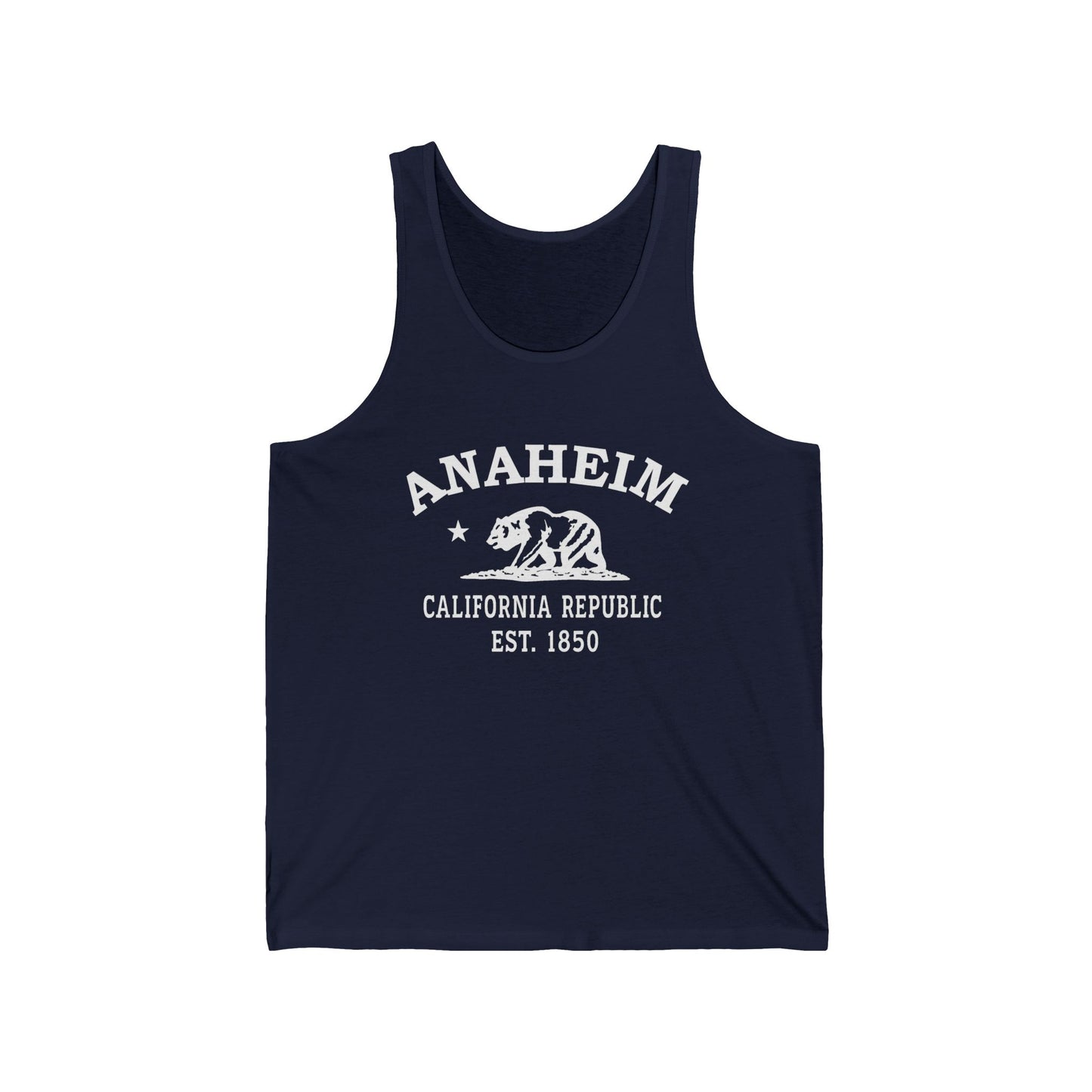
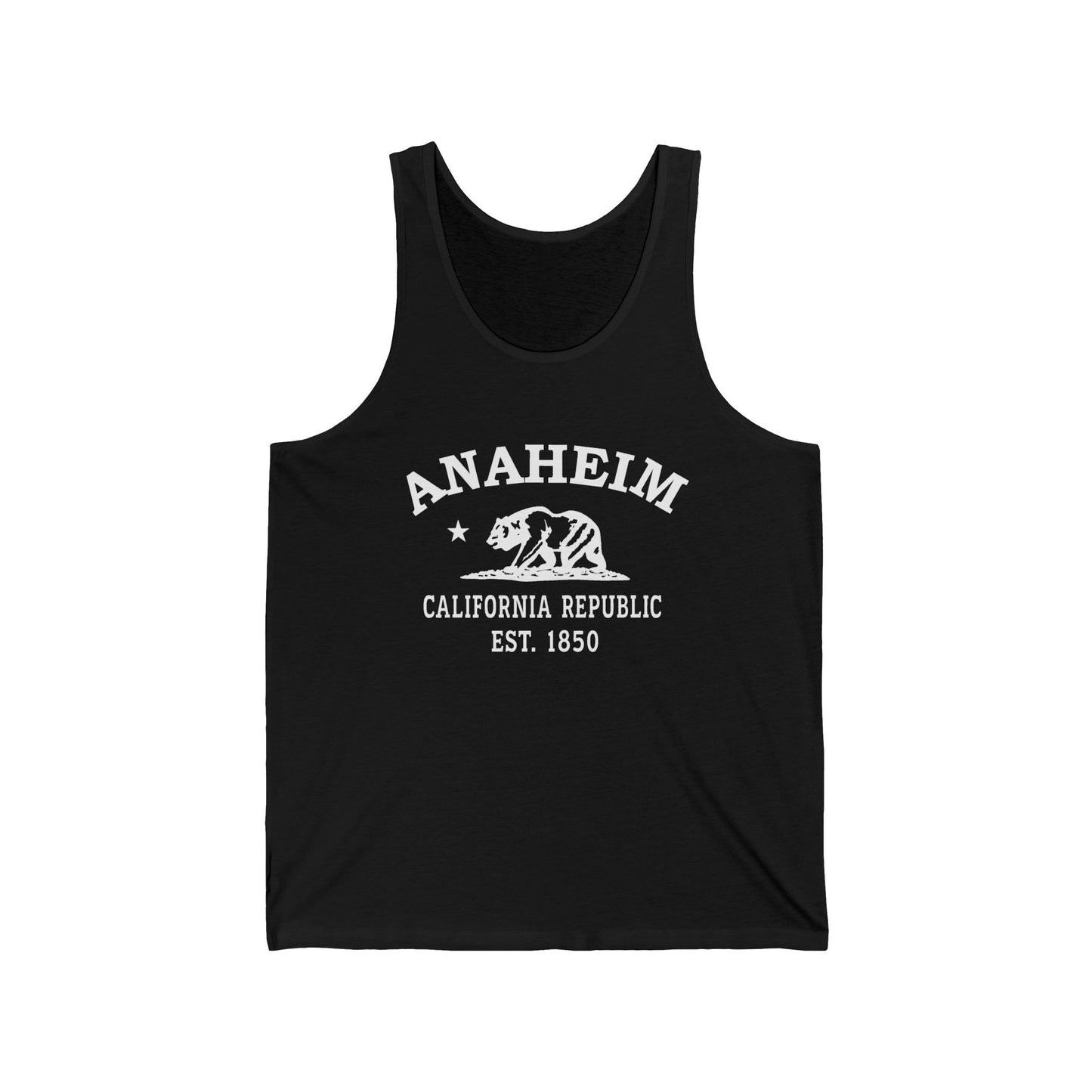
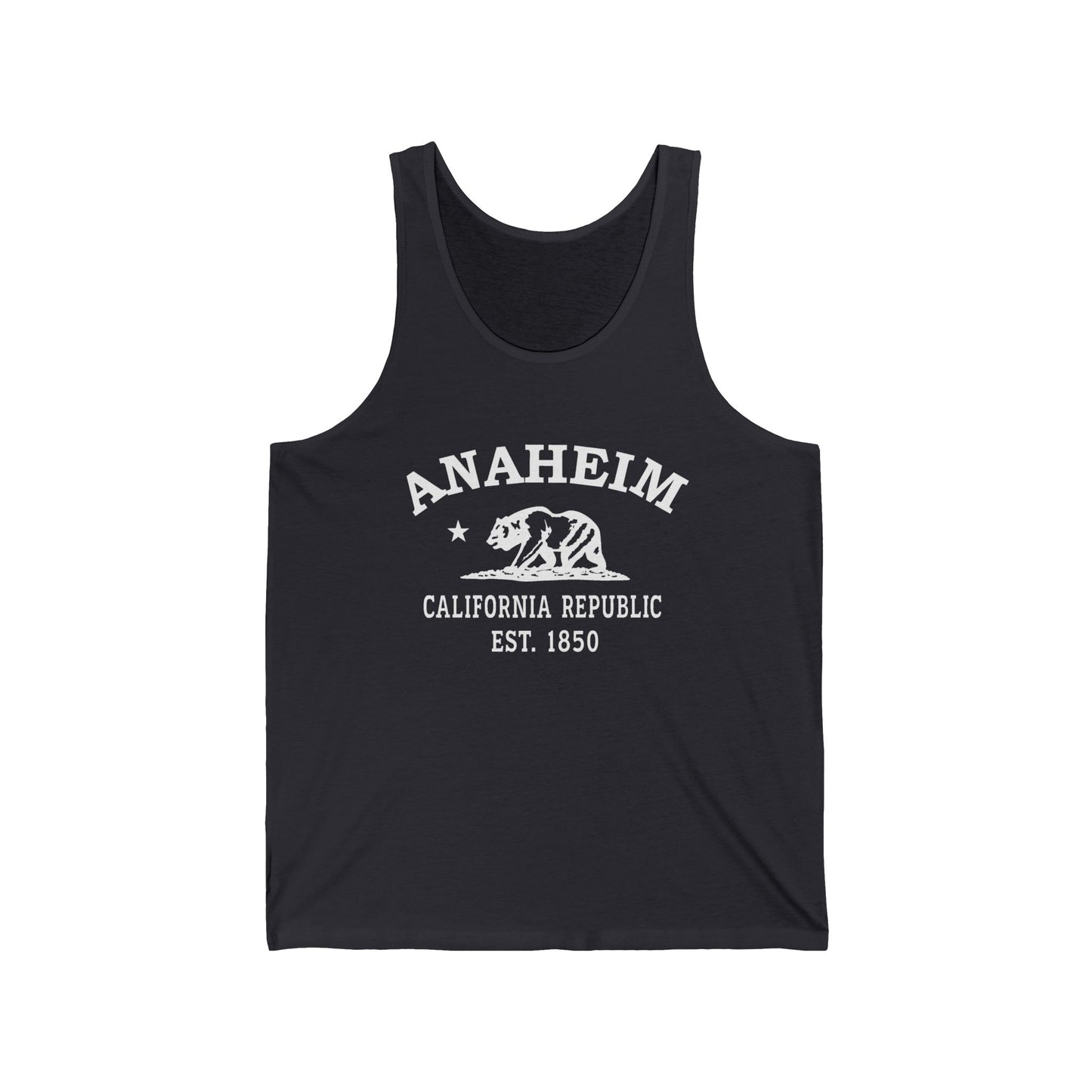
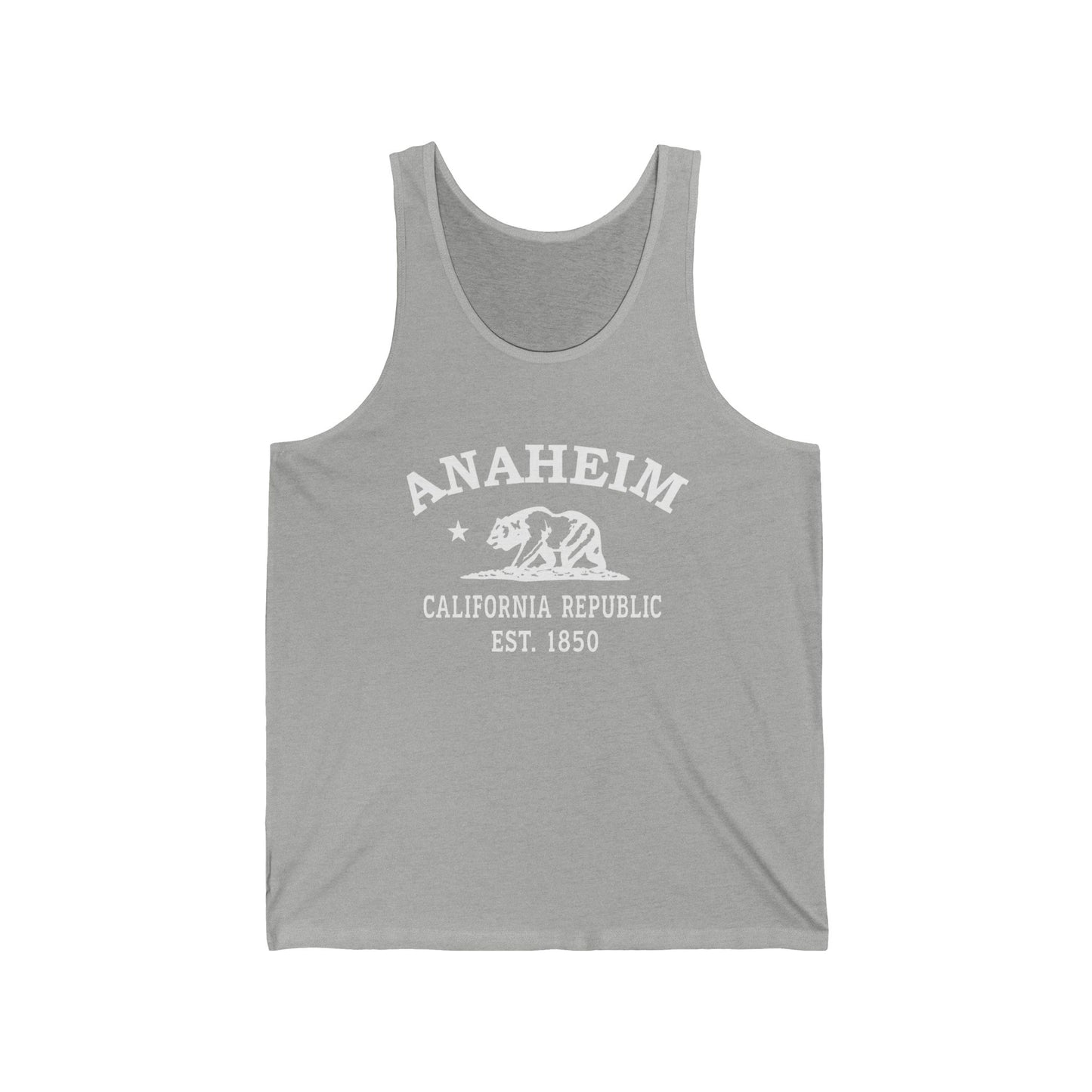
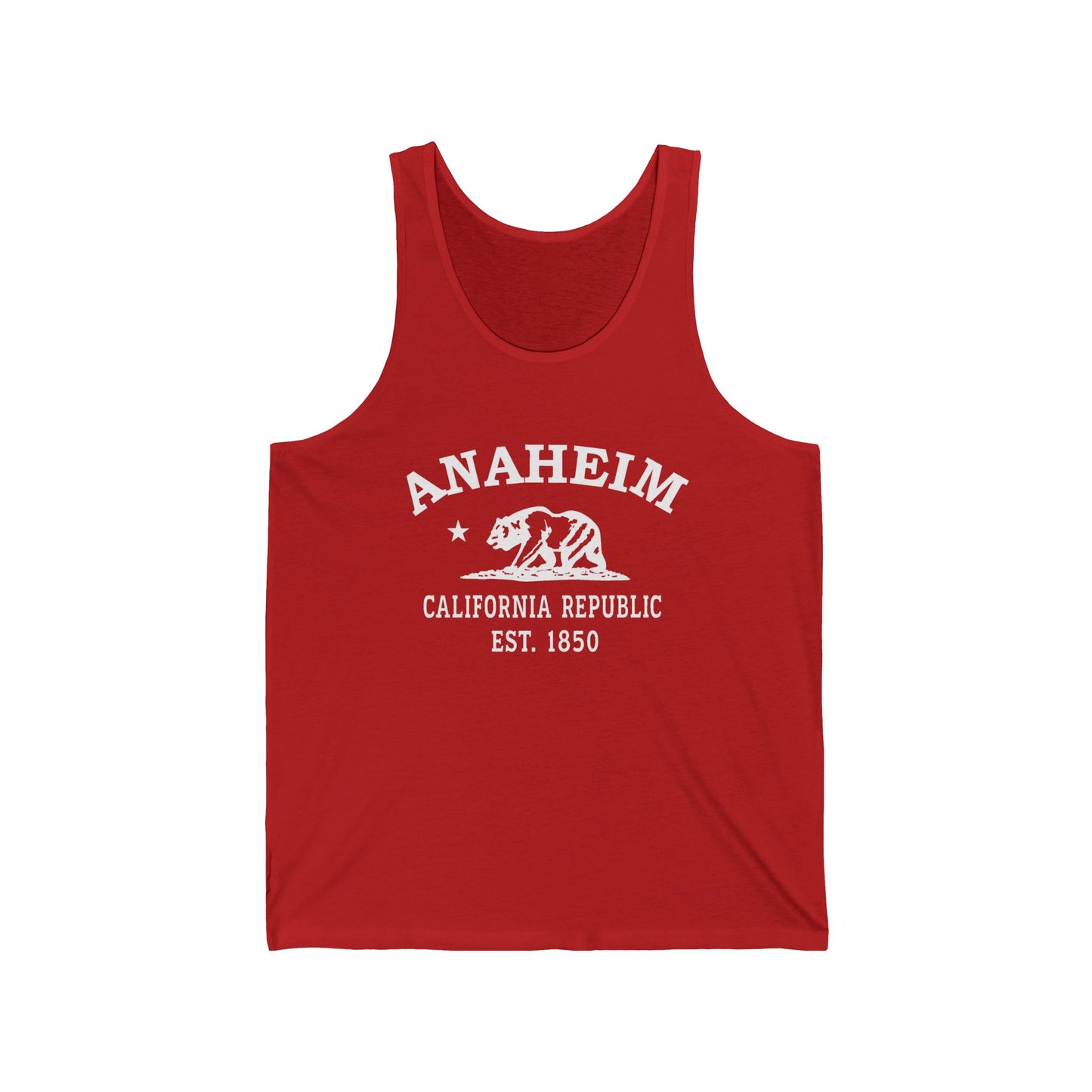
Our Anaheim logo carries California's bear and star over "1850," the year of statehood and the shared emblem of every Merlin Classics California place. The bear and the lone star are the state in shorthand — independence, the Republic, the frontier — printed black-and-white with the worn look of an old crate label, a WPA poster, a piece of farm signage. What makes this one Anaheim is the place behind it: the German wine colony, the willow gates, the Valencia groves, the home by the river. On a tee or a cap it reads like a piece of orange-grove California — Est. 1850 on the emblem, with an 1857 colony story underneath.
A few good stories survive from the colony years. The Mother Colony House — the home George Hansen built in 1857, now the oldest wood-framed building in Orange County and a museum since 1929 — once counted among its residents the celebrated actress Helena Modjeska and the author Henryk Sienkiewicz, who would go on to write "Quo Vadis." And the city's name lives on in an unexpected place: the Anaheim pepper, the mild green chili first grown commercially in this valley, still carries the town's name on grocery shelves across the country. Vines, oranges, a willow-fenced colony, and a pepper — that's a lot of identity for one valley to hold.
Why People Visit Anaheim California
Most people come to Anaheim for the modern attractions — but the city rewards anyone who looks for the older layer underneath: a planned German wine colony that became an orange-grove capital, with a 19th-century museum house, a heritage park, and a downtown still shaped by a willow fence planted in 1857. It's bright, warm, and welcoming, and its real history sits quietly right alongside the famous stuff.
