Every design is set in hand-lettered vintage type for that old-school, crate-label look. One sample color shown — black and white logo options on every piece. Recently in the national press. Enjoy!
-
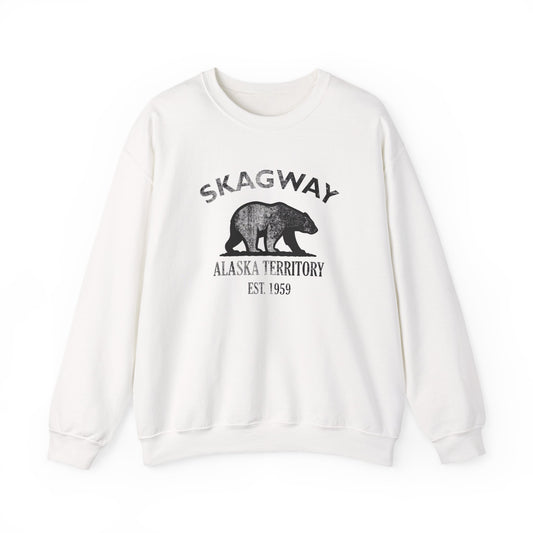
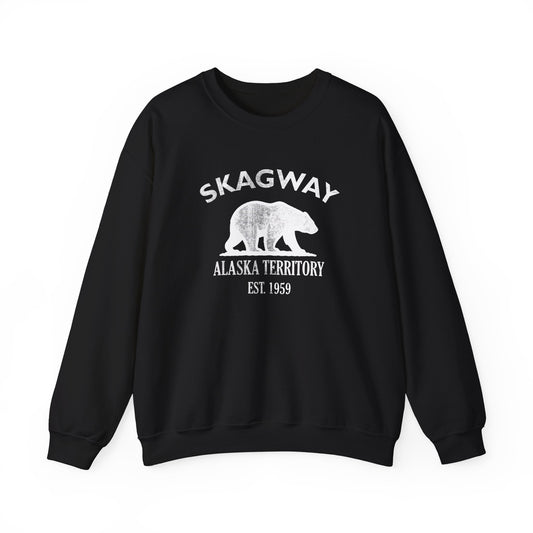
Skagway Alaska Vintage Retro Premium Crewneck Sweatshirt - Black Logo
Regular price $48.00 USDRegular price -
Skagway Alaska Vintage Retro Premium Crewneck Sweatshirt - White Logo
Regular price $48.00 USDRegular price -
Skagway Alaska Vintage Retro Unisex Heavy Cotton Hoodie - White Logo
Regular price $56.00 USDRegular price -
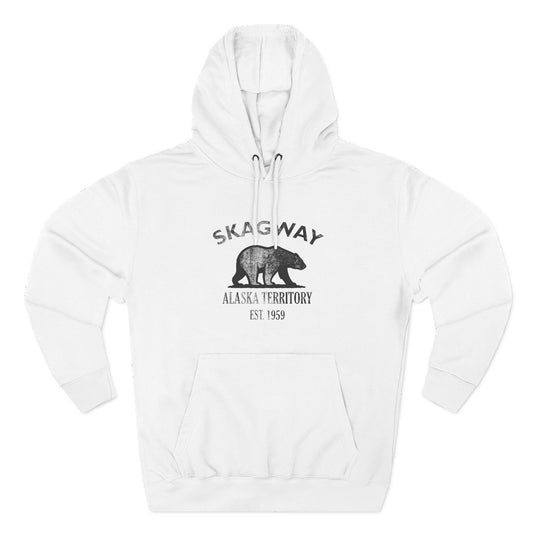
Skagway Alaska Vintage Retro Unisex Heavy Cotton Hoodie - Black Logo
Regular price $56.00 USDRegular price -
Skagway Alaska Vintage Retro Embroidered Cotton Cap - White Logo
Regular price $32.00 USDRegular price -
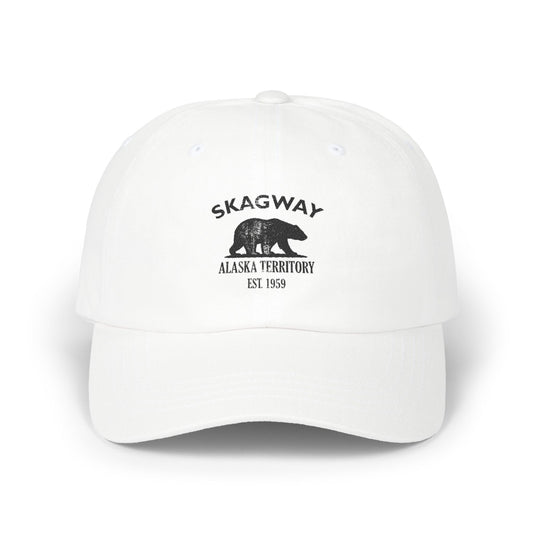
Skagway Alaska Vintage Retro Embroidered Cotton Cap - Black Logo
Regular price $32.00 USDRegular price -
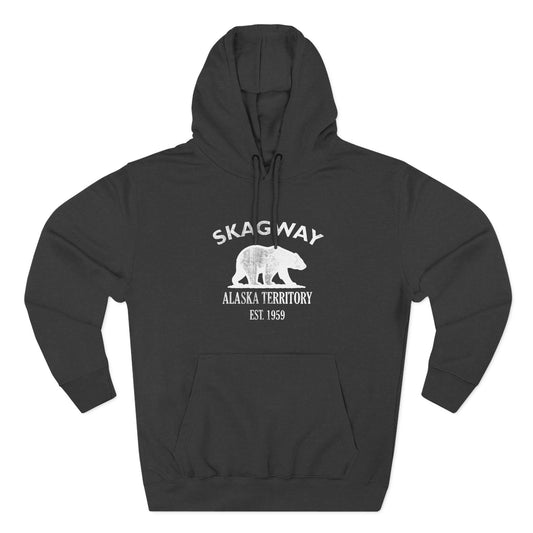
Skagway Alaska Vintage Retro Unisex Heavy Cotton Tee - White Logo
Regular price $22.00 USDRegular price -
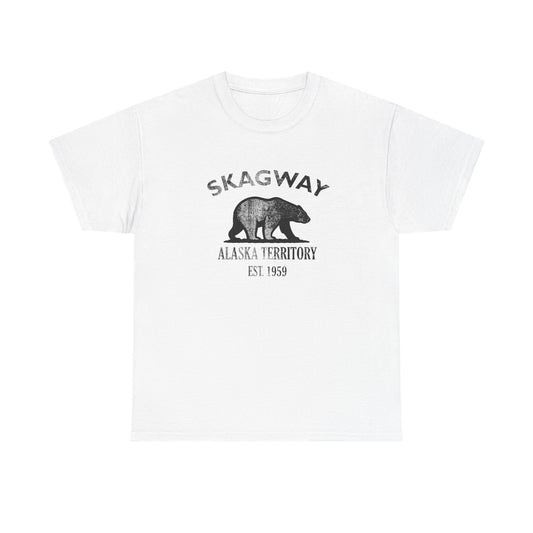
Skagway Alaska Vintage Retro Unisex Heavy Cotton Tee - Black Logo
Regular price $22.00 USDRegular price -
Skagway Alaska Vintage Retro Vinyl Sticker - Black Logo
Regular price From $6.00 USDRegular price -
-
Skagway Alaska Vintage Retro Womens Fitted Ringspun Cotton Tee - Black Logo
Regular price $28.00 USDRegular price -
Skagway Alaska Vintage Retro Unisex Embroidered Fleece Jacket - White Logo
Regular price $98.00 USDRegular price -
Skagway Alaska Vintage Retro Ceramic Mug - Black Logo
Regular price From $16.00 USDRegular price -
Skagway Alaska Vintage Retro Cotton Canvas Tote Bag - White Logo
Regular price $25.00 USDRegular price -
Skagway Alaska Vintage Retro Cotton Canvas Tote Bag - Black Logo
Regular price $25.00 USDRegular price -
Skagway Alaska Vintage Retro Thank You Card Set - Black Logo
Regular price From $25.00 USDRegular price -
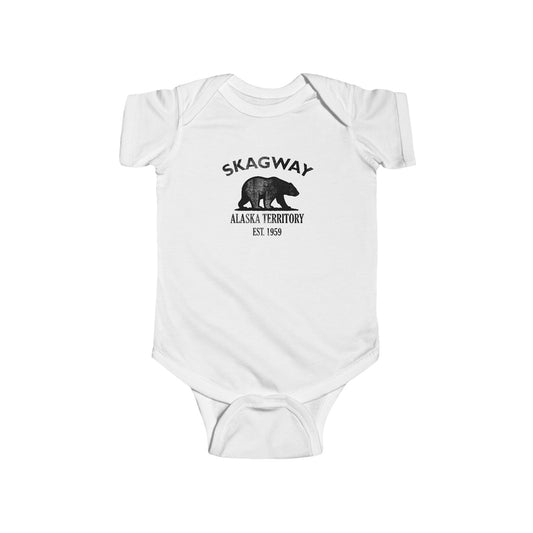
Skagway Alaska Vintage Retro Cotton Jersey Baby Bodysuit - Black Logo
Regular price $26.00 USDRegular price -
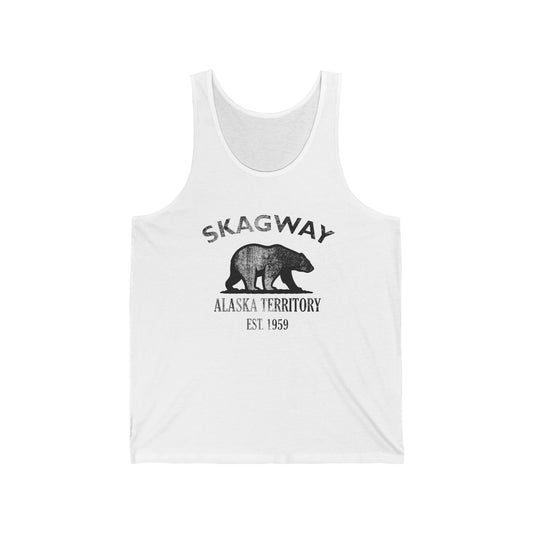
Skagway Alaska Vintage Retro Unisex Cotton Jersey Tank Top - White Logo
Regular price $28.00 USDRegular price -
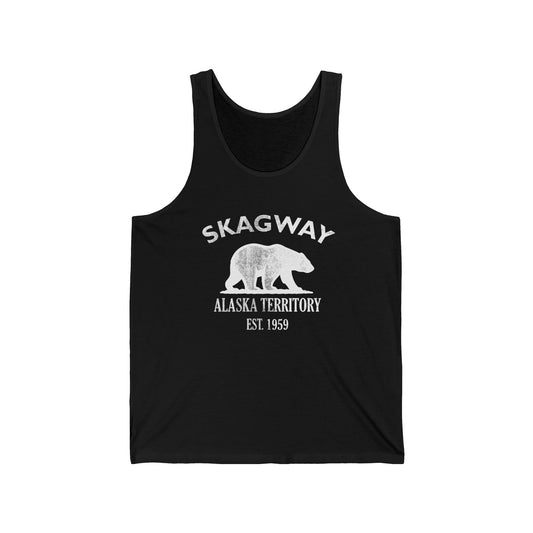
Skagway Alaska Vintage Retro Unisex Cotton Jersey Tank Top - Black Logo
Regular price $28.00 USDRegular price -
Skagway Alaska Vintage Retro Back Printed Art Series Cotton Tee - Black Logo
Regular price $32.00 USDRegular price -
Skagway Alaska Vintage Retro Giclée Print Art Series Poster
Regular price From $38.00 USDRegular price -
Skagway Alaska Vintage Retro Unisex Heavy Crewneck Sweatshirt - Black Logo
Regular price $44.00 USDRegular price -
Skagway Alaska Vintage Retro Unisex Heavy Crewneck Sweatshirt - White Logo
Regular price $44.00 USDRegular price -
Skagway Alaska Vintage Retro Unisex Embroidered Cotton Polo - Black Logo
Regular price $48.00 USDRegular price






Skagway Alaska — Retro Vintage History
What's with the Trail of '98? In the summer of 1897 a steamer docked in Seattle carrying a literal ton of Klondike gold, and within weeks tens of thousands of ordinary people quit their jobs and pointed themselves toward the Yukon. The fastest way in ran straight through Skagway. From this muddy beach at the head of the Lynn Canal, an estimated 40,000 stampeders shouldered a year's worth of supplies and started up the Chilkoot and White Pass trails toward the goldfields — a frozen, brutal, once-in-a-lifetime gamble that the era christened the Trail of '98. Most never struck it rich. But the rush built a town almost overnight, and Skagway has been telling its story ever since.
Wear the HistoryThe man who saw it coming was Captain William Moore. A riverboat pilot and pack-trail veteran, Moore staked a 160-acre homestead at the mouth of the Skagway River in 1887 — a full decade early — convinced that gold in the Canadian interior would one day send a flood of people past his door looking for a way over the mountains. He built a sawmill, a wharf, and a rough trail toward the White Pass summit. When the stampede finally arrived in 1897, it simply overran him: newcomers re-platted his claim into a gridded boomtown almost overnight, and the quiet homestead became the busiest place in Alaska.

What rose on Moore's claim was extraordinary. Within a year Skagway went from a scatter of tents to a town of close to 10,000 — for a moment the largest settlement in Alaska — with a main street of false-front stores, outfitters, hotels, and saloons running wall to wall up Broadway. It was the supply depot for the whole stampede: nearly everything bound for the Klondike came ashore here first. A few miles west, a rival townsite called Dyea boomed at the foot of the steeper Chilkoot Trail, and for a season the two raced each other. When the railroad chose Skagway, Dyea emptied out and faded into the ghost town it remains today.
The thing that settled the contest, and outlived the gold, was the railroad. In May 1898 crews began blasting a narrow-gauge line straight up the coastal wall behind town — the White Pass & Yukon Route, engineered by the Irish-born contractor Michael Heney, who liked to say he could build a railroad anywhere a man could climb. Working with hand tools and black powder through brutal winters, they reached the 2,885-foot summit early in 1899 and drove the last spike at Carcross, in the Yukon, on July 29, 1900. By then the rush was fading, but the "Scenic Railway of the World" had given Skagway a permanent reason to exist — and today it is the town's signature excursion.
Skagway voted to incorporate on June 28, 1900 — the first incorporated city in Alaska, beating Juneau to it by a single day — with a census population of 3,117. Then the gold was gone. By 1910 fewer than 900 people remained, and for half a century Skagway lived quietly off the railroad, hauling freight to Whitehorse and back. What saved it was its own past: the false-front downtown had never been torn down, and as Alaska tourism grew, travelers came specifically to walk a Gold-Rush street that looked almost exactly as it had in 1898.
In 1976 Congress made it official, establishing the Klondike Gold Rush National Historical Park around the preserved blocks of Broadway — wooden boardwalks, restored 1898 storefronts, and the old railroad depot — now the most-visited national park in Alaska. The cruise ships followed. Tucked at the head of a deep glacial fjord and ringed by steep peaks, Skagway is one of the busiest ports on the Inside Passage, with more than a million day-visitors a season stepping off onto the same waterfront the stampeders once crossed. It is a gold-rush boomtown that found its second fortune in being remembered.
Our Skagway logo carries the distressed Alaska bear above "Alaska Territory — Est. 1959," the shared retro emblem of our Alaska towns; the bear stands for the wild, mountain-walled country the stampeders pushed through, and 1959 marks the year Alaska joined the Union as a state. Rendered in worn black-and-white, like a stamp on a shipping crate or an outfitter's mark, it ties Skagway to every other Alaska town we make. What makes this one Skagway is the town behind the brand — the Trail of '98, the railway up the pass, and the boardwalks that never came down.
So Skagway gathers a gold rush, a railway, and a street frozen in 1898 onto a narrow shelf at the top of the Inside Passage. Our Skagway designs gather that into wearable form. Wear the history. Gateway to the Klondike — Skagway, Alaska.

Skagway, Alaska — Travel Guide
Visiting Skagway Today
Skagway sits at the head of the Lynn Canal, the northernmost stop on Alaska's Inside Passage and one of the only towns there you can reach by road, via the South Klondike Highway. The historic Broadway district, the White Pass railway depot, and the trails up the pass are all within a few blocks of the cruise docks.
The Gold-Rush Town, the Railway & the Passes
For visitors looking for things to do in Skagway, Alaska:
- Ride the White Pass & Yukon Route railway, a narrow-gauge climb to the summit and the Yukon border.
- Walk Broadway through the Klondike Gold Rush National Historical Park — restored 1898 storefronts and boardwalks.
- Start at the park visitor center in the old railroad depot for the Trail of '98 story.
- Drive or walk out to the Dyea townsite, the ghost town at the foot of the Chilkoot Trail.
- Hike a stretch of the Chilkoot Trail, the stampeders' route toward the Yukon.
- Visit Jewell Gardens for glassblowing and flower displays along the highway.
Why People Visit Skagway
Visitors come to Skagway for the most intact Gold-Rush town in Alaska — a real boomtown you can walk through — and for the railway that climbs straight out of it into the mountains. It is compact, dramatic, and easy to explore on foot, with the harbor, the historic district, and the trailheads all close together. Equal parts living history and big northern scenery, Skagway rewards anyone who wants to stand at the starting line of the Klondike stampede.
Wear the History
Kindred Cities
A warm welcome to visitors from Queenstown, New Zealand and Dawson City, Canada — like-minded gold-rush towns turned wild-country getaways.
Skagway was the roaring gateway to the Klondike, and Queenstown and Dawson City know that fever. Dawson City was the goldfields themselves, where the stampeders Skagway funneled north finally struck their claims; Queenstown boomed on New Zealand's own Otago gold before reinventing itself as an adventure capital; Skagway kept its boardwalks and false-front saloons from the 1898 rush and now greets the cruise ships at the foot of the White Pass. Boomtowns that struck gold, then struck it again in their own legend.
Skagway calls to anyone who loves a frontier story: the wooden storefronts of the gold-rush days preserved whole, the cliff-hugging White Pass railway climbing toward the Yukon, and the ghosts of stampeders along every boardwalk. Come and visit us soon.
When you plan the trip, the Skagway Convention & Visitors Bureau is the place to start.
Wear the History

For deeper reading on the Skagway history described here — Captain William Moore's 1887 townsite and the 1897 Klondike stampede, the Trail of '98 over the Chilkoot and White Pass, the building of the White Pass & Yukon Route Railroad, the 1900 incorporation, and the preserved Broadway historic district — it may be useful to consult (1) the Skagway Museum and the Skagway Historical Society, (2) the Klondike Gold Rush National Historical Park / National Park Service, (3) the Alaska State Library and Historical Collections, (4) the Municipality of Skagway clerk's records office, and (5) the White Pass & Yukon Route archives. For travel and visitor information, it may be useful to contact (1) the Skagway Convention & Visitors Bureau, (2) the Skagway Chamber of Commerce, (3) the Municipality of Skagway Parks and Recreation, (4) the Alaska state parks office, and (5) the White Pass & Yukon Route Railway and the Alaska Marine Highway ferry.