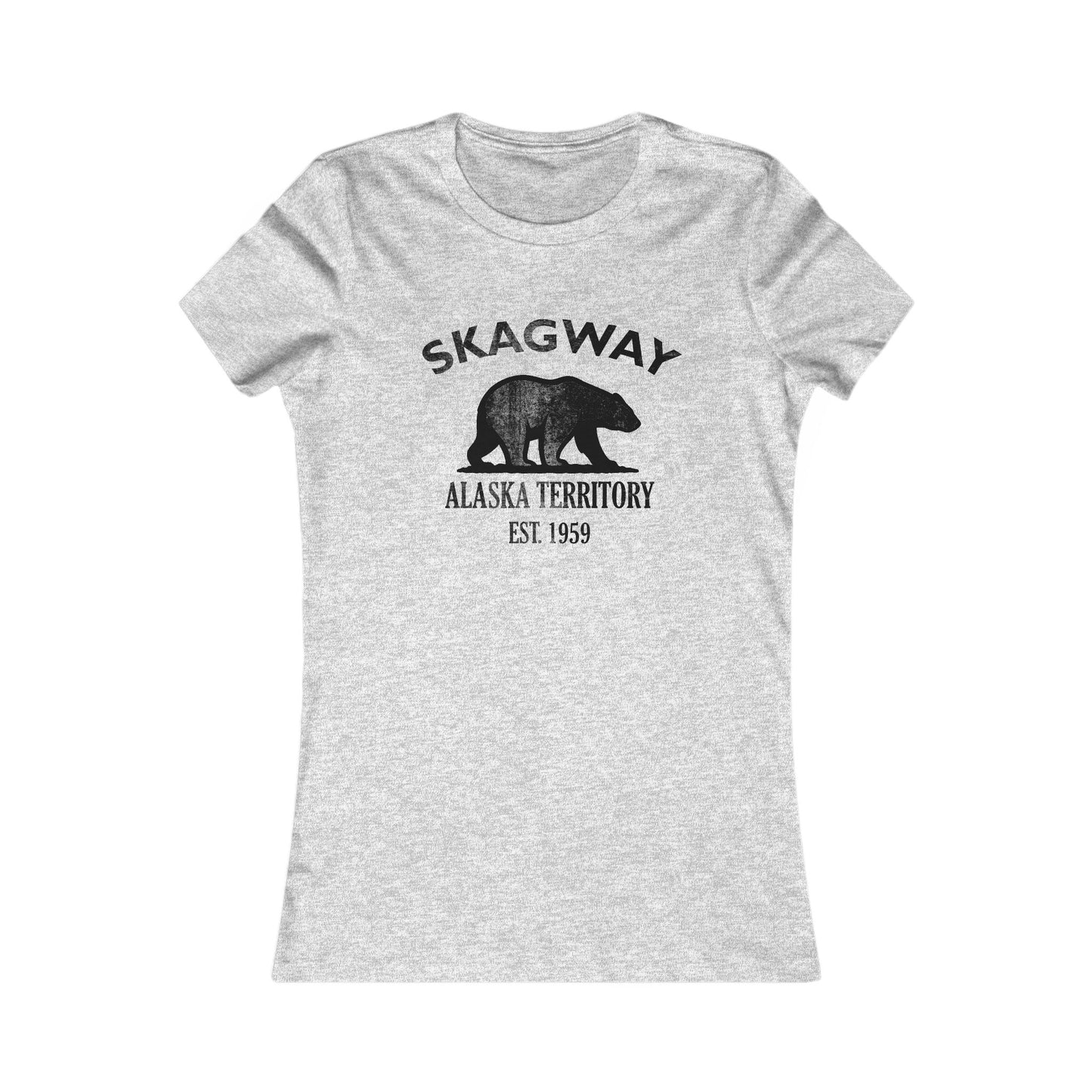
Skagway voted to incorporate on June 28, 1900 — the first incorporated city in Alaska, beating Juneau to it by a single day — with a census population of 3,117. Then the gold was gone. By 1910 fewer than 900 people remained, and for half a century Skagway lived quietly off the railroad, hauling freight to Whitehorse and back. What saved it was its own past: the false-front downtown had never been torn down, and as Alaska tourism grew, travelers came specifically to walk a Gold-Rush street that looked almost exactly as it had in 1898.
So Skagway gathers a gold rush, a railway, and a street frozen in 1898 onto a narrow shelf at the top of the Inside Passage. Our Skagway designs gather that into wearable form. Wear the history. Gateway to the Klondike — Skagway, Alaska.
Why People Visit Skagway
Visitors come to Skagway for the most intact Gold-Rush town in Alaska — a real boomtown you can walk through — and for the railway that climbs straight out of it into the mountains. It is compact, dramatic, and easy to explore on foot, with the harbor, the historic district, and the trailheads all close together. Equal parts living history and big northern scenery, Skagway rewards anyone who wants to stand at the starting line of the Klondike stampede.
