Every design is set in hand-lettered vintage type for that old-school, crate-label look. One sample color shown — black and white logo options on every piece. Recently in the national press. Enjoy!
-
Sitka Alaska Vintage Retro Premium Crewneck Sweatshirt - Black Logo
Regular price $48.00 USDRegular price -
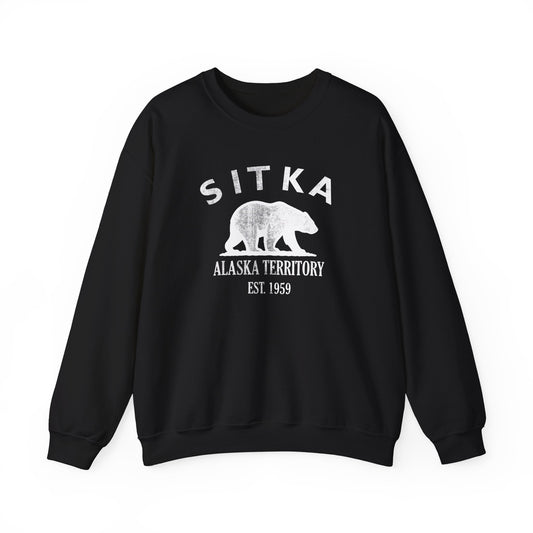
Sitka Alaska Vintage Retro Premium Crewneck Sweatshirt - White Logo
Regular price $48.00 USDRegular price -
Sitka Alaska Vintage Retro Vinyl Sticker - Black Logo
Regular price From $6.00 USDRegular price -
Sitka Alaska Vintage Retro Ceramic Mug - Black Logo
Regular price From $16.00 USDRegular price -
Sitka Alaska Vintage Retro Unisex Heavy Cotton Tee - Black Logo
Regular price $22.00 USDRegular price -
Sitka Alaska Vintage Retro Unisex Heavy Cotton Tee - White Logo
Regular price $22.00 USDRegular price -
Sitka Alaska Vintage Retro Cotton Canvas Tote Bag - White Logo
Regular price $25.00 USDRegular price -
Sitka Alaska Vintage Retro Cotton Canvas Tote Bag - Black Logo
Regular price $25.00 USDRegular price -
Sitka Alaska Vintage Retro Thank You Card Set - Black Logo
Regular price From $25.00 USDRegular price -
Sitka Alaska Vintage Retro Cotton Jersey Baby Bodysuit - Black Logo
Regular price $26.00 USDRegular price -
-
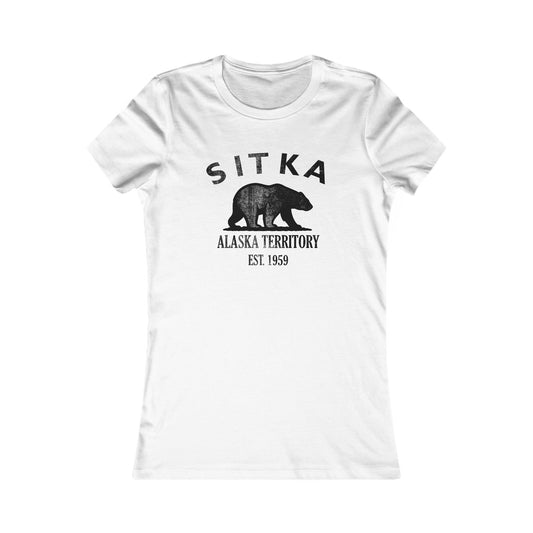
Sitka Alaska Vintage Retro Womens Fitted Ringspun Cotton Tee - Black Logo
Regular price $28.00 USDRegular price -
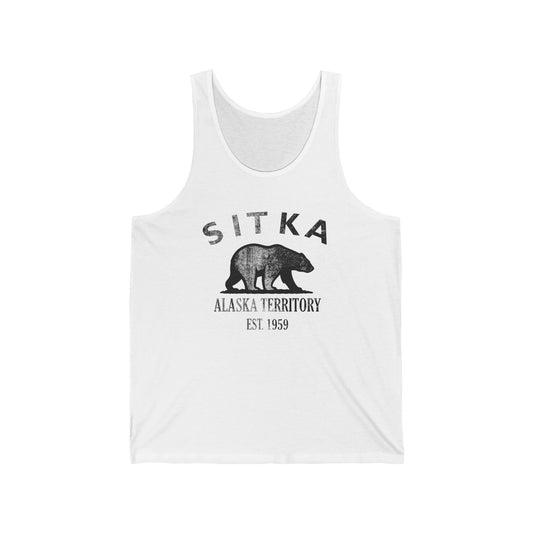
Sitka Alaska Vintage Retro Unisex Cotton Jersey Tank Top - White Logo
Regular price $28.00 USDRegular price -
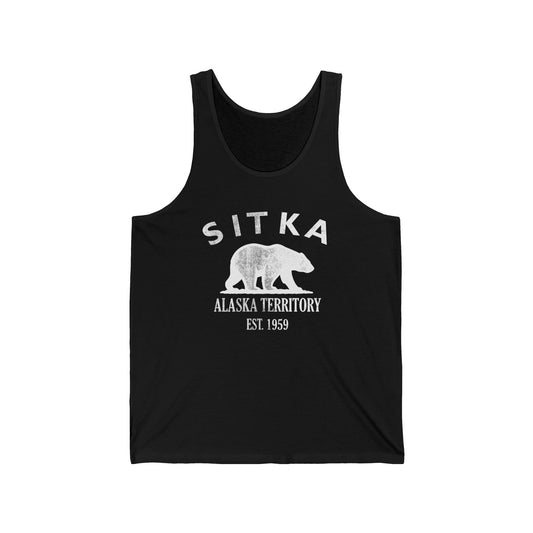
Sitka Alaska Vintage Retro Unisex Cotton Jersey Tank Top - Black Logo
Regular price $28.00 USDRegular price -
Sitka Alaska Vintage Retro Embroidered Cotton Cap - White Logo
Regular price $32.00 USDRegular price -
Sitka Alaska Vintage Retro Embroidered Cotton Cap - Black Logo
Regular price $32.00 USDRegular price -
Sitka Alaska Vintage Retro Back Printed Art Series Cotton Tee - Black Logo
Regular price $32.00 USDRegular price -
Sitka Alaska Vintage Retro Unisex Heavy Crewneck Sweatshirt - Black Logo
Regular price $44.00 USDRegular price -
Sitka Alaska Vintage Retro Unisex Heavy Crewneck Sweatshirt - White Logo
Regular price $44.00 USDRegular price -
Sitka Alaska Vintage Retro Giclée Print Art Series Poster
Regular price From $38.00 USDRegular price -
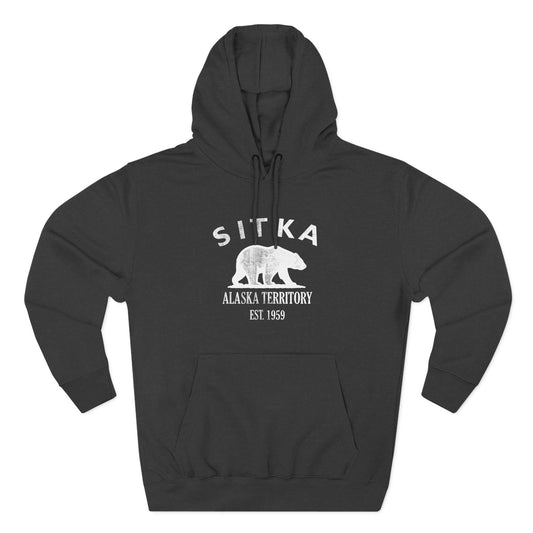
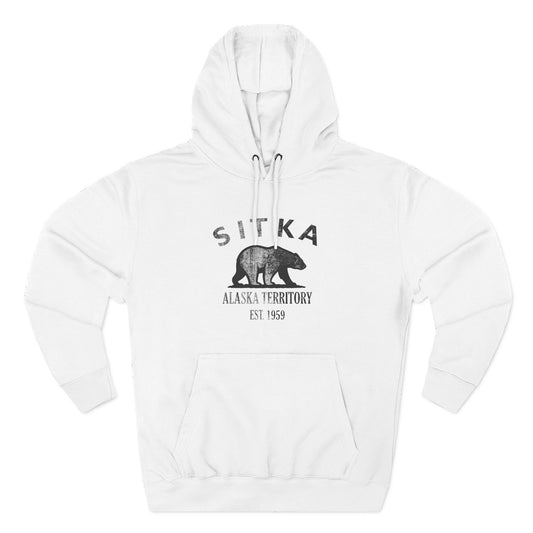
Sitka Alaska Vintage Retro Unisex Heavy Cotton Hoodie - White Logo
Regular price $56.00 USDRegular price -
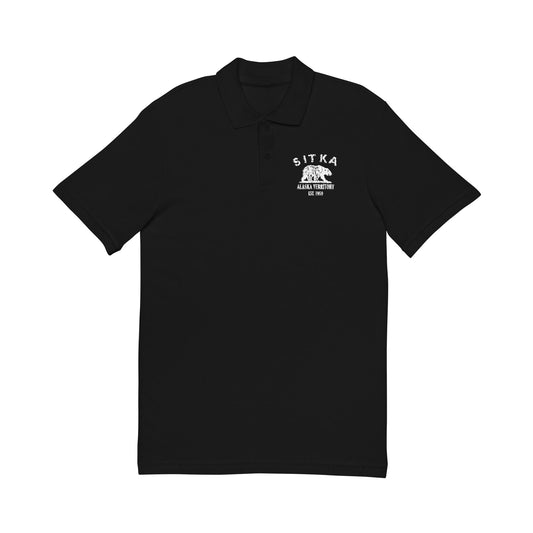
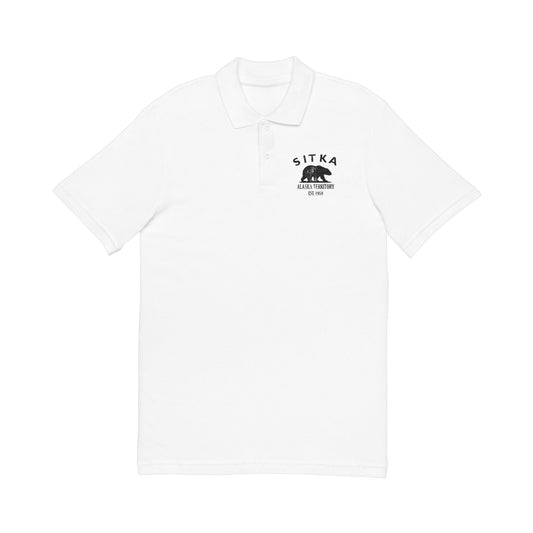
Sitka Alaska Vintage Retro Unisex Embroidered Cotton Polo - Black Logo
Regular price $48.00 USDRegular price -
Sitka Alaska Vintage Retro Unisex Heavy Cotton Hoodie - Black Logo
Regular price $56.00 USDRegular price -
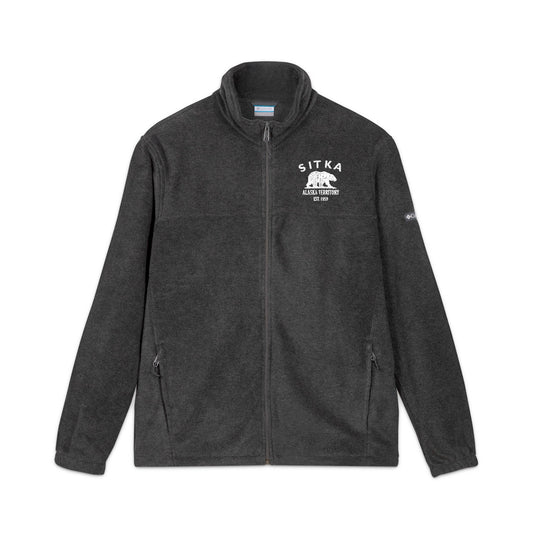
Sitka Alaska Vintage Retro Unisex Embroidered Fleece Jacket - White Logo
Regular price $98.00 USDRegular price








Sitka Alaska — Retro Vintage History
What's with the Paris of the Pacific? That was Sitka's nickname in the 1840s and 1850s, when this rainforest town on the outer coast of Baranof Island was the capital of Russian America — a colonial seat with a cathedral, a bishop's library, shipyards, a foundry, and more people than San Francisco. Traders called at the harbor from three continents, the governor kept a residence on the hill above the water, and the tea, the icons, and the brass came around the world by sail. The nickname was earned the way all good ones are: by exaggeration with a core of truth. The domes are still on the skyline, the hill is still called Castle Hill, and the town still faces the open Pacific like a port that expects company.
Wear the HistoryWhere you're from. Where you love. Where you explored. Where you belong.
Where Russia met America in 1867. Sitka sits on the outer Pacific coast of Baranof Island in the Alexander Archipelago — a wet, green rainforest town on the open sea, with the dormant volcano Mount Edgecumbe rising across Sitka Sound like a backdrop painted into the view. The Tlingit have called this stretch of coast Sheet'ká for longer than written history. In 1808, the Russian-American Company moved its capital here from Kodiak and made the town the seat of Russian America — at one point so prosperous and worldly that contemporaries called it "the Paris of the Pacific," a Russian Imperial capital on the Pacific coast more populous than San Francisco at the time. In 1848, Bishop Innocent — Russian Orthodox missionary, ethnographer, and the man who designed the building himself — consecrated St. Michael's Cathedral, the first Russian Orthodox cathedral in North America. Its onion dome and green bell tower still define the Sitka skyline. Then on October 18, 1867, on the bluff that locals still call Castle Hill, the formal transfer ceremony took place: Prince Dmitry Maksutov, the last Russian governor, watched the Imperial Russian flag come down, and General Lovell Rousseau watched the American flag go up. The price had been $7.2 million, paid by Secretary of State William Seward — about two cents an acre for territory more than twice the size of Texas. Alaska Day has been observed every October 18 since. The Russian Bishop's House from 1842 is still standing, the oldest intact Russian building in Sitka. In 1910 the federal government designated Sitka National Historical Park — the oldest federally designated park anywhere in Alaska. And in 1912, in this same town, a small group of Tlingit founded the Alaska Native Brotherhood, one of the earliest civil-rights organizations representing indigenous peoples anywhere in the Americas. The Russian flag hasn't flown over Castle Hill in 159 years. The cathedral, the bishop's house, the totems in the forest park, the dome, the hill, and the brotherhood are all still here.
QUICK FACTS — SITKA, AK
Sitka was the capital of Russian America from 1808 to 1867 — nicknamed "the Paris of the Pacific," and for a time more populous than San Francisco.
The Tlingit have lived on this coast — Sheet'ká — for more than ten thousand years, and the Sheet'ká Kwáan remain a thriving culture in Sitka today.
Alaska formally changed hands here: on October 18, 1867, the Russian flag came down and the American flag went up on Baranof Castle Hill. Alaska Day is observed every October 18.
St. Michael's Cathedral (1848) was the first Russian Orthodox cathedral in North America; after the 1966 fire it was rebuilt to its original appearance, with the icons the town carried out of the flames.
Sitka National Historical Park (1910) — Alaska's oldest federally designated park — preserves the 1804 battle site, where a totem honors K'alyaán, who led the Kiks.ádi Tlingit defense.
The Alaska Native Brotherhood, founded in Sitka in 1912, is one of the earliest civil-rights organizations representing indigenous peoples in the Americas.
Alaska's first fish cannery opened in Sitka in 1878, and fishing is still the town's largest industry; the O'Connell Bridge (1972) was the first cable-stayed bridge in the United States.
No road reaches Sitka — the town of about 8,400 on Baranof Island is accessible only by air or by sea, beneath the 3,201-foot dormant volcano Mount Edgecumbe.
The town's founding story is older and harder than the postcard. Baranov planted Fort Saint Michael six miles north in 1799, in a homeland the Tlingit had held for ten thousand years; the Kiks.ádi destroyed it in 1802, and when the Russians returned in October 1804 with the warship Neva, the Kiks.ádi under K'alyaán defended their fort at the river mouth until their reserve gunpowder was lost — then withdrew in good order across the island. The Russians built New Archangel on the emptied ground. The park at the battle site tells that story today, with K'alyaán's totem standing in the rainforest where he fought — and it is worth saying plainly that when Russia later sold Alaska, Tlingit elders noted the land had never been Russia's to sell beyond its small settlements, a question the Alaska Native Claims Settlement Act finally began to address in 1971.

The American century kept the town small and made it essential. Alaska's first fish cannery opened here in 1878 and the boats never left — fishing remains the biggest industry in town. The territorial capital moved to Juneau in 1906, and Sitka answered with something more durable: the Alaska Native Brotherhood, founded on Katlian Street in 1912. The Navy filled Japonski Island during the Second World War, when the population briefly swelled to forty thousand; statehood came in 1959; the cathedral burned in 1966 and the town rebuilt it dome for dome, having carried the icons out by hand; and in 1972 the O'Connell Bridge — the first cable-stayed bridge in the United States — finally connected the town to its own airport. Every October 18 the flags still change on Castle Hill, in period dress, for Alaska Day — the holiday that was born here.
Our Sitka retro logo uses Alaska's distressed bear motif over "1959," tying the design to Alaska statehood. Its black-and-white styling is rugged and retro, resembling crate stamps and outfitter branding of the territorial era, and it bridges Sitka's layered identity: Tlingit homeland, Russian capital, American fishing town. On merchandise it reads authentic and vintage — an emblem of Southeast Alaska pride.
So Sitka gathers the Paris of the Pacific, the hill where the flags changed, the first cathedral, the first cannery, the first cable-stayed bridge, and the brotherhood that changed Alaska onto one rainforest shore — and our Sitka designs gather that into wearable form. Whether Sitka is your hometown, your harbor, the port your ship called at once, or the town you still mean to come back to, wear the history. Where Russia met America in 1867.

Sitka Alaska — Travel Guide
Visiting Sitka Alaska Today
Sitka sits on the outer Pacific coast of Baranof Island in Southeast Alaska's Alexander Archipelago and Inside Passage, with the dormant volcano Mount Edgecumbe rising across Sitka Sound. Air access daily on Alaska Airlines and Inside Passage ferry access on the Alaska Marine Highway. The town of roughly eight thousand four hundred is a major cruise port May through September and one of the most historically layered communities anywhere on the Pacific coast — Tlingit homeland, former Russian Imperial capital, and the birthplace of Alaska Day.
Russian Heritage, Tlingit Heritage, and Pacific Stops in Sitka Alaska
For visitors searching for things to do in Sitka Alaska:
- Visit St. Michael's Cathedral, the 1848 Russian Orthodox cathedral with its iconic green onion-dome and bell tower, the first Russian Orthodox cathedral in North America (the original burned in 1966 and was rebuilt to the original exterior appearance with rescued icons).
- Climb Baranof Castle Hill, the bluff where the formal Alaska Transfer Ceremony took place on October 18, 1867 — the day the Russian flag came down and the American flag went up. Alaska Day is celebrated here every October 18.
- Walk Sitka National Historical Park, the oldest federally designated park in Alaska (established 1910), with totem-pole trails through old-growth coastal rainforest along the Indian River — and the site of the 1804 battle, where a totem honors the Kiks.ádi leader K'alyaán.
- Tour the Russian Bishop's House, the 1842 home of Bishop Innocent — the oldest intact Russian-built building in Sitka and a National Historic Landmark.
- Visit the Sheldon Jackson Museum, the 1895 octagonal concrete building that is the oldest museum in Alaska, holding collections of Alaska Native art and material culture.
- Stop at the Alaska Native Brotherhood Hall on Katlian Street, built in 1914 — headquarters of the civil-rights organization founded in Sitka in 1912.
- See Mount Edgecumbe, the 3,201-foot dormant stratovolcano on Kruzof Island that frames every view of Sitka Sound.
- Visit the Alaska Raptor Center, the nonprofit rehabilitation facility for injured eagles, hawks, and owls along the Indian River.
- See Fortress of the Bear, the nonprofit rescue and rehabilitation center for orphaned brown and black bear cubs.
- Drive across the O'Connell Bridge, the 1972 span that was the first cable-stayed bridge built in the United States, connecting Sitka to Japonski Island and the airport.
- Attend Sitka WhaleFest the first week of November during the humpback whale migration through Sitka Sound — the festival has been running annually since 1995.
Why People Visit Sitka Alaska
Sitka offers world-historical depth in a working Alaska fishing town — Tlingit heritage, Russian Imperial architecture, the birthplace of Alaska Day, old-growth coastal rainforest, totem poles, and a working harbor — all within a walkable downtown along the outer Pacific. Visitors combine cathedral and museum stops with rainforest trails, whale-watching, raptor rehabilitation tours, and the simple pleasure of standing on the hill where the flags changed in 1867. It is photogenic, walkable, and unlike any other town on the Alaska coast.
Wear the History
Where you're from. Where you love. Where you explored. Where you belong.
Kindred Cities
A warm welcome to friends from Nemuro (ようこそ), Japan — our fellow fishing port across the northern sea.
Sitka and Nemuro are two ocean-facing fishing towns on opposite shores of the North Pacific, and the kinship is easy. Nemuro reaches out to the easternmost cape of Japan, its boats working the cold northern seas; Sitka, the old Russian capital of Alaska, tucks beneath volcanic Mount Edgecumbe among the islands of the Inside Passage, its onion-domed cathedral and Tlingit totems telling a long history. Two harbours that live by the same restless ocean.
Sitka and Nemuro became sisters in 1975, drawn together by their shared life on the sea, and marked fifty years of friendship in 2025 with delegations crossing the Pacific in both directions.
Come from Nemuro and Sitka will show you its layered past: Russian and Tlingit history side by side, eagles over the harbour, the Sitka Sound full of boats, and the rainforest and volcano framing one of Alaska's loveliest towns. Come and visit us soon.
When you plan the trip, Visit Sitka is the place to start.
Wear the History
Where you're from. Where you love. Where you explored. Where you belong.

For deeper reading on Sitka, Alaska history described here — the Tlingit homeland of Sheet'ká, the 1799 Old Sitka fort and the 1804 Battle of Sitka, the Russian-American Company capital era 1808-1867, the October 18 1867 Alaska Transfer Ceremony at Baranof Castle Hill, St. Michael's Cathedral and the first Russian Orthodox cathedral in North America, the 1910 founding of Sitka National Historical Park, and the 1912 founding of the Alaska Native Brotherhood — it may be useful to consult (1) the Sitka National Historical Park visitor center and archives administered by the National Park Service, the primary federal repository for Russian-era and Tlingit material at Sitka, (2) the Sheldon Jackson Museum operated by the Alaska State Museums system, the oldest museum in Alaska holding collections on Russian-American and Alaska Native heritage, (3) the Alaska State Library and Historical Collections in Juneau for territorial-era documents including the 1867 transfer records and the records of the Russian-American Company, (4) the University of Alaska Southeast Egan Library and the University of Alaska Fairbanks Rasmuson Library for primary archival materials, and (5) the Smithsonian National Museum of Natural History Arctic Studies Center for Tlingit ethnographic collections and broader Northwest Coast research. For deeper local and family history research in Sitka, Baranof Island, and the surrounding Alexander Archipelago, it may be useful to reach out to (1) the Sitka History Museum, (2) the Russian Orthodox Diocese of Alaska for Russian Orthodox church records, (3) the Central Council of Tlingit and Haida Indian Tribes of Alaska, (4) the Alaska Native Brotherhood Grand Camp historical archive, and (5) the Anchorage Museum at the Rasmuson Center for Alaska Native art and historical collections. For travel and visitor information in Sitka, it may be useful to contact (1) the Visit Sitka Convention and Visitors Bureau, (2) the Alaska Travel Industry Association, (3) the National Park Service Sitka National Historical Park visitor information desk, (4) the Alaska Marine Highway System for ferry connections through the Inside Passage, and (5) the State of Alaska Department of Natural Resources Division of Parks and Outdoor Recreation.