Every design is set in hand-lettered vintage type for that old-school, crate-label look. One sample color shown — black and white logo options on every piece. Recently in the national press. Enjoy!
-
Hand on the Mane - Silhouette Art Framed Art Print
Regular price From $96.00 USDRegular price -
Palm Beach Florida Vintage Retro Unisex Heavy Cotton Tee - White Logo
Regular price $22.00 USDRegular price -
Palm Beach Florida Vintage Retro Embroidered Cotton Cap - White Logo
Regular price $32.00 USDRegular price -
Boy and Hound - Silhouette Art Giclée Unframed Art Print
Regular price From $34.00 USDRegular price -
Whitewater Leap - Silhouette Art Framed Art Print
Regular price From $96.00 USDRegular price -
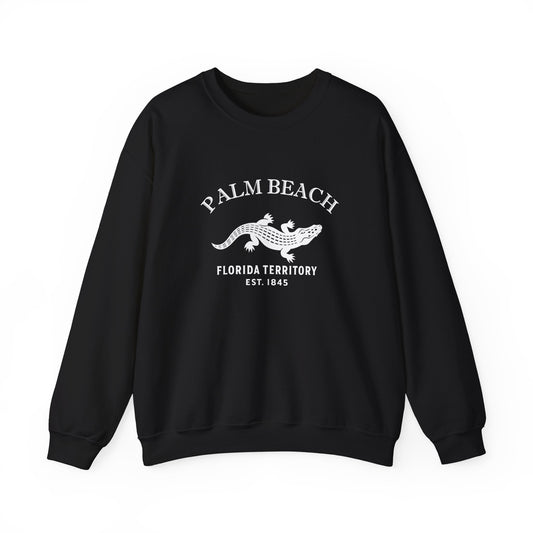
Palm Beach Florida Vintage Retro Unisex Heavy Crewneck Sweatshirt - Black Logo
Regular price $44.00 USDRegular price -
Palm Beach Florida Vintage Retro Unisex Heavy Cotton Hoodie - White Logo
Regular price $56.00 USDRegular price -
Whitewater Run - Silhouette Art Giclée Unframed Art Print
Regular price From $34.00 USDRegular price -
Whitewater Run - Silhouette Art Framed Art Print
Regular price From $96.00 USDRegular price -
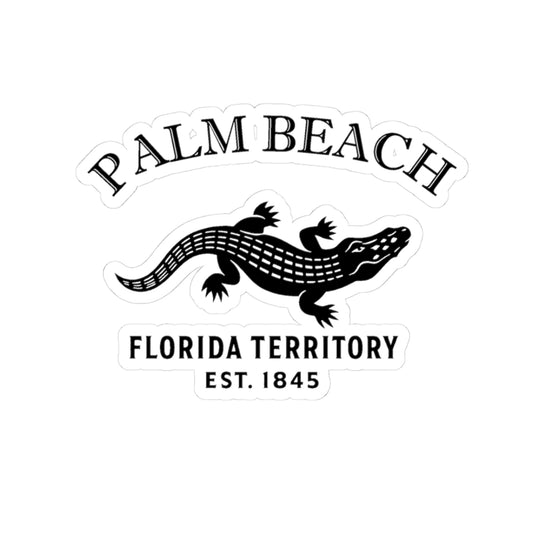
Palm Beach Florida Vintage Retro Vinyl Sticker - Black Logo
Regular price From $6.00 USDRegular price -
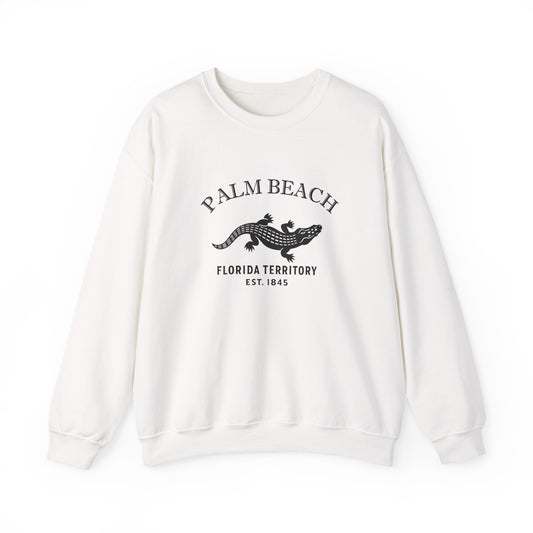
Palm Beach Florida Vintage Retro Unisex Heavy Crewneck Sweatshirt - White Logo
Regular price $44.00 USDRegular price -
Between Horse and Hound - Silhouette Art Framed Art Print
Regular price From $96.00 USDRegular price -
Boy and Hound Portrait - Silhouette Art Framed Art Print
Regular price From $112.00 USDRegular price







Palm Beach Florida — Retro Vintage History
What's with the island Flagler built? A century and a half ago this was a sandbar of coconut palms with almost no one on it. Then Henry Flagler arrived. Flagler had made his fortune as a partner in Standard Oil, and in his second act he built railroads down the length of Florida — and where the tracks reached, resorts followed. In 1894 he opened the Royal Poinciana Hotel on the shore of Lake Worth, then the largest wooden building in the world, and two years later a smaller oceanfront hotel that would soon be renamed The Breakers. Almost overnight, a remote barrier island became the winter address of America's wealthiest families. Everything Palm Beach is — the grand hotels, the season, the glamour — starts with Flagler's railroad.
Wear the HistoryThe island had a name before it had a resort, and the name came from a shipwreck. In 1878 a Spanish brig called the Providencia ran aground here carrying a cargo of coconuts; the settlers along Lake Worth salvaged them and planted them, and within a few years the shore was lined with palms. People started calling the place Palm Beach. Before any of that the Jaega people had lived along these waters for centuries, and a scattering of pioneers grew pineapples and tended the new palm groves. It was a quiet frontier coast — until the tracks came south.

Flagler did not just build hotels; he built a winter world. In 1902 he completed Whitehall, a white marble mansion on the Intracoastal that he gave his wife as a wedding present and that now serves as the Flagler Museum, a National Historic Landmark. Each winter the Gilded Age families came south by private railcar for ‘the season,’ the months between the holidays and Easter when Palm Beach filled with the wealthiest names in the country. The Town of Palm Beach was formally incorporated in 1911, a small, exclusive island already certain of what it was.
If Flagler built the resort, Addison Mizner gave it a face. The architect arrived around 1918 and, with his patron Paris Singer, designed the Everglades Club — and with it invented the look that still defines the island: Mediterranean Revival, all red barrel-tile roofs, stucco walls, arched loggias, and shaded courtyards, as if a corner of the Italian and Spanish coast had washed up in Florida. The style spread from the club down the shopping street and across the estate row, and ‘the Palm Beach look’ became a national shorthand for warm-weather glamour. It is the reason the island still feels like a stage set for the 1920s.
That shopping street is Worth Avenue, named in 1913 for General William Jenkins Worth — the same officer Fort Worth, Texas, is named for. Mizner and those who followed lined it with arcades and tucked hidden courtyards, the Vias, behind the storefronts: little open-air passages of shops and fountains reached through archways off the main walk. Since the 1920s it has been one of the most famous luxury shopping streets in the country, a quarter mile of boutiques running from the Mediterranean arcades down to the clock tower at the ocean.
Grand hotels are fragile things, and Palm Beach's were no exception. The Breakers burned and was rebuilt more than once; the present Italian-Renaissance hotel, with its twin belvedere towers, opened in 1926 and still anchors the oceanfront. The original Royal Poinciana — by then aging and outsized — came down in the 1930s, its lumber carried off to build homes. Through it all the island held its character: a narrow strip of sand between the lagoon and the Atlantic that had decided, early and permanently, to be beautiful.
Our Palm Beach logo carries Florida's alligator above ‘Florida — Est. 1845,’ the shared retro emblem of our Florida towns. The alligator is the state's wild signature and 1845 marks Florida statehood; the emblem is the through-line that links Palm Beach to every other Florida town we make. There is a pleasing contrast in it here — the untamed Florida gator stamped over an island built on imported palms and imported elegance, rendered in the black-and-white of an old crate label. What makes this one Palm Beach is the Gilded Age glamour behind the gator: red-tile roofs, ocean light, and a hundred winters of the season.
Today Palm Beach is a small barrier island of about nine thousand residents that still keeps its season, its Mediterranean arcades, and its grand hotels along the Atlantic. Its story runs from a wreck full of coconuts to Flagler's railroad to Mizner's red-tile dream, and the ‘Palm Beach look’ it invented now turns up far from the island itself. Our Palm Beach designs gather that into wearable form. Wear the history. This is Flagler's paradise on the Atlantic.

Palm Beach, Florida — Travel Guide
Visiting Palm Beach Today
Palm Beach is a narrow barrier island between the Lake Worth Lagoon and the Atlantic, across the water from West Palm Beach. It is compact, walkable, and almost entirely Mediterranean Revival — red-tile roofs, ocean light, the Lake Trail along the Intracoastal, and Worth Avenue running down to the sea.
Flagler, Mizner & the Mediterranean Island
For visitors looking for things to do in Palm Beach, Florida:
- Tour the Flagler Museum at Whitehall, Henry Flagler's 1902 Gilded Age mansion on the Intracoastal.
- Walk Worth Avenue and its hidden Vias — Mizner's Mediterranean-Revival arcades and courtyards of boutiques.
- See the Worth Avenue Clock Tower at the oceanfront end of the street.
- Visit the Society of the Four Arts for galleries, gardens, and libraries on Royal Palm Way.
- Bike the Lake Trail along the Intracoastal for breezy water views.
- Stop at the Church of Bethesda-by-the-Sea, a Gothic-Revival landmark with formal gardens.
- Stroll the Atlantic public beaches and Phipps Ocean Park along the island's ocean side.
Why People Visit Palm Beach
Palm Beach offers refined culture beside an easy ocean shoreline. Visitors pair the Flagler and Mizner heritage with museum galleries, gardens, and a quiet bike path along the water. It is polished, historic, and relaxed in pace, with year-round appeal in its parks, paths, and public spaces. The vintage Gilded Age glamour is evergreen, drawing architecture lovers and vintage-resort enthusiasts from well beyond the small island, and history and everyday island life sit side by side here in a welcoming way.
Wear the History
Kindred Cities
Welcome to visitors from Cannes, France (bienvenue) and Portofino, Italy (benvenuti) — fellow playgrounds of the gilded and the glamorous.
Palm Beach is where America keeps its old money, and Cannes and Portofino would feel instantly at home. Cannes lines its Croisette with palms, yachts and a film festival's worth of glamour; Portofino tucks its pastel harbour and superyachts into a Ligurian cove; Palm Beach answers with Worth Avenue's couture windows, Flagler's Gilded Age mansions and an island that has been the winter address of the very rich for over a century.
Palm Beach is the place for anyone who enjoys a little glamour with the sea air: Worth Avenue's boutiques and courtyards, the grand hotels of the Flagler era, and a manicured barrier island where the Atlantic laps a coastline of mansions. Come and visit us soon.
When you plan the trip, the Town of Palm Beach and Discover The Palm Beaches are the place to start.
Wear the History

For deeper reading on the Palm Beach history described here — the Jaega shoreline, the 1878 Providencia coconut wreck that named the island, Henry Flagler's railroad and the 1894 Royal Poinciana and 1902 Whitehall, the 1911 incorporation, Addison Mizner's Mediterranean Revival 'Palm Beach look' from 1918, and the grand-hotel era of The Breakers and the Royal Poinciana — it may be useful to consult (1) the Historical Society of Palm Beach County, (2) the Flagler Museum at Whitehall, (3) the Society of the Four Arts library, (4) the Town of Palm Beach records, and (5) the State Archives of Florida (Florida Memory) and the Florida Division of Historical Resources. For travel and visitor information, it may be useful to contact (1) the Town of Palm Beach, (2) Discover The Palm Beaches, the official destination office, (3) the Palm Beach Recreation Department, (4) the Worth Avenue Association, and (5) Visit Florida, the state tourism office.
- Choosing a selection results in a full page refresh.
- Opens in a new window.