Every design is set in hand-lettered vintage type for that old-school, crate-label look. One sample color shown — black and white logo options on every piece. Recently in the national press. Enjoy!
-
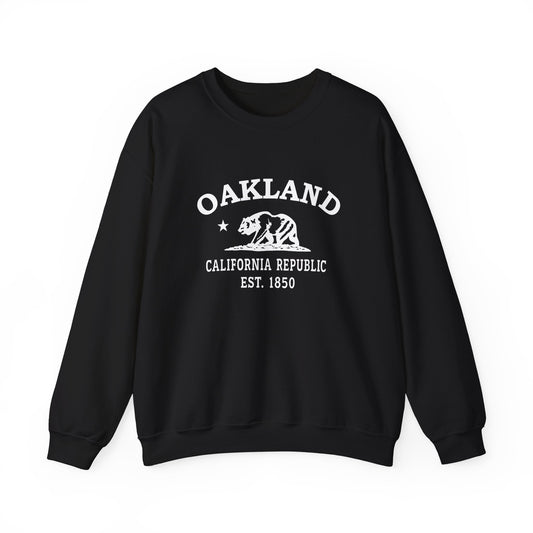
Oakland California Vintage Retro Premium Crewneck Sweatshirt - Black Logo
Regular price $48.00 USDRegular price -
Oakland California Vintage Retro Premium Crewneck Sweatshirt - White Logo
Regular price $48.00 USDRegular price -
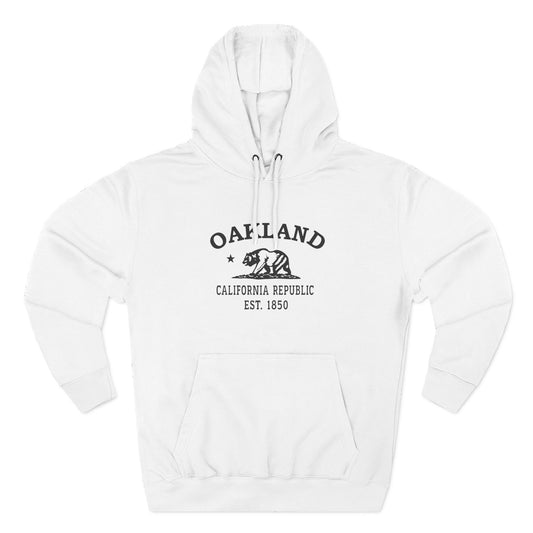
Oakland California Vintage Retro Unisex Heavy Cotton Hoodie - White Logo
Regular price $56.00 USDRegular price -
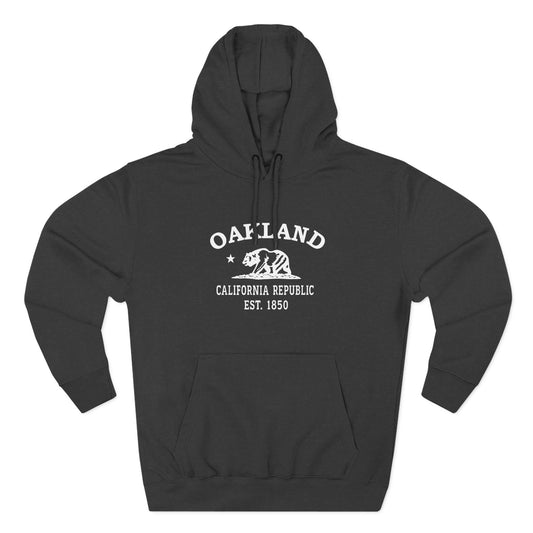
Oakland California Vintage Retro Unisex Heavy Cotton Hoodie - Black Logo
Regular price $56.00 USDRegular price -
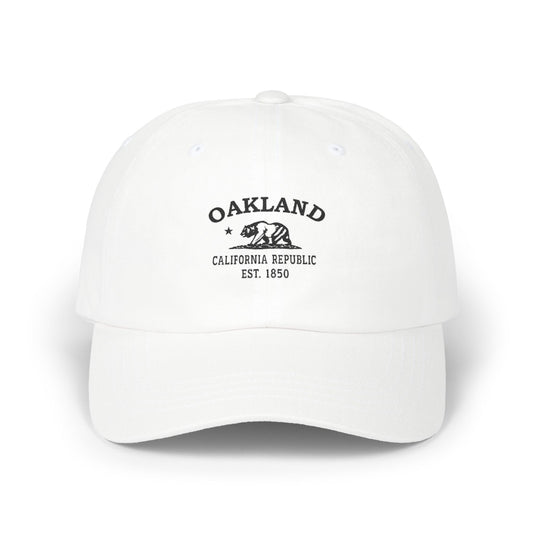
Oakland California Vintage Retro Embroidered Cotton Cap - White Logo
Regular price $32.00 USDRegular price -
Oakland California Vintage Retro Embroidered Cotton Cap - Black Logo
Regular price $32.00 USDRegular price -
Oakland California Vintage Retro Vinyl Sticker - Black Logo
Regular price From $6.00 USDRegular price -
Oakland California Vintage Retro Unisex Heavy Cotton Tee - White Logo
Regular price $22.00 USDRegular price -
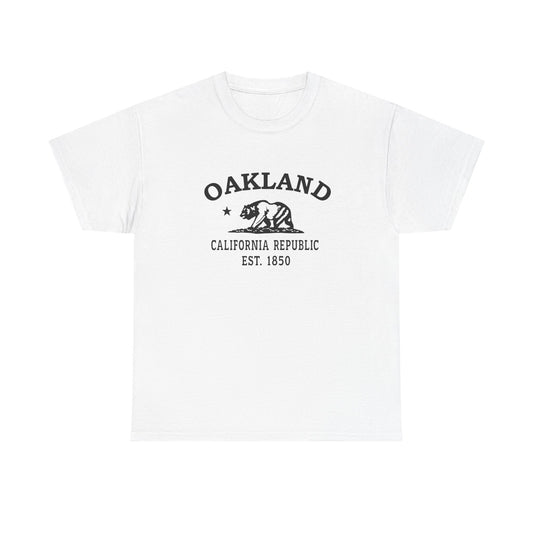
Oakland California Vintage Retro Unisex Heavy Cotton Tee - Black Logo
Regular price $22.00 USDRegular price -
Oakland California Vintage Retro Unisex Cotton Jersey Tank Top - White Logo
Regular price $28.00 USDRegular price -
Oakland California Vintage Retro Unisex Cotton Jersey Tank Top - Black Logo
Regular price $28.00 USDRegular price -
-
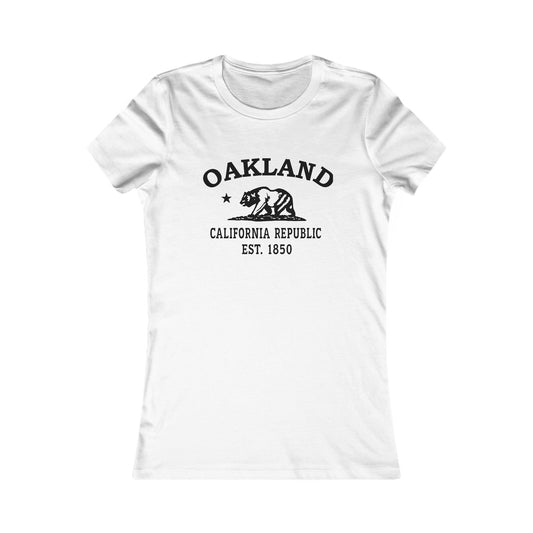
Oakland California Vintage Retro Womens Fitted Ringspun Cotton Tee - Black Logo
Regular price $28.00 USDRegular price -
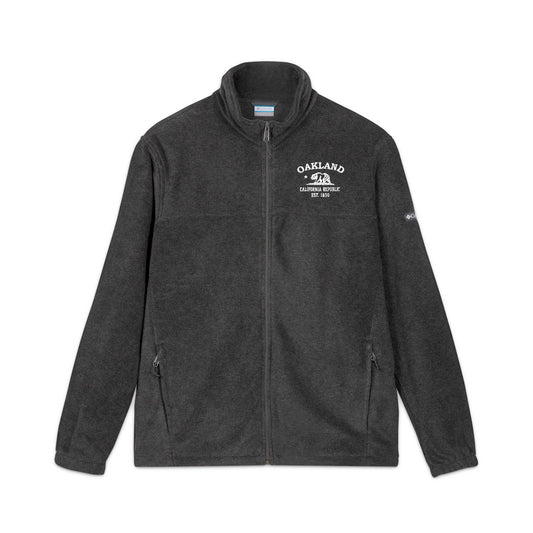
Oakland California Vintage Retro Unisex Embroidered Fleece Jacket - White Logo
Regular price $98.00 USDRegular price -
Oakland California Vintage Retro Back Printed Art Series Cotton Tee - Black Logo
Regular price $32.00 USDRegular price -
Oakland California Vintage Retro Giclée Print Art Series Poster
Regular price From $38.00 USDRegular price -
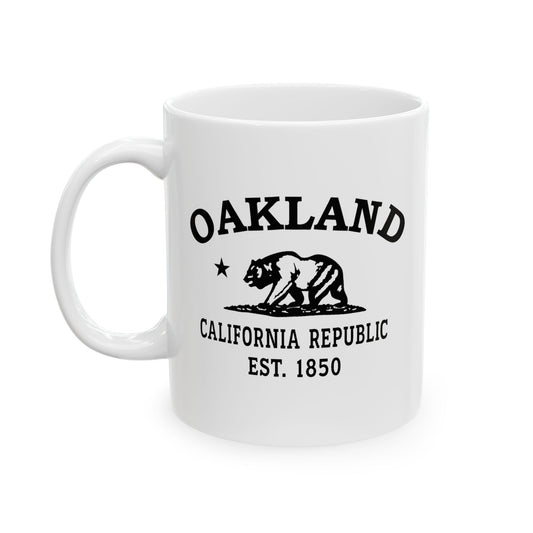
Oakland California Vintage Retro Ceramic Mug - Black Logo
Regular price From $16.00 USDRegular price -
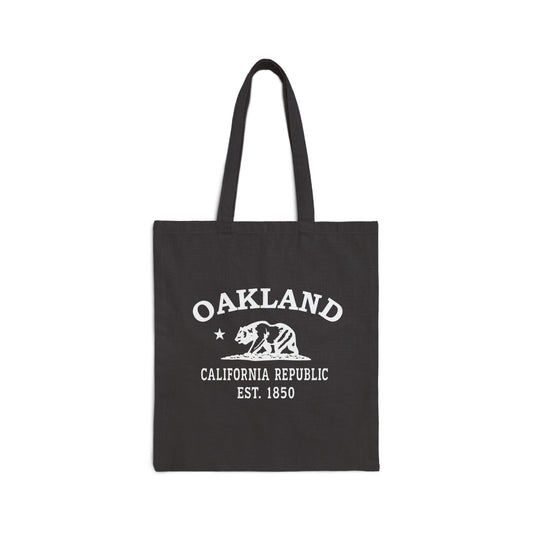
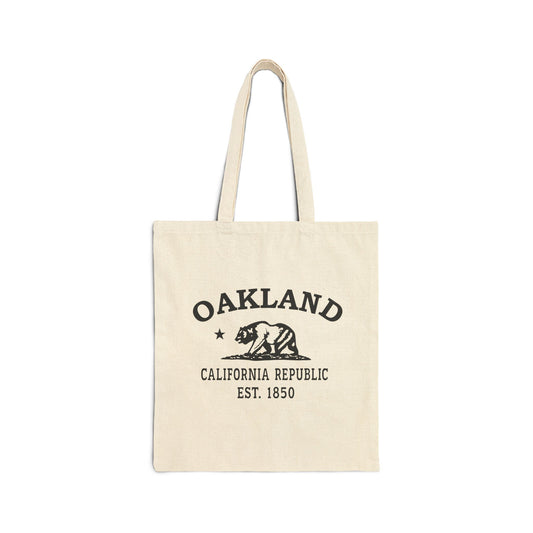
Oakland California Vintage Retro Cotton Canvas Tote Bag - White Logo
Regular price $25.00 USDRegular price -
Oakland California Vintage Retro Cotton Canvas Tote Bag - Black Logo
Regular price $25.00 USDRegular price -
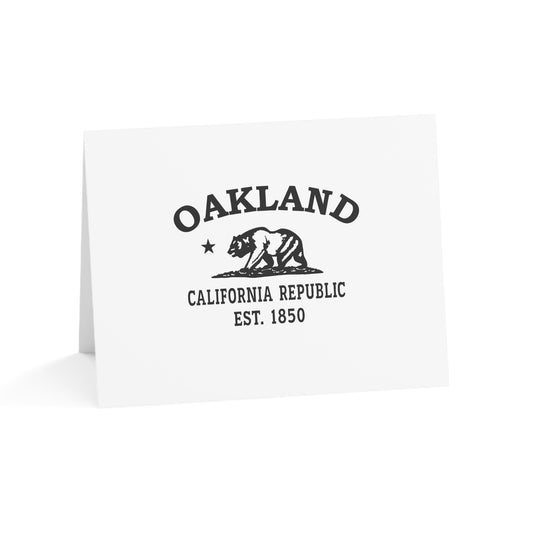
Oakland California Vintage Retro Thank You Card Set - Black Logo
Regular price From $25.00 USDRegular price -
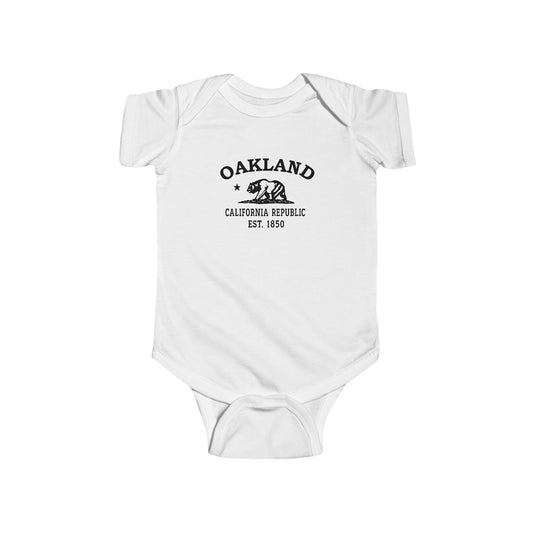
Oakland California Vintage Retro Cotton Jersey Baby Bodysuit - Black Logo
Regular price $26.00 USDRegular price -
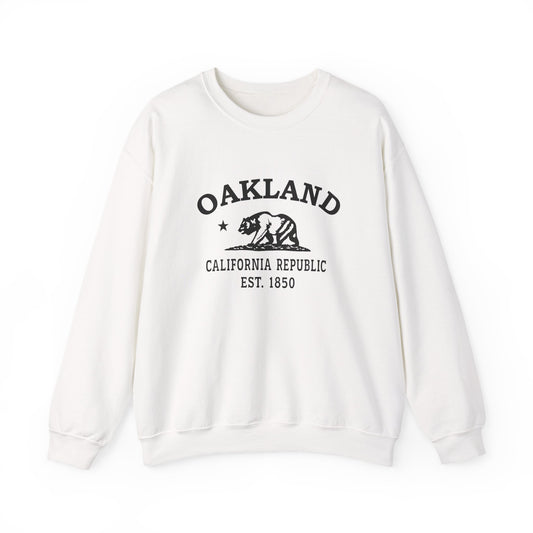
Oakland California Vintage Retro Unisex Heavy Crewneck Sweatshirt - Black Logo
Regular price $44.00 USDRegular price -
Oakland California Vintage Retro Unisex Heavy Crewneck Sweatshirt - White Logo
Regular price $44.00 USDRegular price -
Oakland California Vintage Retro Unisex Embroidered Cotton Polo - Black Logo
Regular price $48.00 USDRegular price






Oakland California — Retro Vintage History
What's with the end of the railroad? On November 8, 1869 — six months after the golden spike at Promontory — the first transcontinental train rolled to the edge of San Francisco Bay and stopped at Oakland. For two months the line had ended across the estuary at the Alameda Terminal; that November morning the terminus moved to Oakland for good, and the first through train for the East left town the very same day. The tracks ran out onto a pier at Oakland Point, which the Central Pacific soon stretched into the great Oakland Long Wharf — a generation later rebuilt as the famous Oakland Mole — where passengers stepped off the train and onto ferries for the last mile across to San Francisco. Oakland was the western terminus, the literal end of the line that bound the continent together, chosen for a deep harbor, flat land, and a straight shot to the bay. That choice turned a quiet oak-grove town into a city almost overnight.
Wear the HistoryWhat's with Disability Justice? In 2025 the United States Mint issued the nineteenth coin of its American Women Quarters program, and it belongs to Oakland: it honors Stacey Park Milbern, who moved to the city at twenty-four and organized from East Oakland as a leader of the disability justice movement. She championed the belief that everyone is inherently valuable, built mutual-aid networks that carried her community through crisis, directed programs at a center for independent living, worked as an impact producer in film, and was appointed to a presidential committee. The quarter's reverse, designed by Elana Hagler and sculpted by Craig A. Campbell, shows her speaking to an audience — one hand near her trach, the other held palm-up in a gesture of open dialogue and allyship — beside the inscription DISABILITY JUSTICE. She is the first woman shown in a wheelchair on United States currency, and her coin carries a piece of Oakland in every pocket it reaches.
The United States Mint issued the Stacey Park Milbern quarter in August 2025 — the nineteenth coin of the American Women Quarters program, and Oakland's own.

The reverse shows her mid-sentence, palm open to the audience — a design by Elana Hagler, sculpted by Craig A. Campbell, that puts a working Oakland organizer on a coin the whole country carries.
QUICK FACTS — OAKLAND, CA
Lake Merritt was declared the first official wildlife refuge in the United States in 1870 and has been a National Historic Landmark since 1963.
The Necklace of Lights — 126 lampposts and 3,400 bulbs — was first lit in 1925, went dark for the 1941 blackout, was relit in 1987, and turned 100 in 2025.
Oakland became the western terminus of the Transcontinental Railroad on November 8, 1869; the Long Wharf opened in 1871 and the Oakland Mole in 1882.
Two giant redwoods in the Oakland hills — the Blossom Rock Navigation Trees, California Historical Landmark No. 962 — once guided ships on the bay, a bearing logged by Captain F.W. Beechey in 1826.
The black-crowned night heron became Oakland's first official city bird in 2019, by unanimous council vote, after a campaign begun by third-graders.
The Port of Oakland was a pioneer of container shipping, loading its first container ships in 1962.
Oakland is named for its coast live oaks — encinal, "oak grove" in Spanish — and was incorporated on May 4, 1852.
Stacey Park Milbern's 2025 American Women quarter is the first U.S. coin to show a woman in a wheelchair.
The town the railroad found was named for its trees. The flatlands along the East Bay shore were once a forest of coast live oaks — encinal, "oak grove" in Spanish — and the groves gave Oakland both its name and its nickname, "The Town." The land had belonged to the Peralta family, whose vast Rancho San Antonio, granted to Luis Maria Peralta in 1820, covered most of the East Bay. During the Gold Rush the shoreline became the mainland staging point between the bay and the Sierra foothills, and as Americans poured in, the rancho was carved up and a town laid out along the waterfront. On May 4, 1852, the state incorporated the Town of Oakland — then a place of barely a hundred people, two hotels, and a wharf. Within a generation of the railroad's arrival its population had leapt more than twenty-fold, and its harbor deepened into one of the great ports of the West.

As the city grew, one of its mayors gave it a treasure. Samuel Merritt, mayor from 1867 to 1869, proposed and funded a dam across a tidal slough at the heart of downtown, turning brackish marsh into a clean saltwater lake. In 1870 the state legislature declared it a refuge for the migrating birds of the Pacific Flyway that crowded its shores — the first official wildlife refuge in the United States. Lake Merritt has been the jewel of Oakland ever since: 155 acres and three and a half miles around, ringed by parkland and five little bird islands, still alive with herons, pelicans, and the great autumn flights, and a National Historic Landmark since 1963. A wild lake in the middle of a working city is a very Oakland kind of idea.
The lake earned its jewelry in 1925, when the Necklace of Lights — 126 lampposts strung with 3,400 pearly bulbs — was lit around the shore. Switched off for the wartime blackout in 1941, it stayed dark for nearly half a century until a citizens' campaign relit it in 1987, and it marked its hundredth birthday in 2025. The lake's most famous residents got their honor more recently: black-crowned night herons, stocky and red-eyed, have nested around Lake Merritt and the downtown trees for generations, and in 2019 — after a two-year campaign begun by a class of Oakland third-graders — the City Council voted unanimously to make the night heron the city's first official bird.
The hills above town tell an older story about the sea. The East Bay ridges once carried a forest of giant coast redwoods, and two of them stood so tall that ship captains sixteen miles out lined them up with Yerba Buena Island to steer clear of Blossom Rock, a hazard lurking just beneath the bay — Captain F.W. Beechey of the Royal Navy wrote the bearing into his log in 1826. The old giants were felled by about 1855 to build Gold Rush San Francisco, and the redwoods that shade Redwood Regional and Joaquin Miller parks today are their descendants, sprouted from the original stumps. The site of the Navigation Trees is California Historical Landmark No. 962, at the Madrone Picnic Area high in the Oakland hills.
Oakland's character grew richer as the city did. The young Jack London prowled its waterfront before he ever wrote a word, and the wharves where he loafed are now Jack London Square. In the 1920s and '30s the city raised two of the finest movie palaces in the West — the Fox Oakland of 1928 and the great Art Deco Paramount of 1931, all gilt and neon. And in 1950, on the shore of Lake Merritt, Oakland opened Children's Fairyland, a storybook park that has enchanted generations of Bay Area kids. The Town had become a place of theaters, parks, and waterfront stories.
Today Oakland is the anchor of the East Bay — a city of hills and harbor looking across the water at San Francisco. Its port pioneered container shipping in 1962 and remains one of the busiest in the country, and its neighborhoods carry the city's real life: Rockridge and Temescal with their storefronts and cafes, the Fruitvale district and Chinatown with some of the best food in California, Montclair up in the wooded hills. It is a city of neighborhoods, food, murals, and art, proudly diverse and proud of its table. Through every chapter, Oakland has been a crossroads — the western end of the line, where the continent meets the bay.
Our Oakland logo carries the California grizzly and the lone star above "California Republic — Est. 1850," the shared retro emblem of our California towns; the bear and star are the state's own, and 1850 marks the year California joined the Union — the state's birthday, not the town's, which came two years later in 1852. Rendered in worn black-and-white, like a WPA poster or a crate label, it ties Oakland to every other California town we make. What makes this one Oakland is the story behind it — the oak groves, the Necklace of Lights, and the western end of the railroad.
So Oakland gathers oak groves, a wild lake with a necklace of lights, redwoods that once steered ships, a night heron on the city seal of the heart, and the end of the transcontinental line onto one East Bay shore — with a 2025 quarter carrying an Oakland story in millions of pockets. Our Oakland designs gather all of that into wearable form. Wear the history. Oakland, California — The Town: oak groves, the Necklace of Lights, and the western end of the line.

Oakland, California — Travel Guide
Visiting Oakland Today
Oakland sits on the East Bay shore of San Francisco Bay, a city of hills, harbor, and culture a short ferry or train ride from San Francisco. Lake Merritt, redwood parks, Art Deco theaters, and some of the best neighborhood food in California anchor a day here.
Lake Merritt, the Redwoods & the Waterfront
For visitors looking for things to do in Oakland, California:
- Walk the Lake Merritt loop under the Necklace of Lights — the first U.S. wildlife refuge, right in the downtown core — and watch for the night herons, the city's official bird.
- Wander the Gardens at Lake Merritt in Lakeside Park, home to a bonsai garden, a torii gate, and the Oakland-Fukuoka friendship mural.
- Tour the Oakland Museum of California for art, history, and natural science.
- See the Art Deco Paramount Theatre and the Fox Oakland, two restored 1920s-30s movie palaces.
- Stroll Jack London Square on the estuary waterfront, with shops, dining, and ferries across the bay.
- Hike Redwood Regional Park and Roberts Regional Recreation Area in the hills — and find the Madrone Picnic Area landmark marking the Blossom Rock Navigation Trees.
- Take in the bay views from Joaquin Miller Park or along Skyline Boulevard.
- Smell the roses at the Morcom Rose Garden, a WPA-era terraced garden that is free to visit.
- Watch the container ships glide past at Middle Harbor Shoreline Park, with a beach and San Francisco skyline views.
- Visit Children's Fairyland on the lakeshore, the beloved 1950 storybook park.
- Eat your way through the neighborhoods — Rockridge and Temescal cafes, Fruitvale district taquerias, dim sum in Chinatown — and if you're here in October, join the free Otsukimi moon-viewing at the Gardens at Lake Merritt, held every year since 1965.
Why People Visit Oakland
Visitors come to Oakland for a Bay Area city with its own strong character: a wild lake at its center, redwood groves in the hills, a historic waterfront, and one of the most celebrated food scenes in California. The museums and Jack London Square sit minutes from the lake, and San Francisco is a quick trip across the bay. Equal parts oak-grove heritage and creative energy, Oakland rewards anyone drawn to the heart of the East Bay.
Wear the History
Kindred Cities
Greetings, friends from Fukuoka, Japan (ようこそ) — our partner across the Pacific and our oldest friend abroad.
Oakland and Fukuoka are two harbour cities that have leaned toward each other for sixty years. Fukuoka, the great port and food capital of Japan's Kyushu — its yatai food stalls and Hakata ramen famous nationwide — matches Oakland's own life on the water: a working harbour on San Francisco Bay, a crossroads city, proudly diverse and proud of its table. Two ports that put food and character first.
Oakland made Fukuoka its sister city in 1962, its oldest and one of its most active ties, born of the postwar people-to-people movement. For the 60th in 2022 the two set a mosaic mural in Oakland's Lakeside Park — plum tree and oak entwined.
Come from Fukuoka and Oakland will feel like harbour kin: a port city of real food and real character, a Japanese-American community woven deep, and a moon-viewing party each autumn that would not feel out of place back home. Come and visit us soon.
When you plan the trip, Visit Oakland is the place to start.
Wear the History

For deeper reading on the Oakland history described here — the coast-live-oak groves and the Peralta Rancho San Antonio, the 1852 incorporation, the November 8, 1869 western terminus of the Transcontinental Railroad at Oakland Point and the Oakland Long Wharf (1871) and Oakland Mole (1882) that grew from it, Lake Merritt as the first U.S. wildlife refuge in 1870 and the 1925 Necklace of Lights, the Blossom Rock Navigation Trees of the Oakland hills, and the city's Art Deco theaters and Jack London waterfront — it may be useful to consult (1) the Oakland History Center at the Oakland Public Library, (2) the Historic American Buildings Survey records at the Library of Congress, (3) the Oakland Museum of California, (4) the Lake Merritt Institute and the East Bay Regional Park District, and (5) the Peralta Hacienda Historical Park. For travel and visitor information, it may be useful to contact (1) Visit Oakland, (2) the Oakland Metropolitan Chamber of Commerce, (3) the Oakland Parks, Recreation and Youth Development Department, (4) the East Bay Regional Park District, and (5) the Oakland International Airport information desk.