Every design is set in hand-lettered vintage type for that old-school, crate-label look. One sample color shown — black and white logo options on every piece. Recently in the national press. Enjoy!
-
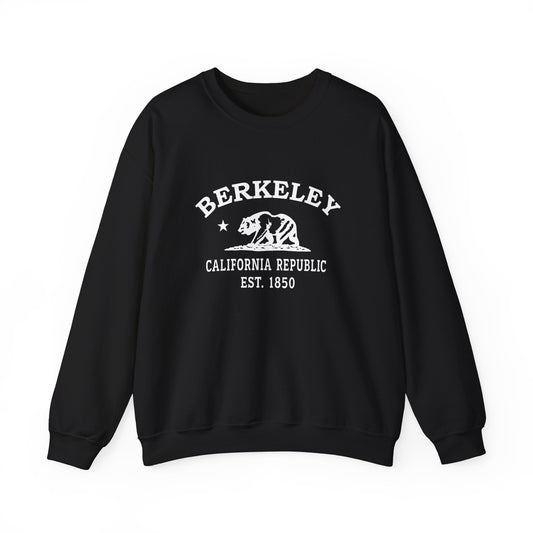
Berkeley California Vintage Retro Premium Crewneck Sweatshirt - Black Logo
Regular price $48.00 USDRegular price -
Berkeley California Vintage Retro Premium Crewneck Sweatshirt - White Logo
Regular price $48.00 USDRegular price -
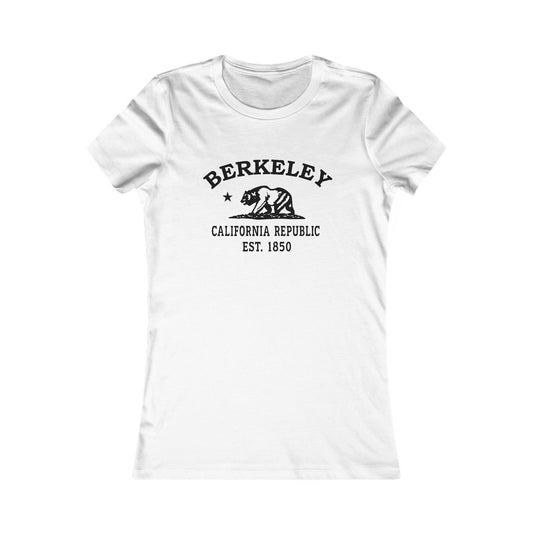
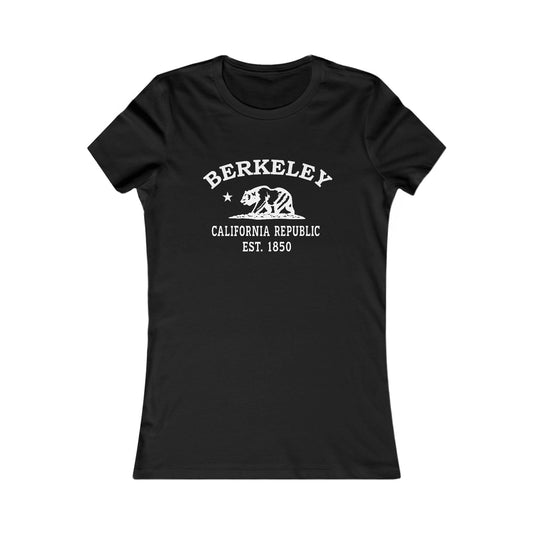
Berkeley California Vintage Retro Womens Fitted Ringspun Cotton Tee - Black Logo
Regular price $28.00 USDRegular price -
-
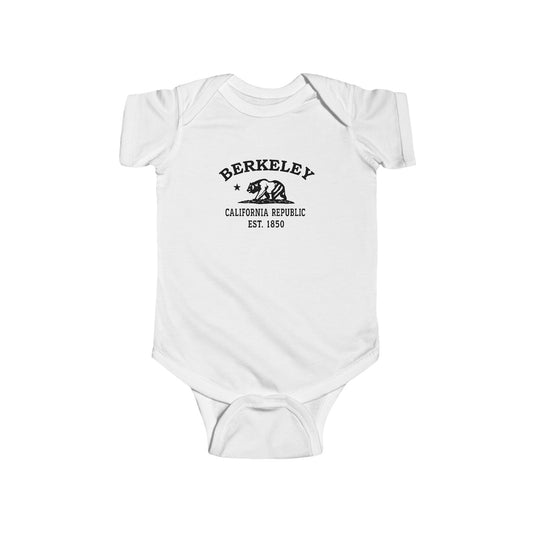
Berkeley California Vintage Retro Cotton Jersey Baby Bodysuit - Black Logo
Regular price $26.00 USDRegular price -
Berkeley California Vintage Retro Embroidered Cotton Cap - Black Logo
Regular price $32.00 USDRegular price -
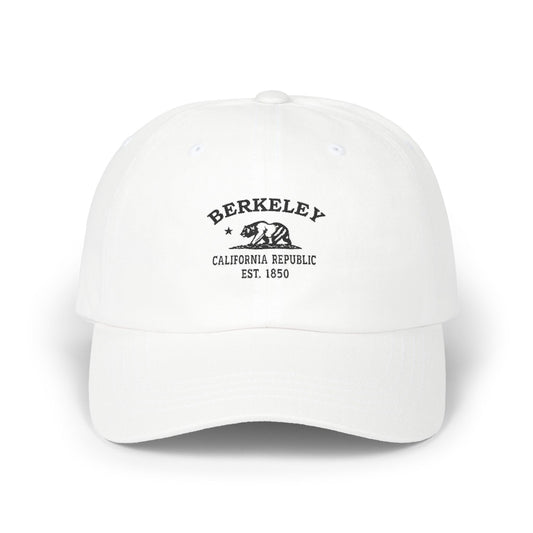
Berkeley California Vintage Retro Embroidered Cotton Cap - White Logo
Regular price $32.00 USDRegular price -
Berkeley California Vintage Retro Unisex Embroidered Fleece Jacket - White Logo
Regular price $98.00 USDRegular price -
Berkeley California Vintage Retro Unisex Heavy Cotton Hoodie - Black Logo
Regular price $56.00 USDRegular price -
Berkeley California Vintage Retro Unisex Heavy Cotton Hoodie - White Logo
Regular price $56.00 USDRegular price -
Berkeley California Vintage Retro Vinyl Sticker - Black Logo
Regular price From $6.00 USDRegular price -
Berkeley California Vintage Retro Unisex Heavy Cotton Tee - Black Logo
Regular price $22.00 USDRegular price -
Berkeley California Vintage Retro Unisex Heavy Cotton Tee - White Logo
Regular price $22.00 USDRegular price -
Berkeley California Vintage Retro Ceramic Mug - Black Logo
Regular price From $16.00 USDRegular price -
Berkeley California Vintage Retro Cotton Canvas Tote Bag - White Logo
Regular price $25.00 USDRegular price -
Berkeley California Vintage Retro Cotton Canvas Tote Bag - Black Logo
Regular price $25.00 USDRegular price -
Berkeley California Vintage Retro Thank You Card Set - Black Logo
Regular price From $25.00 USDRegular price -
Berkeley California Vintage Retro Unisex Cotton Jersey Tank Top - White Logo
Regular price $28.00 USDRegular price -
Berkeley California Vintage Retro Unisex Cotton Jersey Tank Top - Black Logo
Regular price $28.00 USDRegular price -
Berkeley California Vintage Retro Back Printed Art Series Cotton Tee - Black Logo
Regular price $32.00 USDRegular price -
Berkeley California Vintage Retro Giclée Print Art Series Poster
Regular price From $38.00 USDRegular price -
Berkeley California Vintage Retro Unisex Heavy Crewneck Sweatshirt - Black Logo
Regular price $44.00 USDRegular price -
Berkeley California Vintage Retro Unisex Heavy Crewneck Sweatshirt - White Logo
Regular price $44.00 USDRegular price -
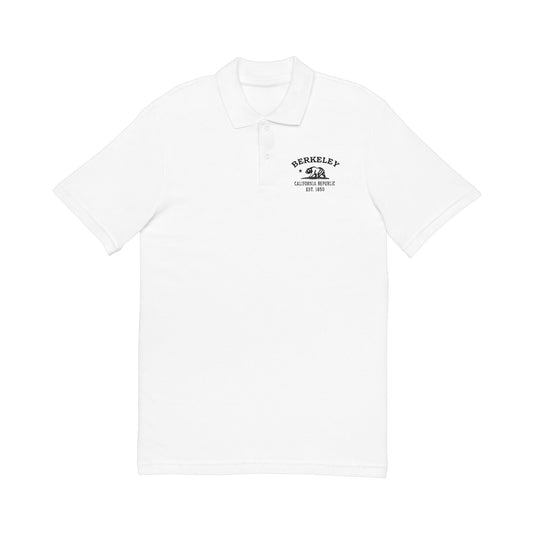
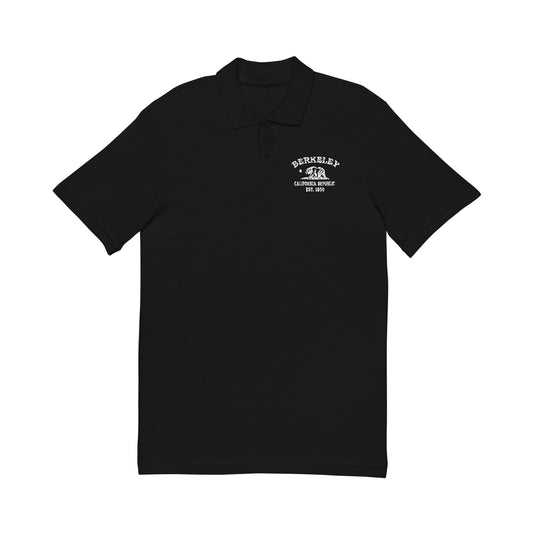
Berkeley California Vintage Retro Unisex Embroidered Cotton Polo - Black Logo
Regular price $48.00 USDRegular price






Berkeley California — Retro Vintage History
What's with the Little Castle? A block from the university stands a Moorish-Gothic pile of arches, courtyards, and a long indoor pool that Berkeley has nicknamed the Little Castle: the Berkeley City Club, built in 1929 by Julia Morgan. Morgan was the first woman licensed as an architect in California and the designer of Hearst Castle down the coast, and the City Club is her jewel-box in town — now a National Register landmark and a California Historical Landmark. It is the perfect doorway into Berkeley, a city that has always built, thought, and cooked a little differently from everywhere else.
Wear the HistoryWhere you're from. Where you love. Where you explored. Where you belong.
What's with the Word HOPE? The United States Mint opened its 2024 American Women Quarters with a coin built around a single word — and the woman inside it sharpened her law here. Pauli Murray finished first in her class at Howard Law in 1944, its only woman, then came west for a master of laws at Berkeley, passed the California bar, and in January 1946 became the state's first Black deputy attorney general. Her book States' Laws on Race and Color was called the bible of the civil rights movement; she went on to co-found the National Organization for Women, become the first Black woman ordained an Episcopal priest, and the first Black person to earn a doctorate of the science of law from Yale. The quarter shows her eyeglass-framed face within the word HOPE, ringed by a line from her poem Dark Testament: A SONG IN A WEARY THROAT.

The name itself is a small piece of poetry. In 1866 the trustees of the College of California stood on a rocky outcrop above the new townsite — still called Founders' Rock — looked out through the Golden Gate, and decided to name the place for the Anglo-Irish philosopher George Berkeley, remembering his line, ‘Westward the course of empire takes its way.’ The land was Ohlone homeland for thousands of years, then a piece of the Peralta family's Rancho San Antonio, then a Gold-Rush settlement called Ocean View; in 1878 the campus town and the waterfront village merged and incorporated as Berkeley.

For a generation it was called the Athens of the West, and it built like it. Between about 1910 and 1930, Berkeley's architects gave it a golden age: Bernard Maybeck's serene First Church of Christ, Scientist (1910), a landmark of Bay Area Arts and Crafts; John Galen Howard's bell tower, the Campanile, rising over the campus in 1914; and Julia Morgan's Little Castle in 1929. In the hills above, the brown-shingle houses of the First Bay Tradition tucked themselves among the oaks and the fog.
QUICK FACTS — BERKELEY, CA
Berkeley was named in 1866 at Founders' Rock, for the philosopher George Berkeley — 'Westward the course of empire takes its way.'
The town incorporated in 1878, merging the campus settlement with the waterfront village of Ocean View; the Ohlone lived here for millennia before.
Julia Morgan — the first woman licensed as an architect in California — built the 'Little Castle,' the Berkeley City Club, in 1929.
Maybeck's First Church of Christ, Scientist (1910) is a National Historic Landmark of the Bay Area Arts and Crafts movement.
In 1964 the Free Speech Movement gathered on Sproul Plaza — a landmark in the history of campus expression.
Alfred Peet opened his coffee shop at Walnut and Vine in 1966; Alice Waters opened Chez Panisse in 1971 and invented California cuisine.
The modern wheelchair curb cut was pioneered on Berkeley's streets in 1972.
Pauli Murray took her law degree at Berkeley in 1945; the 2024 quarter bearing her face opened that year's American Women Quarters.
All of it grew up around the University of California, chartered in 1868 and built on the first campus here — the institution that made Berkeley a city of learning, bookshops, and cafes that double as seminar rooms. In the 1930s, Ernest Lawrence's Radiation Laboratory and its cyclotrons made the hills a birthplace of modern physics. More than most American towns, Berkeley has been organized around ideas and the people who argue about them.
That habit of argument made national history. In 1964, students gathered on Sproul Plaza in what became the Free Speech Movement, a landmark in the history of campus expression that gave Berkeley a lasting reputation as a city where speech is taken seriously. Whatever one makes of the politics that followed, the movement itself is now a fixed part of the American civic story, and of Berkeley's.
Berkeley's other revolution happened at the table. In 1966 Alfred Peet opened a small coffee shop at Walnut and Vine and taught America to take its coffee seriously; in 1971 Alice Waters opened Chez Panisse a few blocks away and invented what the world now calls California cuisine — cooking built on fresh, local, seasonal ingredients and direct ties to nearby farms. The stretch of North Shattuck around them earned the nickname the Gourmet Ghetto, and farm-to-table spread from these few blocks to the whole country. Wear local; feed local; it started here.
And then there are the hills. Berkeley climbs from the Marina, with its kite fields and Golden Gate views, up through the flats to the Berkeley Hills and Tilden Regional Park — Lake Anza, the botanic garden, a vintage steam train, and the sunset view from Indian Rock. The terraced Berkeley Rose Garden, a WPA amphitheater from 1937, looks straight at the Bay. The Hayward Fault runs right under the city, a reminder that all this sits on living ground. Even the curb cut for wheelchairs was pioneered on these streets, in 1972.

Our Berkeley logo carries California's grizzly bear above ‘California Republic — Est. 1850,’ the shared retro emblem of our California towns; the bear is the state's own icon, from the old Bear Flag Republic, and 1850 marks the year California joined the Union. Rendered in black-and-white, it ties Berkeley to every other California town we make. What makes this one Berkeley is the city behind the bear — the Little Castle, the cafes of the Gourmet Ghetto, and the hills above the Bay.
So Berkeley gathers a philosopher's name, a little castle on the Bay, the birth of California cuisine, and a whole hillside of ideas onto the east shore of San Francisco Bay. Our Berkeley designs gather that into wearable form. Wear the history. Berkeley, CA — where the table, the soapbox, and the hills all meet the Bay.
Berkeley, California — Travel Guide
Visiting Berkeley Today
Berkeley sits on the east shore of San Francisco Bay, climbing from the Marina to the Berkeley Hills. It mixes Julia Morgan's Little Castle and Maybeck's landmarks with the cafes of the Gourmet Ghetto, the Rose Garden, Tilden Park, and wide Golden Gate views — a city of food, books, architecture, and ideas, with the campus at its center.
The Little Castle, the Gourmet Ghetto & the Hills
For visitors looking for things to do in Berkeley, California:
- Tour the Berkeley City Club, Julia Morgan's 1929 'Little Castle,' for its pool, courtyards, and arches.
- Eat your way through the Gourmet Ghetto on North Shattuck, the cradle of California cuisine.
- Hike Tilden Regional Park in the Berkeley Hills, with Lake Anza, the botanic garden, and a vintage steam train.
- Climb Indian Rock for sunset views across the Bay to the Golden Gate.
- Stroll the terraced Berkeley Rose Garden, a WPA amphitheater from 1937.
- Walk the Berkeley Marina and Cesar Chavez Park for kite fields and shoreline paths.
- See Maybeck's First Church of Christ, Scientist (1910), a landmark of Bay Area Arts and Crafts.
- Browse the bookstores and cafes of Telegraph Avenue and Fourth Street.
Why People Visit Berkeley
Berkeley balances learning with the outdoors. Visitors mix landmark architecture and famous kitchens with regional parks, rose terraces, and waterfront breezes. It is curious, green, and welcoming, with year-round appeal in its parks, paths, and public spaces. History and everyday culture sit side by side here in a welcoming way, from the Little Castle to the cafes of the Gourmet Ghetto and the trails of the hills above the Bay.
Wear the History
Where you're from. Where you love. Where you explored. Where you belong.
Kindred Cities
A warm welcome to friends from Sakai, Japan (ようこそ), Gongju, South Korea (환영합니다) and Jena, Germany (willkommen) — Berkeley keeps good company among the world's cities of learning and long memory.
Berkeley twins with places that think for a living. Jena is the German university town that taught Hegel and Schiller and built Zeiss optics; Sakai is the old free-merchant city that gave Japan the tea ceremony and the master Sen no Rikyū; Gongju was once a royal capital of the ancient Baekje kingdom. A campus town's idea of kindred spirits.
Sakai came first — Berkeley's oldest sister city, signed in 1967 and marked at fifty years in 2017, the tie that opened the door to more than a dozen others worldwide.
Arrive from a city that argues, studies and protests with equal energy, and Berkeley will feel familiar: a university at full volume, bookshops and cafés that double as seminar rooms, and hills that open onto the whole bay. Come and visit us soon.
When you plan the trip, Visit Berkeley — the city's visitor bureau — is the place to start.
Wear the History
Where you're from. Where you love. Where you explored. Where you belong.

For deeper reading on the Berkeley history described here — the 1866 naming at Founders' Rock and the 1878 incorporation, the Ohlone homeland and the Rancho San Antonio land grant, the Maybeck-Morgan-Howard architectural golden age and Julia Morgan's City Club, the university's founding and the Free Speech Movement of 1964, and the birth of California cuisine at Chez Panisse in 1971 — it may be useful to consult (1) the Berkeley Historical Society and Museum, (2) the Berkeley Public Library's Berkeley History Room, (3) the Bancroft Library, (4) the California State Library and State Archives, and (5) the City of Berkeley Landmarks Preservation Commission. For travel and visitor information, it may be useful to contact (1) Visit Berkeley, (2) Visit California, (3) the East Bay Regional Park District for Tilden Park, (4) the Downtown Berkeley Association, and (5) the Berkeley Marina and the East Bay Regional Park District for Tilden's nature area and steam train.
- Choosing a selection results in a full page refresh.
- Opens in a new window.