Every design is set in hand-lettered vintage type for that old-school, crate-label look. One sample color shown — black and white logo options on every piece. Recently in the national press. Enjoy!
-
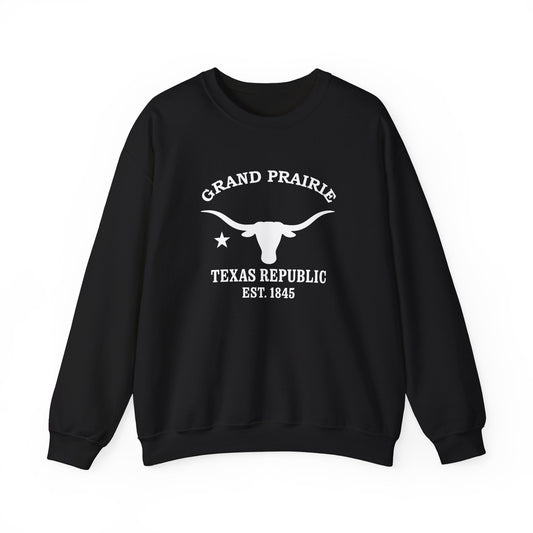
Grand Prairie Texas Vintage Retro Premium Crewneck Sweatshirt - Black Logo
Regular price $48.00 USDRegular price -
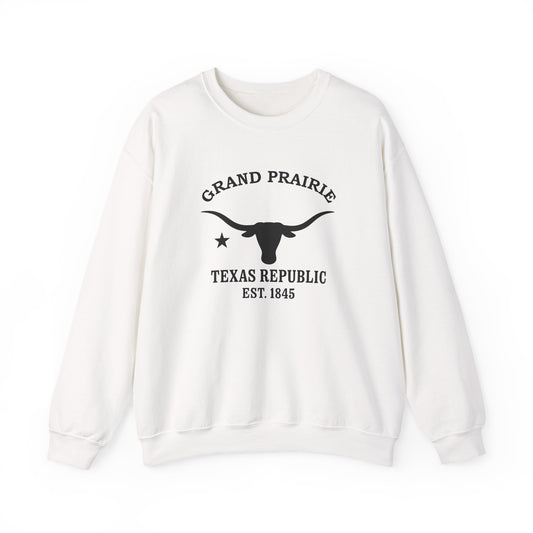
Grand Prairie Texas Vintage Retro Premium Crewneck Sweatshirt - White Logo
Regular price $48.00 USDRegular price -
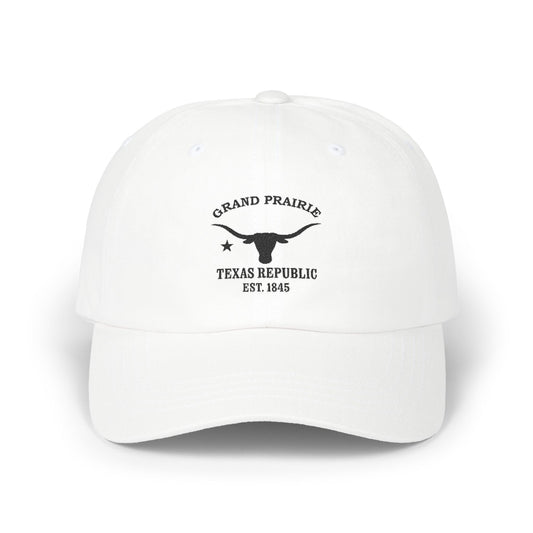
Grand Prairie Texas Vintage Retro Embroidered Cotton Cap - White Logo
Regular price $32.00 USDRegular price -
Grand Prairie Texas Vintage Retro Embroidered Cotton Cap - Black Logo
Regular price $32.00 USDRegular price -
Grand Prairie Texas Vintage Retro Unisex Heavy Cotton Tee - White Logo
Regular price $22.00 USDRegular price -
Grand Prairie Texas Vintage Retro Unisex Heavy Cotton Tee - Black Logo
Regular price $22.00 USDRegular price -
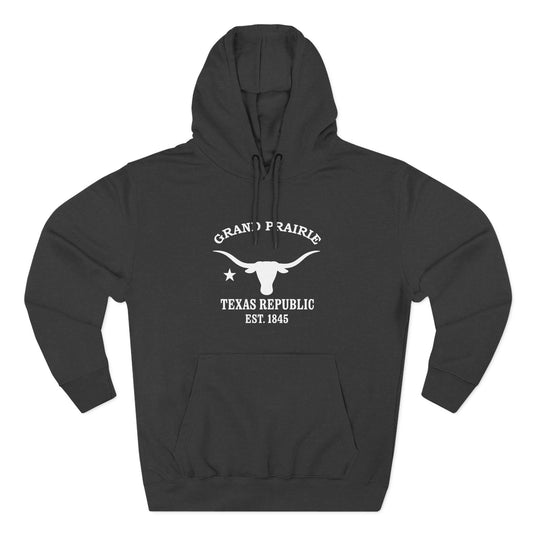
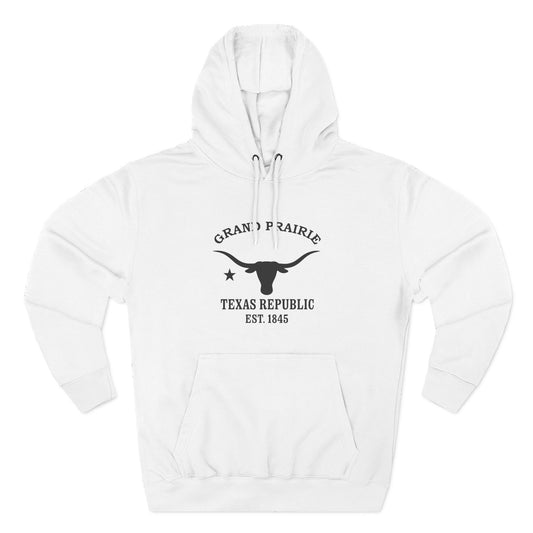
Grand Prairie Texas Vintage Retro Unisex Heavy Cotton Hoodie - White Logo
Regular price $56.00 USDRegular price -
Grand Prairie Texas Vintage Retro Unisex Heavy Cotton Hoodie - Black Logo
Regular price $56.00 USDRegular price -
-
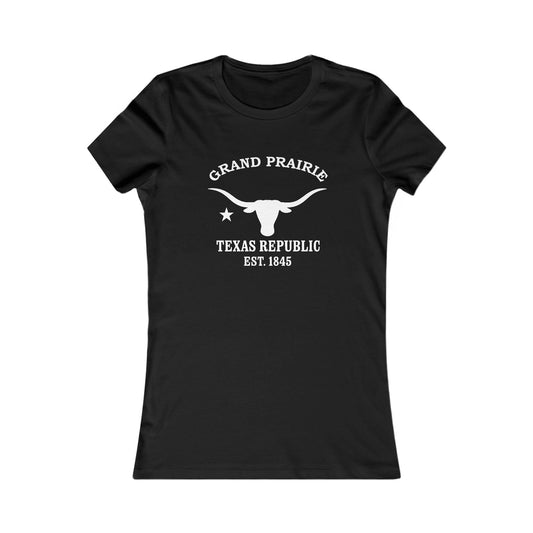
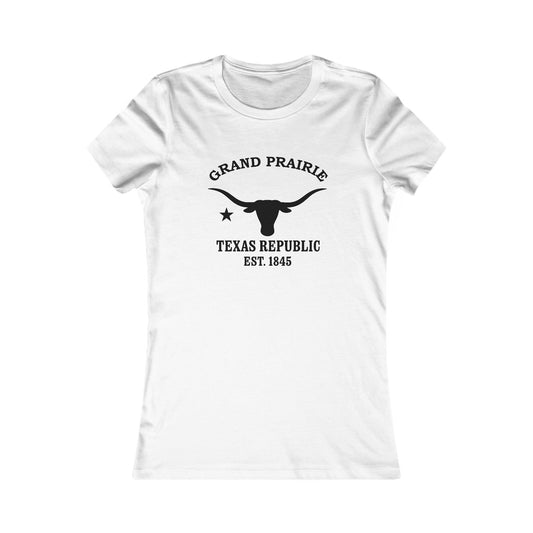
Grand Prairie Texas Vintage Retro Womens Fitted Ringspun Cotton Tee - Black Logo
Regular price $28.00 USDRegular price -
Grand Prairie Texas Vintage Retro Vinyl Sticker - Black Logo
Regular price From $6.00 USDRegular price -
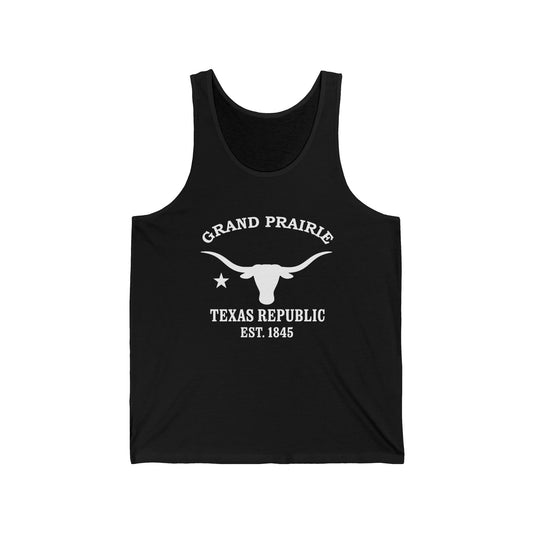
Grand Prairie Texas Vintage Retro Unisex Cotton Jersey Tank Top - White Logo
Regular price $28.00 USDRegular price -
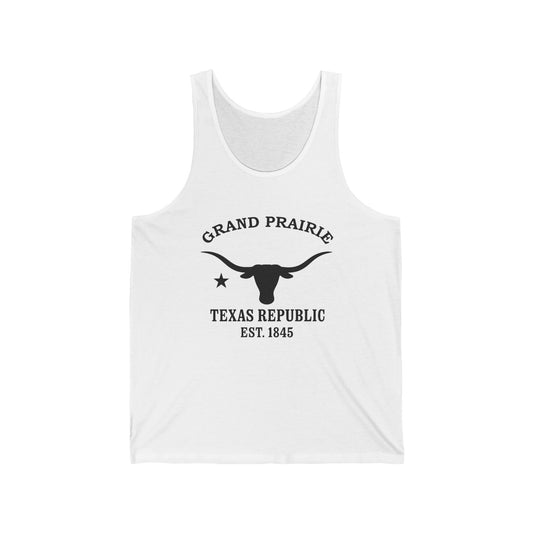
Grand Prairie Texas Vintage Retro Unisex Cotton Jersey Tank Top - Black Logo
Regular price $28.00 USDRegular price -
Grand Prairie Texas Vintage Retro Back Printed Art Series Cotton Tee - Black Logo
Regular price $32.00 USDRegular price -
Grand Prairie Texas Vintage Retro Giclée Print Art Series Poster
Regular price From $38.00 USDRegular price -
Grand Prairie Texas Vintage Retro Unisex Heavy Crewneck Sweatshirt - White Logo
Regular price $44.00 USDRegular price -
Grand Prairie Texas Vintage Retro Unisex Heavy Crewneck Sweatshirt - Black Logo
Regular price $44.00 USDRegular price -
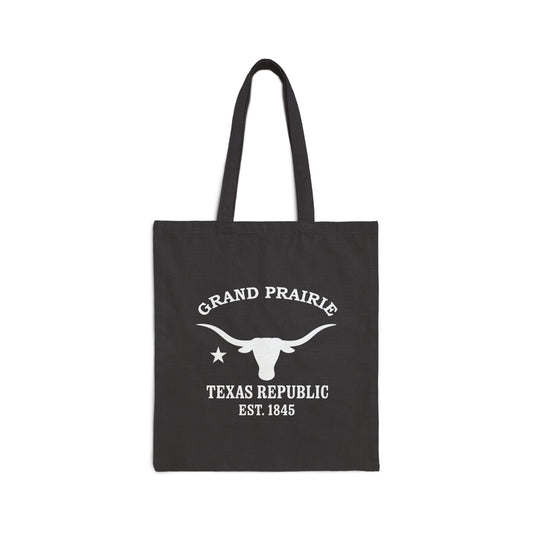
Grand Prairie Texas Vintage Retro Cotton Canvas Tote Bag - White Logo
Regular price $25.00 USDRegular price -
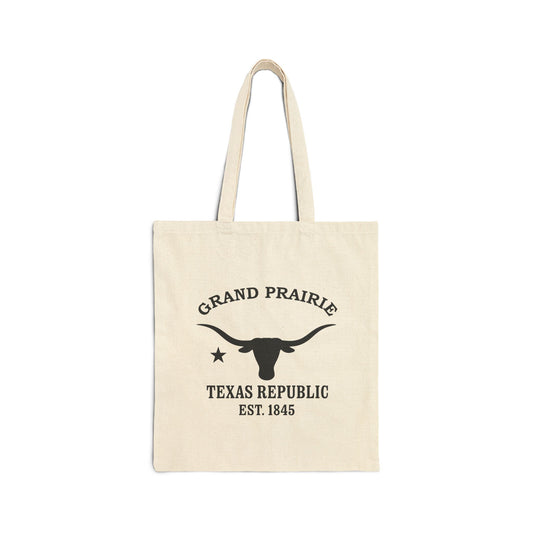
Grand Prairie Texas Vintage Retro Cotton Canvas Tote Bag - Black Logo
Regular price $25.00 USDRegular price -
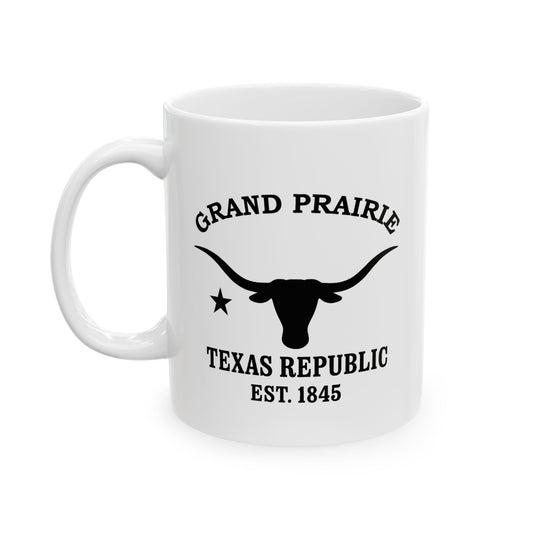
Grand Prairie Texas Vintage Retro Ceramic Mug - Black Logo
Regular price From $16.00 USDRegular price -
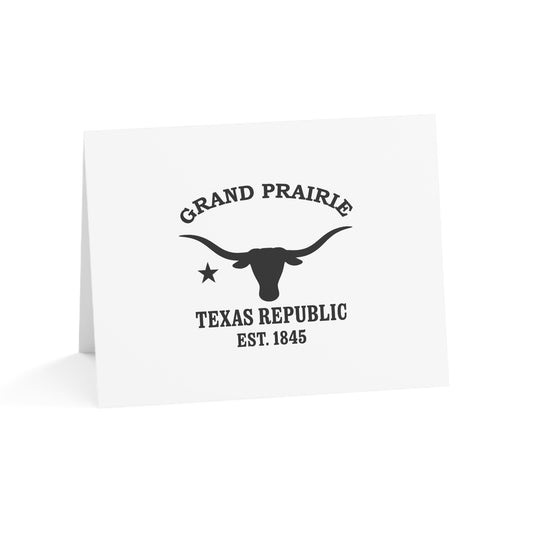
Grand Prairie Texas Vintage Retro Thank You Card Set - Black Logo
Regular price From $25.00 USDRegular price -
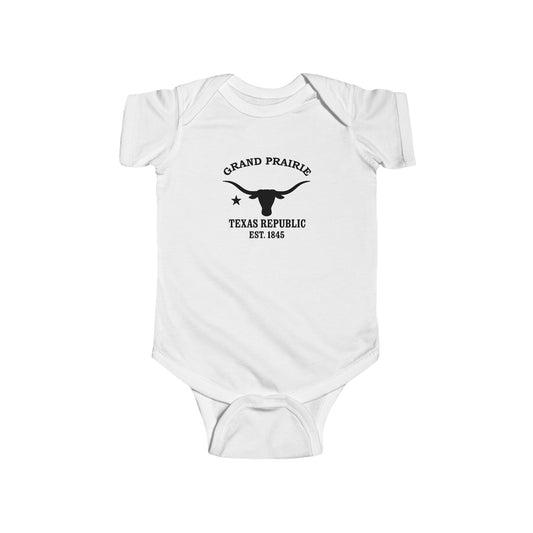
Grand Prairie Texas Vintage Retro Cotton Jersey Baby Bodysuit - Black Logo
Regular price $26.00 USDRegular price -
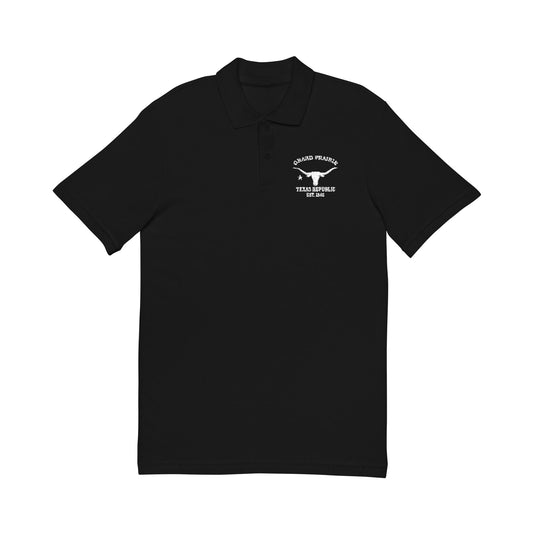
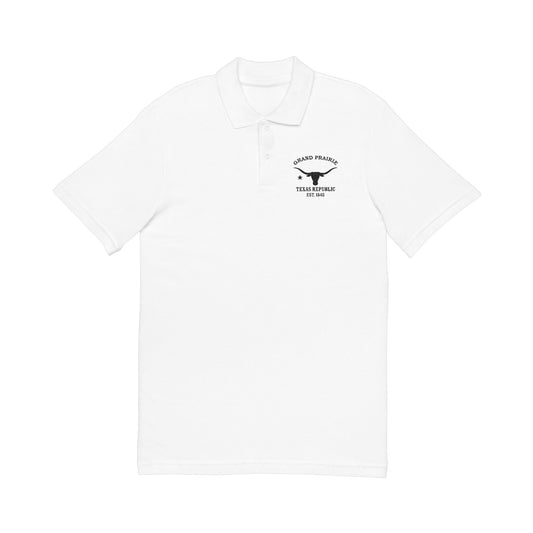
Grand Prairie Texas Vintage Retro Unisex Embroidered Cotton Polo - Black Logo
Regular price $48.00 USDRegular price -
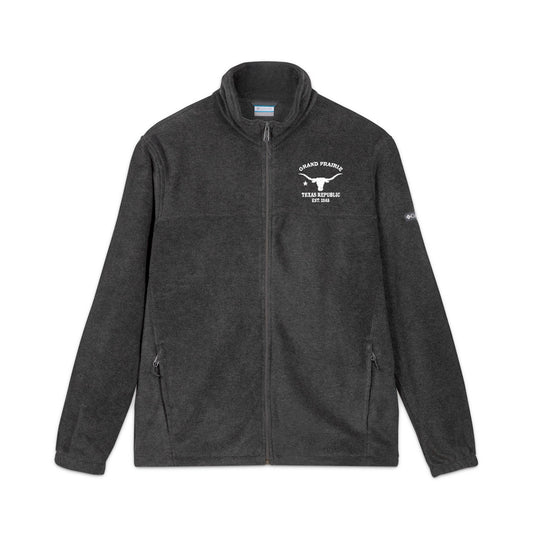
Grand Prairie Texas Vintage Retro Unisex Embroidered Fleece Jacket - White Logo
Regular price $98.00 USDRegular price






Grand Prairie Texas — Retro Vintage History
What’s with the Mustangs of Grand Prairie? Wild Spanish horses ranged this grassland into the 1850s, and ninety years later a plant on the same prairie built 4,790 Mustang fighters. The answer is two answers, and the second one borrowed its name from the first. Wild horses ran the North Texas prairies here into the 1850s, plentiful enough that the settlers who arrived didn’t bother inventing names for the creeks — they called one spring-fed branch Mustang Branch because Spanish horses ranged along it, and there is still a Mustang Creek running northeast into Tarrant County. Ninety years later, on that same grassland, a factory was turning out fighter planes called Mustangs at better than one aircraft an hour. Two kinds of Mustang, one prairie, and a word that crossed an ocean twice to get here.
Wear the HistoryWhere you're from. Where you love. Where you explored. Where you belong.
Start further back than Texas. Horses evolved on this continent and then vanished from it — gone from the Americas some ten thousand years ago, surviving only on the far side of the land bridge their ancestors had crossed. Every wild horse that has run the American plains since is descended from the ones that came back, and the ones that came back came in Spanish ships: Iberian horses with Barb blood in them, the tough, close-coupled stock of southern Spain and North Africa. The first of them on record in Texas arrived in 1542 with the Moscoso expedition — the remnant of De Soto's army, marching through the eastern pines looking for a way home to New Spain. The men eventually left by sea. Not every horse left with them.
Over the next two centuries, animals escaped, were traded, or were simply turned loose, and the ones that survived went wild on the grass. They spread north across the plains and became something the Spanish already had a word for — mesteño, roughly a horse belonging to the stockmen, a horse with no owner but the range. English wore the word down to mustang. By the 1800s they were the great curiosity of the Texas prairies: smaller and tougher than anything the settlers brought from the east, able to work all day on thin grass and bad water, which is exactly why every cattle range in Texas ended up running them.
The grasslands between the forks of the Trinity were that kind of country — open prairie, deep grass, few trees, and horses on it long before anyone drew a county line across it. This ground was Peters Colony prairie in the 1840s, crossed by trading paths, and the settlers who arrived didn't have to invent names for what they found: they called one spring-fed branch Mustang Branch because Spanish horses ranged along it, and there is still a Mustang Creek running northeast into Tarrant County. The names outlasted the herds.
The town arrived later, and it arrived for the railroad. In 1863 a settler named Alexander McRae Dechman founded the community first known as Dechman. When the Texas and Pacific reached the depot in 1876 the place became a rail town, and in 1877 the name the railroad used — taken from the great grassland the tracks ran across — became official. Grand Prairie incorporated in 1909 as a farming and ranching crossroads and stayed one for thirty years: a name taken from the land, and a founder's name taken off the map.
QUICK FACTS — GRAND PRAIRIE, TX
Founded in 1863 as Dechman by settler Alexander McRae Dechman; the railroad's name, Grand Prairie, became official in 1877
The Texas & Pacific reached the depot in 1876; the town incorporated in 1909
Wild Spanish mustangs ranged the grassland here — Mustang Creek still runs northeast into Tarrant County
In 1940 Grand Prairie held 1,595 people; that September, ground broke on the aircraft plant beside Hensley Field
The plant was the first windowless, fully air-conditioned, artificially lit aircraft factory in the United States
From August 1941 to August 1945 the plant built 12,967 Texan trainers, 966 Liberator bombers, and 4,790 Mustangs
The Navy's inland reserve base at Hensley Field — the "Prairie Navy" — was commissioned in May 1941
Lone Star Park opened in 1996, and thoroughbreds returned to the prairie
Then, in September 1940, ground broke on an aircraft plant beside Hensley Field, part of the industrial mobilization Roosevelt had just named the arsenal of democracy. Grand Prairie was a town of 1,595 people. What went up next to it was concrete and steel with no windows at all — the first fully air-conditioned, artificially lit aircraft factory in the country, a sealed box set down on a prairie where you can watch weather coming from miles off. The federal government built three hundred homes at Avion Village simply to house the people arriving to work in it, and at peak the line ran at better than one aircraft an hour. From August 1941 to August 1945 the plant turned out 12,967 Texan trainers, 966 Liberator bombers, and 4,790 Mustangs.
The fighter gets the posters, but the airplane the prairie built most was the trainer. The T-6 was so widely flown it answered to three names — Texan to the Army, SNJ to the Navy, Harvard to the British Commonwealth — and crews on every continent called it the Pilot Maker. It wasn't built to fight; it was built to teach, a fast, honest, unforgiving airplane, and nearly every American pilot of the war learned the feel of one before he learned anything else. Nearly thirteen thousand of them came off this one line.
And the fighter got its name secondhand. The British ordered the aircraft before America was in the war and flew it first, as the Mustang Mk I; the Americans wanted to call their version the Apache, tried it — the dive-bomber variant, the A-36, kept the name for a while — and then dropped it in favour of the British choice. Everyone agrees the British took the word from the wild horses of the American West. Nobody wrote down why. So the plane that came off a North Texas prairie carried a name the British had already borrowed from the animal that used to run it — the long way round, and back to the same grass.
The field next door has a story of its own. Hensley had been an army airfield since the 1920s, on land the city of Dallas bought and leased to the Army in 1928. In May 1941 the Navy commissioned a reserve aviation base on part of it, and somebody looked at the map, counted the hundreds of miles of dry country between that runway and the nearest ocean, and started calling it the Prairie Navy. The name stuck. What came through it is the strange part: fleet pilots and Marines, Coast Guard, the WAVES — the women who enlisted for emergency service and kept the place running — a contingent of Free French forces a long way from France, and three men who would later leave the atmosphere entirely. By the end of the war the field held 4,104 people.

After the war the aerospace work stayed and the prairie filled in around it — subdivisions, shopping, the Metroplex closing over the open ground from both directions. Then in 1996 Lone Star Park opened its grandstand and the horses came back to the prairie, thoroughbreds and quarter horses running spring and fall, with the Breeders' Cup brought to the grandstand in 2004. The quarter horse itself closes the circle: the foundation stock Texans still argue about — back to Steel Dust himself, the legend the breed's oldest arguments run through — carried the blood of the same Spanish horses that ran here before the fences. The return is less a coincidence than a long circle finally closing.

Our Grand Prairie logo carries the Texas longhorn and Lone Star, the emblem every Merlin Classics Texas place wears, set over “Texas Republic, Est. 1845.” The longhorn and the star are the state’s shorthand — endurance, independence, the open range — printed black-and-white with the worn look of an old barn brand or a rodeo bill. What makes this one Grand Prairie is what stands behind it: the grassland that named the town, the horses that ran it, and the aircraft that borrowed their name. On a tee or a cap it reads less like a souvenir than like a piece of North Texas, worn plain.
Today Grand Prairie stretches long and narrow across Dallas and Tarrant counties, from Mountain Creek Lake down toward Joe Pool, a Metroplex city that kept its prairie name. The runway is still there, now the Armed Forces Reserve Complex; the racing is still there; the grass is still the thing underneath all of it. Wild horses, fighter planes, and a grandstand — same ground, three centuries. Wear the history, and carry a little of it home.
Grand Prairie, Texas — Travel Guide
Visiting Grand Prairie, Texas Today
Grand Prairie sits squarely between Dallas and Fort Worth, one of the longer cities in Texas, running north to south across the prairie from Mountain Creek Lake down toward Joe Pool. It pairs lakefront parks and trails with family attractions, a rail-depot downtown, and the racing seasons at Lone Star Park. The land is flat and open, the horizon is long, and almost everything in the Metroplex is a short drive away.
The Prairie, the Lakes and the Racing
For visitors looking for things to do in Grand Prairie, Texas:
- Spend a day at Loyd Park on Joe Pool Lake, with trails, campsites, and boating access on the water at the city’s southern edge.
- Catch live thoroughbred and quarter-horse racing at Lone Star Park during the spring and fall meets.
- Walk the historic downtown around the Texas and Pacific rail depot, where the town began as a depot stop.
- Take in a show at the Uptown Theater, the restored downtown performance house.
- Browse the weekend stalls at Traders Village, a long-running open-air market.
- Cool off at the Epic Waters indoor waterpark, an easy rainy-day option for families.
- Drive the length of the city north to south for the prairie horizon and the two lakes that frame it.
Why People Visit Grand Prairie, Texas
People come for the central Metroplex location and the mix of prairie, lakes, and live racing — and stay curious about an aviation heritage most visitors never expect from a city between Dallas and Fort Worth. It is flat, friendly, and in the middle of everything, with a long horizon and a longer memory than its suburbs suggest.
Wear the HistoryWhere you're from. Where you love. Where you explored. Where you belong.
Kindred Cities
We're glad to welcome visitors from Birmingham, England and Essen, Germany (willkommen) — kindred industrial cities that built the things the century ran on.
Industrial bones show through in all three. Birmingham was the workshop of the British Empire; Essen forged the steel of the Ruhr; Grand Prairie built warplanes between Dallas and Fort Worth and still turns out aircraft today. Heavy-industry towns — and all three now mixing the factory with racetracks, parks and a second act.
Made-things cities will recognise Grand Prairie: an aviation heritage you can still hear overhead, horse racing and theme-park thrills, and the wide-open ground between two big Texas cities. Come and visit us soon.
When you plan the trip, Visit Grand Prairie — the city's tourism bureau — is the place to start.
Wear the History
Where you're from. Where you love. Where you explored. Where you belong.

For deeper reading on the Grand Prairie, Texas history described here — the Peters Colony prairie of the 1840s and the wild horses that ranged it, the 1863 founding as Dechman, the 1876 arrival of the Texas and Pacific Railway and the 1877 renaming, the 1909 incorporation, the wartime aircraft plant and the naval reserve base at Hensley Field, and the 1996 opening of Lone Star Park — it may be useful to consult (1) the Grand Prairie Historical Organization, (2) the Grand Prairie Memorial Library local-history collection, (3) the Texas State Library and Archives Commission together with the Texas Historical Commission marker files, (4) the Grand Prairie city secretary's records office and the Dallas and Tarrant county clerks for land and property records, and (5) the Dallas and Tarrant county historical commissions, with the Portal to Texas History and the Texas State Historical Association handbook for wider regional context. For travel and visitor information, it may be useful to contact (1) Visit Grand Prairie, (2) the Texas Office of Tourism, (3) the Grand Prairie Parks, Arts and Recreation department, (4) the Joe Pool Lake and Texas State Parks offices, and (5) the Grand Prairie chamber of commerce.