


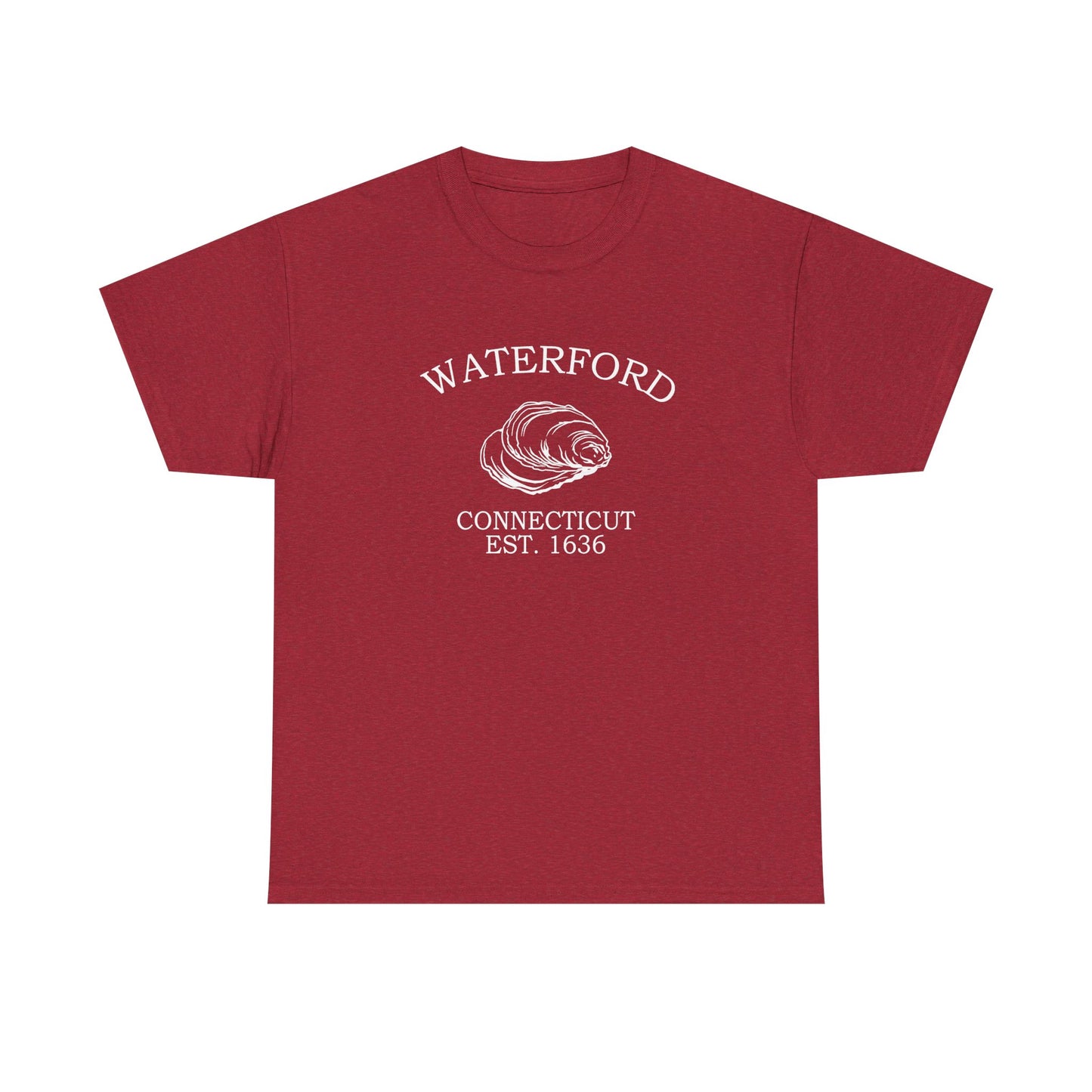
The town itself came later than its stone. For a century and a half this was the "West Farms" of New London — English colonists first raised crops on Fog Plain in 1645, and a sawmill turned at Quaker Hill by 1653. The farmers along the Sound eventually wanted a town of their own, and on October 8, 1801, Waterford was incorporated as Connecticut's 109th town. It took its name from the old city of Waterford in Ireland, a fitting borrow for a coast town. From the start it was a place of farms, fishing, and granite, strung along twenty-three miles of Long Island Sound shoreline.
So Waterford gathers granite quarries, a seaside estate, and a famous stage onto a granite coast on Long Island Sound. Our Waterford designs gather that into wearable form. Wear the history. Waterford, Connecticut — Eolia's gardens, a granite coast, and the long light of Long Island Sound.
Why People Visit Waterford
Visitors come to Waterford for an unspoiled stretch of the Connecticut coast: the gardens and mansion at Harkness, a famous playwriting center, granite-walled woods, and rocky beaches on Long Island Sound. It sits minutes from New London and the Mystic shoreline, with two state parks holding long reaches of open coast. Equal parts heritage and easy beach time, Waterford rewards anyone who likes the shore quiet and the history close at hand.
