






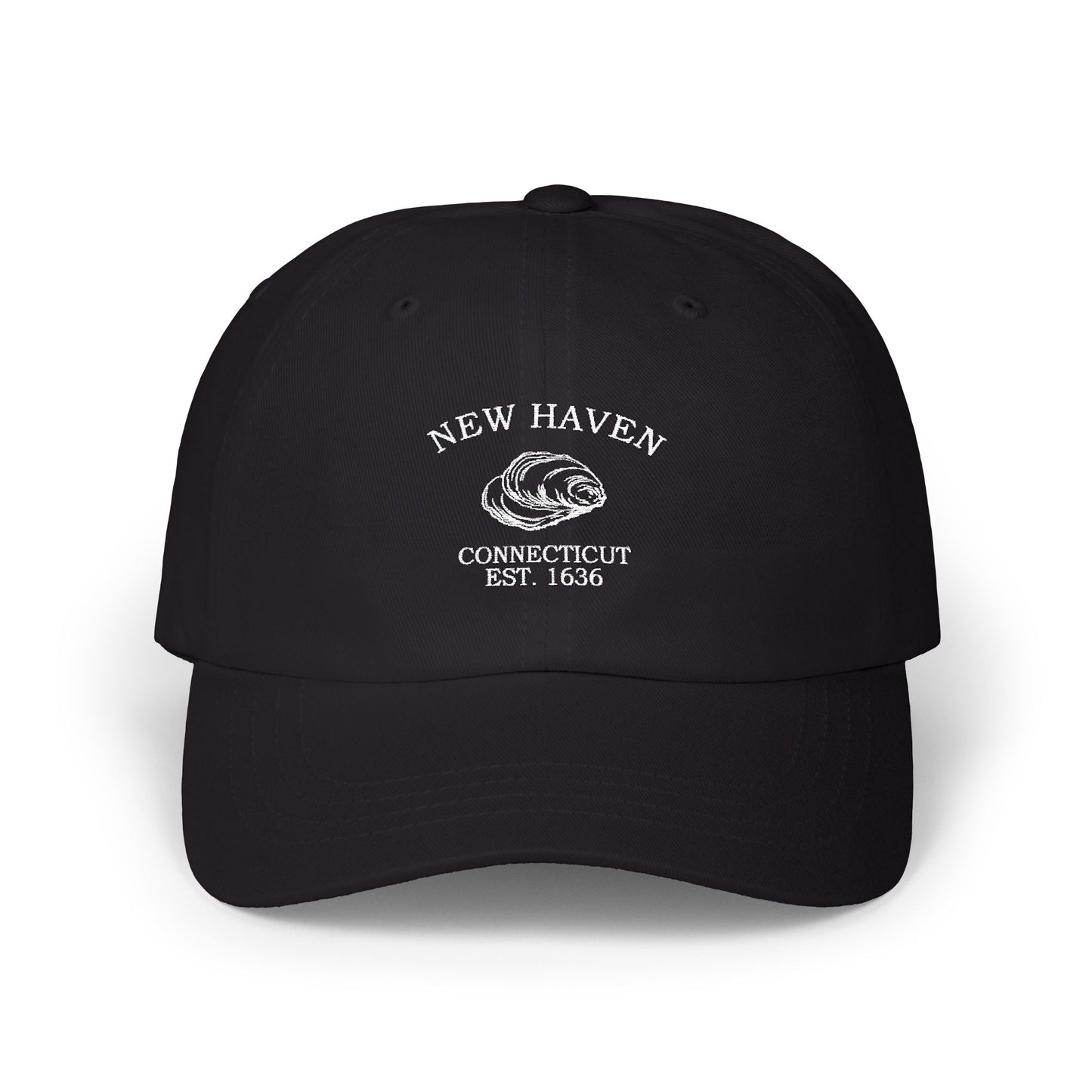
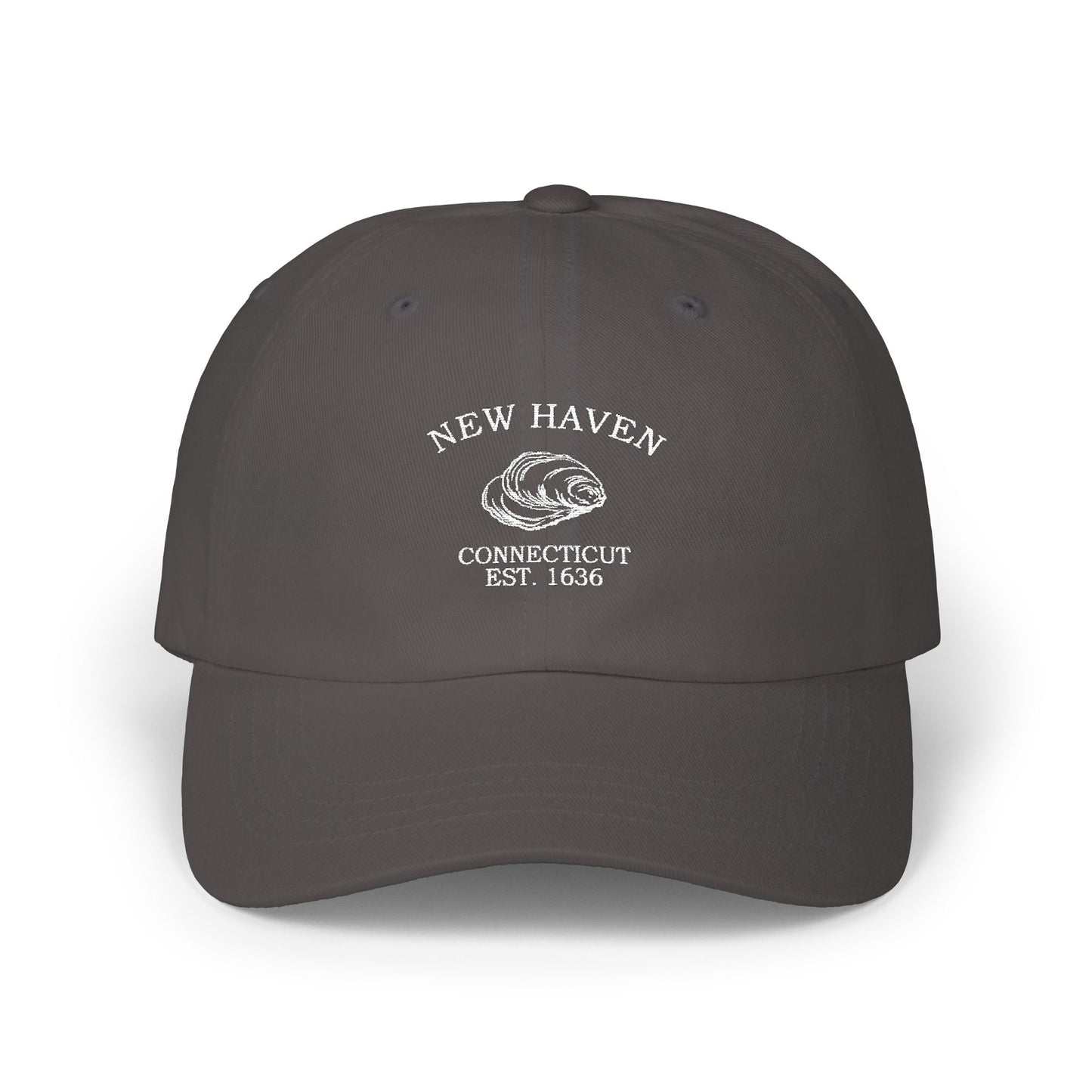

Our New Haven logo carries the same emblem every Merlin Classics Connecticut place wears — a Long Island Sound oyster, above "New Haven, Connecticut, Est. 1636," rendered in hand-printed black and white with a worn, vintage feel. The oyster is Connecticut's shoreline mark, the through-line that ties New Haven to every other Connecticut place we make — a nod to the Sound that built these towns. What makes this one New Haven is everything around it: the Elm City, the nine-square Green, the regicides' cave on West Rock. On a tee or a cap it reads less like a souvenir and more like a piece of the Connecticut shore — Est. 1636, worn plain.
The Elm City carried its history out loud. The Green and its three churches still mark the center square of Brockett's 1638 plan; the ridges of East and West Rock still rise over the rooftops; and the 1847 Five Mile Point Light still stands at the harbor mouth in Lighthouse Point Park, with its old carousel and its migrating birds. Somewhere along the way the city perfected the coal-fired, charred-crust pizza it calls apizza, argued over more passionately here than almost anywhere. Through four centuries, New Haven kept its colonial bones and its salt-water edge.
Why People Visit New Haven Connecticut
People come to New Haven for the layered history and the harbor — the first planned city in America, the regicides' cave, the lighthouse on the Sound — and for the museums, theaters, and the apizza the city argues about endlessly. It is compact, walkable, and deep: four centuries of New England on Long Island Sound.
