









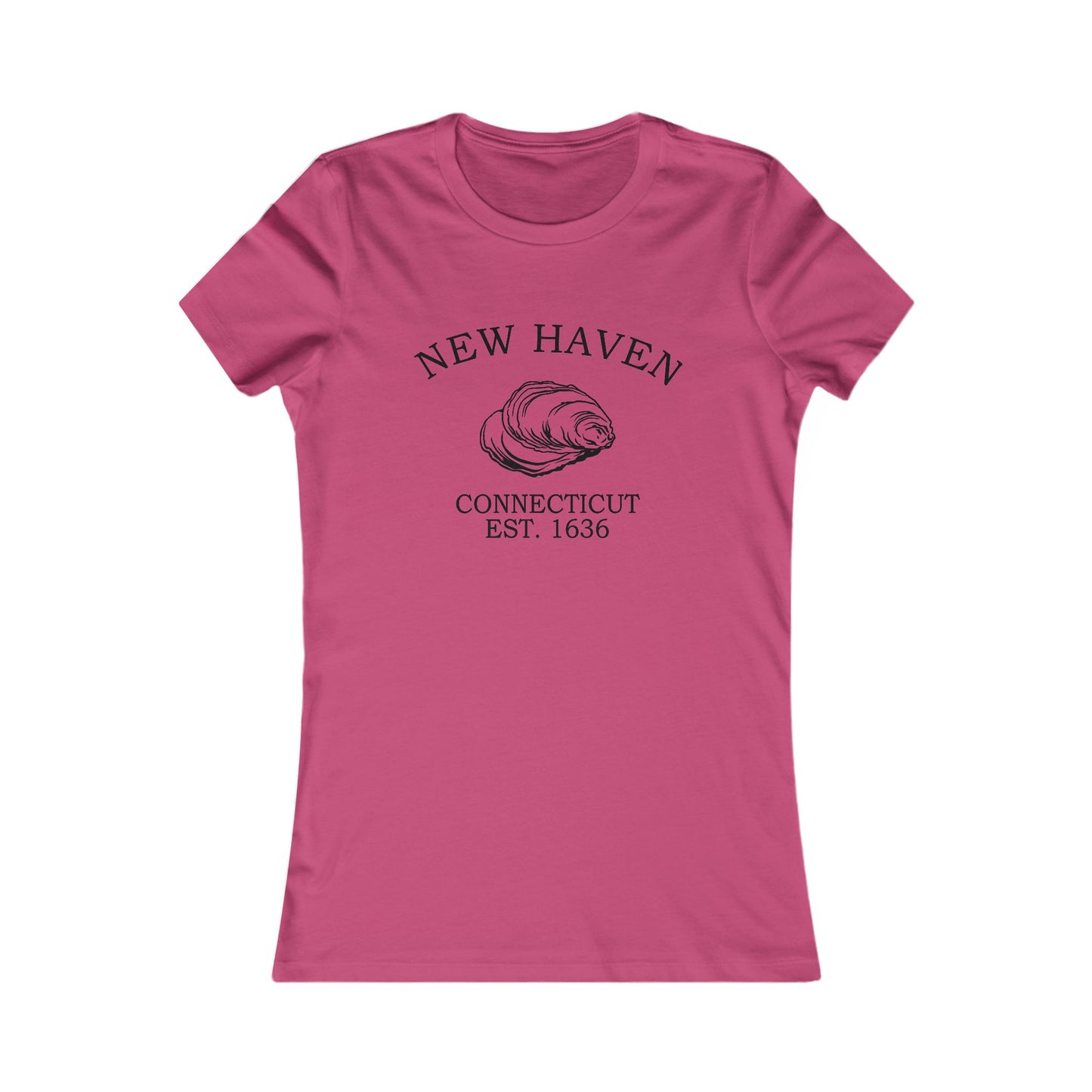
Our New Haven logo carries the same emblem every Merlin Classics Connecticut place wears — a Long Island Sound oyster, above "New Haven, Connecticut, Est. 1636," rendered in hand-printed black and white with a worn, vintage feel. The oyster is Connecticut's shoreline mark, the through-line that ties New Haven to every other Connecticut place we make — a nod to the Sound that built these towns. What makes this one New Haven is everything around it: the Elm City, the nine-square Green, the regicides' cave on West Rock. On a tee or a cap it reads less like a souvenir and more like a piece of the Connecticut shore — Est. 1636, worn plain.
The Elm City — America's first planned city, nine perfect squares laid out around a green in 1638. New Haven sits on Long Island Sound between the twin traprock ridges of East and West Rock — the Elm City of Connecticut. English Puritans laid it out in 1638 as the first planned city in America, nine squares around the New Haven Green, and within a generation it was hiding the men who had signed a king's death warrant in a cave on West Rock. Co-capital of Connecticut for the better part of two centuries, a Sound port lit by an 1847 brownstone lighthouse, and the birthplace of New Haven-style apizza. This page tells the story of the Elm City.
Why People Visit New Haven Connecticut
People come to New Haven for the layered history and the harbor — the first planned city in America, the regicides' cave, the lighthouse on the Sound — and for the museums, theaters, and the apizza the city argues about endlessly. It is compact, walkable, and deep: four centuries of New England on Long Island Sound.
