
The modern story starts in 1836, when Dr. Dwight Baldwin, a missionary doctor, settled on Maui. In 1853 he received a royal grant of about 2,675 acres of the West Maui uplands, and that grant — expanded by later purchases until it reached some 24,000 acres — became Honolua Ranch. For its first decades the ranch ran cattle and raised mixed crops: coffee, taro, mango, aloe. Baldwin's son, Henry Perrine Baldwin, saw bigger possibilities in the rich volcanic soil, and with a Scottish ranch manager named David Thomas Fleming — an avid horticulturist who planted the tall Cook and Norfolk pines that still line Kapalua's roads — he began turning the ranch toward a single, transforming crop.
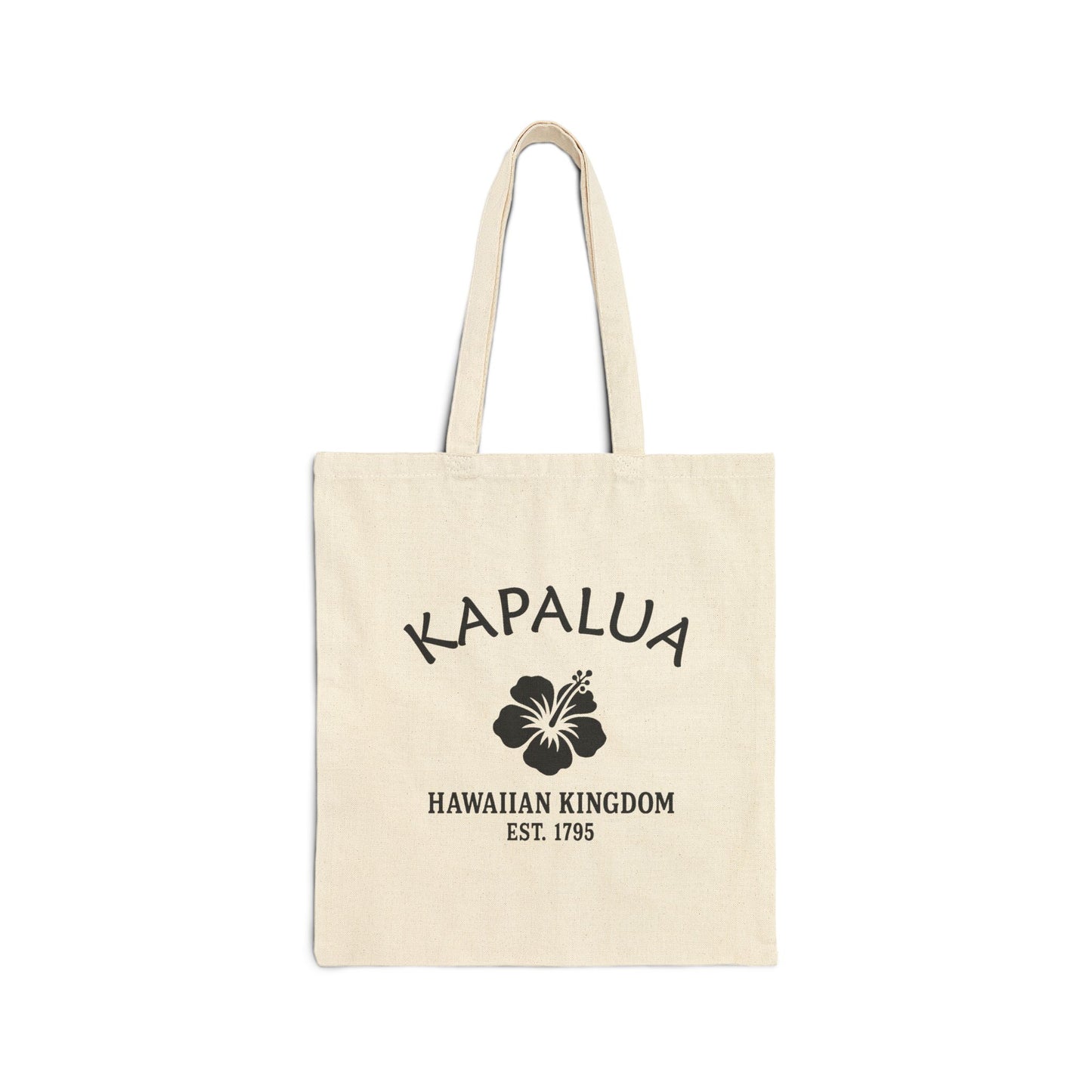
Our Kapalua logo carries the Hawaiian hibiscus above "Hawaiian Kingdom — Est. 1795," the shared retro emblem of our Hawaii towns; the hibiscus stands for the islands themselves, and 1795 marks the year Kamehameha I brought most of the Hawaiian Islands together into a single kingdom. Rendered in worn black-and-white, like a vintage travel decal or a fruit-crate label, it ties Kapalua to every other Hawaii place we make. What makes this one Kapalua is the story behind the mark — the embracing bay, the pineapple plantation, and the golf coast that grew up where the fields once ran.
Why People Visit Kapalua
Visitors come to Kapalua for the bays — the calm, reef-fringed water that earns the best-beach lists — and stay for the layered scenery: a manicured golf coast, plantation uplands, and the channel islands on the horizon. It is quiet, walkable, and built to let West Maui's landscape take the lead. Equal parts beach, history, and big ocean views, Kapalua rewards anyone who wants the Hawaiian coast at its most embracing.
