Long before any road reached the bay, Kachemak Bay was home to the Sugpiaq (Alutiiq) and Dena'ina peoples, who fished its rich waters and lived along its shores for generations. The bay's name itself comes down from that long history, and its abundance — salmon, halibut, shellfish, and seabirds — is the same abundance that would later give Homer its living. An honest account of the town begins with the people who read these waters first. Archaeologists even named an entire ancient culture — the Kachemak tradition — for the bay, a measure of how deep the human story here runs.
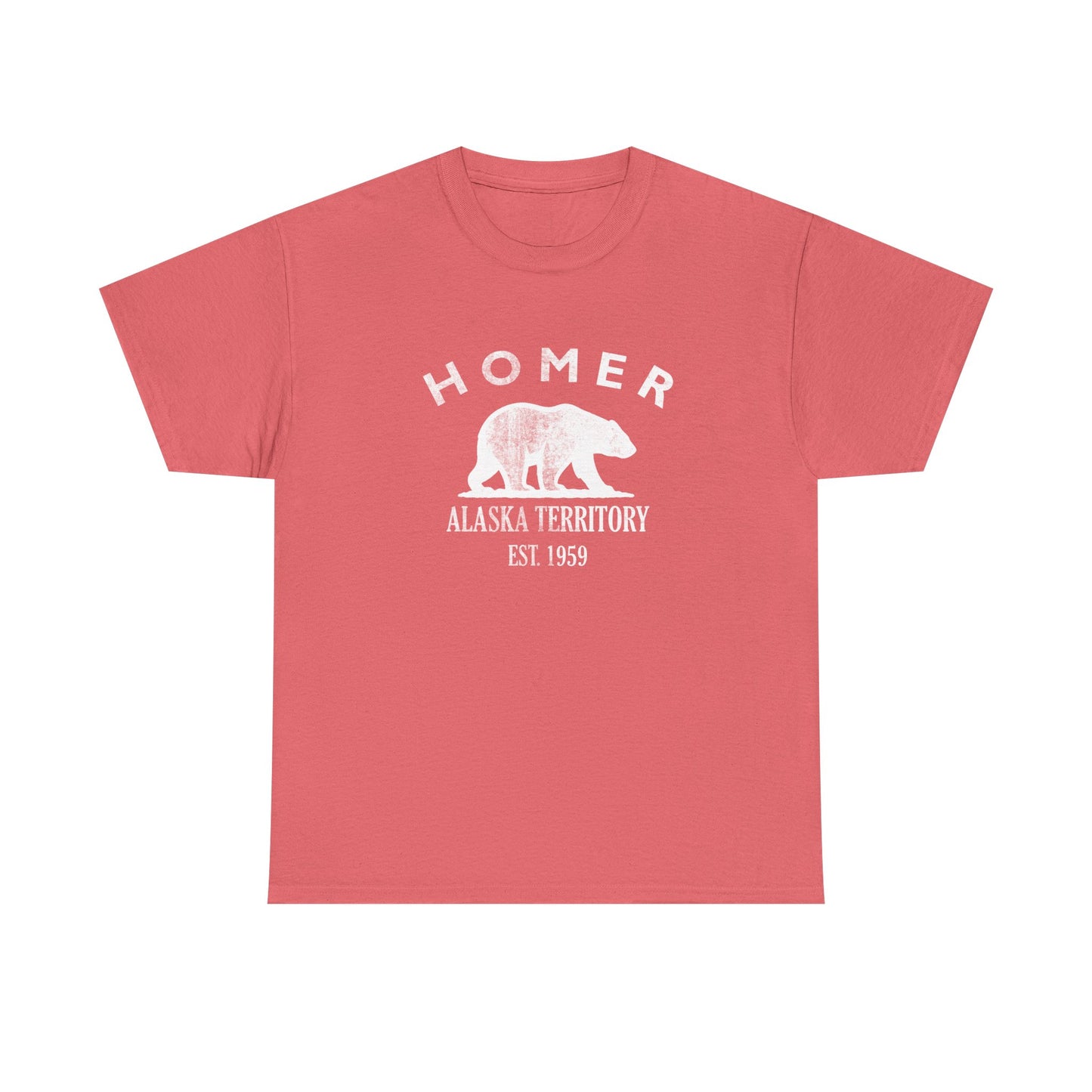
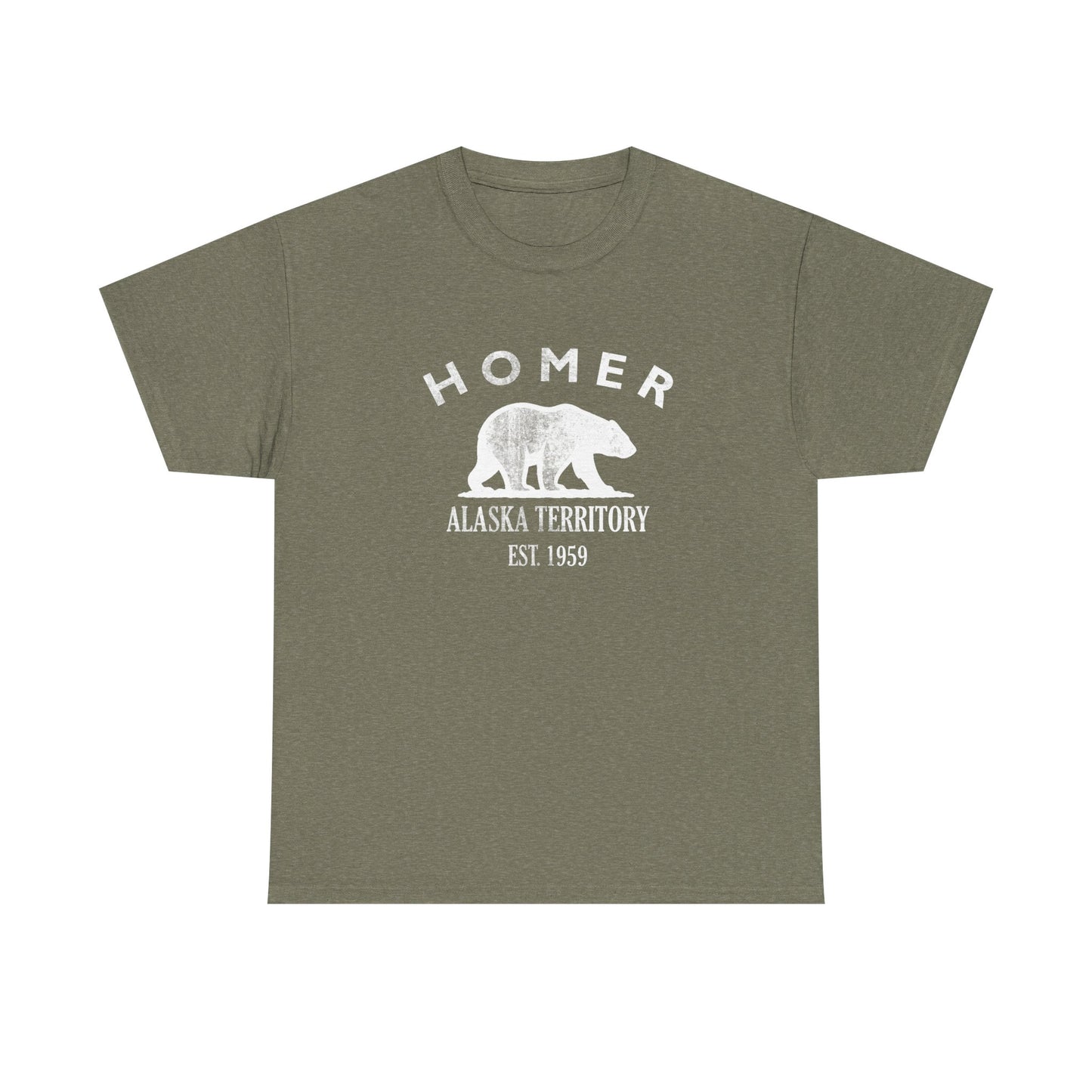
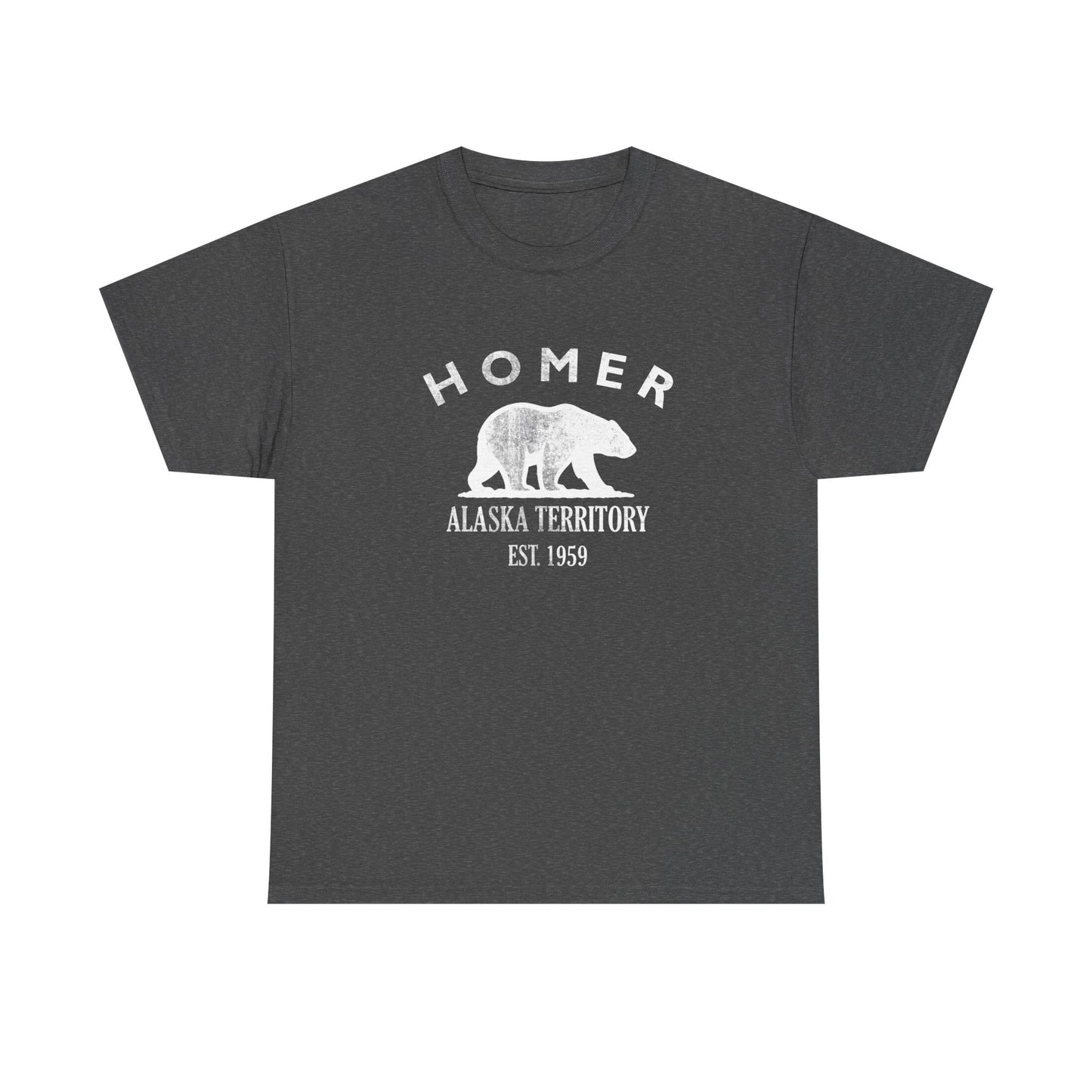
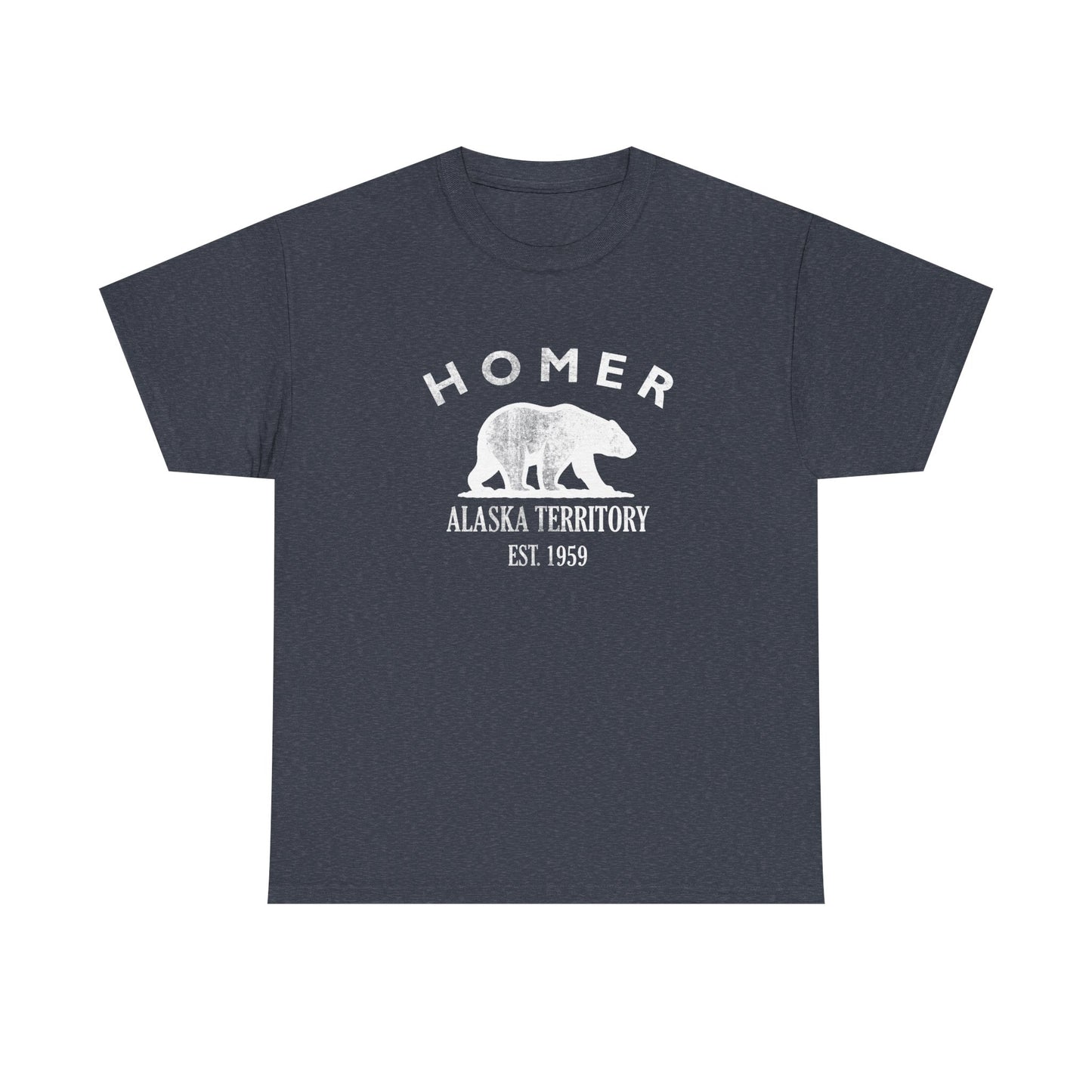
Today Homer is the end of the road and the start of the bay — a fishing town, an arts colony, and a jumping-off point for Kachemak Bay, all gathered onto and around its improbable Spit. Its story runs from a Sugpiaq and Dena'ina homeland through a failed coal venture to the Halibut Capital of the World it became. Our Homer designs gather that identity into wearable form — the bear-and-1959 emblem, the Spit, and the bay. Homer, Alaska: where the road ends and the water begins.
Why People Visit Homer
Homer offers Alaska at its most scenic and approachable — a working fishing port and arts town on one of the most beautiful bays in the state. Visitors come for the halibut charters, the Spit, and the wildlife and water excursions, and stay for the galleries, beaches, and unhurried end-of-the-road feel. From the harbor docks to the mountains across the bay, it rewards a slow few days. It is wild, creative, and welcoming in every season on Kachemak Bay.
