
The colony mattered far beyond the village. Twachtman, Weir, and Hassam were among the founders of The Ten American Painters in 1897, the group that carried Impressionism and the new styles across the country, and writers like Willa Cather and Lincoln Steffens stayed at the Holley House as well. For a few remarkable decades, a tiny Connecticut waterfront village sat close to the center of American art. Historians still count Cos Cob among the most important of the early American art colonies, its story set down in Susan Larkin's study, 'The Cos Cob Art Colony: Impressionists on the Connecticut Shore.'
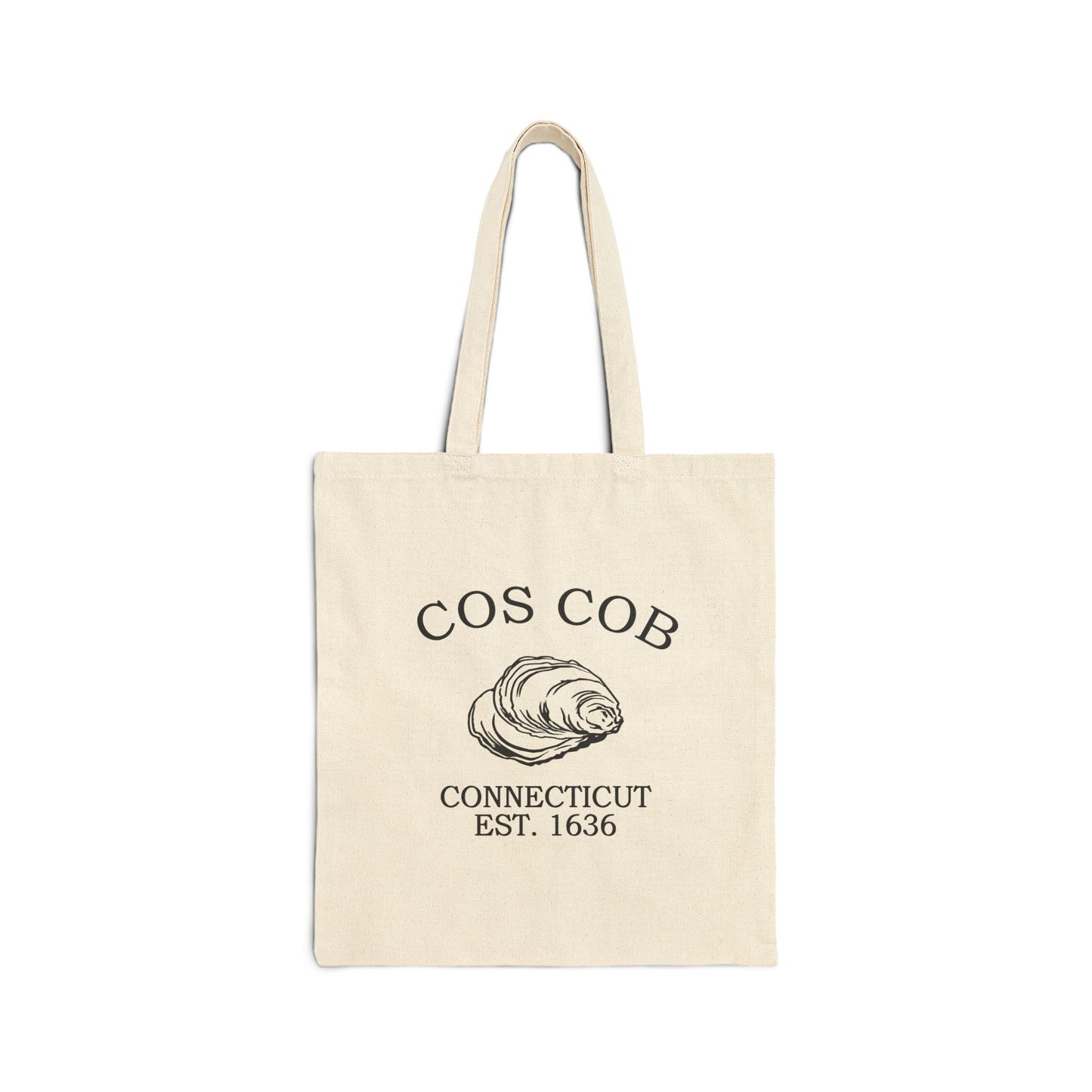
Our Cos Cob logo carries Connecticut's oyster above ‘Connecticut — Est. 1636,’ the shared retro emblem of our Connecticut towns; the oyster recalls the Long Island Sound shellfishing of the old waterfront village, and 1636 marks the founding of the colony. Rendered in black-and-white, like an old crate label, it ties Cos Cob to every other Connecticut town we make. What makes this one Cos Cob is the village behind the shell — the saltbox over the harbor and the painters on the riverbank.
Why People Visit Cos Cob
Cos Cob offers art heritage and green escapes in a small, walkable village. Visitors pair the Bush-Holley House and its Impressionist collection with river paths, harbor overlooks, and quiet historic streets. It is tranquil, residential, and close to the water, with year-round appeal in its parks, paths, and public spaces. History and everyday life sit side by side here, from the saltbox over the harbor to the trails along the Mianus.
