Waiʻanae Hawaii — Retro Vintage History
What's with the Cliff Keepers of Waiʻanae? Waiʻanae sits along the leeward coast where ridges rise fast and the ocean is always in view, changing color with wind and tide. From up high you can read the day before it reaches the beach: sets stacking, whitecaps forming, weather sliding down the line. Cliff Keepers is the name for the lookout habit, the idea that someone is always watching from above, not to control the ocean, but to understand it. The playful claim is that one wave of an arm from the ridge could start a whole shoreline moving, because the cliff sees what the sand cannot yet. Geography does the heavy lifting — height, sightlines, and a coast that rewards attention. Stand up there at sunset and you will start watching too.
Wear the HistoryWhere you're from. Where you love. Where you explored. Where you belong.
Mākaha Beach is one of the original homes of big-wave surfing. Native Hawaiians have lived along the leeward coast of Oʻahu for centuries; the Waiʻanae moku — the long ahupuaʻa district running from Kahe through Nānākuli, Mā'ili, Waiʻanae, Mākaha, and Mākua to Kaʻena Point — has its name from wai (water) and ʻanae (the prized mature mullet of the brackish muliwai pools that once produced fish in large amounts along these beaches). The Waiʻanae ahupuaʻa was the Royal Center of the district in the late 1600s and 1700s, with the largest population of the moku at the time of European contact in 1778. Kamehameha I unified the Hawaiian Islands in 1795. The first Christian missionaries arrived on Oʻahu in 1820, Stephen Waimalu was installed as the first Hawaiian minister of Waiʻanae in 1850, and Benjamin F. Dillingham received the franchise in 1888 to extend his Oahu Railway and Land Company along the Waiʻanae coast. Hawaiʻi entered the Union as the 50th state on August 21, 1959. In 1952, the Waikīkī Surf Club — founded by John Lind — and the Waiʻanae Lions Club organized what they called the Mākaha International Surfing Championships, and held the first running of the contest at Mākaha Beach in 1953-1954. It was the world's first international surfing competition. The event ran through 1971 as the unofficial world championships of surfing, and in 1962 it became the first televised surf contest ever, on ABC's Wide World of Sports. In 1969, Greg Noll caught what surfers of the era called the biggest wave ever ridden, at Mākaha; in 1977, the Mākaha-born lifeguard Richard "Buffalo" Keaulana — the 1960 Mākaha International champion, descended on his father's side from Kamehameha I and on his mother's side from Kekaulike — founded Buffalo's Big Board Surfing Classic at Mākaha Beach, and the Classic still runs every February. Behind Mākaha and Waiʻanae the Waiʻanae Mountain Range rises to Mount Kaʻala, the 4,025-foot summit that is the highest peak on Oʻahu. Mākaha Valley holds Kāneʻāki Heiau, a 15th-century wahi pana that the Bishop Museum restored in 1970 and opened to respectful public visits Tuesday through Sunday in 1990. On the Westside since time before contact.
QUICK FACTS — WAIʻANAE, HI
Waiʻanae is the heart of the Westside — the leeward coast of Oʻahu, home to one of the highest concentrations of Native Hawaiians and Pacific Islanders anywhere.
The name means “waters of the mullet” — an etymology so classically Hawaiian it is shared with Waikanae, New Zealand, half a Pacific away.
Mākaha Beach is a birthplace of big-wave surfing: the Mākaha International Surfing Championships, founded in 1952 by the Waikīkī Surf Club, were the world's first international surfing contest.
Kāneʻāki Heiau, built around the 15th century as an agricultural temple to Lono, is the most thoroughly restored ancient heiau in Hawaiʻi — excavated by the Bishop Museum in 1970 and open to visitors.
Mount Kaʻala, rising behind the coast, is the highest peak on Oʻahu at 4,025 feet.
Israel “IZ” Kamakawiwoʻole, whose “Over the Rainbow” carried Hawaiian music around the world, grew up on the Waiʻanae Coast.
Waiʻanae Boat Harbor is one of Oʻahu's great fishing ports — the home water of the coast's ahi fleet.
The Westside runs along Farrington Highway from Nānākuli through Mākaha to Kaʻena Point, where the road ends and the island's wild northwestern tip begins.
The Waiʻanae moku — sometimes called Waiʻanae Moku rather than translated to "the Waiʻanae District" — is the leeward division of Oʻahu, running from Kahe in the south to Kaʻena Point at the westernmost tip of the island. The Waiʻanae ahupuaʻa, sitting between the Mākaha and Lualualei ahupuaʻa, was the Royal Center of the district in the late 1600s and 1700s, with numerous important heiau and an estimated 4,000 to 6,000 residents at the time of European contact. Captain Cook's Resolution and Discovery first sighted the Hawaiian Islands on January 18, 1778, and Kamehameha I completed the unification of the islands in 1795. Pōkaʻī Bay, the protected swimming bay at Waiʻanae, takes its name from the voyaging chief Pōkaʻī of Kahiki who, in Hawaiian tradition, brought niu (coconut) to the islands; the bay once held the great coconut grove Ka Uluniu o Pokaʻī, noted by Western sailors in the 1700s. On the peninsula at Pōkaʻī Bay sits Kūʻīlioloa Heiau, the three-platform navigation heiau dedicated to Kū in his dog form Kūʻīlioloa. The Hawaiian creation tradition places the birth of the demigod Māui on this coast.

The Western era arrived in stages. The 1820 arrival of the first Christian missionaries on Oʻahu reached the Westside through Stephen Waimalu, who was installed as the first Hawaiian minister of Waiʻanae in 1850. The Treaty of Reciprocity in 1876 opened duty-free sugar exports to the United States, and a sugar-plantation economy followed. In 1888, Benjamin F. Dillingham obtained a franchise to extend his Oahu Railway and Land Company line along the Waiʻanae coast, ultimately running rail from Honolulu through Pearl Harbor and along the Westside past Kaʻena Point to Waialua and Kahuku. The Hawaiian Kingdom was overthrown in 1893, the islands were annexed by the United States in 1898, and Hawaiʻi entered the Union as the 50th state on August 21, 1959.
The Mākaha era began in the 1930s when Honolulu surfers first ventured west to ride the leeward-coast waves, and accelerated in 1952 when John Lind's Waikīkī Surf Club and the Waiʻanae Lions Club organized the Mākaha International Surfing Championships. The first running of the contest at Mākaha Beach in 1953-1954 was the world's first international surfing competition; the event grew through the 1950s and 1960s into the unofficial world championships, drew thousands of spectators out to the Westside every November and December, ran on ABC's Wide World of Sports in 1962 as the first televised surf contest ever, and continued at Mākaha until 1971 — when global surf attention shifted to the North Shore breaks at Pipeline and Sunset Beach. Greg Noll caught what surfers of the era called the biggest wave ever ridden, at Mākaha, in 1969. The Mākaha-born lifeguard Richard "Buffalo" Keaulana — born 1934, with a royal genealogy that ran through Kamehameha I on his father's side and Kekaulike on his mother's side, and the 1960 Mākaha International champion — founded Buffalo's Big Board Surfing Classic at Mākaha Beach in 1977, featuring canoe-surfing, tandem surfing, bullyboarding, bodysurfing, and longboards, and the Classic still runs every February. Behind the surf, in Mākaha Valley, Kāneʻāki Heiau is one of the most thoroughly restored ancient heiau in Hawaiʻi — a wahi pana that the Bishop Museum restored across the 1970s and opened to respectful public visits Tuesday through Sunday in 1990. The heiau is sacred ground; visitors observe quietly.
Today Waiʻanae is, above everything, a residential Native Hawaiian community on the leeward coast of Oʻahu: the long Waiʻanae moku running from Kahe to Kaʻena Point along Farrington Highway, the Waiʻanae Mountain Range rising to Mount Kaʻala behind it, Mākaha Beach and the big-wave surf credentials that started the world's first international surfing competition, the protected swimming waters of Pōkaʻī Bay, the working ahi-tuna port at the Waiʻanae Small Boat Harbor, and the long ahupuaʻa heritage that has carried these shores for centuries. Our Waiʻanae designs are made for that coast — the leeward Westside, the Royal Center of the moku, and the beach that taught the world what big-wave surfing looked like.
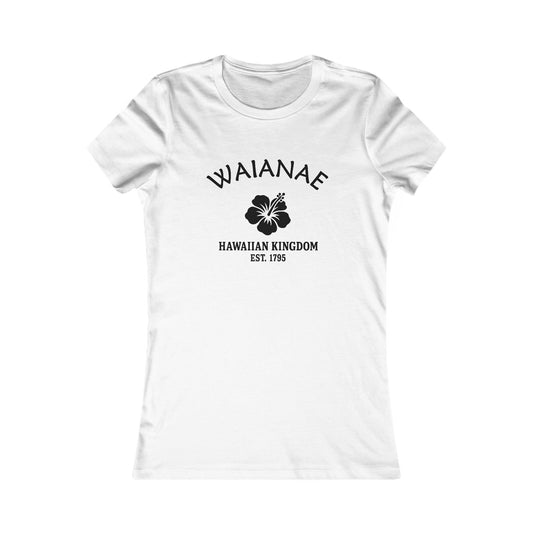
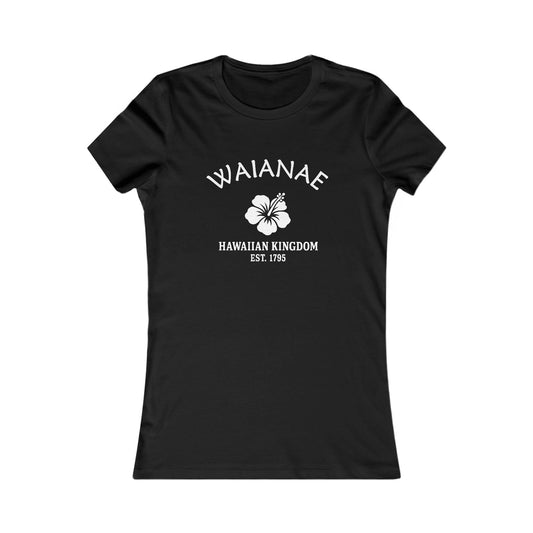
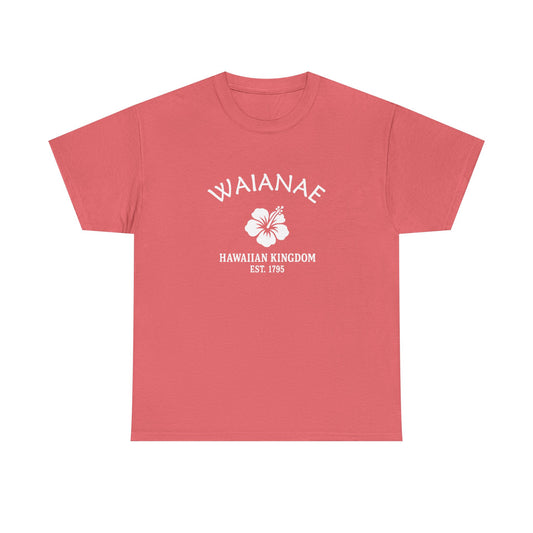
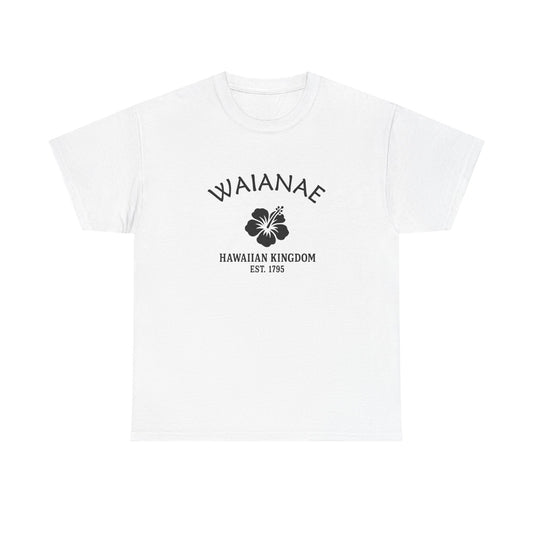
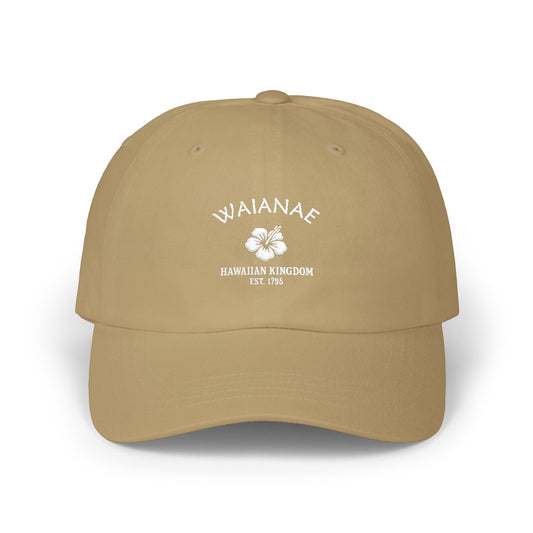
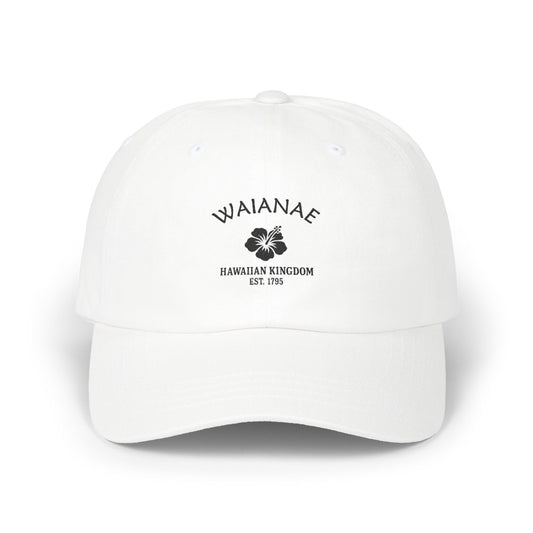
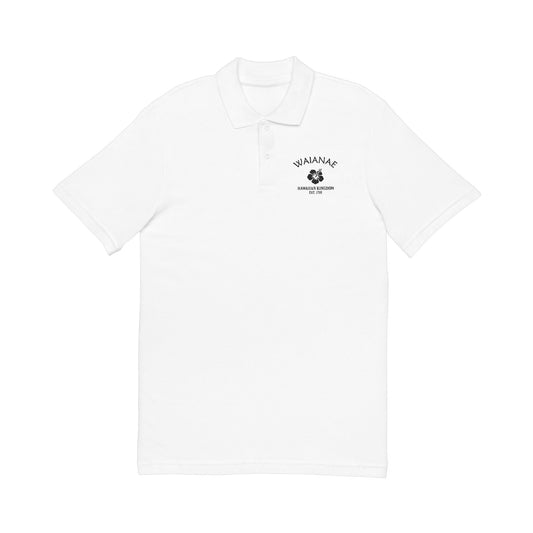
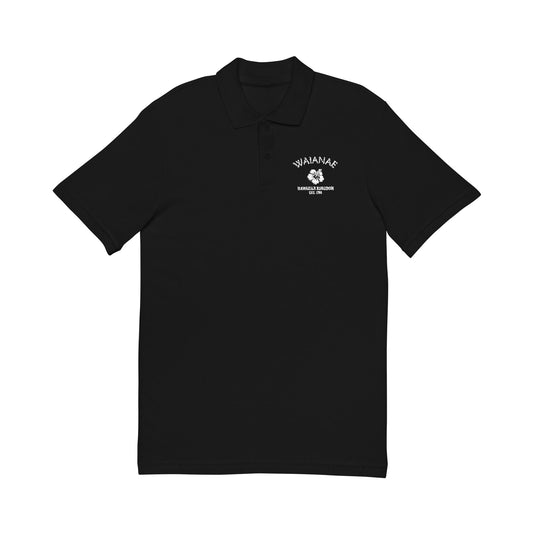
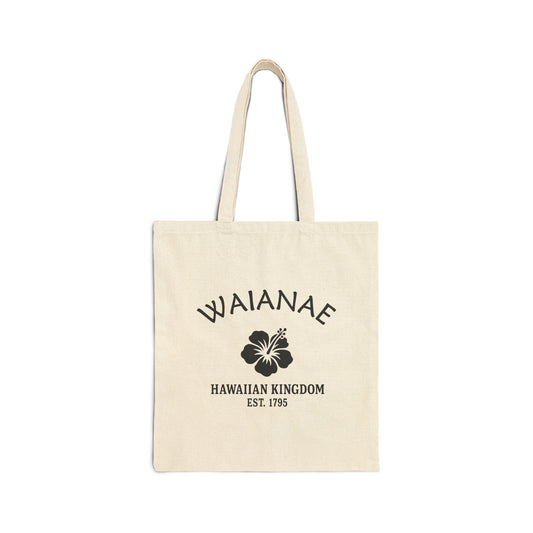
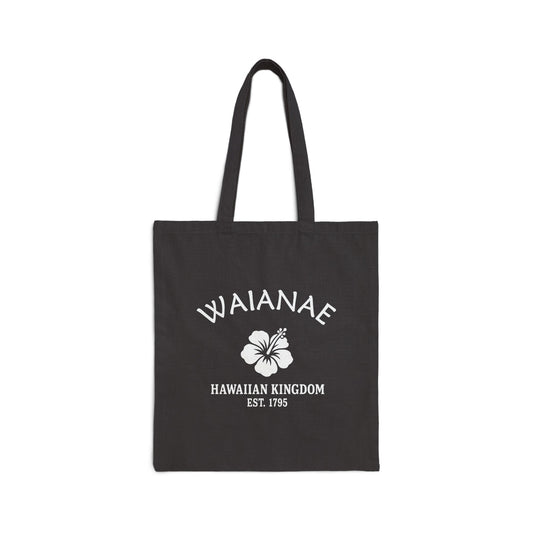
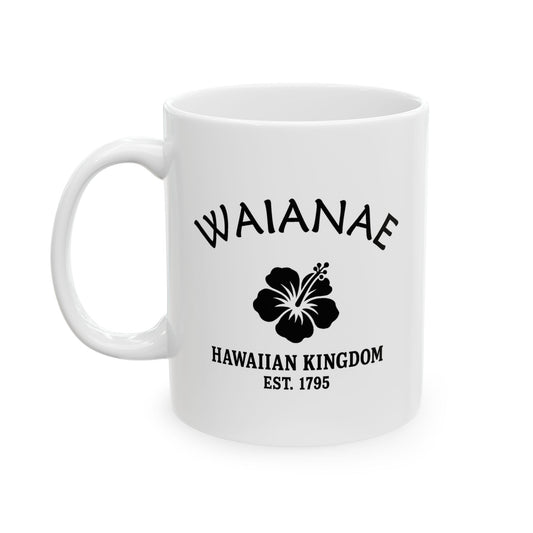
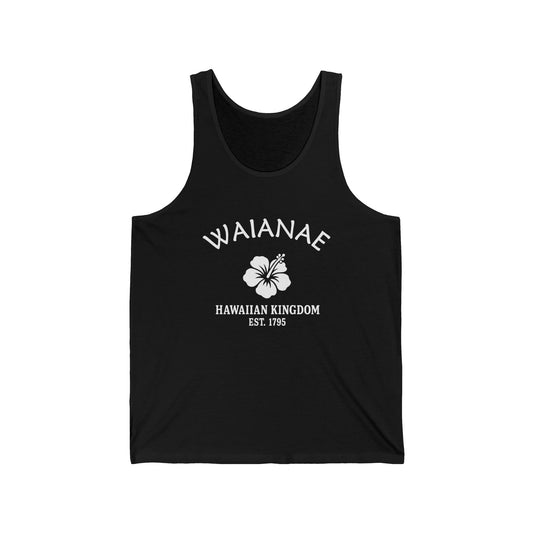
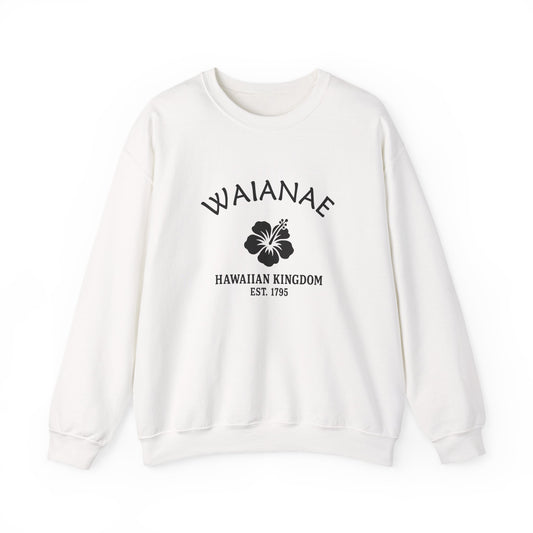
The Waiʻanae logo — our retro emblem — carries the hibiscus motif, the state flower of Hawaiʻi, and the date "1795" stamped beneath, for the year Kamehameha I unified the islands. The black-and-white styling is retro, in the vocabulary of travel decals and mid-century beach signage. The hibiscus and the date do the work of placing the design in the unification era of the islands — and the leeward coast that was the Royal Center of its moku, that hosted the world's first international surfing competition at Mākaha, and that stands beneath the highest summit on Oʻahu.
So the Westside gathers it all — the mullet waters of the old fishponds, the heiau under Kaʻala, the first big waves the world ever came to ride, and a community whose roots run deeper than contact. Our Waiʻanae designs gather that pride into wearable form. On the Westside since time before contact.

Waiʻanae Hawaiʻi — Travel Guide
Visiting Waiʻanae Hawaiʻi Today
Waiʻanae sits on the leeward coast of Oʻahu, 35 miles northwest of Honolulu along Farrington Highway. The Westside is primarily a Native Hawaiian and Pacific Islander residential community, not a tourist destination in the conventional sense; visitors who come are typically surf-pilgrims to Mākaha Beach or hikers heading for Mount Kaʻala or Kaʻena Point. Visit respectfully. The climate is leeward (drier and warmer than the windward side); winter (November to February) brings the big-wave season at Mākaha; summer (May through September) brings calmer water for swimming and snorkeling at Mākaha and Pōkaʻī Bay.
Mākaha Beach, Pōkaʻī Bay, Mount Kaʻala, and Kaʻena Point
For visitors searching for things to do in Waiʻanae Hawaiʻi:
- Watch the surf at Mākaha Beach Park — one of the original homes of big-wave surfing, with winter waves up to 25 feet off Mākaha Point. The 1953-1954 Mākaha International Surfing Championships were the world's first international surfing competition. Buffalo's Big Board Surfing Classic, founded by Buffalo Keaulana in 1977, runs every February. Powerful backwash and rip currents in winter; calmer water and good shore-side viewing in summer.
- Swim at Pōkaʻī Bay — the protected swimming bay at Waiʻanae, the safest swimming on the leeward coast, named for the voyaging chief Pōkaʻī of Kahiki who brought niu (coconut) to the Hawaiian Islands. The peninsula on the south side of the bay holds Kūʻīlioloa Heiau, the three-platform navigation heiau dedicated to Kū in his dog form; respect the site, do not climb the platforms.
- Visit Kāneʻāki Heiau in Mākaha Valley — one of the most thoroughly restored ancient heiau in Hawaiʻi, a wahi pana sacred site that the Bishop Museum restored in 1970 and opened to respectful public visits Tuesday through Sunday in 1990. Access through the Mākaha Valley road; check current visiting hours; this is sacred ground, observe quietly and follow posted respectful-access guidance.
- Hike toward Kaʻena Point State Park — the westernmost tip of Oʻahu, where the Waiʻanae and North Shore coasts meet, a seabird refuge and Hawaiian monk seal habitat, sacred in Hawaiian belief as the leaping place of souls. Walk in from the Waiʻanae side along the old Dillingham railroad bed.
- Look up at Mount Kaʻala — the 4,025-foot summit of the Waiʻanae Mountain Range, the highest peak on the island of Oʻahu, sacred in Hawaiian tradition and often cloud-shrouded. The summit access trail is challenging.
- Walk the Waiʻanae Small Boat Harbor on Pōkaʻī Bay — one of Oʻahu's principal commercial fishing harbors, with the ahi-tuna fleet and views toward the Waiʻanae Range.
- Stroll Mā'ili Beach Park — the long lawn and sandy beach park south of Waiʻanae along Farrington Highway.
- Drive Farrington Highway (Route 93) along the Waiʻanae moku from Nānākuli north through Mā'ili and Waiʻanae to Mākaha, with the Pacific on your left and the Waiʻanae Range on your right.
- Look for honu (Hawaiian green sea turtles) and Hawaiian monk seals along the leeward beaches — both protected; stay 50 feet away.
Why People Visit Waiʻanae Hawaiʻi
Waiʻanae offers the original home of big-wave surfing at Mākaha Beach, the world's first international surfing competition (1953-1954) and the long-running Buffalo's Big Board Surfing Classic, the protected swimming waters of Pōkaʻī Bay with its Pōkaʻī coconut-grove legend and Kūʻīlioloa Heiau, the 15th-century Kāneʻāki Heiau in Mākaha Valley, the 4,025-foot summit of Mount Kaʻala as the highest peak on Oʻahu, the westernmost tip of Oʻahu at Kaʻena Point, and the long Native Hawaiian heritage of the Waiʻanae moku that has carried this coast for centuries. It is the leeward Westside of Oʻahu — a residential community whose culture is alive, and where the world first watched surfers ride big waves on television. On the Westside since time before contact.
Wear the History
Where you're from. Where you love. Where you explored. Where you belong.
Kindred Cities
Welcome to visitors from Skye and Madeira (bem-vindos) — like-minded rugged coasts of proud, deep roots.
The Waiʻanae Coast is the wild, sun-baked west side of Oʻahu, where Native Hawaiian culture runs strong and the mountains fall steeply to the sea, and Skye and Madeira know that kind of country. Skye rears its jagged Cuillin peaks over the Hebrides, a heartland of Gaelic tradition; Madeira rises green and volcanic from the Atlantic; Waiʻanae guards its dry leeward shore beneath sharp ridgelines, a tight-knit community far from the tourist towers. Three rugged coasts that kept their own character.
Waiʻanae is built for the respectful traveler: the sunniest, driest beaches on Oʻahu, dramatic mountains tumbling to the water, the big surf of Mākaha, and a coast where local culture and aloha still run deep. Come and visit us soon.
When you plan the trip, the Oʻahu Visitors Bureau is the place to start.
Wear the History
Where you're from. Where you love. Where you explored. Where you belong.

For deeper reading on Waiʻanae, Hawaiʻi history described here — the long Native Hawaiian heritage of the Waiʻanae moku running from Kahe through Nānākuli, Mā'ili, Waiʻanae, Mākaha, and Mākua to Kaʻena Point, the wai-ʻanae name etymology from the prized mullet of the muliwai brackish-water pools, the late-1600s-and-1700s Royal Center status of the Waiʻanae ahupuaʻa, the Pōkaʻī voyaging-chief legend of the introduction of niu to the Hawaiian Islands and the Ka Uluniu o Pokaʻī coconut grove, the 1778 first European contact of the Captain Cook expedition, the 1795 unification of the Hawaiian Islands by Kamehameha I, the 1820 arrival of the first Christian missionaries on Oʻahu, the 1850 installation of Stephen Waimalu as the first Hawaiian minister of Waiʻanae, the 1876 Treaty of Reciprocity, the 1888 Benjamin F. Dillingham Oahu Railway and Land Company franchise along the Waiʻanae coast, the 1893 overthrow of the Hawaiian Kingdom, the 1898 American annexation, the August 21 1959 Hawaiʻi statehood, the 1952 Waikīkī Surf Club and Waiʻanae Lions Club organization of the Mākaha International Surfing Championships, the 1953-1954 first running of the contest at Mākaha Beach as the world's first international surfing competition, the 1962 first televised surf contest on ABC's Wide World of Sports, the 1969 Greg Noll big-wave ride at Mākaha, the 1970 Bishop Museum restoration of Kāneʻāki Heiau, the 1971 final running of the Mākaha International at Mākaha, the 1977 Buffalo Keaulana founding of Buffalo's Big Board Surfing Classic, and the 1990 opening of Kāneʻāki Heiau to respectful public visits — it may be useful to consult (1) the Bernice Pauahi Bishop Museum in Honolulu, the state museum of Hawaiian natural and cultural history and the primary scholarly repository for Hawaiian-Islands archaeology and the 1970 Kāneʻāki Heiau restoration records, (2) the Hawaiian State Archives in Honolulu for the Kingdom-era records, the 1850 Waiʻanae minister-of-record documents, and the 1888 Oahu Railway and Land Company franchise papers, (3) the Hawaiʻi State Library Hawaiian Collection on King Street in Honolulu for the Honolulu Advertiser and Honolulu Star-Bulletin microfilm runs covering the Westside, the Sanborn fire insurance maps for the Waiʻanae plantation era, and the Hawaiian-language newspapers, (4) the University of Hawaiʻi at Mānoa Hawaiian Collection at Hamilton Library for the Place Names of Hawaiʻi (Pukui, Elbert, Mookini) records, the ʻōlelo Hawaiʻi linguistic studies, and the academic Waiʻanae-moku ethnographic literature, (5) the Lyman House Memorial Museum and the Mission Houses Museum in Honolulu for the 1820-forward missionary-era records, including Stephen Waimalu, (6) the Hawaiian Historical Society at Mission Houses for the long-running Hawaiian Journal of History, (7) the Encyclopedia of Surfing and the surfing-archive collections (Surfing Heritage and Culture Center, the Waikīkī Surf Club archive) for the 1952-onward Mākaha International Surfing Championships records, the 1962 ABC Wide World of Sports footage, the 1969 Greg Noll big-wave coverage, and the 1977-forward Buffalo's Big Board Surfing Classic documentation, (8) the Bishop Museum Archaeology Department for the Kāneʻāki Heiau excavation and restoration documentation, and (9) the Waiʻanae Hawaiian Civic Club for community-rooted Westside cultural records. For deeper local Waiʻanae research, it may be useful to reach out to (1) the Bishop Museum, (2) the Hawaiian State Archives, (3) the Hawaiʻi State Library Hawaiian Collection, (4) the University of Hawaiʻi at Mānoa Hawaiian Collection at Hamilton Library, (5) the Waiʻanae Hawaiian Civic Club, (6) the Hawaiian Historical Society, and (7) the Mission Houses Museum. For travel and visitor information in Waiʻanae, it may be useful to contact (1) the Hawaiʻi Tourism Authority for statewide tourism information, (2) the Hawaiʻi Department of Land and Natural Resources for Kaʻena Point State Park information, (3) the City and County of Honolulu Parks and Recreation Department for Mākaha Beach Park, Pōkaʻī Bay, Mā'ili Beach Park, and the Waiʻanae Small Boat Harbor information, (4) the Bishop Museum for Kāneʻāki Heiau respectful-access information and visiting hours, (5) the Mākaha-area surf-history community for Buffalo's Big Board Surfing Classic event details, and (6) the Waiʻanae Hawaiian Civic Club for community-rooted Westside cultural events. Readers interested in the broader cultural reception of Waiʻanae and its leeward-coast identity — the long Native Hawaiian heritage of the Waiʻanae moku before contact, the Pōkaʻī voyaging-chief legend, the late-1600s-and-1700s Royal Center status, the 1778 Cook expedition contact, the 1795 Kamehameha unification, the 1820 missionary arrival, the 1850 first Hawaiian minister of Waiʻanae, the 1876 Treaty of Reciprocity, the 1888 Dillingham Oahu Railway franchise, the 1893 overthrow and 1898 annexation, the 1959 statehood, the 1952-1971 Mākaha International Surfing Championships, the 1962 first televised surf contest, the 1969 Greg Noll wave, the 1970 Kāneʻāki Heiau restoration, the 1977 Buffalo's Big Board Surfing Classic founding, and the 1990 Kāneʻāki Heiau public opening — will find that the named places (the Waiʻanae moku, the Waiʻanae ahupuaʻa, Mākaha Beach Park, Mākaha Valley, Kāneʻāki Heiau, Pōkaʻī Bay, Kūʻīlioloa Heiau, the Waiʻanae Small Boat Harbor, Mount Kaʻala, the Waiʻanae Mountain Range, Kaʻena Point State Park, Kaneana Cave, Mākua Valley, Mā'ili and Mā'ili Beach Park, Lualualei Valley, Nānākuli, Farrington Highway, and the surrounding island sites at Honolulu, Pearl Harbor, Kapolei, and the North Shore of Oʻahu), the named historical figures (Kamehameha I, Captain James Cook, Benjamin F. Dillingham, John Lind, Richard "Buffalo" Keaulana, and the voyaging chief Pōkaʻī), and the named historical moments (the Native Hawaiian Waiʻanae moku settlement centuries before European contact, the late-1600s-and-1700s Royal Center status, the 1778 Cook expedition, the 1795 unification, the 1820 missionary arrival, the 1850 Stephen Waimalu installation, the 1876 Treaty of Reciprocity, the 1888 Dillingham railroad franchise, the 1893 overthrow and 1898 annexation and 1959 statehood, the 1952 Mākaha International Surfing Championships founding by John Lind and the Waikīkī Surf Club with the Waiʻanae Lions Club, the 1953-1954 first running at Mākaha Beach as the world's first international surf competition, the 1962 ABC Wide World of Sports first televised surf contest, the 1969 Greg Noll big-wave ride at Mākaha, the 1970 Bishop Museum restoration of Kāneʻāki Heiau, the 1971 final running of the Mākaha International, the 1977 Buffalo Keaulana founding of Buffalo's Big Board Surfing Classic, and the 1990 opening of Kāneʻāki Heiau to respectful Tuesday-through-Sunday public visits) recur across all of these traditions as a shared cultural grammar of foundational Waiʻanae history grounded specifically on the leeward coast of Oʻahu under the highest peak on the island.
Shop the Waiʻanae Hawaiʻi collection
View full collection-
Waianae Hawaii Vintage Retro Premium Crewneck Sweatshirt - Black Logo
Regular price $48.00 USDRegular price -
Waianae Hawaii Vintage Retro Premium Crewneck Sweatshirt - White Logo
Regular price $48.00 USDRegular price -
Waianae Hawaii Vintage Retro Unisex Heavy Cotton Hoodie - Black Logo
Regular price $56.00 USDRegular price -
Waianae Hawaii Vintage Retro Unisex Heavy Cotton Hoodie - White Logo
Regular price $56.00 USDRegular price -
Waianae Hawaii Vintage Retro Womens Fitted Ringspun Cotton Tee - Black Logo
Regular price $28.00 USDRegular price -
-
Waianae Hawaii Vintage Retro Unisex Heavy Cotton Tee - White Logo
Regular price $22.00 USDRegular price -
Waianae Hawaii Vintage Retro Unisex Heavy Cotton Tee - Black Logo
Regular price $22.00 USDRegular price -
Waianae Hawaii Vintage Retro Back Printed Art Series Cotton Tee - Black Logo
Regular price $32.00 USDRegular price -
Waianae Hawaii Vintage Retro Giclée Print Art Series Poster
Regular price From $38.00 USDRegular price -
Waianae Hawaii Vintage Retro Embroidered Cotton Cap - White Logo
Regular price $32.00 USDRegular price -
Waianae Hawaii Vintage Retro Embroidered Cotton Cap - Black Logo
Regular price $32.00 USDRegular price -
Waianae Hawaii Vintage Retro Unisex Embroidered Cotton Polo - Black Logo
Regular price $48.00 USDRegular price -
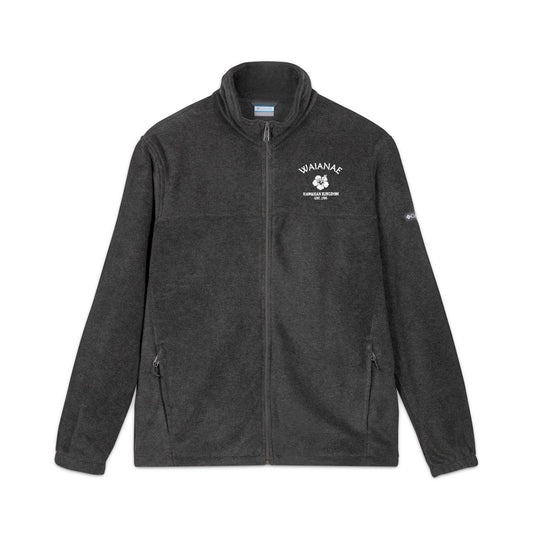
Waianae Hawaii Vintage Retro Unisex Embroidered Fleece Jacket - White Logo
Regular price $98.00 USDRegular price -
Waianae Hawaii Vintage Retro Cotton Canvas Tote Bag - Black Logo
Regular price $25.00 USDRegular price -
Waianae Hawaii Vintage Retro Cotton Canvas Tote Bag - White Logo
Regular price $25.00 USDRegular price -
Waianae Hawaii Vintage Retro Ceramic Mug - Black Logo
Regular price From $16.00 USDRegular price -
Waianae Hawaii Vintage Retro Vinyl Sticker - Black Logo
Regular price From $6.00 USDRegular price -
Waianae Hawaii Vintage Retro Thank You Card Set - Black Logo
Regular price From $25.00 USDRegular price -
Waianae Hawaii Vintage Retro Cotton Jersey Baby Bodysuit - Black Logo
Regular price $26.00 USDRegular price -
Waianae Hawaii Vintage Retro Unisex Cotton Jersey Tank Top - Black Logo
Regular price $28.00 USDRegular price -
Waianae Hawaii Vintage Retro Unisex Cotton Jersey Tank Top - White Logo
Regular price $28.00 USDRegular price -
Waianae Hawaii Vintage Retro Unisex Heavy Crewneck Sweatshirt - Black Logo
Regular price $44.00 USDRegular price