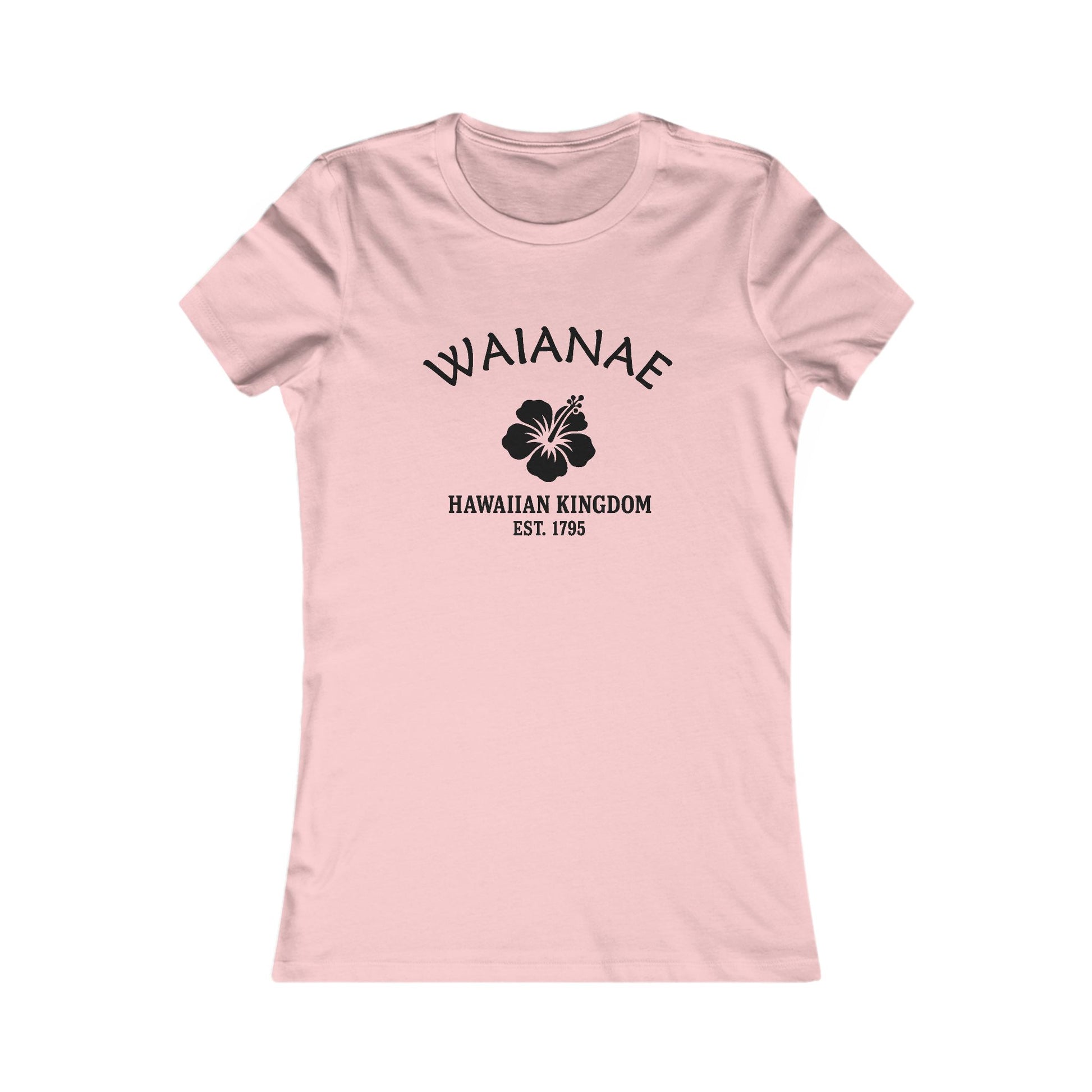
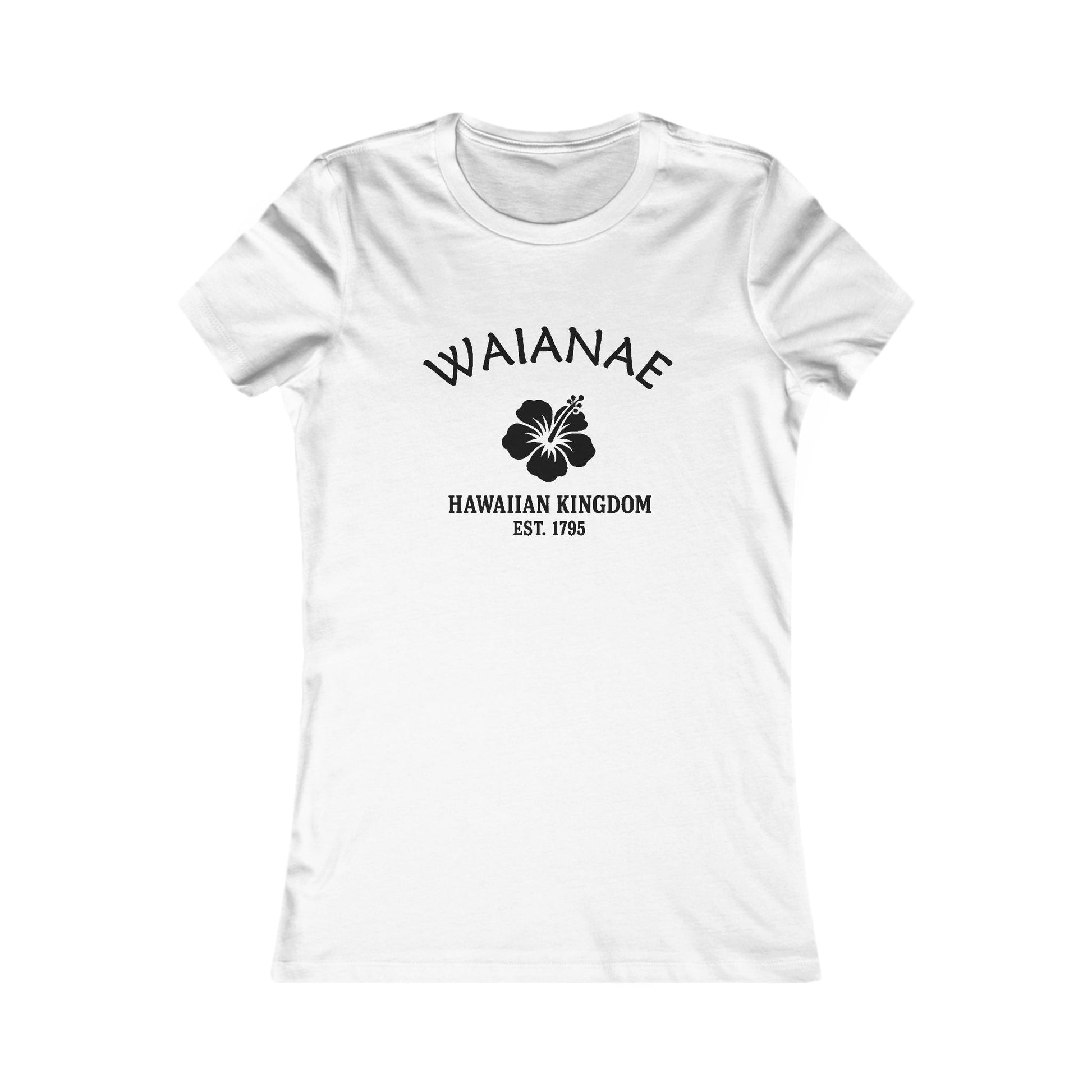
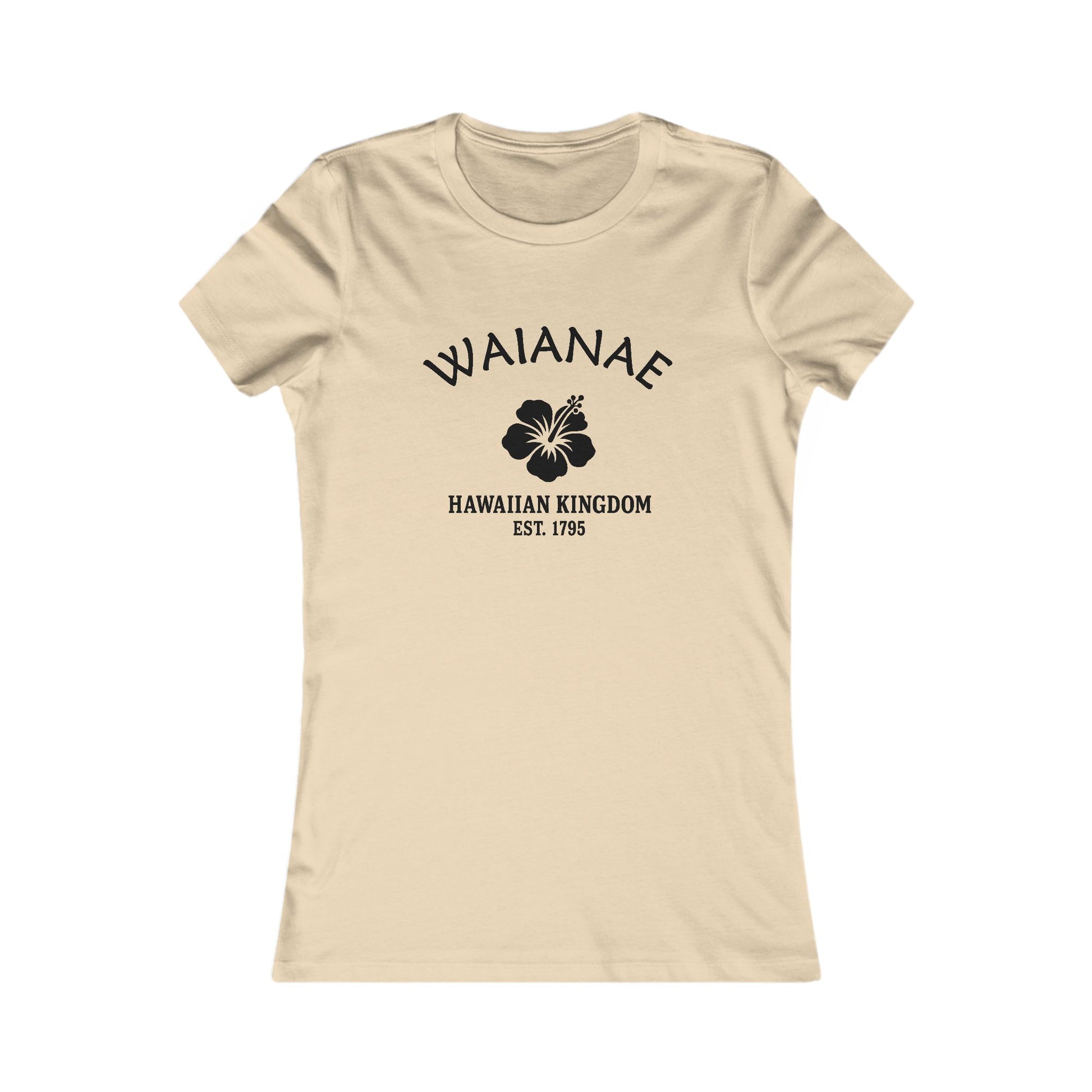
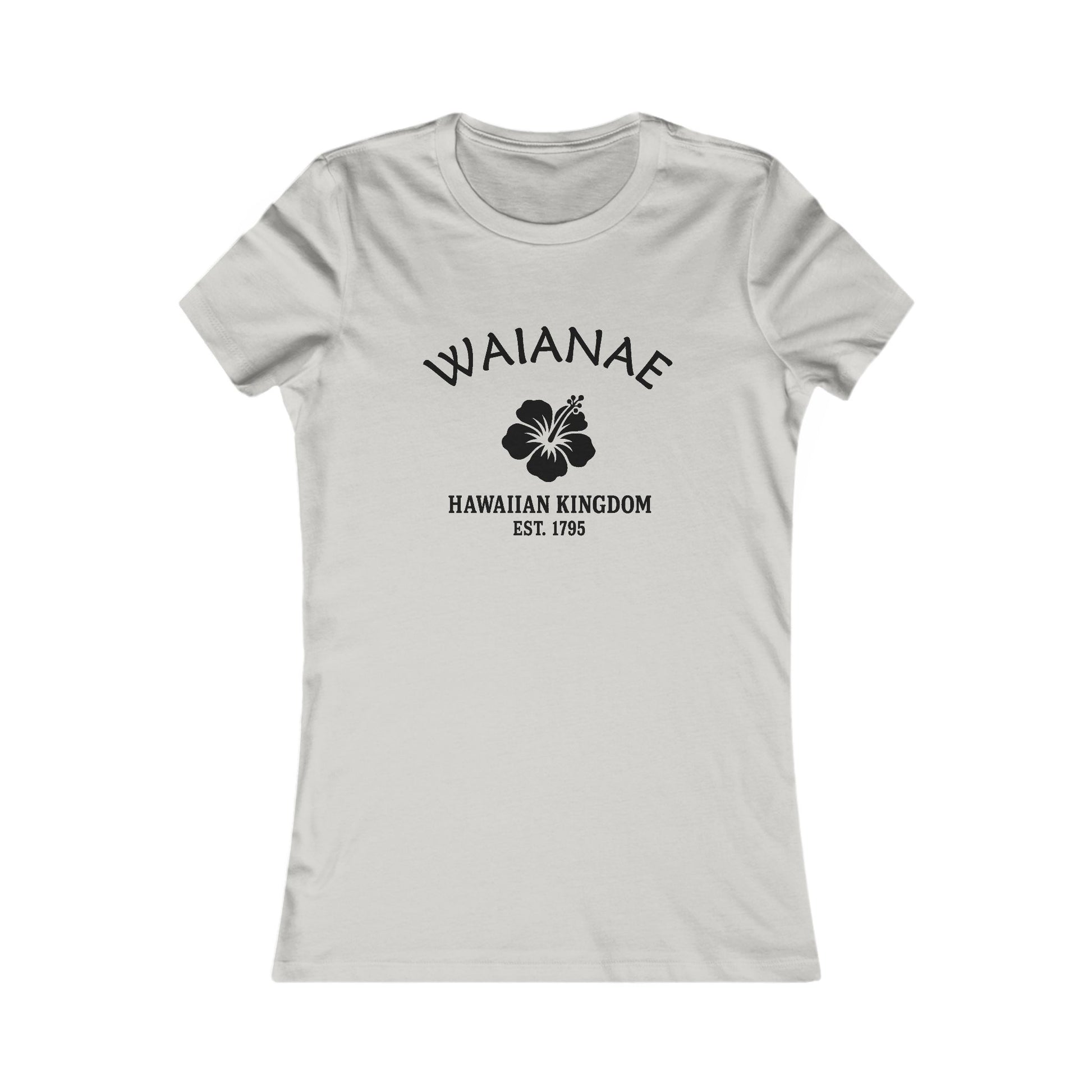
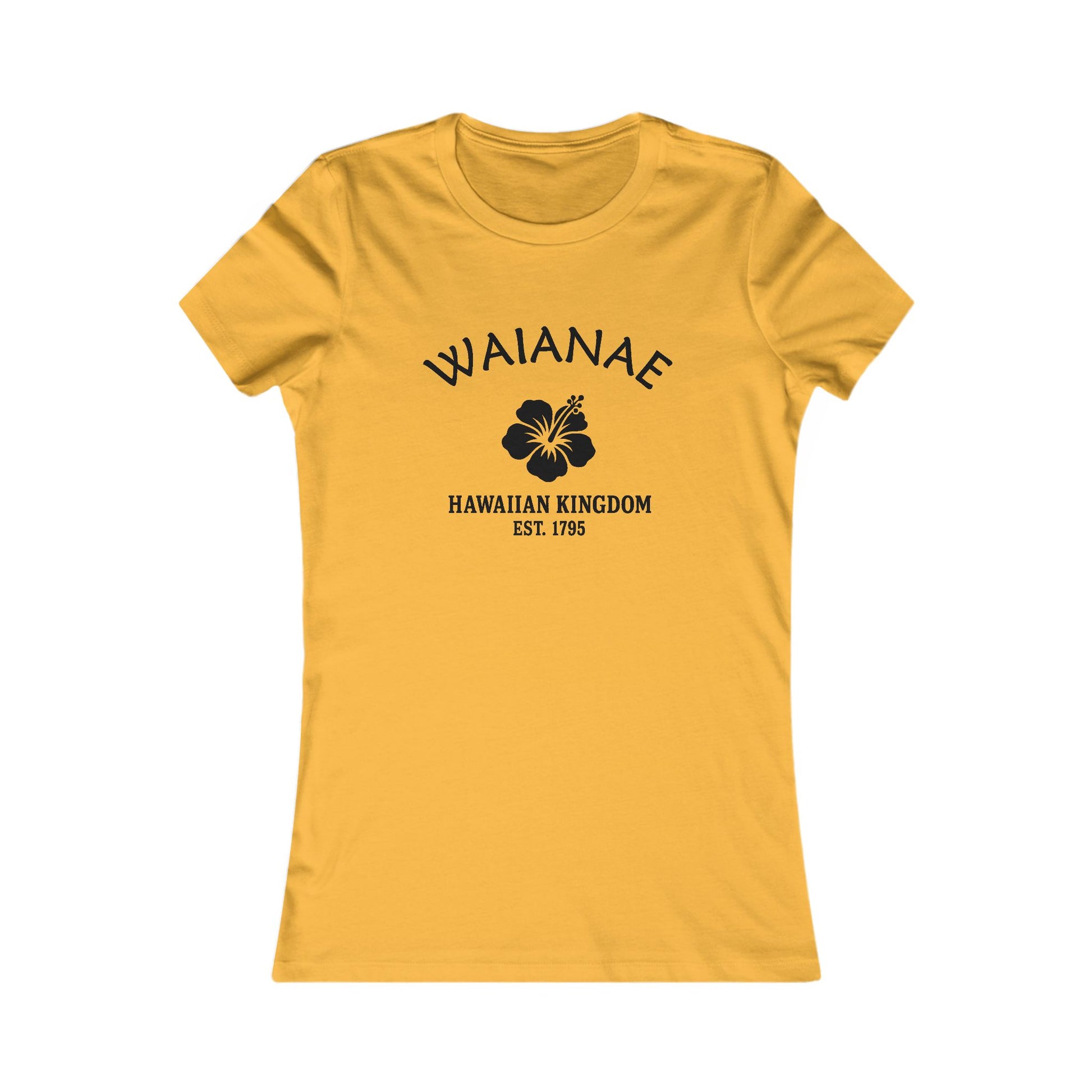
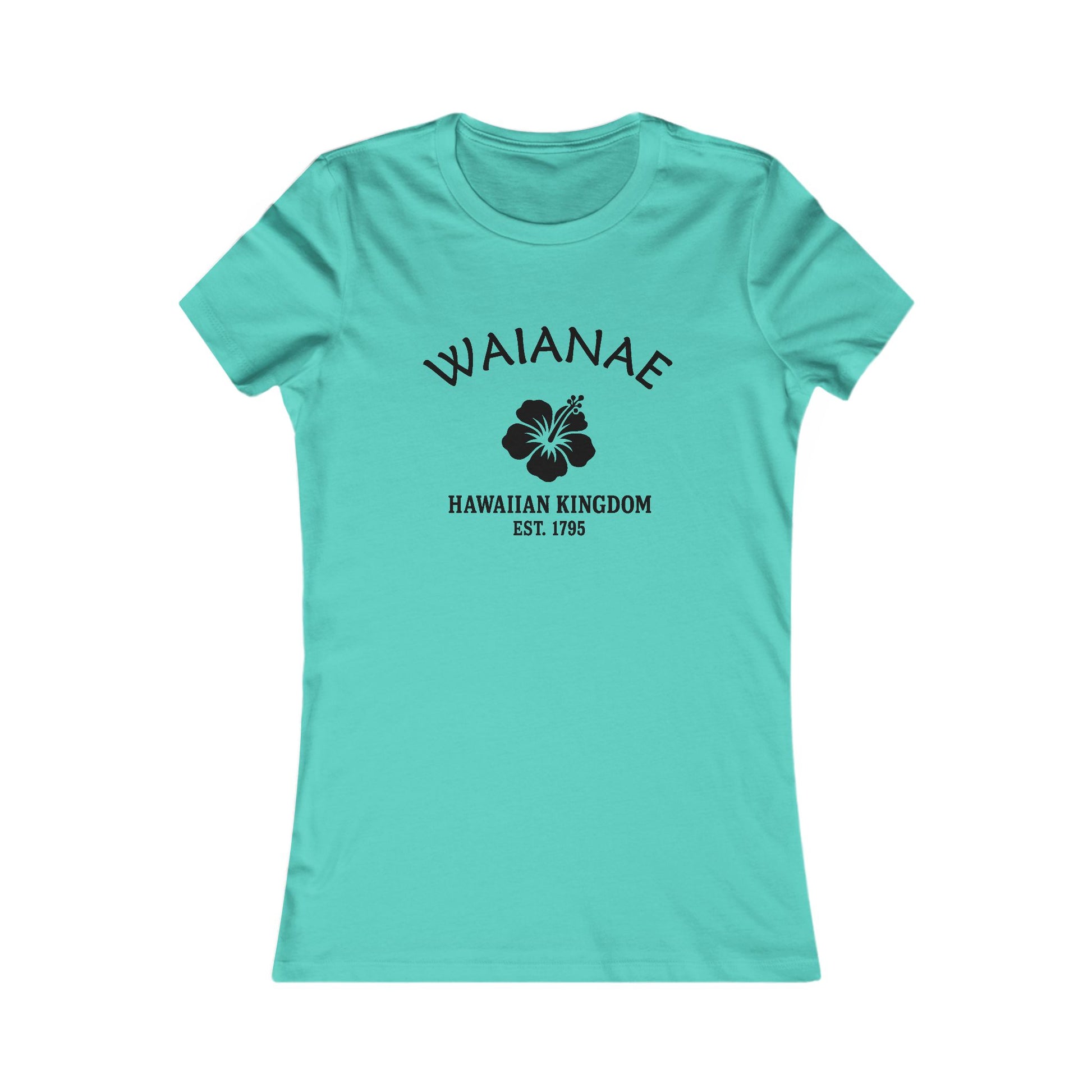
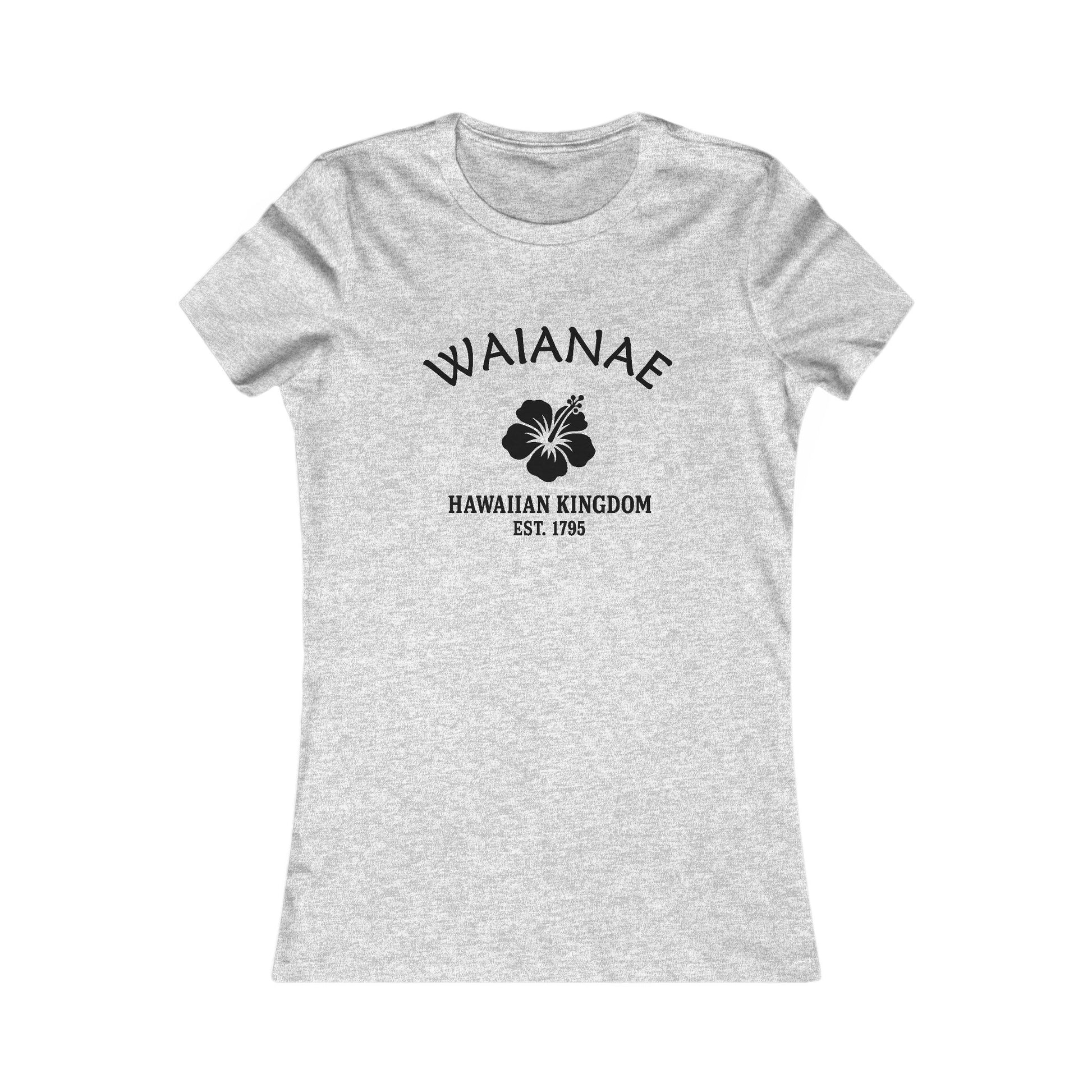
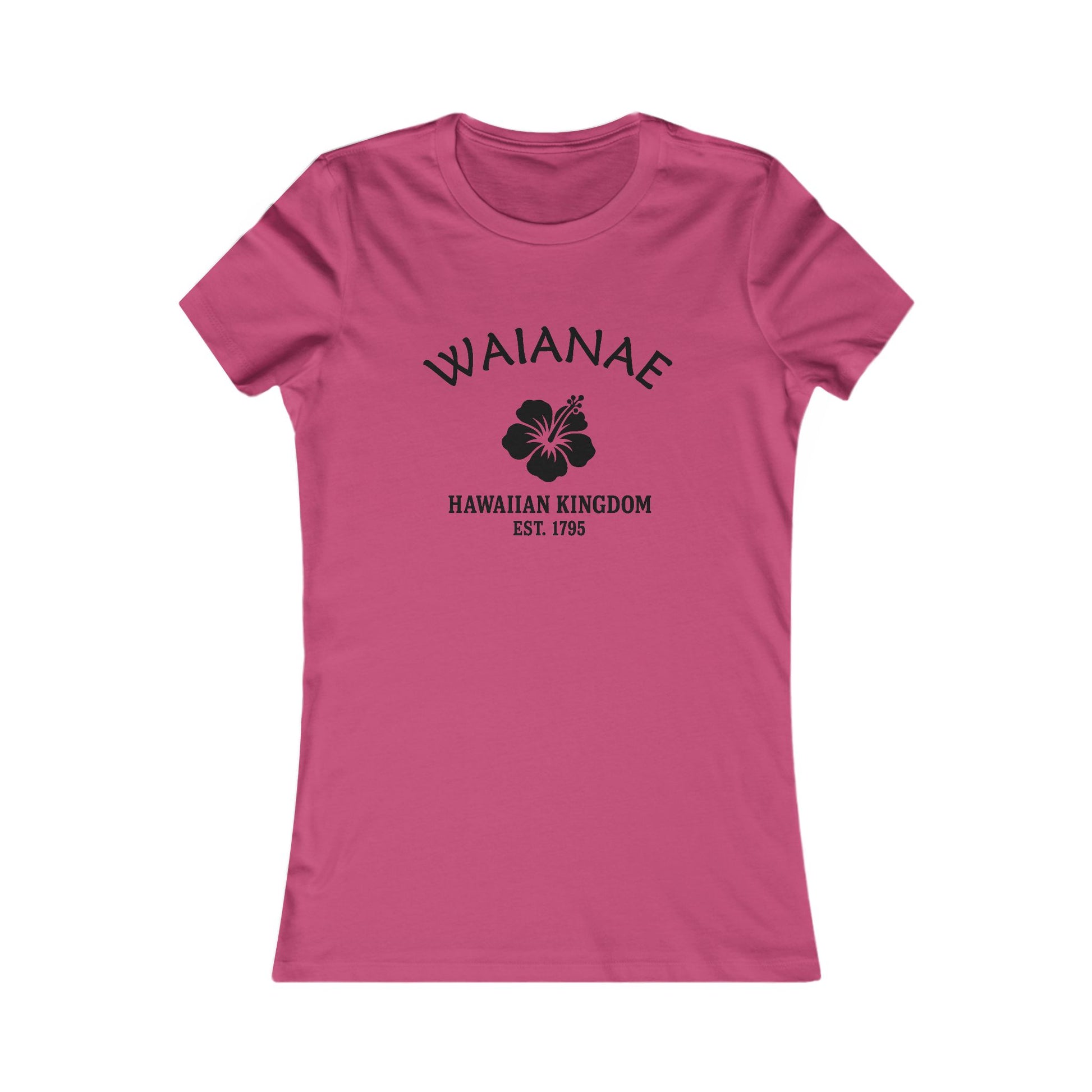
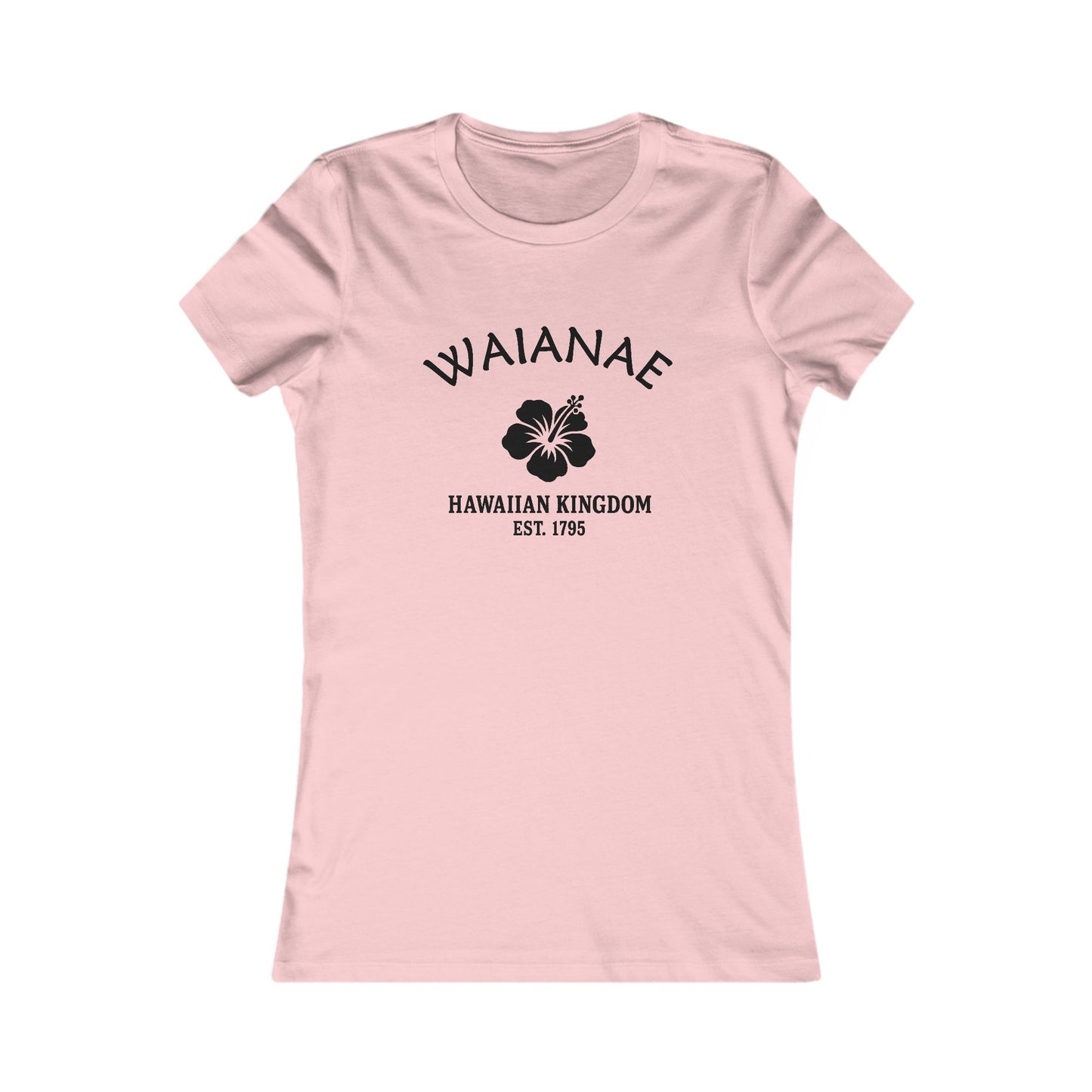
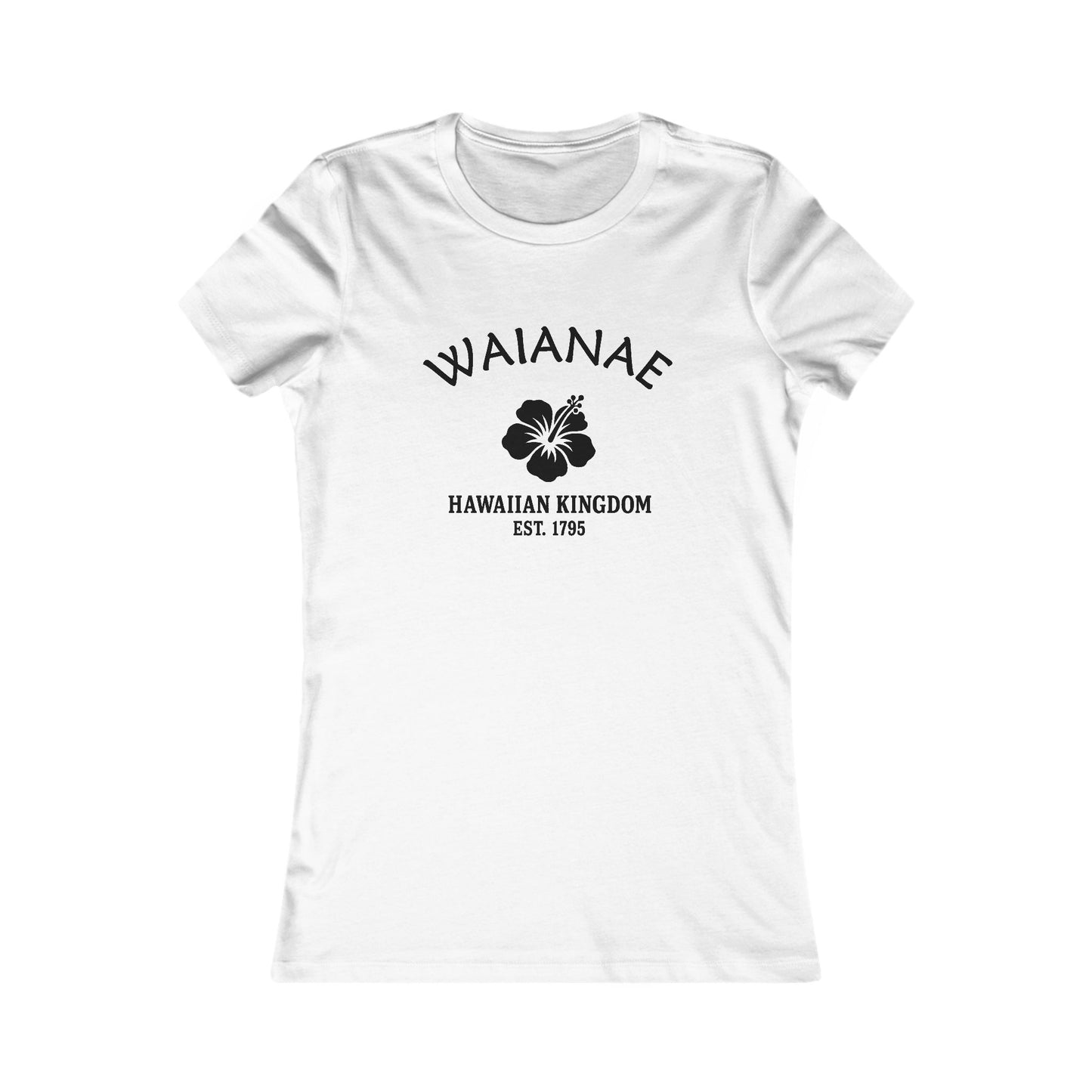
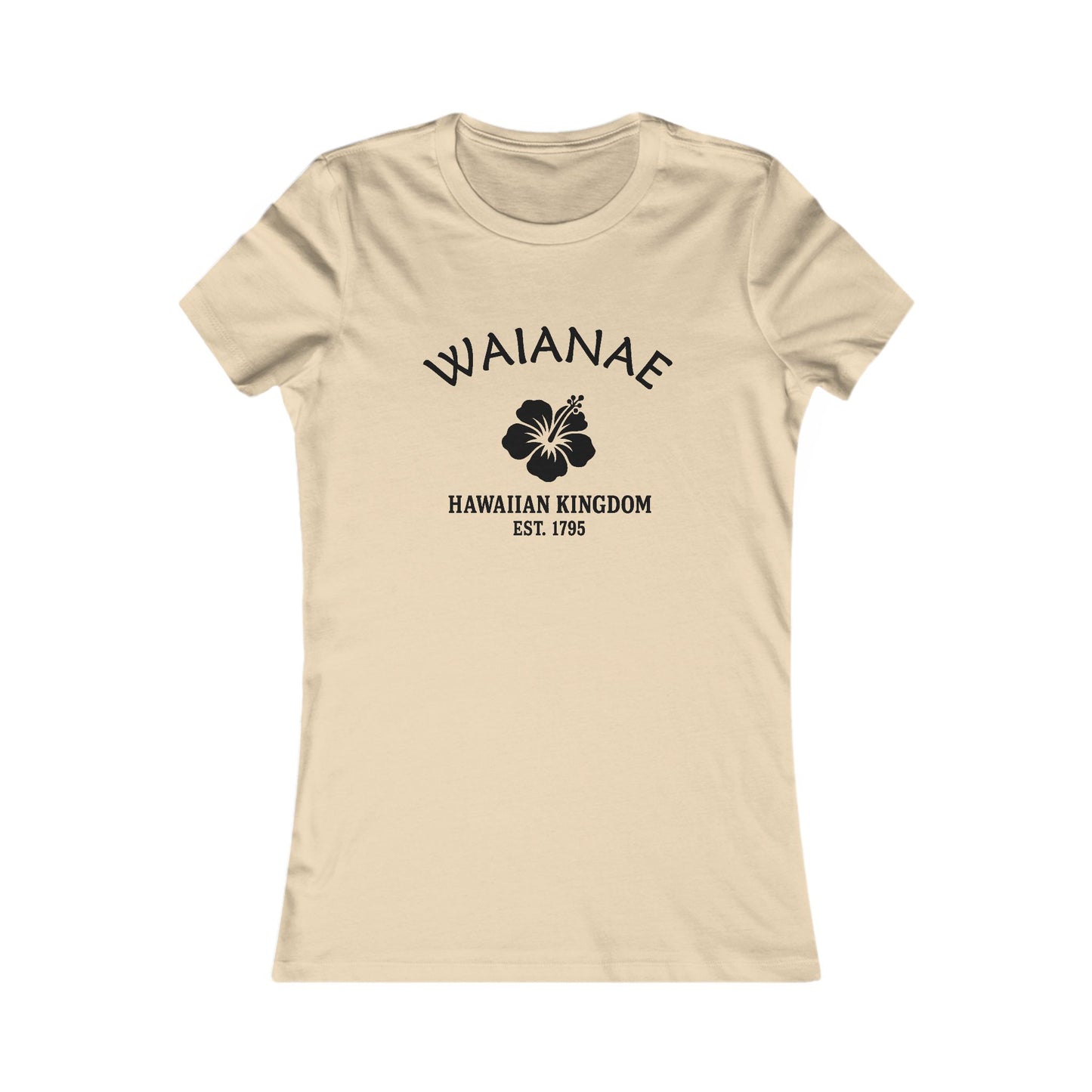
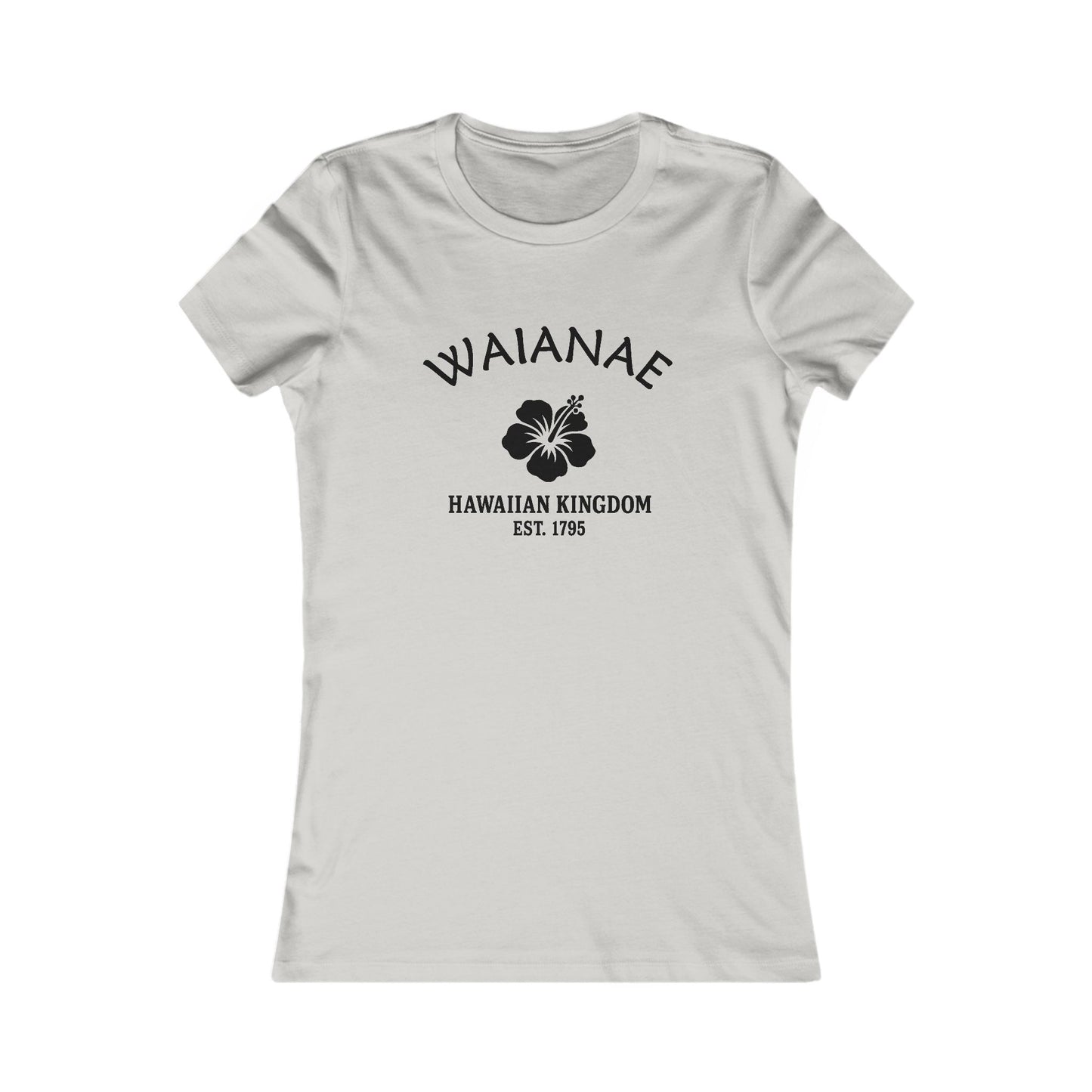
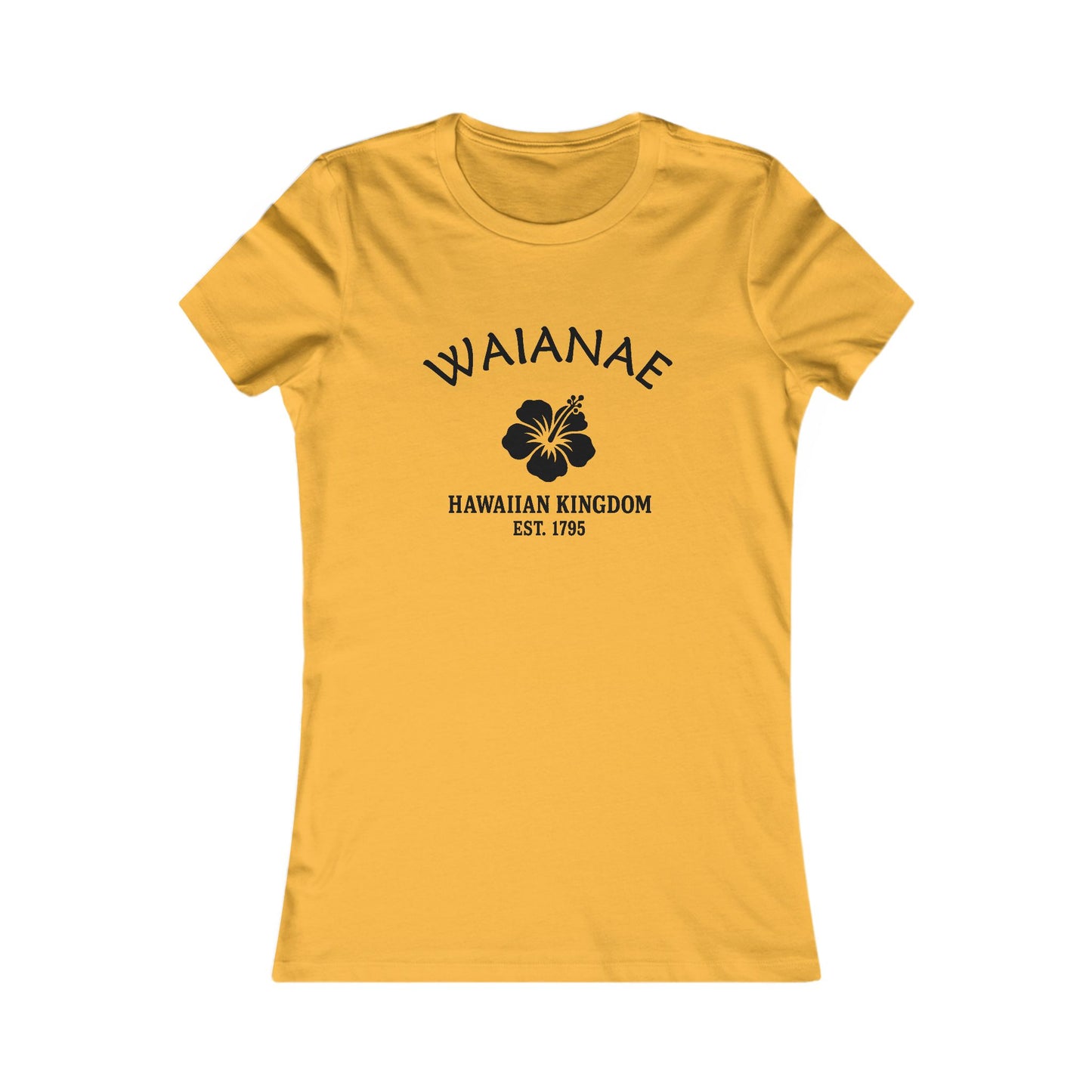
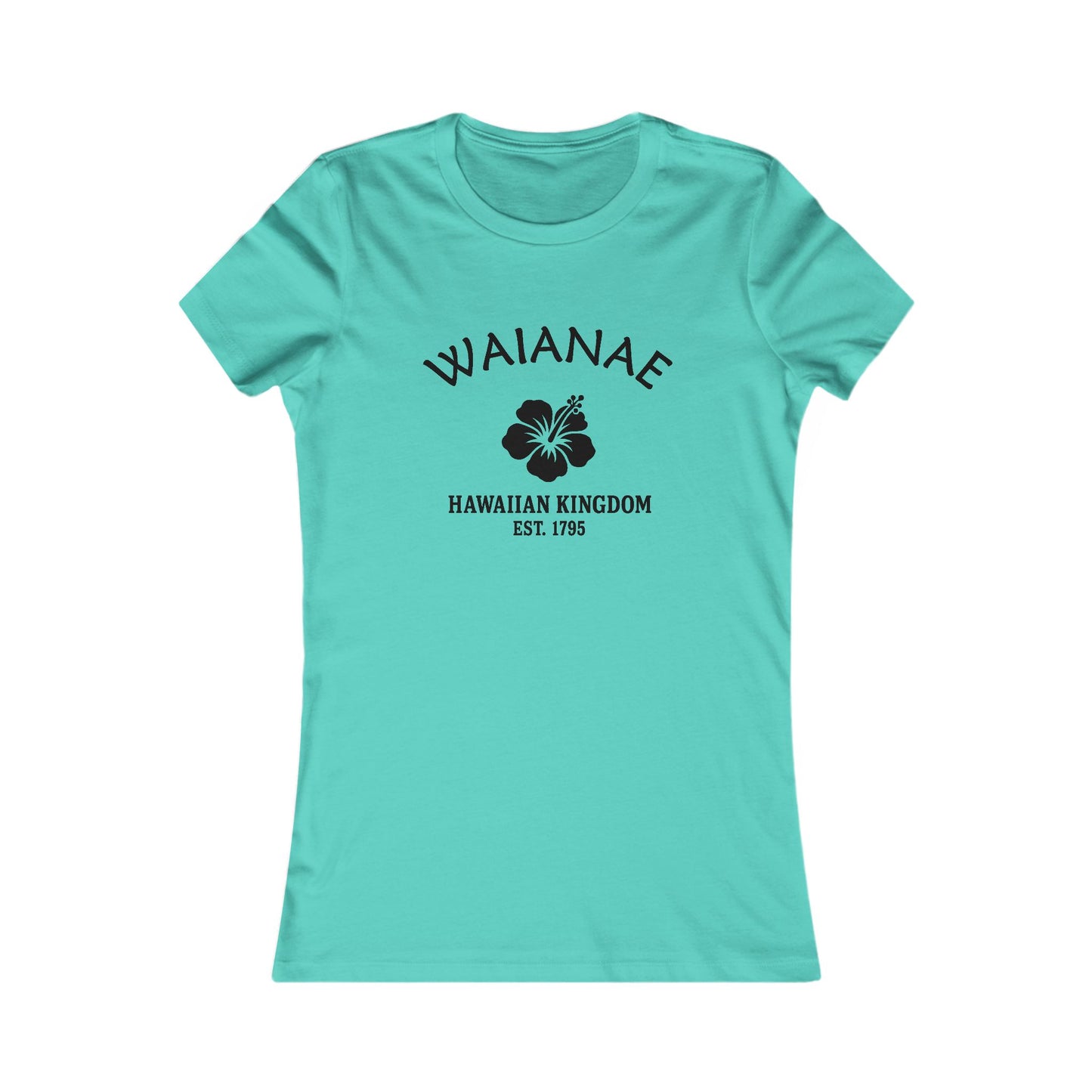
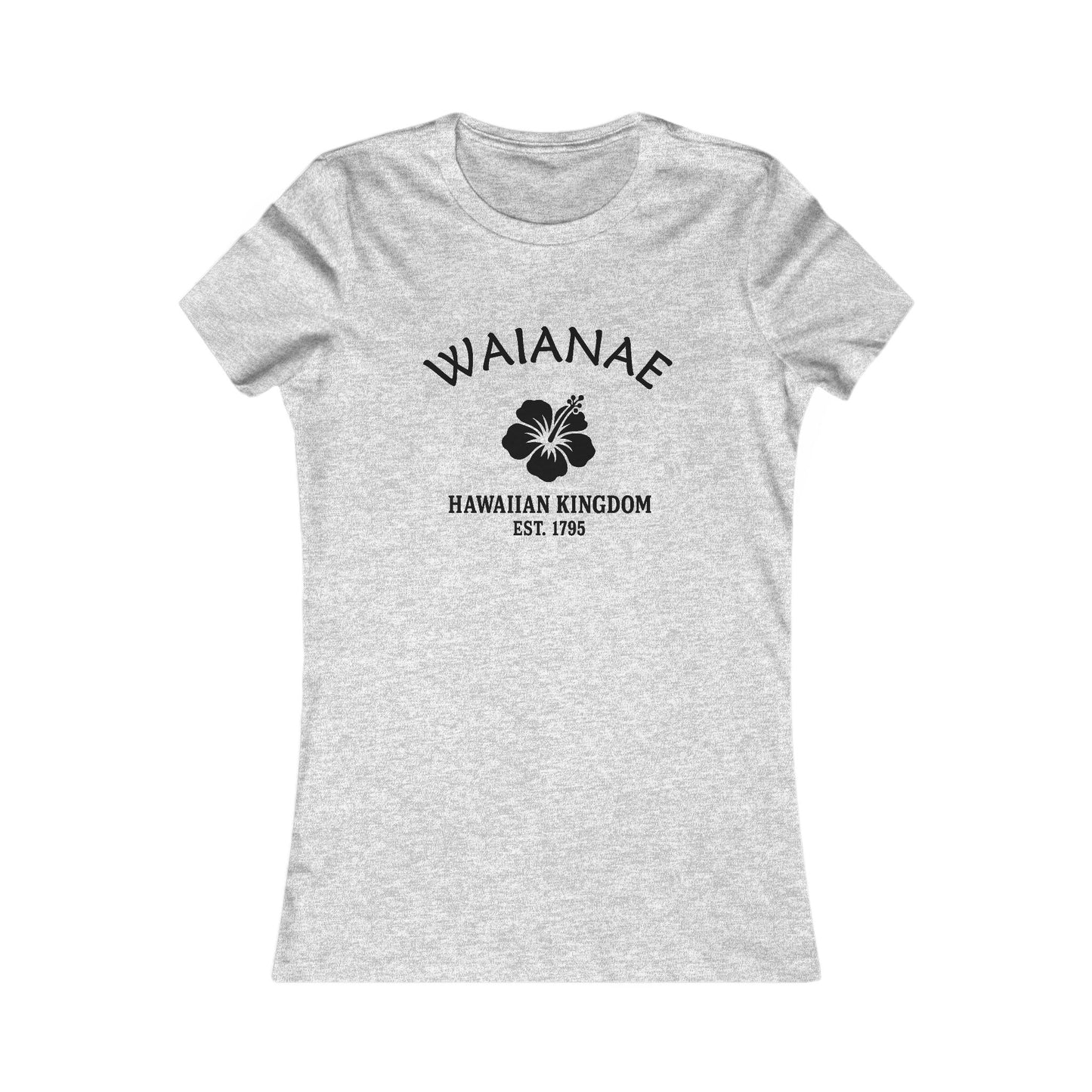
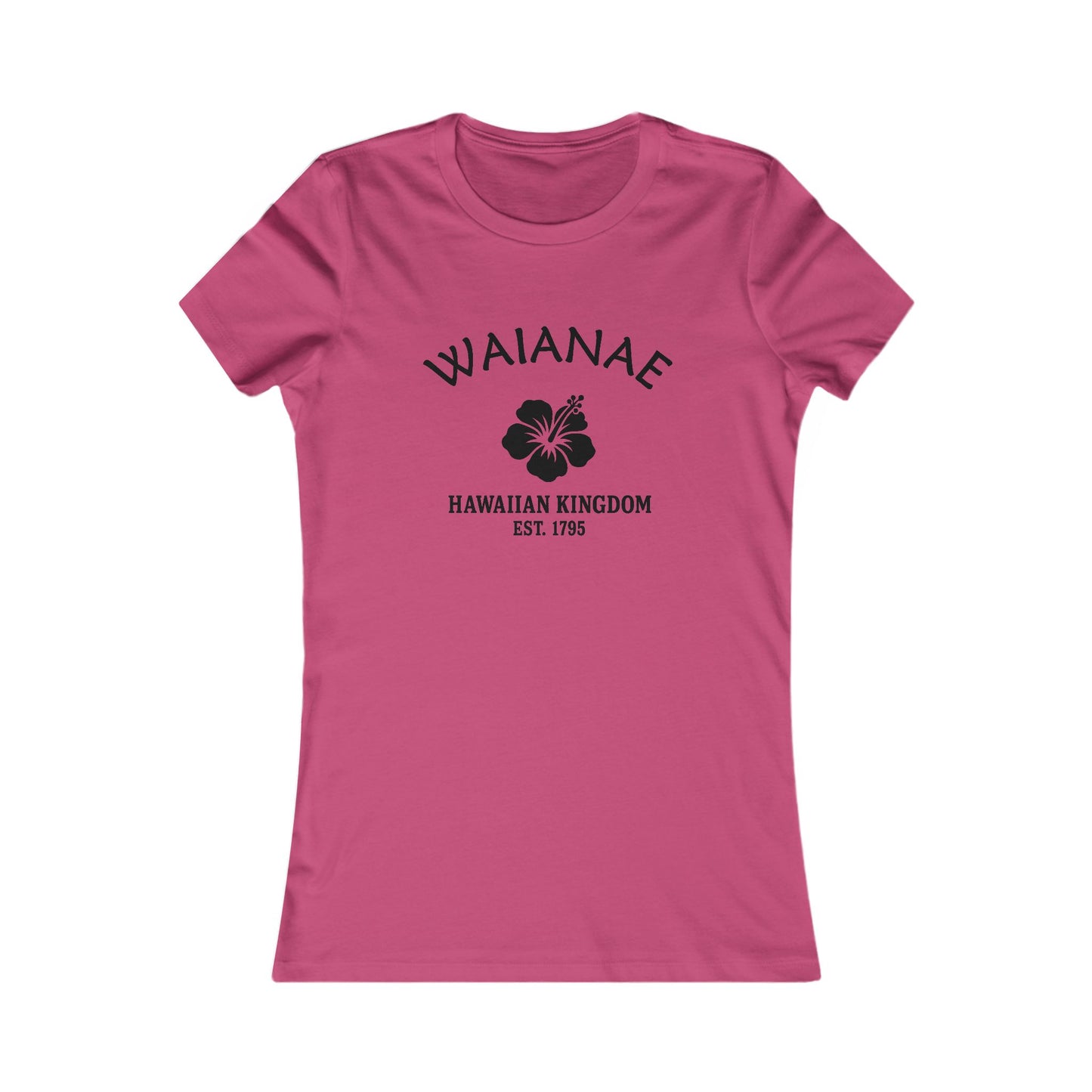
Our Waiʻanae retro logo carries the hibiscus motif, the state flower of Hawaiʻi, and the date "1795" stamped beneath, for the year Kamehameha I unified the islands. The black-and-white styling is retro, in the vocabulary of travel decals and mid-century beach signage. The hibiscus and the date do the work of placing the design in the unification era of the islands — and the leeward coast that was the Royal Center of its moku, that hosted the world's first international surfing competition at Mākaha, and that stands beneath the highest summit on Oʻahu.
Mākaha Beach is one of the original homes of big-wave surfing. Native Hawaiians have lived along the leeward coast of Oʻahu for centuries; the Waiʻanae moku — the long ahupuaʻa district running from Kahe through Nānākuli, Mā'ili, Waiʻanae, Mākaha, and Mākua to Kaʻena Point — has its name from wai (water) and ʻanae (the prized mature mullet of the brackish muliwai pools that once produced fish in large amounts along these beaches). The Waiʻanae ahupuaʻa was the Royal Center of the district in the late 1600s and 1700s, with the largest population of the moku at the time of European contact in 1778. Kamehameha I unified the Hawaiian Islands in 1795. The first Christian missionaries arrived on Oʻahu in 1820, Stephen Waimalu was installed as the first Hawaiian minister of Waiʻanae in 1850, and Benjamin F. Dillingham received the franchise in 1888 to extend his Oahu Railway and Land Company along the Waiʻanae coast. Hawaiʻi entered the Union as the 50th state on August 21, 1959. In 1952, the Waikīkī Surf Club — founded by John Lind — and the Waiʻanae Lions Club organized what they called the Mākaha International Surfing Championships, and held the first running of the contest at Mākaha Beach in 1953-1954. It was the world's first international surfing competition. The event ran through 1971 as the unofficial world championships of surfing, and in 1962 it became the first televised surf contest ever, on ABC's Wide World of Sports. In 1969, Greg Noll caught what surfers of the era called the biggest wave ever ridden, at Mākaha; in 1977, the Mākaha-born lifeguard Richard "Buffalo" Keaulana — the 1960 Mākaha International champion, descended on his father's side from Kamehameha I and on his mother's side from Kekaulike — founded Buffalo's Big Board Surfing Classic at Mākaha Beach, and the Classic still runs every February. Behind Mākaha and Waiʻanae the Waiʻanae Mountain Range rises to Mount Kaʻala, the 4,025-foot summit that is the highest peak on Oʻahu. Mākaha Valley holds Kāneʻāki Heiau, a 15th-century wahi pana that the Bishop Museum restored in 1970 and opened to respectful public visits Tuesday through Sunday in 1990. On the Westside since time before contact.
Why People Visit Waiʻanae Hawaiʻi
Waiʻanae offers the original home of big-wave surfing at Mākaha Beach, the world's first international surfing competition (1953-1954) and the long-running Buffalo's Big Board Surfing Classic, the protected swimming waters of Pōkaʻī Bay with its Pōkaʻī coconut-grove legend and Kūʻīlioloa Heiau, the 15th-century Kāneʻāki Heiau in Mākaha Valley, the 4,025-foot summit of Mount Kaʻala as the highest peak on Oʻahu, the westernmost tip of Oʻahu at Kaʻena Point, and the long Native Hawaiian heritage of the Waiʻanae moku that has carried this coast for centuries. It is the leeward Westside of Oʻahu — a residential community whose culture is alive, and where the world first watched surfers ride big waves on television. On the Westside since time before contact.
